European Implementation Collaborative, Zurich, Switzerland.
Department of Social Work, Education and Community Wellbeing, Northumbria University, Newcastle, United Kingdom.
PLoS One. 2022 May 11;17(5):e0267533. doi: 10.1371/journal.pone.0267533. eCollection 2022.
It requires thoughtful planning and work to successfully apply and sustain research-supported interventions like healthcare treatments, social support, or preventive programs in practice. Implementation support practitioners (ISPs) such as facilitators, technical assistance providers, knowledge brokers, coaches or consultants may be involved to actively support the implementation process. This article presents knowledge and attitudes ISPs bring to their work.
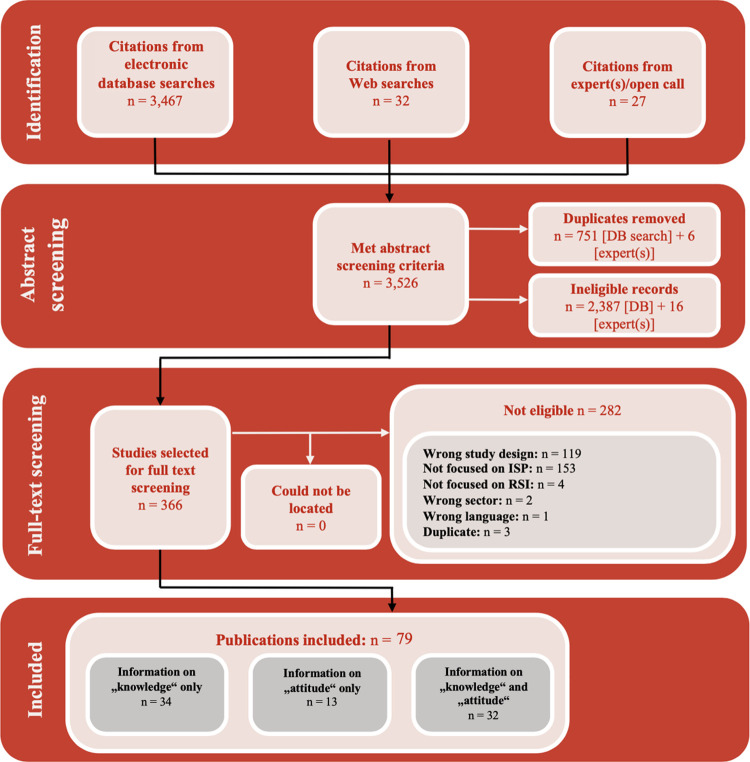
Building on a previously developed program logic, a systematic integrative review was conducted. Literature was sourced by searching nine electronic data bases, organizational websites, and by launching a call for publications among selected experts and social media. Article screening was performed independently by two researchers, and data from included studies were extracted by members of the research team and quality-assured by the lead researcher. The quality of included RCTs was assessed based on a framework by Hodder and colleagues. Thematic Analysis was used to capture information on knowledge and attitudes of ISPs across the included studies. Euler diagrams and heatmaps were used to present the results.
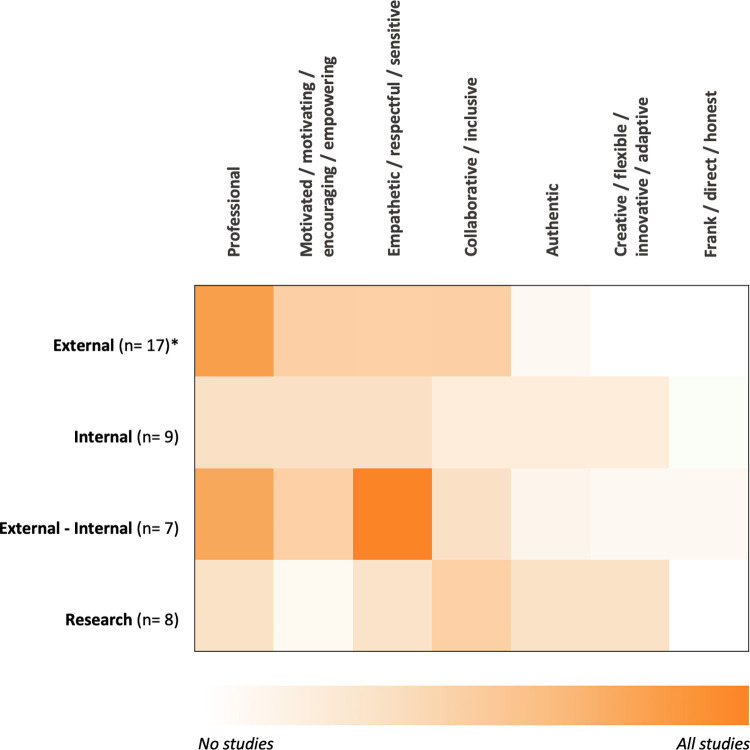
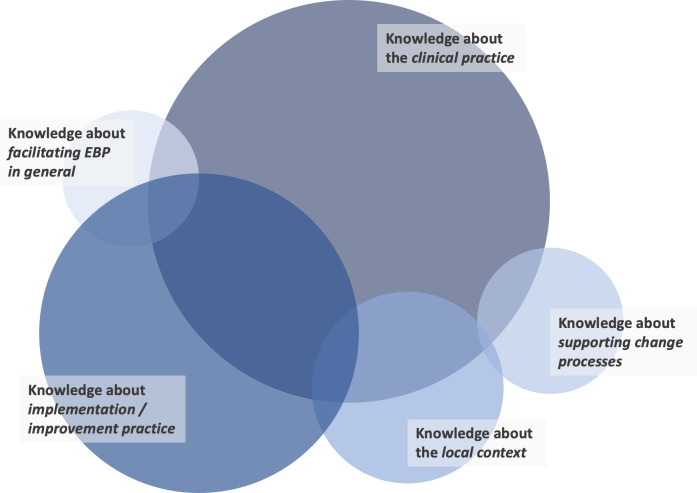
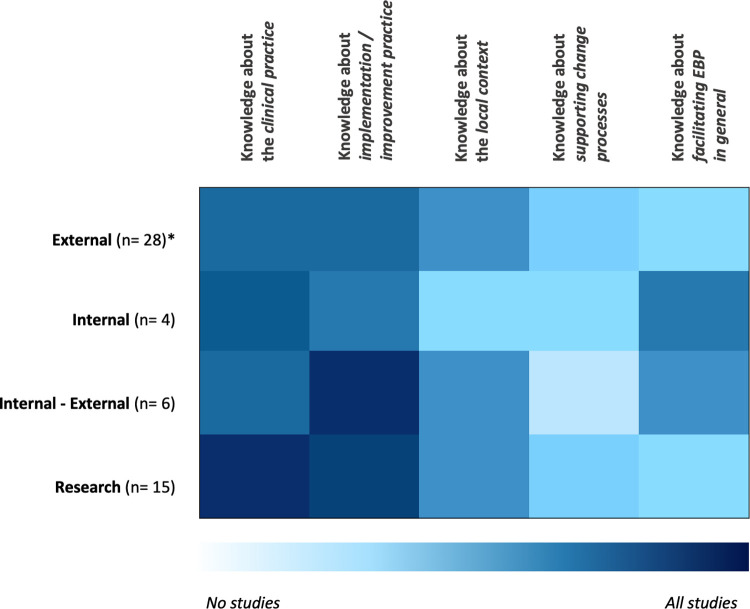
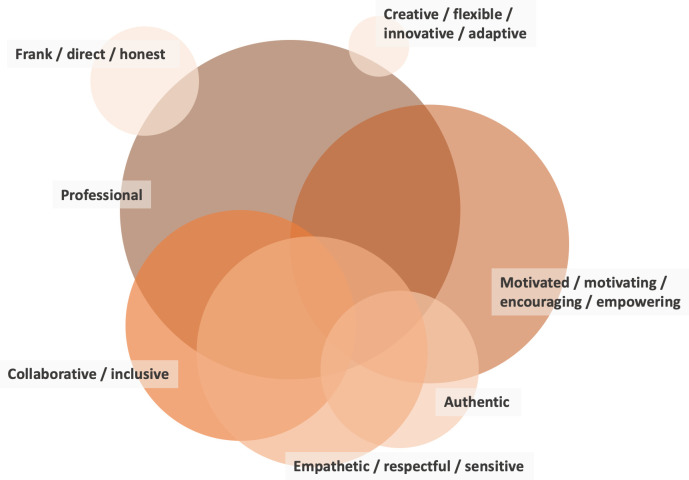
Results are based on 79 included studies. ISPs reportedly displayed knowledge about the clinical practice they work with, implementation / improvement practice, the local context, supporting change processes, and facilitating evidence-based practice in general. In particular, knowledge about the intervention to be implemented and its target population, specific improvement / implementation methods and approaches, organizational structures and sensitivities, training, and characteristics of (good) research was described in the literature. Seven themes describing ISPs' attitudes were identified: 1) professional, 2) motivated / motivating / encouraging / empowering, 3) empathetic / respectful / sensitive, 4) collaborative / inclusive, 5) authentic, 6) creative / flexible / innovative / adaptive, and 7) frank / direct / honest. Pertaining to a professional attitude, being responsive and focused were the most prevalent indicators across included publications.
The wide range and complexity of knowledge and attitudes found in the literature calls for a comprehensive and systematic approach to collaboratively develop a professional role for ISPs across disciplines. Embedding the ISP role in different health and social welfare settings will enhance implementation capacities considerably.
成功地将研究支持的干预措施(如医疗保健治疗、社会支持或预防计划)应用于实践并维持下去需要深思熟虑的规划和工作。实施支持从业者(ISP),如促进者、技术援助提供者、知识经纪人、教练或顾问,可能会参与其中,以积极支持实施过程。本文介绍了 ISP 在工作中所具备的知识和态度。
基于先前开发的程序逻辑,进行了系统的综合审查。通过搜索九个电子数据库、组织网站以及向选定的专家和社交媒体发布出版物征集通知来获取文献。两位研究人员独立进行文章筛选,研究团队成员提取纳入研究的数据,并由首席研究员进行质量保证。基于 Hodder 等人的框架评估纳入的 RCT 的质量。主题分析用于捕捉纳入研究中关于 ISP 知识和态度的信息。使用 Euler 图和热图呈现结果。
结果基于 79 项纳入的研究。据报道,ISP 具备与他们所从事的临床实践、实施/改进实践、当地背景、支持变革过程以及一般促进基于证据的实践相关的知识。特别是,文献中描述了对要实施的干预措施及其目标人群、具体的改进/实施方法和方法、组织结构和敏感性、培训以及(良好)研究的特征的了解。确定了描述 ISP 态度的七个主题:1)专业,2)积极主动/激励/鼓励/授权,3)富有同理心/尊重/敏感,4)协作/包容,5)真实,6)创新/灵活/创新/适应,7)坦率/直接/诚实。在专业态度方面,响应性和专注性是纳入出版物中最常见的指标。
文献中发现的广泛而复杂的知识和态度需要一种全面而系统的方法,以共同为跨学科的 ISP 制定专业角色。将 ISP 角色嵌入到不同的卫生和社会福利环境中,将大大提高实施能力。