Chen Lijuan, Wang Hongbo, Li Xiang, Nie Cong, Liang Taibo, Xie Fuwei, Liu Kejian, Peng Xiaojun, Xie Jianping
Key Laboratory of Separation Science for Analytical Chemistry, Dalian Institute of Chemical Physics, Chinese Academy of Sciences 457 Zhongshan Road Dalian Liaoning 116023 China.
University of Chinese Academy of Sciences 19 Yuquan Road Beijing 100049 China.
RSC Adv. 2018 Oct 15;8(61):35246-35256. doi: 10.1039/c8ra06665e. eCollection 2018 Oct 10.
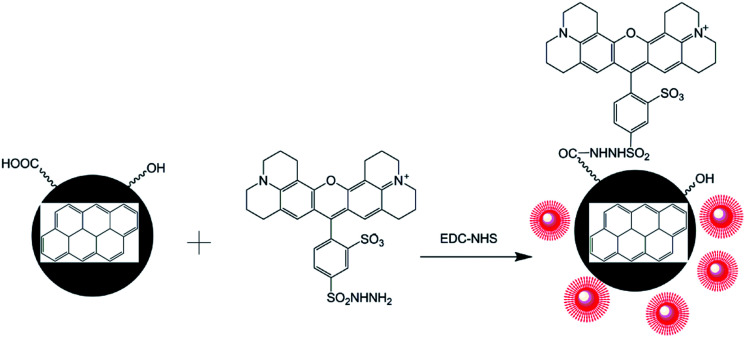
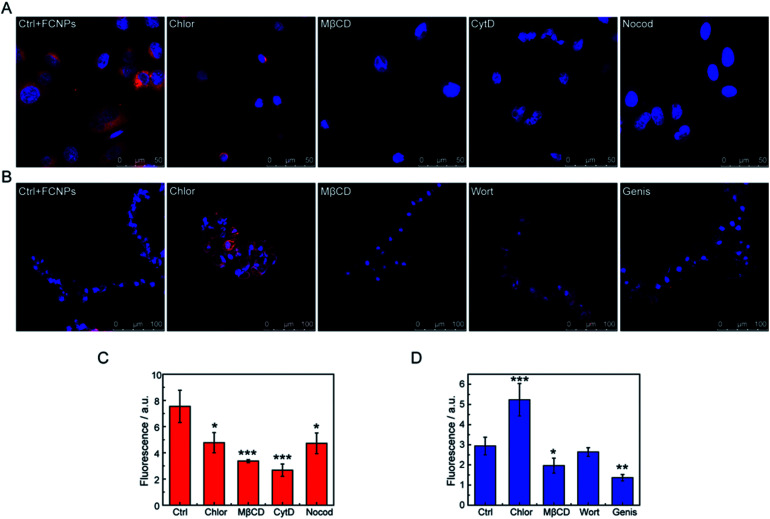
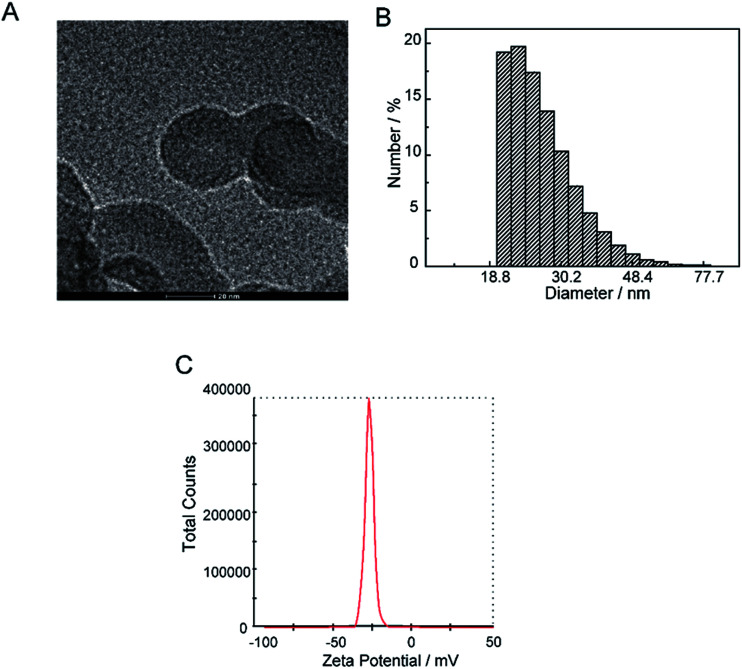
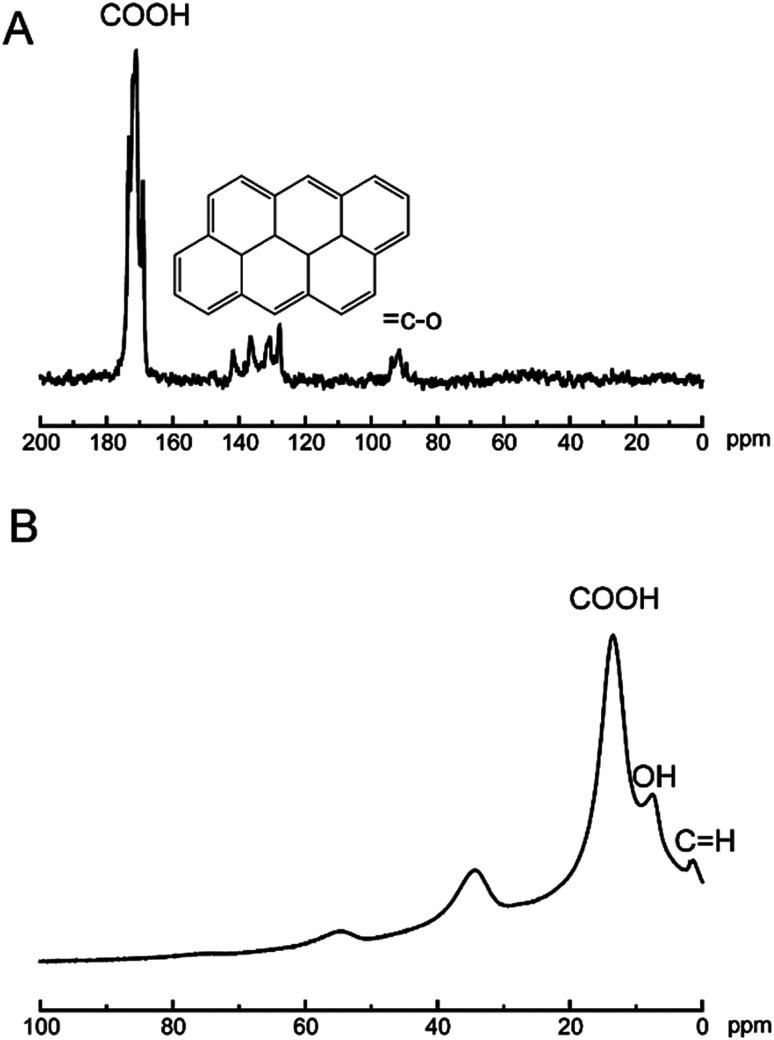
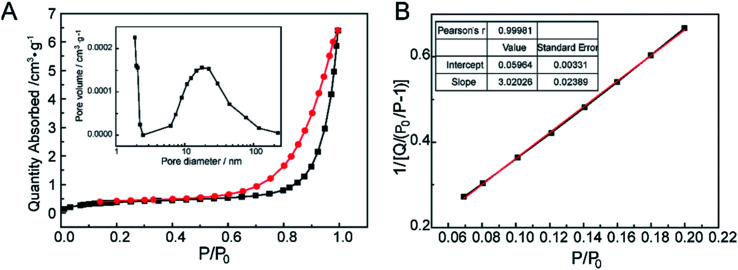
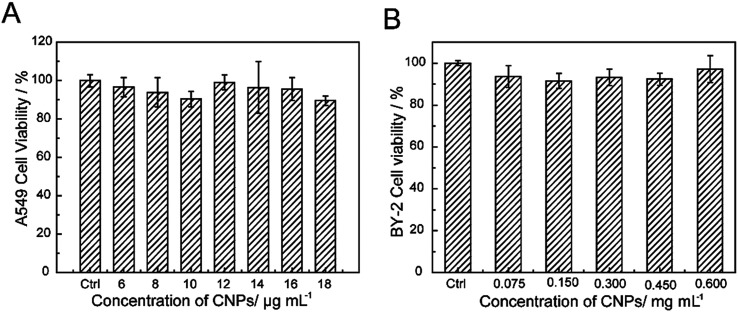
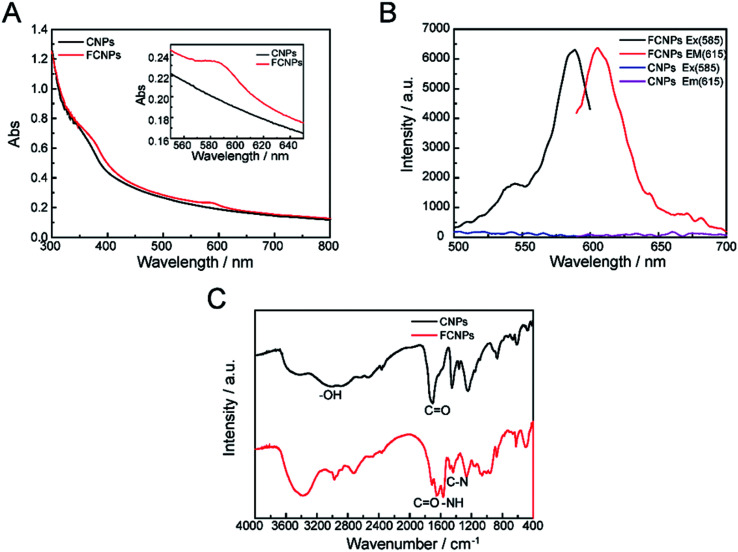
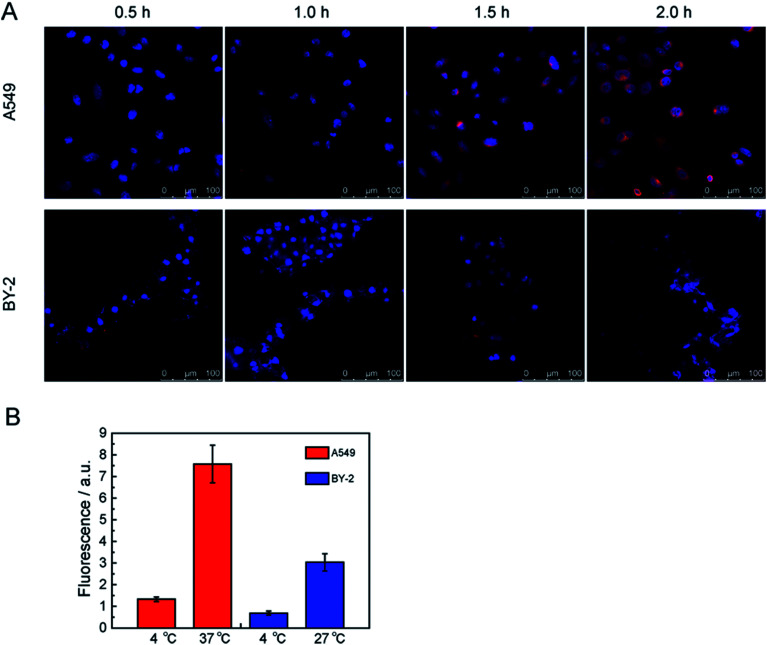
As one of the carbon based materials, the potential application of carbon nanoparticles (CNPs) has emerged in the promotion of plant growth. However, knowledge on the biological mechanism of how the CNPs interact with plant cells is limited. In this study, nanostructures of CNPs were examined. The particles exhibited particulate morphology and their size distribution was in the range of 18 to 70 nm, with an average size of 30 nm. Hydrophilic groups of COOH and OH were present on the surface of CNPs, and CNPs showed the common feature of graphitic sp hybridization carbons. The CNPs were determined to be biocompatible with these two cell lines, mammalian cells (A549 cells) and plant cells (BY-2 cells). The COOH groups on the surface of CNPs were functionalized covalent binding with a fluorescent dye for improvement of the fluorescence. The fluorescent carbon nanoparticles (FCNPs) were found to cross the cell membrane and enter cells (A549 cells and BY-2 cells) in an energy-dependent manner. Subsequently, the mechanism of FCNPs interaction with the cell membrane was evaluated in the presence of inhibitors that specifically affect different endocytosis membrane proteins. The FCNPs mainly entered A549 cells through caveolin-mediated endocytosis and macropinocytosis, and clathrin-dependent endocytosis was also involved in the transportation of the FCNPs. Clathrin-independent endocytosis mediated in the internalization of FCNPs in BY-2 cells. The way FCNPs entering cells will provide a fundamental understanding of the influence of CNPs on cell membrane.
作为碳基材料之一,碳纳米颗粒(CNPs)在促进植物生长方面已展现出潜在应用。然而,关于CNPs如何与植物细胞相互作用的生物学机制的了解却很有限。在本研究中,对CNPs的纳米结构进行了检测。这些颗粒呈现出颗粒形态,其尺寸分布在18至70纳米范围内,平均尺寸为30纳米。CNPs表面存在COOH和OH等亲水性基团,并且CNPs表现出石墨sp杂化碳的共同特征。已确定CNPs与这两种细胞系,即哺乳动物细胞(A549细胞)和植物细胞(BY-2细胞)具有生物相容性。通过与荧光染料共价结合对CNPs表面的COOH基团进行功能化,以提高荧光强度。发现荧光碳纳米颗粒(FCNPs)能以能量依赖的方式穿过细胞膜并进入细胞(A549细胞和BY-2细胞)。随后,在存在特异性影响不同内吞膜蛋白的抑制剂的情况下,评估了FCNPs与细胞膜相互作用的机制。FCNPs主要通过小窝蛋白介导的内吞作用和巨胞饮作用进入A549细胞,网格蛋白依赖性内吞作用也参与了FCNPs的转运。在BY-2细胞中,FCNPs的内化由非网格蛋白依赖性内吞作用介导。FCNPs进入细胞的方式将为理解CNPs对细胞膜的影响提供基础认识。