Penescu Liviu, Stora Thierry, Stegemann Simon, Pitters Johanna, Fiorina Elisa, Augusto Ricardo Dos Santos, Schmitzer Claus, Wenander Fredrik, Parodi Katia, Ferrari Alfredo, Cocolios Thomas E
Abstract Landscapes, Montpellier, France.
European Organization for Nuclear Research (CERN), Geneva, Switzerland.
Front Med (Lausanne). 2022 Apr 25;8:697235. doi: 10.3389/fmed.2021.697235. eCollection 2021.
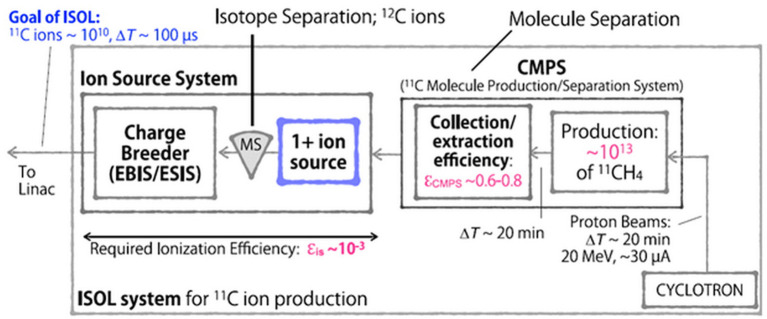
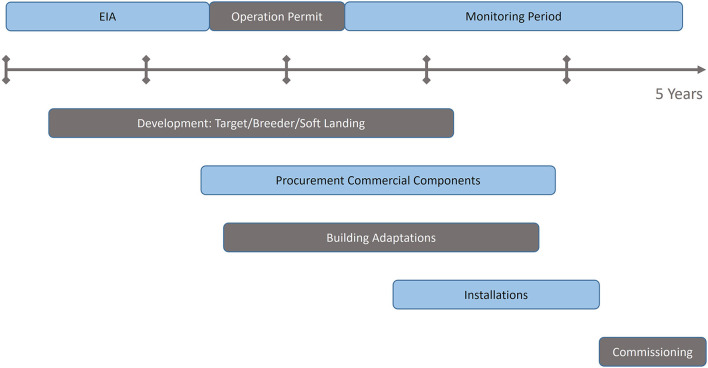
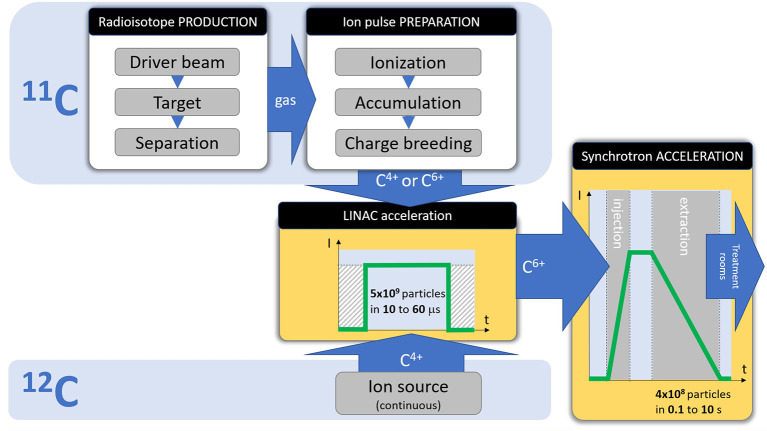
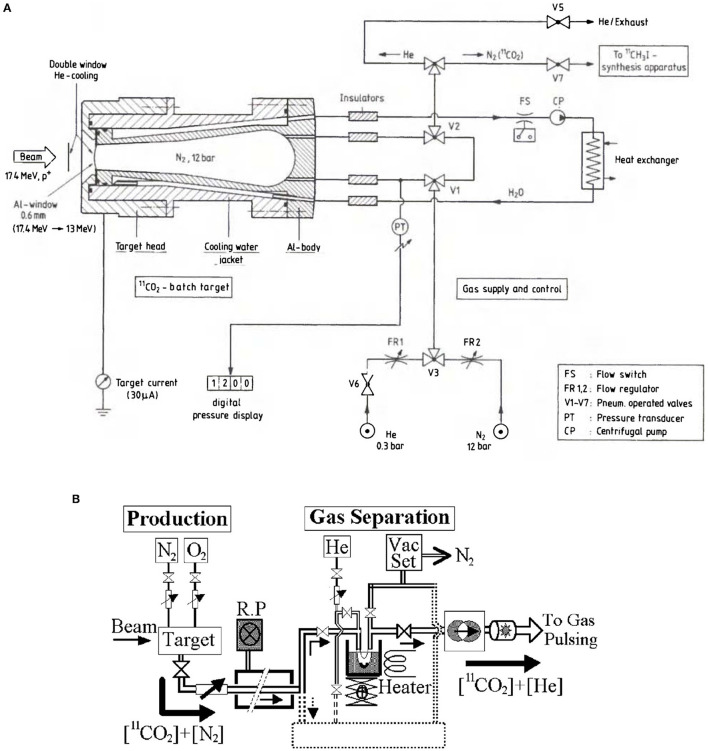
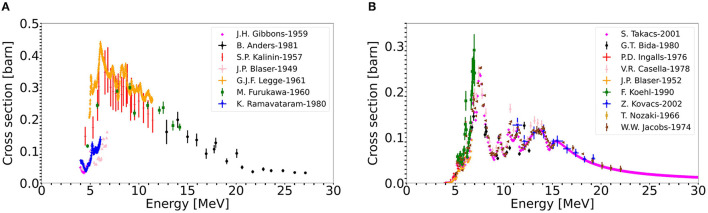
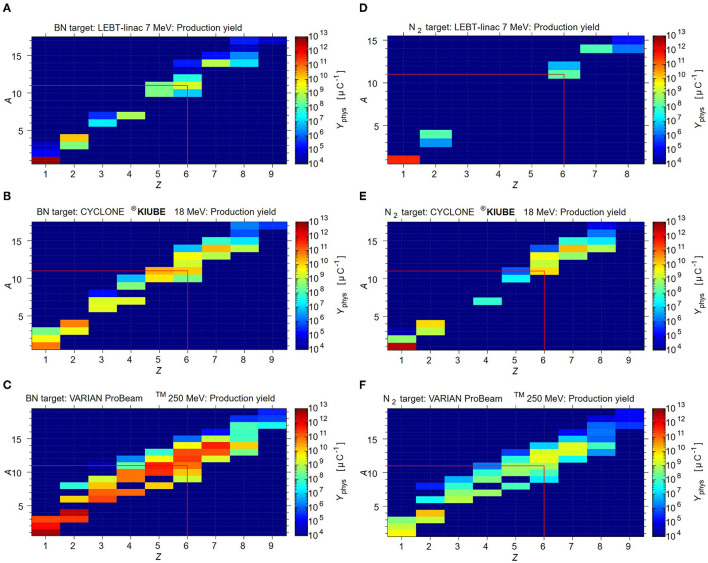
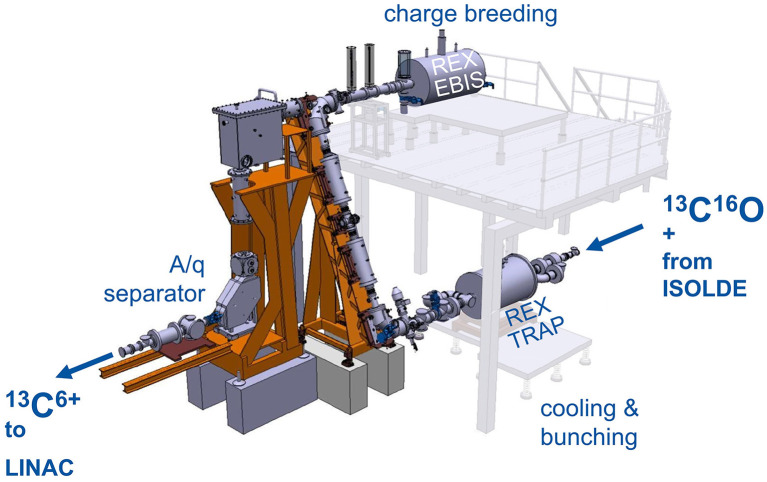
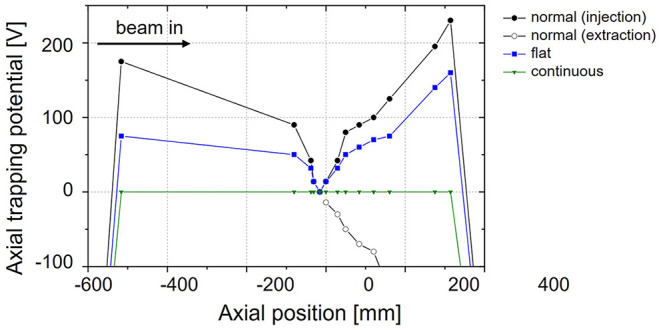
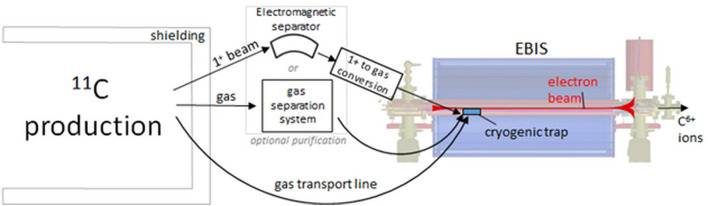
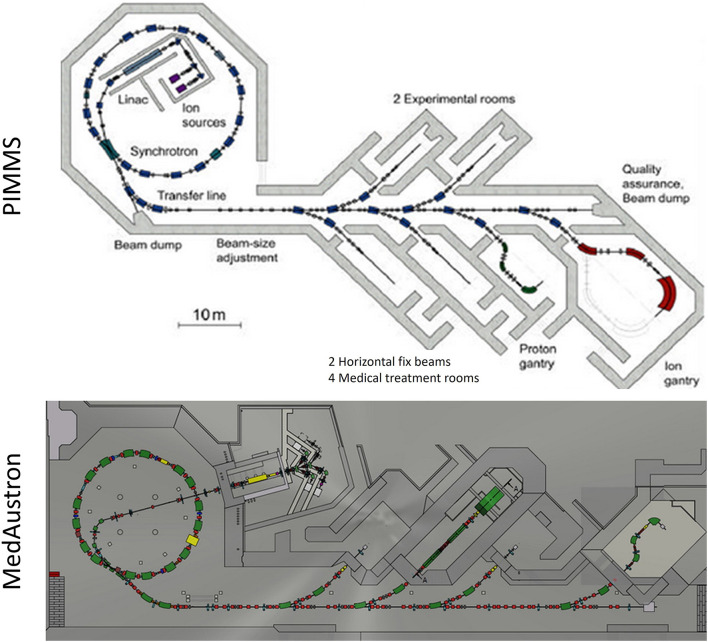
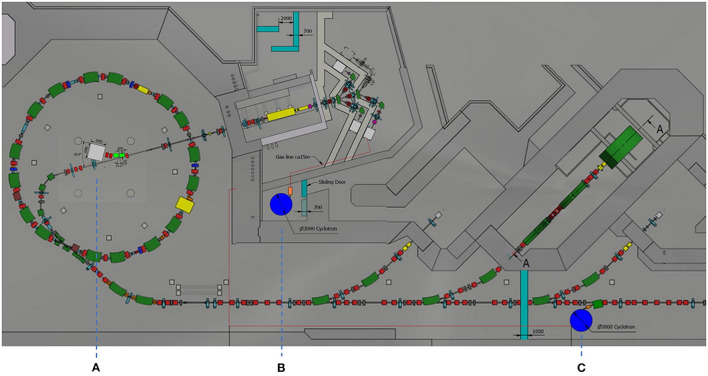
Particle therapy relies on the advantageous dose deposition which permits to highly conform the dose to the target and better spare the surrounding healthy tissues and organs at risk with respect to conventional radiotherapy. In the case of treatments with heavier ions (like carbon ions already clinically used), another advantage is the enhanced radiobiological effectiveness due to high linear energy transfer radiation. These particle therapy advantages are unfortunately not thoroughly exploited due to particle range uncertainties. The possibility to monitor the compliance between the ongoing and prescribed dose distribution is a crucial step toward new optimizations in treatment planning and adaptive therapy. The Positron Emission Tomography (PET) is an established quantitative 3D imaging technique for particle treatment verification and, among the isotopes used for PET imaging, the C has gained more attention from the scientific and clinical communities for its application as new radioactive projectile for particle therapy. This is an interesting option clinically because of an enhanced imaging potential, without dosimetry drawbacks; technically, because the stable isotope C is successfully already in use in clinics. The MEDICIS-Promed network led an initiative to study the possible technical solutions for the implementation of C radioisotopes in an accelerator-based particle therapy center. We present here the result of this study, consisting in a Technical Design Report for a C Treatment Facility. The clinical usefulness is reviewed based on existing experimental data, complemented by Monte Carlo simulations using the FLUKA code. The technical analysis starts from reviewing the layout and results of the facilities which produced C beams in the past, for testing purposes. It then focuses on the elaboration of the feasible upgrades of an existing C particle therapy center, to accommodate the production of C beams for therapy. The analysis covers the options to produce the C atoms in sufficient amounts (as required for therapy), to ionize them as required by the existing accelerator layouts, to accelerate and transport them to the irradiation rooms. The results of the analysis and the identified challenges define the possible implementation scenario and timeline.
粒子治疗依赖于有利的剂量沉积,这使得能够高度精确地将剂量适形于靶区,并相对于传统放疗更好地保护周围健康组织和危及器官。在使用较重离子(如已临床应用的碳离子)进行治疗的情况下,另一个优势是由于高线性能量传递辐射而增强的放射生物学效应。不幸的是,由于粒子射程的不确定性,这些粒子治疗的优势并未得到充分利用。监测正在进行的剂量分布与规定剂量分布之间的一致性,是朝着治疗计划和自适应治疗的新优化迈出的关键一步。正电子发射断层扫描(PET)是一种成熟的用于粒子治疗验证的定量三维成像技术,在用于PET成像的同位素中,碳-11因其作为粒子治疗新的放射性射弹的应用而受到科学界和临床界更多的关注。这在临床上是一个有趣的选择,因为其成像潜力增强,且没有剂量测定方面的缺点;从技术上讲,是因为稳定同位素碳-12已成功应用于临床。MEDICIS-Promed网络发起了一项倡议,研究在基于加速器的粒子治疗中心实施碳-11放射性同位素的可能技术方案。我们在此展示这项研究的结果,即一份碳-11治疗设施的技术设计报告。基于现有实验数据对临床实用性进行了评估,并辅以使用FLUKA代码的蒙特卡罗模拟。技术分析首先回顾过去为测试目的而产生碳-11束流的设施的布局和结果。然后重点阐述对现有碳-12粒子治疗中心进行可行升级的方案,以适应治疗用碳-11束流的生产。分析涵盖了以足够数量(治疗所需)生产碳-11原子、按照现有加速器布局的要求将其电离、加速并输送至照射室的各种选项。分析结果和所确定的挑战确定了可能的实施方案和时间表。