Li Haoxuan, Huang Chen, Jin Xiangyu, Ke Qinfei
Key Laboratory of Textile Science & Technology, College of Textiles, Donghua University No. 2999 North Renmin Road, Songjiang Shanghai 201620 P. R. China
RSC Adv. 2018 Jul 16;8(44):25228-25235. doi: 10.1039/c8ra02059k. eCollection 2018 Jul 9.
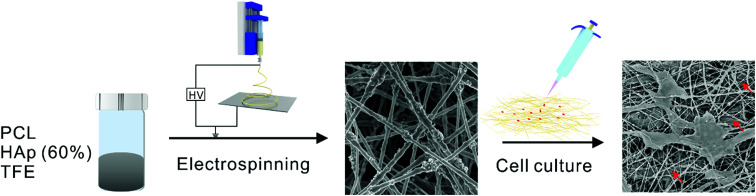
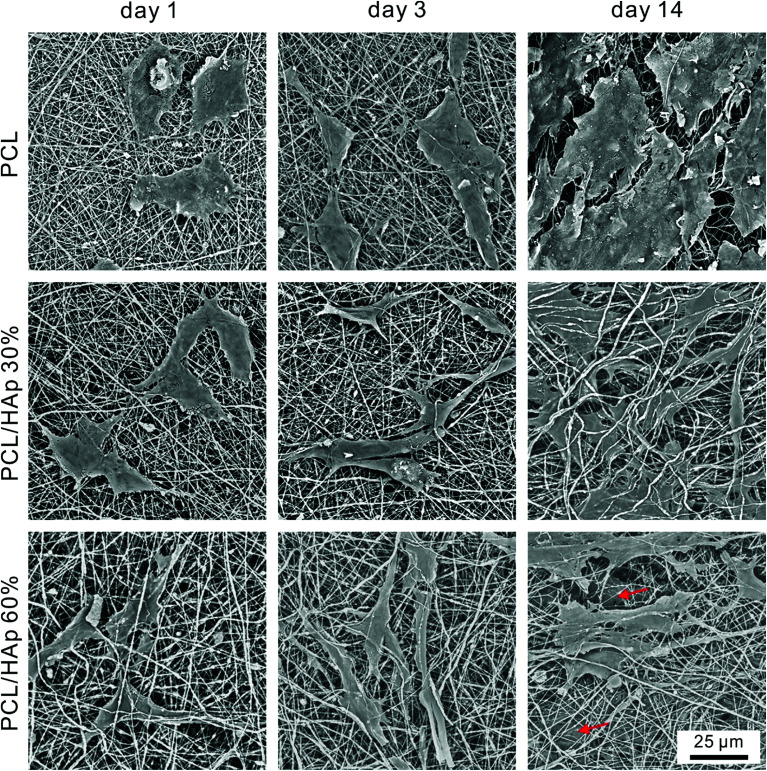
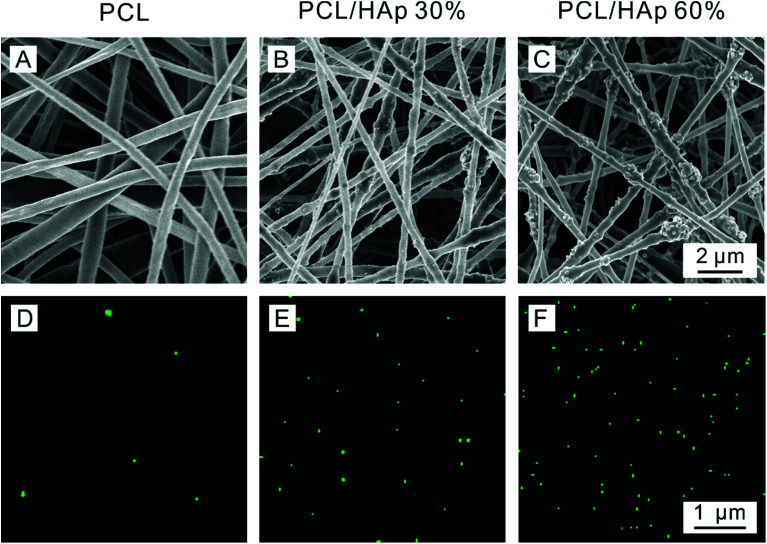
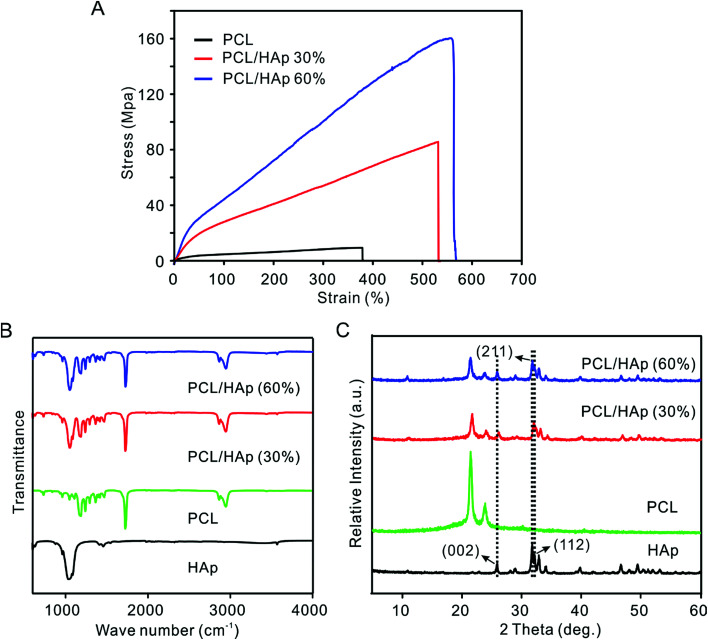
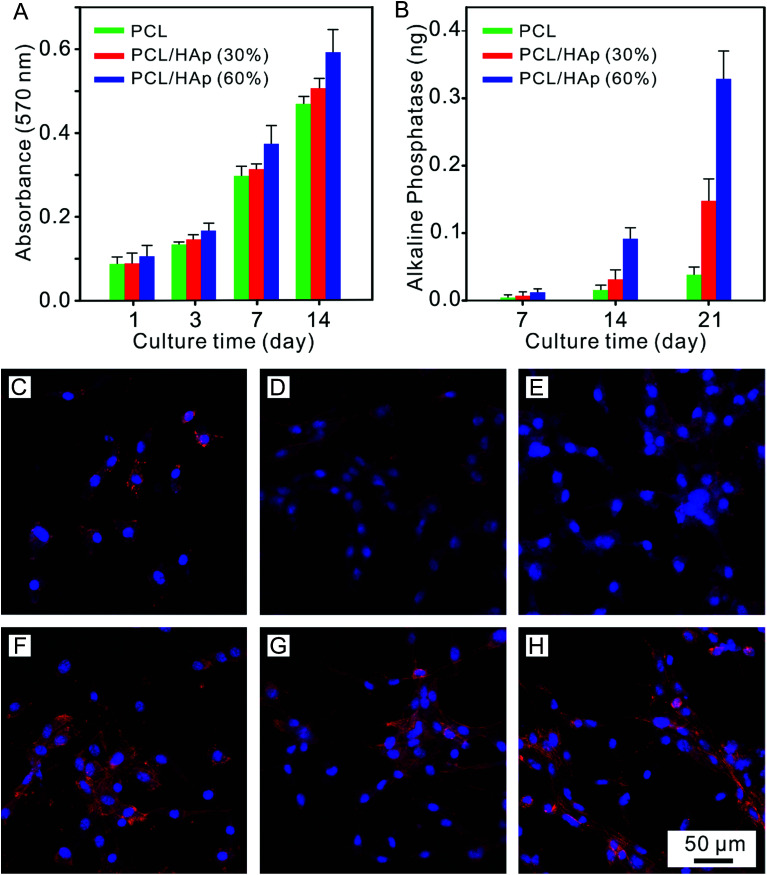
Electrospun polymer/inorganic biomimetic nanocomposite scaffolds have emerged for use in a new strategy for bone regeneration. In this study, a poly(ε-caprolactone) (PCL)/hydroxyapatite (HAp) nanocomposite mat with a HAp content as high as 60% was prepared one-step electrospinning using trifluoroethanol as the solvent, and it has superior dispersibility and spinnability. The structure and physicochemical properties of the scaffolds were studied using scanning electron microscopy and spectroscopic techniques. X-ray diffraction and Fourier transformed infrared spectroscopy confirmed the presence of HAp in the composite PCL fibers. The results of cell culturing suggested that the incorporation of HAp with PCL could regulate the cytoskeleton and the differentiation of cells. More interestingly, the high content of HAp was also found to be conducive to the infiltration of MC-3T3 cells into the mat. The results indicated the potential of PCL/HAp scaffolds as a promising substitute for bone regeneration.
静电纺丝聚合物/无机仿生纳米复合支架已出现并用于骨再生的新策略中。在本研究中,使用三氟乙醇作为溶剂通过一步静电纺丝制备了羟基磷灰石(HAp)含量高达60%的聚(ε-己内酯)(PCL)/羟基磷灰石纳米复合垫,其具有优异的分散性和可纺性。使用扫描电子显微镜和光谱技术研究了支架的结构和物理化学性质。X射线衍射和傅里叶变换红外光谱证实了复合PCL纤维中存在HAp。细胞培养结果表明,HAp与PCL的结合可以调节细胞骨架和细胞分化。更有趣的是,还发现高含量的HAp有利于MC-3T3细胞渗入垫中。结果表明PCL/HAp支架作为骨再生有前景的替代物的潜力。