Department of Urology, Guangdong Key Laboratory of Clinical Molecular Medicine and Diagnostics, Guangzhou First People's Hospital, School of Medicine, South China University of Technology, Guangzhou 510180, China.
Department of Urology, Guangdong Key Laboratory of Clinical Molecular Medicine and Diagnostics, Guangzhou First People's Hospital, Guangzhou Medical University, Guangzhou 510180, China.
Dis Markers. 2022 May 2;2022:8724035. doi: 10.1155/2022/8724035. eCollection 2022.
In our previous research, we developed a 32-gene risk index model that may be utilized as a robust prognostic method for predicting prostate cancer (PCa) recurrence after surgery. Among the 32 genes, the Fifth Ewing Variant () gene was one of the top downregulated genes in relapsed PCa. However, current understanding of the FEV gene and its involvement in PCa is limited.
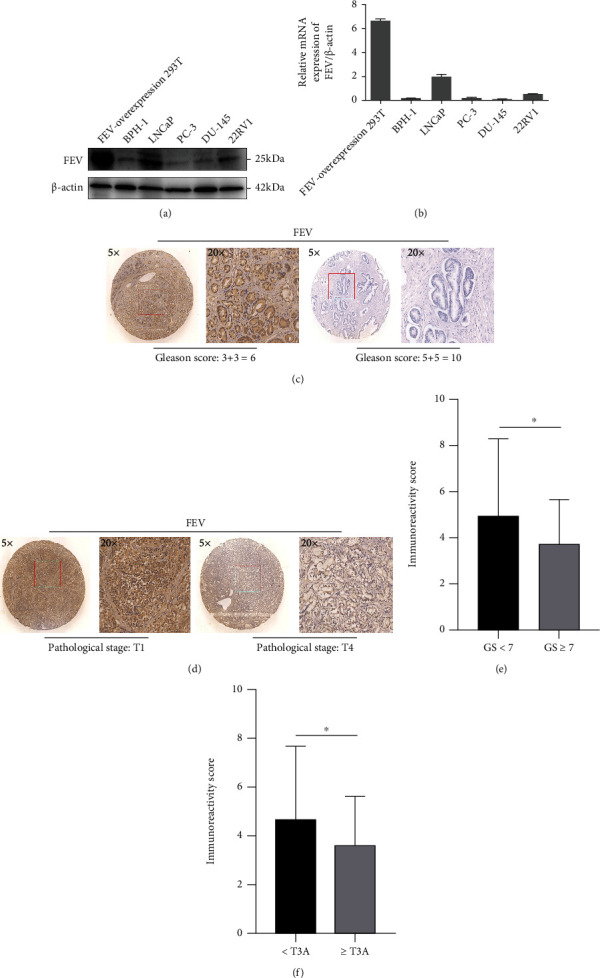
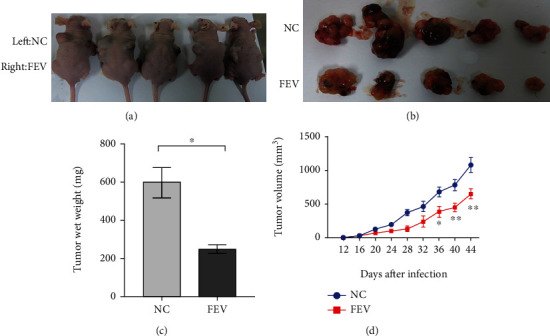
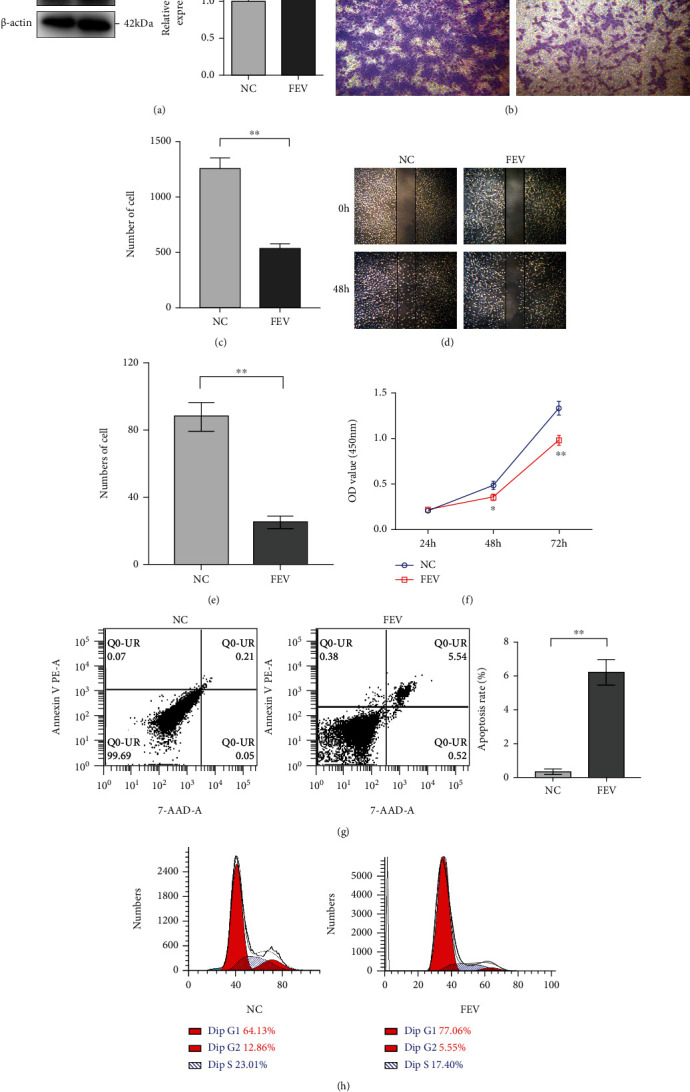
FEV mRNA expression was analyzed and correlated to clinical outcomes in PCa patients who underwent prostatectomy at the Massachusetts General Hospital. Specimens from tissue microarray (TMA) including 102 prostate cancer patients were analysis for the expression of FEV. Meanwhile, FEV expression profiles were also assessed in PCa cell lines and in BPH-1 prostate epithelial cells using western blotting and quantitative reverse transcription-PCR (qRT-PCR). Furthermore, we transfected LNCaP and PC-3 cells with either an empty vector or full-length FEV gene and performed in vitro cell functional assays. The part FEV plays in tumor xenograft growth was also assessed in vivo.
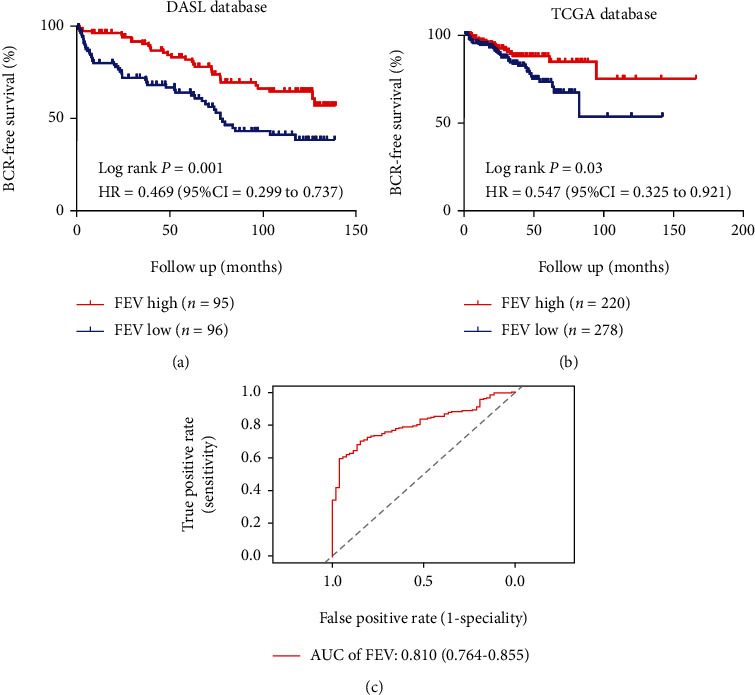
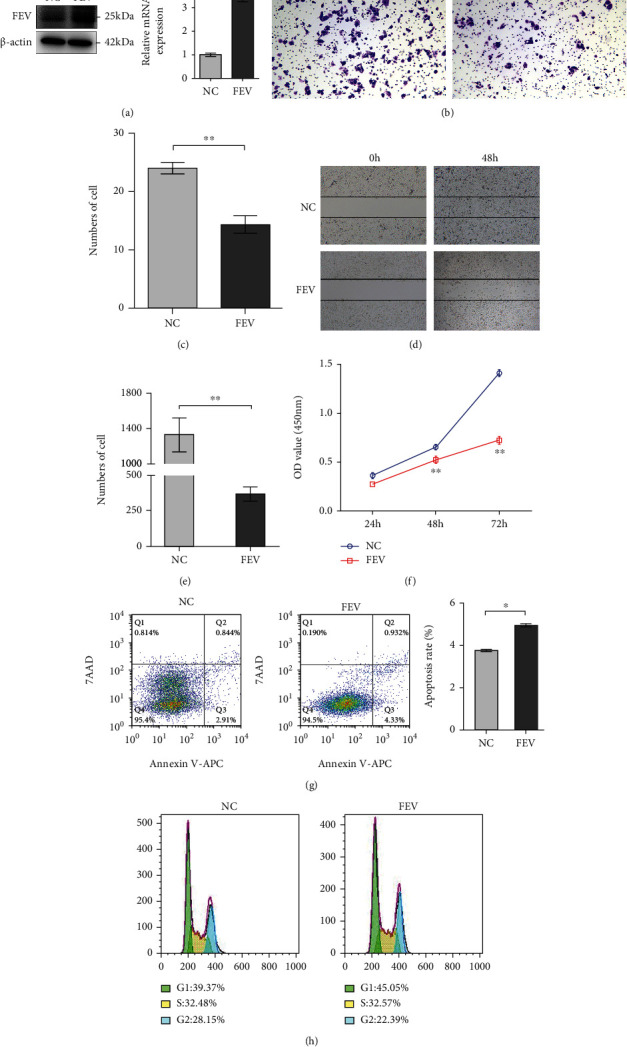
Of the 191 patients included in this study base on the DASL dataset, 77 (40.3%) and 24 (13.6%), respectively, developed prostate-specific antigen (PSA) relapse and metastasis postradical prostatectomy. Significant FEV downregulation was observed in PCa patients showing PSA failure and metastasis. The protein expression of FEV was significantly negatively correlated with the Gleason score and pathological stage in prostate cancer tissues. Similarly, FEV expression significantly decreased in all PCa cell lines relative to BPH-1 (all < 0.05). Functional assays revealed that FEV expression markedly inhibited PCa cell growth, migration, and invasion, which in turn significantly repressed the growth of tumor xenografts in vivo.
The results of this study suggest an association between downregulated FEV expression and PSA relapse in PCa patients. In addition, FEV may act as a tumor suppressor in PCa.
在我们之前的研究中,我们开发了一个 32 基因风险指数模型,该模型可能被用作预测前列腺癌(PCa)手术后复发的一种稳健的预后方法。在这 32 个基因中,第五个埃文斯变体()基因是复发 PCa 中下调最明显的基因之一。然而,目前对 FEV 基因的了解及其在 PCa 中的作用有限。
分析 FEV mRNA 在马萨诸塞州综合医院接受前列腺切除术的 PCa 患者中的表达,并与临床结果相关联。使用组织微阵列(TMA)分析包括 102 例前列腺癌患者的标本,以分析 FEV 的表达。同时,使用 Western blot 和定量逆转录-PCR(qRT-PCR)在 PCa 细胞系和 BPH-1 前列腺上皮细胞中评估 FEV 的表达谱。此外,我们将空载体或全长 FEV 基因转染至 LNCaP 和 PC-3 细胞中,并进行体外细胞功能测定。还在体内评估 FEV 在肿瘤异种移植生长中的作用。
在基于 DASL 数据集的 191 例患者中,分别有 77 例(40.3%)和 24 例(13.6%)在根治性前列腺切除术后发生前列腺特异性抗原(PSA)复发和转移。在 PSA 失败和转移的 PCa 患者中观察到 FEV 的明显下调。在前列腺癌组织中,FEV 的蛋白表达与 Gleason 评分和病理分期呈显著负相关。同样,与 BPH-1 相比,所有 PCa 细胞系中 FEV 的表达均显著降低(均 < 0.05)。功能测定显示,FEV 表达显著抑制 PCa 细胞的生长、迁移和侵袭,进而显著抑制体内肿瘤异种移植的生长。
本研究结果提示 FEV 表达下调与 PCa 患者 PSA 复发相关。此外,FEV 可能在 PCa 中作为肿瘤抑制因子发挥作用。