College of Grassland Science and Technology, Sichuan Agricultural University, Chengdu 611130, China.
Key Laboratory of Forage and Endemic Crop Biology, Ministry of Education, Inner Mongolia University, 49 Xilinguole Road, Hohhot 010020, China.
Int J Mol Sci. 2022 Apr 19;23(9):4472. doi: 10.3390/ijms23094472.
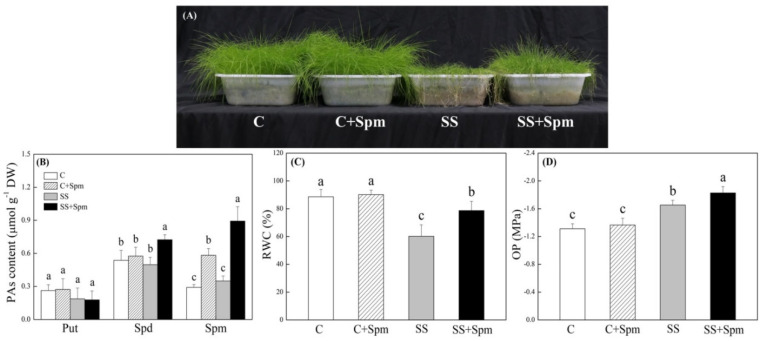
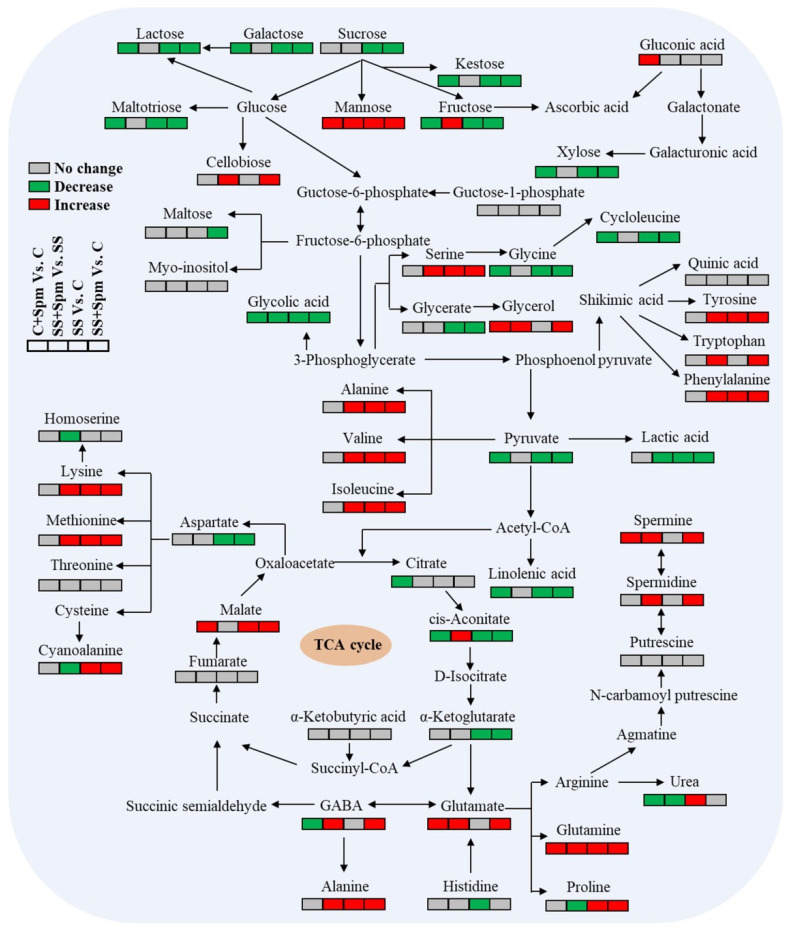
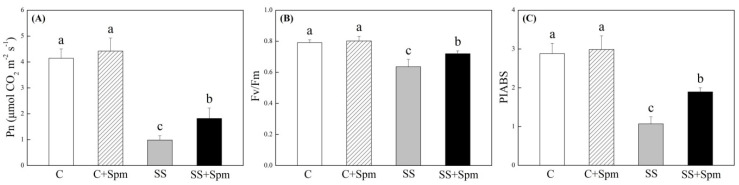
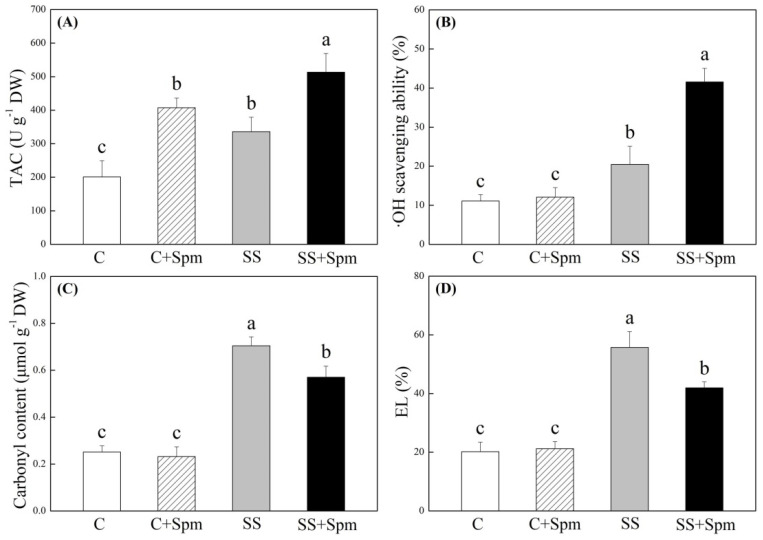
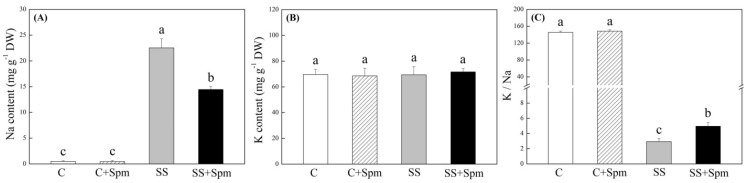
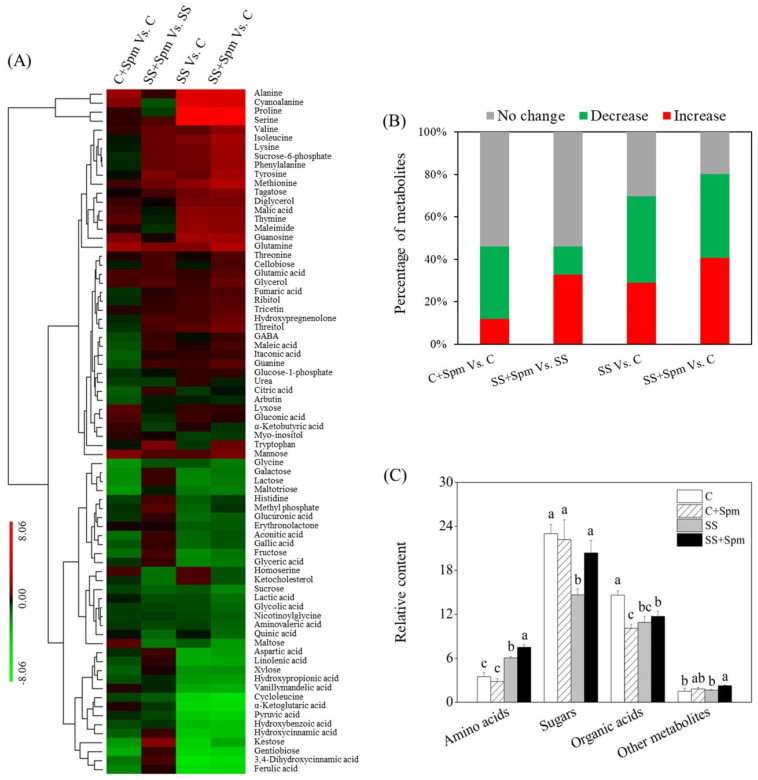
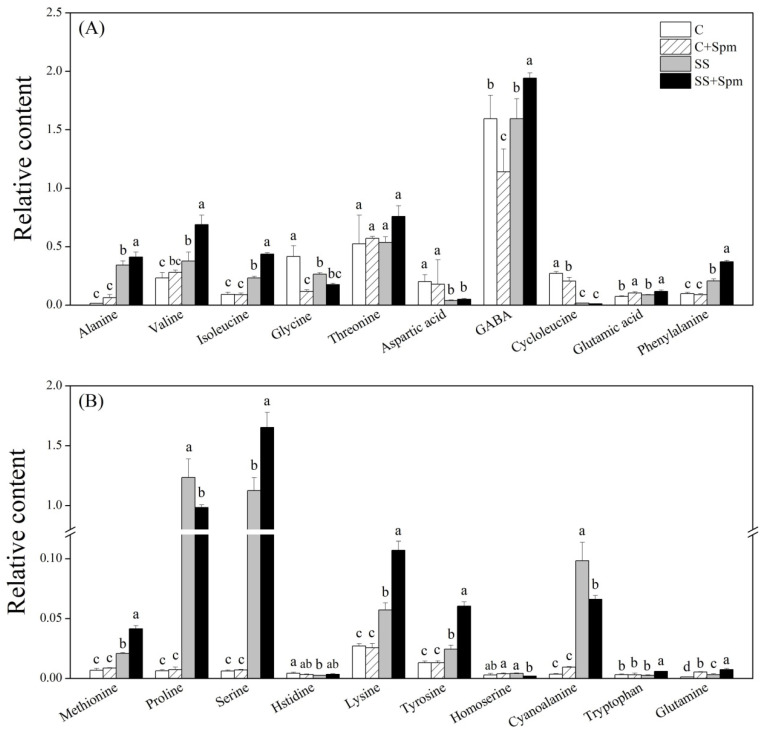
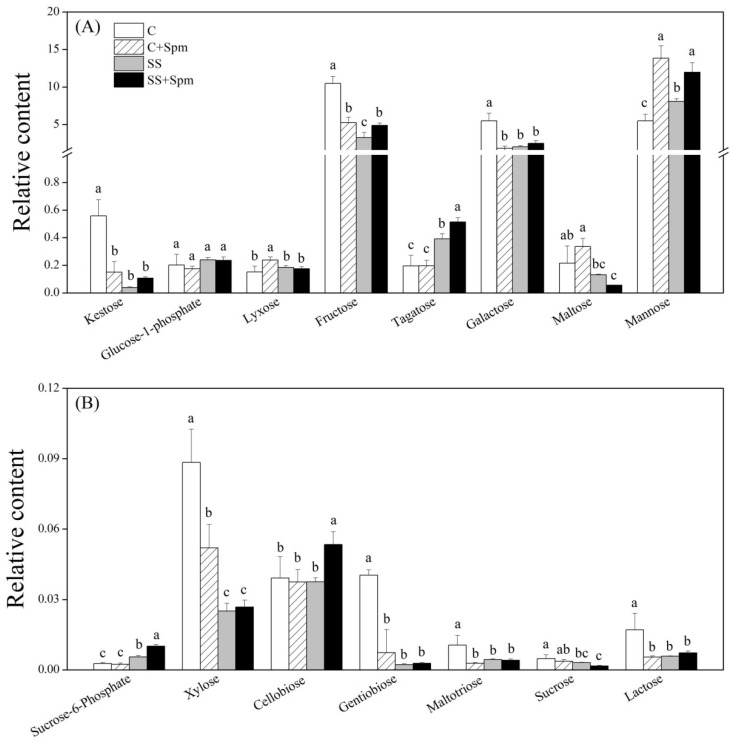
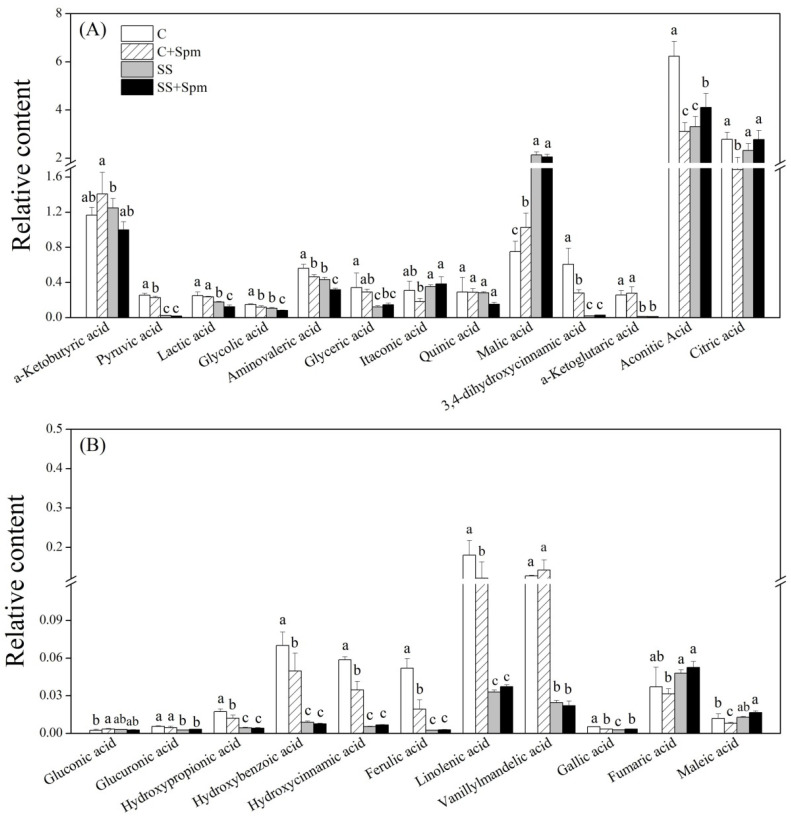
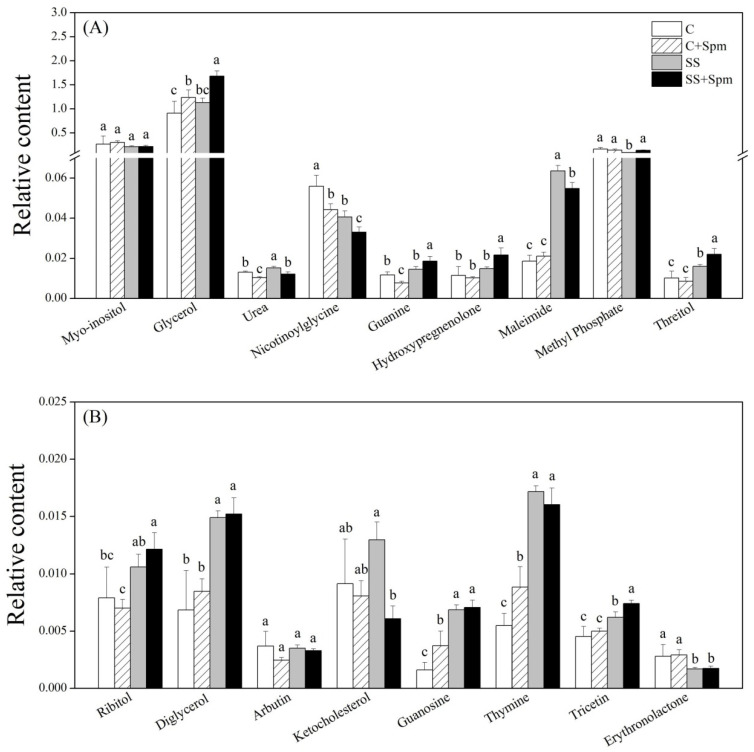
Soil salinization has become a serious challenge to modern agriculture worldwide. The purpose of the study was to reveal salt tolerance induced by spermine (Spm) associated with alterations in water and redox homeostasis, photosynthetic performance, and global metabolites reprogramming based on analyses of physiological responses and metabolomics in creeping bentgrass (). Plants pretreated with or without 0.5 mM Spm were subjected to salt stress induced by NaCl for 25 days in controlled growth chambers. Results showed that a prolonged period of salt stress caused a great deal of sodium (Na) accumulation, water loss, photoinhibition, and oxidative damage to plants. However, exogenous application of Spm significantly improved endogenous spermidine (Spd) and Spm contents, followed by significant enhancement of osmotic adjustment (OA), photosynthesis, and antioxidant capacity in leaves under salt stress. The Spm inhibited salt-induced Na accumulation but did not affect potassium (K) content. The analysis of metabolomics demonstrated that the Spm increased intermediate metabolites of γ-aminobutyric acid (GABA) shunt (GABA, glutamic acid, and alanine) and tricarboxylic acid (TCA) cycle (aconitic acid) under salt stress. In addition, the Spm also up-regulated the accumulation of multiple amino acids (glutamine, valine, isoleucine, methionine, serine, lysine, tyrosine, phenylalanine, and tryptophan), sugars (mannose, fructose, sucrose-6-phosphate, tagatose, and cellobiose), organic acid (gallic acid), and other metabolites (glycerol) in response to salt stress. These metabolites played important roles in OA, energy metabolism, signal transduction, and antioxidant defense under salt stress. More importantly, the Spm enhanced GABA shunt and the TCA cycle for energy supply in leaves. Current findings provide new evidence about the regulatory roles of the Spm in alleviating salt damage to plants associated with global metabolites reprogramming and metabolic homeostasis.
土壤盐渍化已成为全球现代农业面临的严峻挑战。本研究旨在揭示基于生理响应和代谢组学分析,多胺(Spm)诱导的盐胁迫耐受性与水和氧化还原稳态、光合作用性能和全局代谢物重编程的变化有关。在控制生长室内,用或不用 0.5mM Spm 预处理的匍匐翦股颖()植物在 25 天内受到 NaCl 诱导的盐胁迫。结果表明,长期的盐胁迫会导致植物大量积累钠离子(Na)、失水、光抑制和氧化损伤。然而,外源施用 Spm 可显著提高内源腐胺(Spd)和 Spm 含量,进而在盐胁迫下显著增强叶片的渗透调节(OA)、光合作用和抗氧化能力。Spm 抑制盐诱导的 Na 积累,但不影响钾(K)含量。代谢组学分析表明,Spm 在盐胁迫下增加了γ-氨基丁酸(GABA)分流(GABA、谷氨酸和丙氨酸)和三羧酸(TCA)循环(乌头酸)的中间代谢物。此外,Spm 还上调了多种氨基酸(谷氨酰胺、缬氨酸、异亮氨酸、蛋氨酸、丝氨酸、赖氨酸、酪氨酸、苯丙氨酸和色氨酸)、糖(甘露糖、果糖、蔗糖-6-磷酸、塔格糖和纤维二糖)、有机酸(没食子酸)和其他代谢物(甘油)的积累,以响应盐胁迫。这些代谢物在盐胁迫下的 OA、能量代谢、信号转导和抗氧化防御中发挥重要作用。更重要的是,Spm 增强了 GABA 分流和 TCA 循环,为叶片提供能量。本研究为多胺 Spm 缓解植物盐害提供了新的证据,与全局代谢物重编程和代谢稳态有关。