Institute of Plasma Technology, Korea Institute of Fusion Energy, 37 Dongjangsan-ro, Gunsan 54004, Korea.
Department of Plant Science and Technology, Chung-Ang University, Anseong 17546, Korea.
Int J Mol Sci. 2022 Apr 21;23(9):4609. doi: 10.3390/ijms23094609.
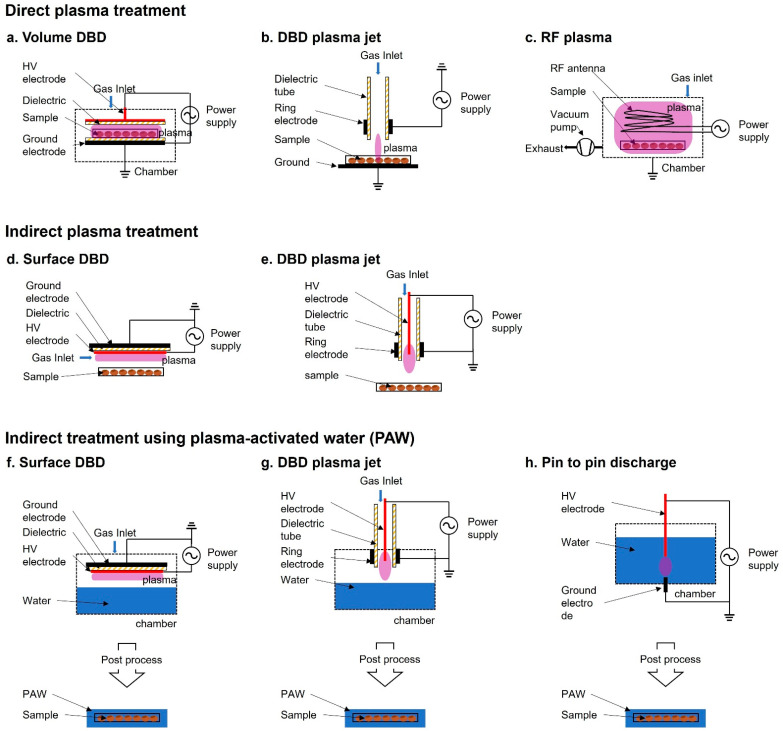
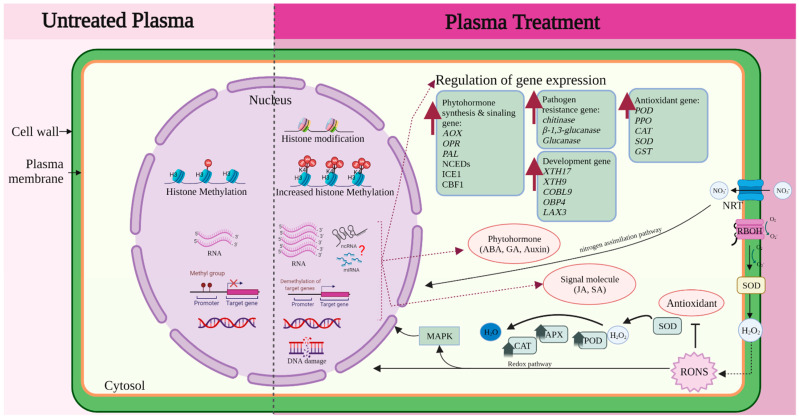
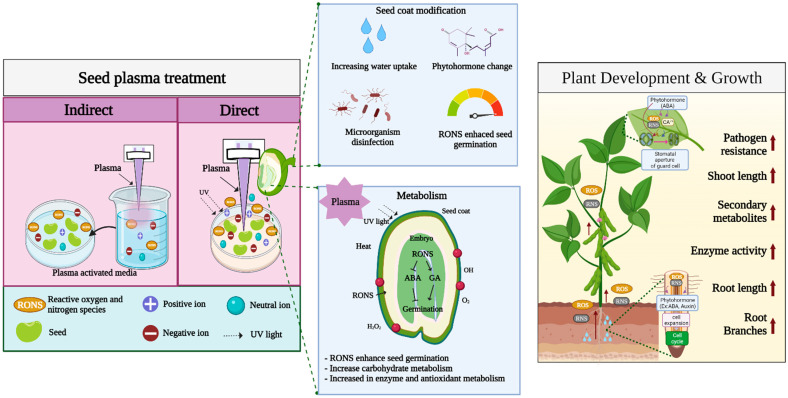
Low-temperature atmospheric pressure plasma has been used in various fields such as plasma medicine, agriculture, food safety and storage, and food manufacturing. In the field of plasma agriculture, plasma treatment improves seed germination, plant growth, and resistance to abiotic and biotic stresses, allows pesticide removal, and enhances biomass and yield. Currently, the complex molecular mechanisms of plasma treatment in plasma agriculture are fully unexplored, especially those related to seed germination and plant growth. Therefore, in this review, we have summarized the current progress in the application of the plasma treatment technique in plants, including plasma treatment methods, physical and chemical effects, and the molecular mechanism underlying the effects of low-temperature plasma treatment. Additionally, we have discussed the interactions between plasma and seed germination that occur through seed coat modification, reactive species, seed sterilization, heat, and UV radiation in correlation with molecular phenomena, including transcriptional and epigenetic regulation. This review aims to present the mechanisms underlying the effects of plasma treatment and to discuss the potential applications of plasma as a powerful tool, priming agent, elicitor or inducer, and disinfectant in the future.
低温常压等离子体已被应用于等离子体医学、农业、食品安全与储存、食品制造等多个领域。在等离子体农业领域,等离子体处理可提高种子发芽率、促进植物生长、增强植物对非生物和生物胁迫的抗性、去除农药残留、提高生物质和产量。目前,等离子体农业中等离子体处理的复杂分子机制仍未被充分探索,特别是与种子发芽和植物生长相关的机制。因此,在本综述中,我们总结了等离子体处理技术在植物中的应用现状,包括等离子体处理方法、物理化学效应以及低温等离子体处理效应的分子机制。此外,我们还讨论了等离子体与种子发芽之间的相互作用,这些作用通过种子包衣修饰、活性物质、种子消毒、热和 UV 辐射与分子现象相关联,包括转录和表观遗传调控。本综述旨在介绍等离子体处理效应的机制,并讨论等离子体作为一种强大的工具、引发剂、激发剂或诱导剂以及消毒剂在未来的潜在应用。