
营养状况、胃肠肽和内源性大麻素在儿童癌症预后和治疗中的作用。
The Role of Nutritional Status, Gastrointestinal Peptides, and Endocannabinoids in the Prognosis and Treatment of Children with Cancer.
机构信息
Department of Pediatric Oncology and Hematology, University Children's Hospital of Krakow, 30-663 Krakow, Poland.
Department of Pediatric Oncology and Hematology, Faculty of Medicine, Jagiellonian University Medical College, 30-663 Krakow, Poland.
出版信息
Int J Mol Sci. 2022 May 5;23(9):5159. doi: 10.3390/ijms23095159.
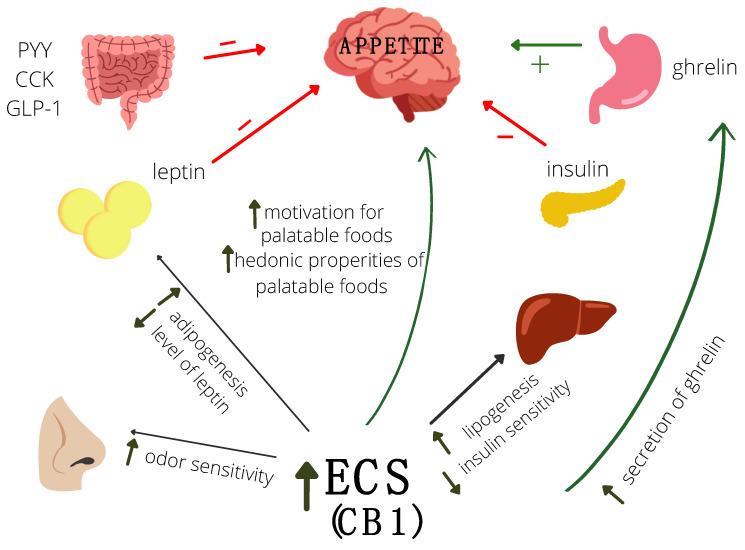
Neoplastic diseases in children are the second most frequent cause of death among the young. It is estimated that 400,000 children worldwide will be diagnosed with cancer each year. The nutritional status at diagnosis is a prognostic indicator and influences the treatment tolerance. Both malnutrition and obesity increase the risk of mortality and complications during treatment. It is necessary to constantly search for new factors that impair the nutritional status. The endocannabinoid system (ECS) is a signaling system whose best-known function is regulating energy balance and food intake, but it also plays a role in pain control, embryogenesis, neurogenesis, learning, and the regulation of lipid and glucose metabolism. Its action is multidirectional, and its role is being discovered in an increasing number of diseases. In adults, cannabinoids have been shown to have anti-cancer properties against breast and pancreatic cancer, melanoma, lymphoma, and brain tumors. Data on the importance of both the endocannabinoid system and synthetic cannabinoids are lacking in children with cancer. This review highlights the role of nutritional status in the oncological treatment process, and describes the role of ECS and gastrointestinal peptides in regulating appetite. We also point to the need for research to evaluate the role of the endocannabinoid system in children with cancer, together with a prospective assessment of nutritional status during oncological treatment.
儿童肿瘤疾病是儿童死亡的第二大常见原因。据估计,全球每年将有 40 万名儿童被诊断患有癌症。诊断时的营养状况是一个预后指标,会影响治疗的耐受性。营养不良和肥胖都会增加治疗期间的死亡风险和并发症风险。因此,有必要不断寻找新的会损害营养状况的因素。内源性大麻素系统(ECS)是一种信号转导系统,其最知名的功能是调节能量平衡和食物摄入,但它在疼痛控制、胚胎发生、神经发生、学习以及脂质和葡萄糖代谢的调节中也发挥作用。其作用是多向的,其作用在越来越多的疾病中被发现。在成年人中,大麻素已被证明对乳腺癌和胰腺癌、黑色素瘤、淋巴瘤和脑肿瘤具有抗癌特性。关于癌症儿童中内源性大麻素系统和合成大麻素的重要性的数据尚缺乏。这篇综述强调了营养状况在肿瘤治疗过程中的重要性,并描述了 ECS 和胃肠道肽在调节食欲中的作用。我们还指出需要研究来评估内源性大麻素系统在癌症儿童中的作用,以及对肿瘤治疗期间营养状况的前瞻性评估。
 Zotero 插件