Division of Cardiovascular Medicine, Center for Molecular Medicine, Department of Medicine, Karolinska Institute, Karolinska University Hospital, 17164 Stockholm, Sweden.
Department of Cardiovascular and Renal Research, Institute of Molecular Medicine, University of Southern Denmark, 5000 Odense-C, Denmark.
Int J Mol Sci. 2022 May 6;23(9):5203. doi: 10.3390/ijms23095203.
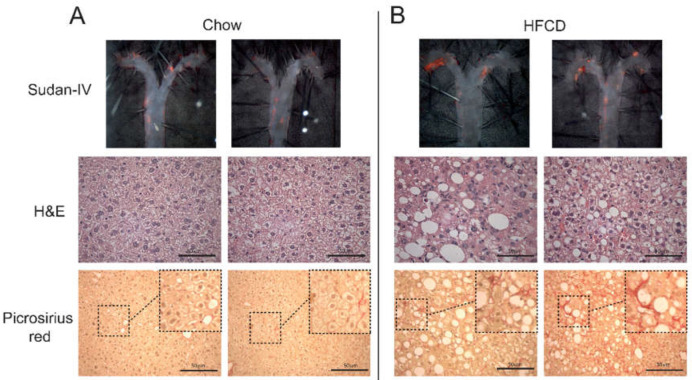
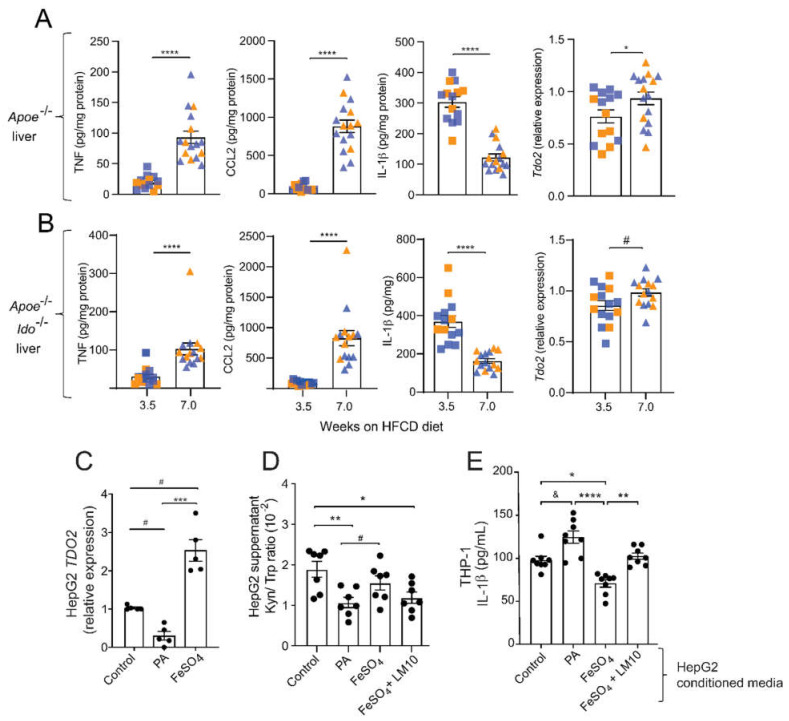
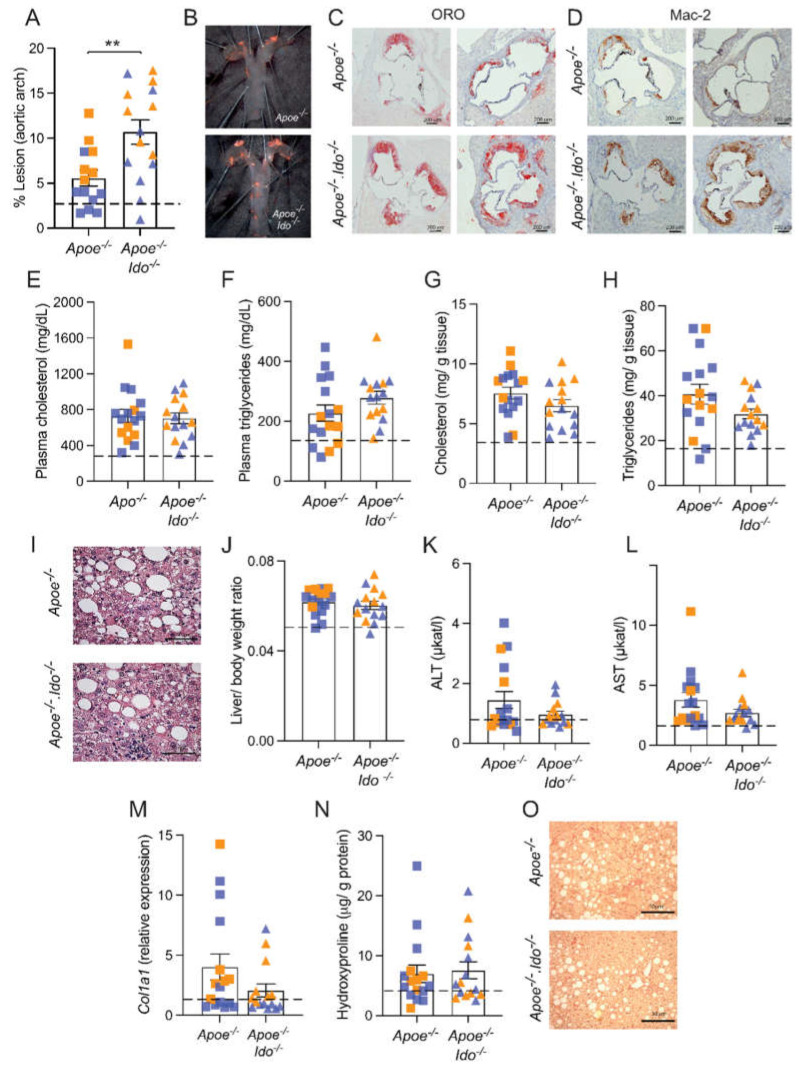
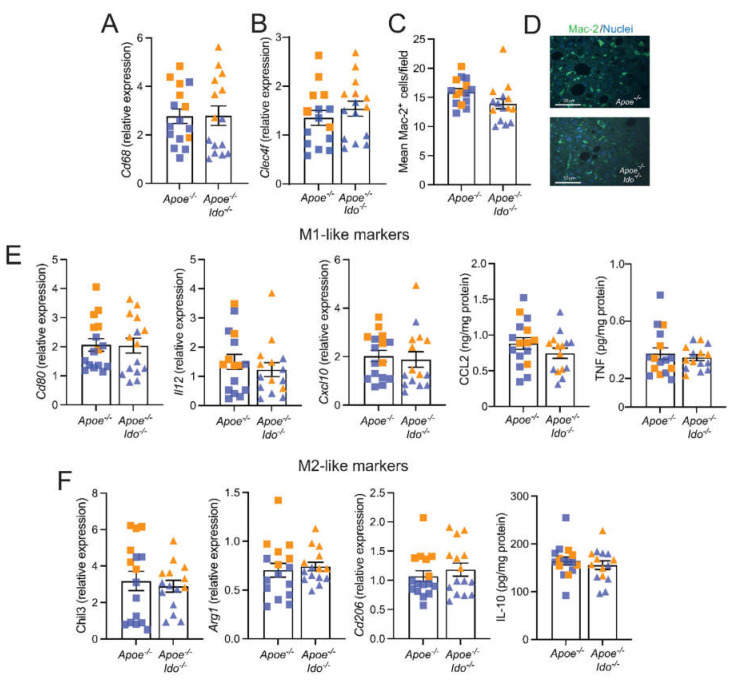
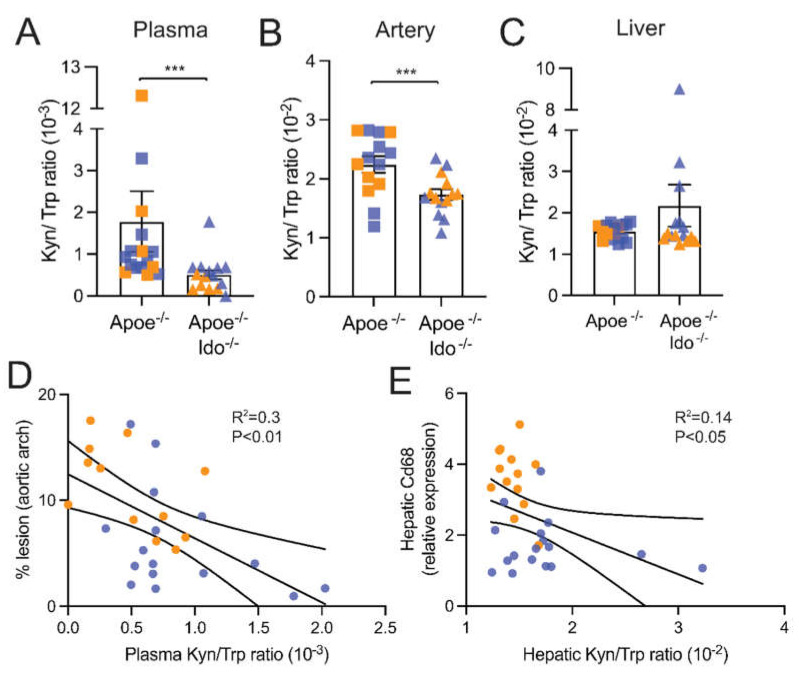
Nonalcoholic steatohepatitis (NASH) is a chronic liver disease that increases cardiovascular disease risk. Indoleamine 2,3-dioxygenase-1 (IDO1)-mediated tryptophan (Trp) metabolism has been proposed to play an immunomodulatory role in several diseases. The potential of IDO1 to be a link between NASH and cardiovascular disease has never been investigated. Using and mice that were fed a high-fat, high-cholesterol diet (HFCD) to simultaneously induce NASH and atherosclerosis, we found that deficiency significantly accelerated atherosclerosis after 7 weeks. Surprisingly, mice did not present a more aggressive NASH phenotype, including hepatic lipid deposition, release of liver enzymes, and histopathological parameters. As expected, a lower L-kynurenine/Trp (Kyn/Trp) ratio was found in the plasma and arteries of mice compared to controls. However, no difference in the hepatic Kyn/Trp ratio was found between the groups. Hepatic transcript analyses revealed that HFCD induced a temporal increase in tryptophan 2,3-dioxygenase ( mRNA, indicating an alternative manner to maintain Trp degradation during NASH development in both and mice. Using HepG2 hepatoma cell and THP1 macrophage cultures, we found that iron, TDO2, and Trp degradation may act as important mediators of cross-communication between hepatocytes and macrophages regulating liver inflammation. In conclusion, we show that deficiency aggravates atherosclerosis, but not liver disease, in a newly established NASH and atherosclerosis comorbidity model. Our data indicate that the overexpression of is an important mechanism that helps in balancing the kynurenine pathway and inflammation in the liver, but not in the artery wall, which likely determined disease outcome in these two target tissues.
非酒精性脂肪性肝炎(NASH)是一种增加心血管疾病风险的慢性肝脏疾病。吲哚胺 2,3-双加氧酶-1(IDO1)介导的色氨酸(Trp)代谢已被提出在几种疾病中发挥免疫调节作用。IDO1 是否可作为 NASH 和心血管疾病之间的联系尚未得到研究。我们使用 和 小鼠,这些小鼠同时喂食高脂肪、高胆固醇饮食(HFCD)以诱导 NASH 和动脉粥样硬化,发现 缺乏会在 7 周后显著加速动脉粥样硬化。令人惊讶的是, 小鼠并没有表现出更具侵袭性的 NASH 表型,包括肝脂质沉积、肝酶释放和组织病理学参数。正如预期的那样,与对照组相比, 小鼠的血浆和动脉中 L-犬尿氨酸/Trp(Kyn/Trp)比值较低。然而,两组之间的肝 Kyn/Trp 比值没有差异。肝转录分析表明,HFCD 诱导 诱导的时间依赖性增加 mRNA,表明在 和 小鼠的 NASH 发展过程中,存在维持 Trp 降解的替代方式。使用 HepG2 肝癌细胞和 THP1 巨噬细胞培养物,我们发现铁、TDO2 和 Trp 降解可能是调节肝脏炎症的肝细胞和巨噬细胞之间交叉通讯的重要介质。总之,我们表明,在新建立的 NASH 和动脉粥样硬化合并症模型中, 缺乏会加重动脉粥样硬化,但不会加重肝脏疾病。我们的数据表明, 的过表达是有助于平衡肝脏中犬尿氨酸途径和炎症的重要机制,但不是在动脉壁中,这可能决定了这两个靶组织中的疾病结局。