Department of Biology and Anatomy, National Defense Medical Center, Taipei 11490, Taiwan.
Department of Urology, Cheng Hsin General Hospital, Taipei 11490, Taiwan.
Int J Mol Sci. 2022 May 9;23(9):5259. doi: 10.3390/ijms23095259.
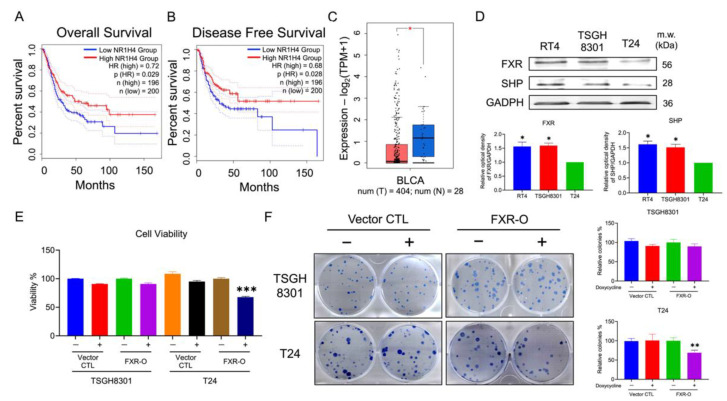
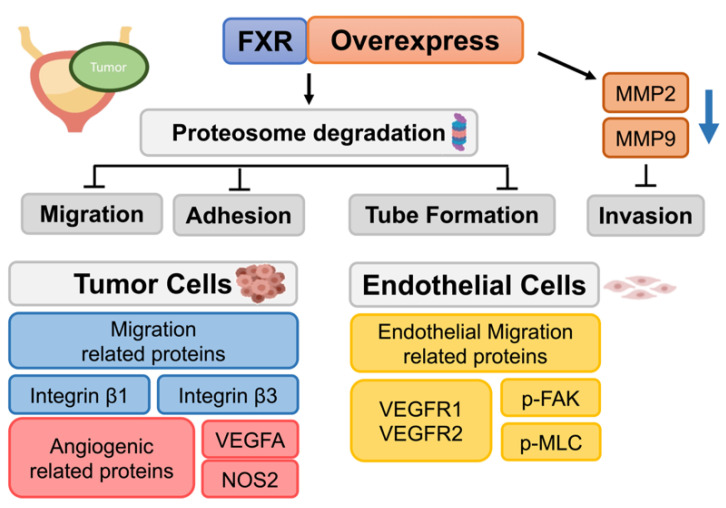
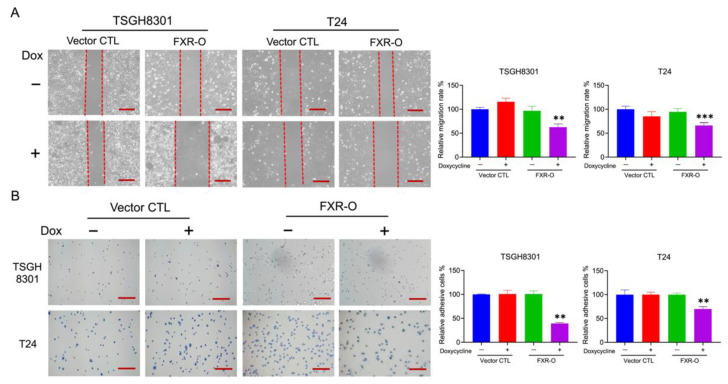
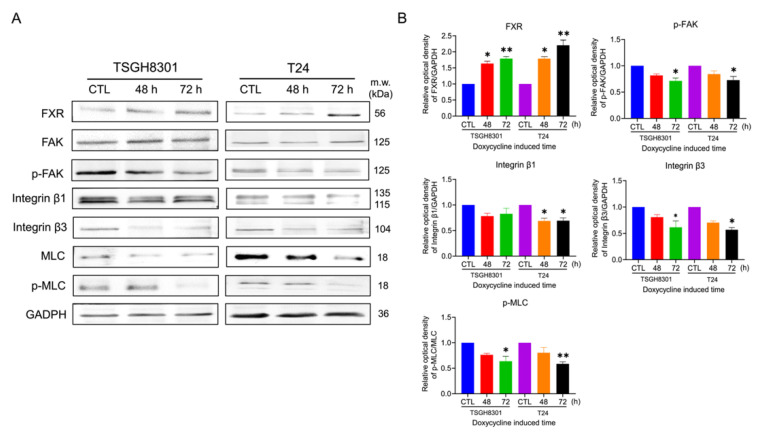
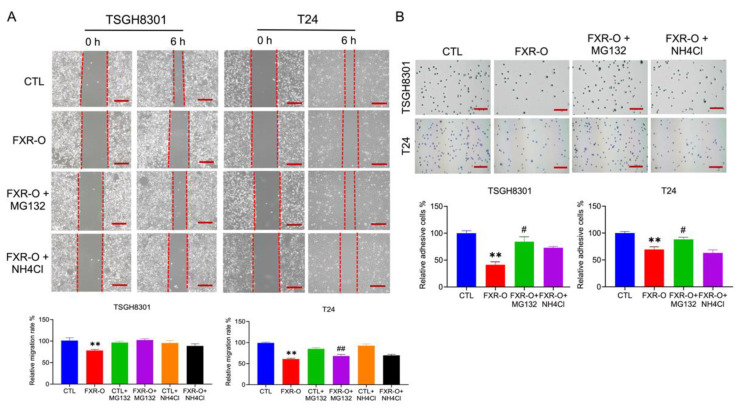
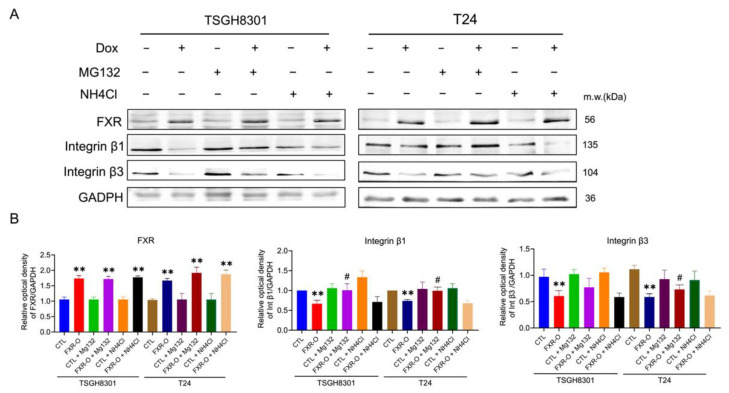
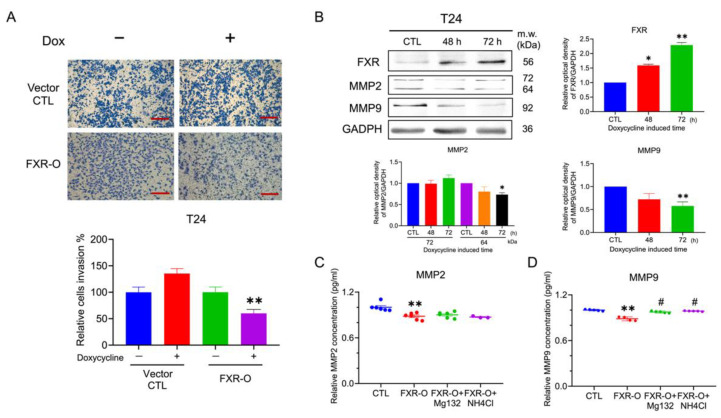
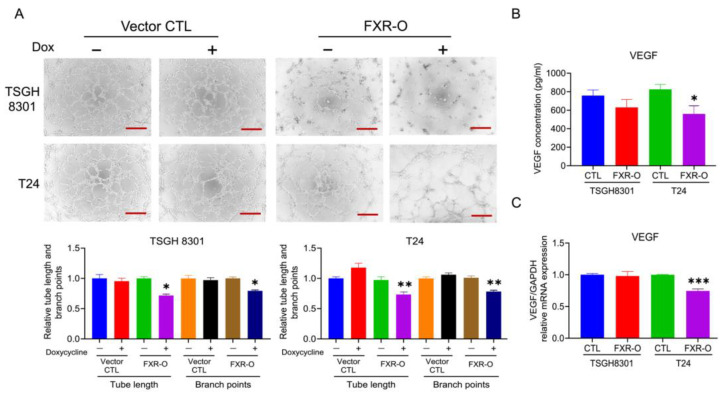
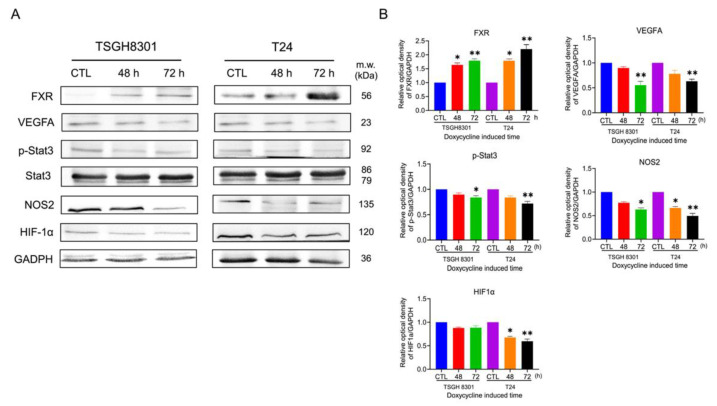
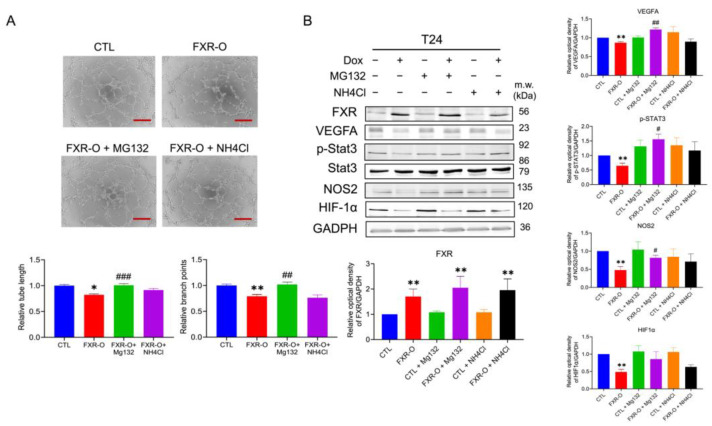
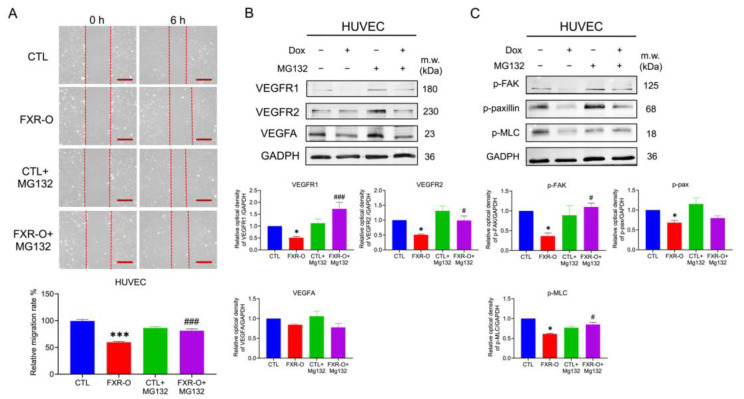
(1) Background: Bladder cancer is a malignant tumor mainly caused by exposure to environmental chemicals, with a high recurrence rate. NR1H4, also known as Farnesoid X Receptor (FXR), acts as a nuclear receptor that can be activated by binding with bile acids, and FXR is highly correlated with the progression of cancers. The aim of this study was to verify the role of FXR in bladder cancer cells. (2) Methods: A FXR overexpressed system was established to investigate the effect of cell viability, migration, adhesion, and angiogenesis in low-grade TSGH8301 and high-grade T24 cells. (3) Results: After FXR overexpression, the ability of migration, adhesion, invasion and angiogenesis of bladder cancer cells declined significantly. Focal adhesive complex, MMP2, MMP9, and angiogenic-related proteins were decreased, while FXR was overexpressed in bladder cancer cells. Moreover, FXR overexpression reduced vascular endothelial growth factor mRNA and protein expression and secretion in bladder cancer cells. After treatment with the proteosome inhibitor MG132, the migration, adhesion and angiogenesis caused by FXR overexpression were all reversed in bladder cancer cells. (4) Conclusions: These results may provide evidence on the role of FXR in bladder cancer, and thus may improve the therapeutic efficacy of urothelial carcinoma in the future.
(1)背景:膀胱癌主要是由暴露于环境化学物质引起的恶性肿瘤,具有很高的复发率。NR1H4 也被称为法尼醇 X 受体(FXR),作为一种核受体,可与胆汁酸结合而被激活,并且 FXR 与癌症的进展高度相关。本研究旨在验证 FXR 在膀胱癌细胞中的作用。
(2)方法:建立 FXR 过表达系统,以研究低级别 TSGH8301 和高级别 T24 细胞中细胞活力、迁移、黏附和血管生成的影响。
(3)结果:FXR 过表达后,膀胱癌细胞的迁移、黏附、侵袭和血管生成能力显著下降。焦点黏附复合物、MMP2、MMP9 和血管生成相关蛋白减少,而膀胱癌细胞中 FXR 过表达。此外,FXR 过表达降低了膀胱癌细胞中血管内皮生长因子 mRNA 和蛋白的表达和分泌。用蛋白酶体抑制剂 MG132 处理后,FXR 过表达引起的膀胱癌细胞迁移、黏附和血管生成均被逆转。
(4)结论:这些结果可能为 FXR 在膀胱癌中的作用提供证据,从而可能提高未来尿路上皮癌的治疗效果。