Experimental Therapeutics and Translational Oncology Program, Instituto de Biología Molecular y Celular del Cáncer, CSIC-USAL, Campus M. de Unamuno s/n, Salamanca, Spain.
Institute for Biomedical Research of Salamanca (IBSAL), Salamanca, Spain.
Sci Rep. 2020 Nov 5;10(1):19189. doi: 10.1038/s41598-020-76206-y.
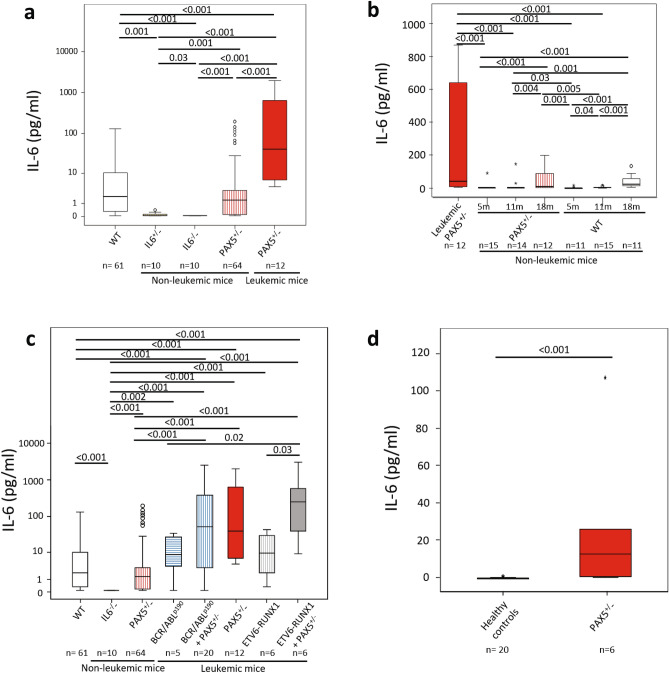
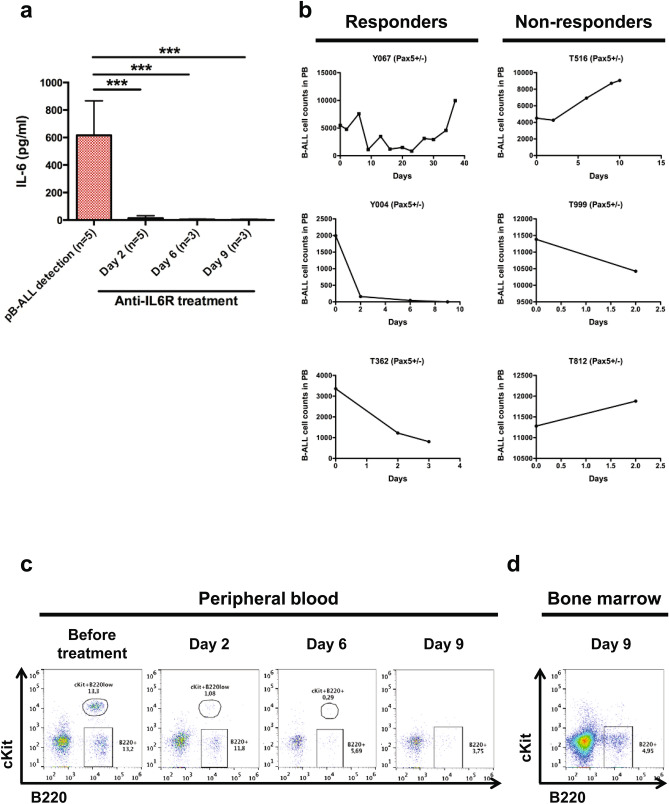
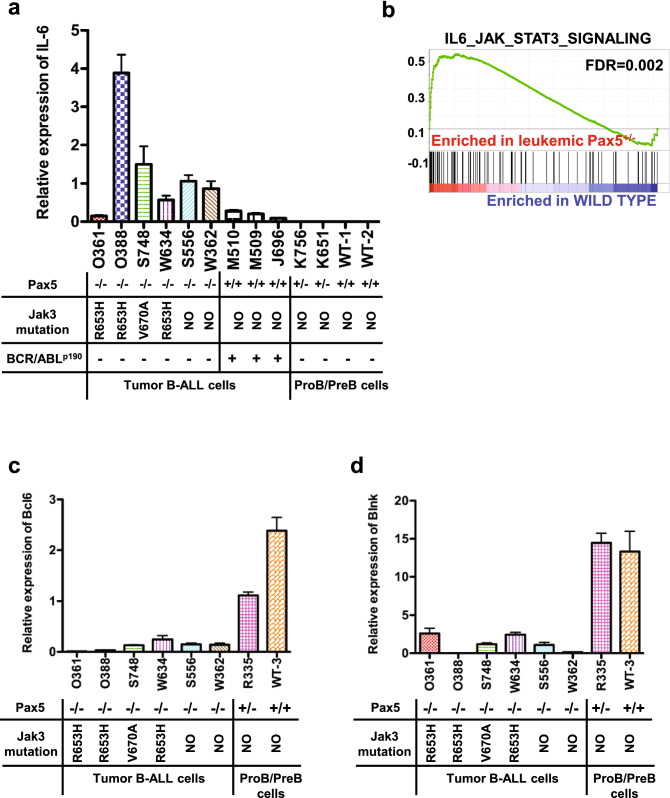
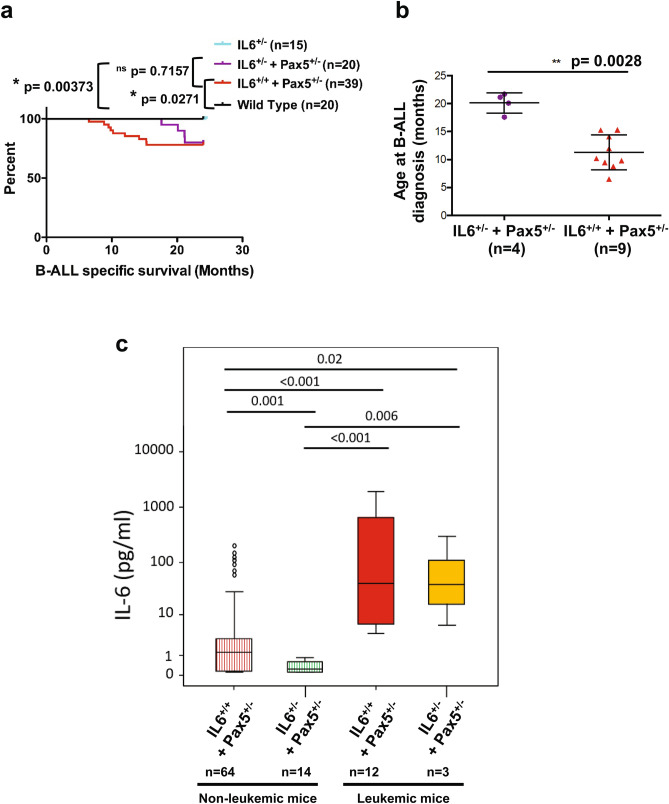
PAX5 is one of the most frequently mutated genes in B-cell acute lymphoblastic leukemia (B-ALL), and children with inherited preleukemic PAX5 mutations are at a higher risk of developing the disease. Abnormal profiles of inflammatory markers have been detected in neonatal blood spot samples of children who later developed B-ALL. However, how inflammatory signals contribute to B-ALL development is unclear. Here, we demonstrate that Pax5 heterozygosis, in the presence of infections, results in the enhanced production of the inflammatory cytokine interleukin-6 (IL-6), which appears to act in an autocrine fashion to promote leukemia growth. Furthermore, in vivo genetic downregulation of IL-6 in these Pax5 heterozygous mice retards B-cell leukemogenesis, and in vivo pharmacologic inhibition of IL-6 with a neutralizing antibody in Pax5 mutant mice with B-ALL clears leukemic cells. Additionally, this novel IL-6 signaling paradigm identified in mice was also substantiated in humans. Altogether, our studies establish aberrant IL6 expression caused by Pax5 loss as a hallmark of Pax5-dependent B-ALL and the IL6 as a therapeutic vulnerability for B-ALL characterized by PAX5 loss.
PAX5 是 B 细胞急性淋巴细胞白血病(B-ALL)中最常发生突变的基因之一,而携带遗传性前白血病 PAX5 突变的儿童患该病的风险更高。在后来发展为 B-ALL 的儿童的新生儿血斑样本中,已经检测到炎症标志物的异常谱。然而,炎症信号如何导致 B-ALL 的发展尚不清楚。在这里,我们证明在感染存在的情况下,PAX5 杂合性导致炎症细胞因子白细胞介素 6(IL-6)的产生增加,这似乎以自分泌方式起作用,促进白血病生长。此外,在这些 Pax5 杂合子小鼠中体内遗传下调 IL-6 会延迟 B 细胞白血病的发生,并且在具有 B-ALL 的 Pax5 突变小鼠中体内用中和抗体抑制 IL-6 可清除白血病细胞。此外,在小鼠中鉴定的这种新的 IL-6 信号通路在人类中也得到了证实。总之,我们的研究确立了由 Pax5 缺失引起的异常 IL6 表达作为 Pax5 依赖性 B-ALL 的标志,以及 IL6 作为以 PAX5 缺失为特征的 B-ALL 的治疗弱点。