Choe Se-Woon, Yoon Ha-Yeong, Jeong Jae-Yeop, Park Jinhyung, Jeong Jin-Woo
Department of Medical IT Convergence Engineering, Kumoh National Institute of Technology, Gumi 39177, Korea.
Department of IT Convergence Engineering, Kumoh National Institute of Technology, Gumi 39177, Korea.
Cancers (Basel). 2022 Apr 29;14(9):2224. doi: 10.3390/cancers14092224.
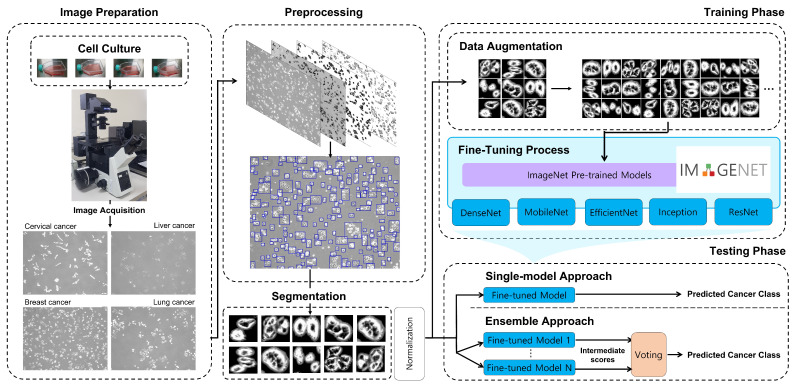
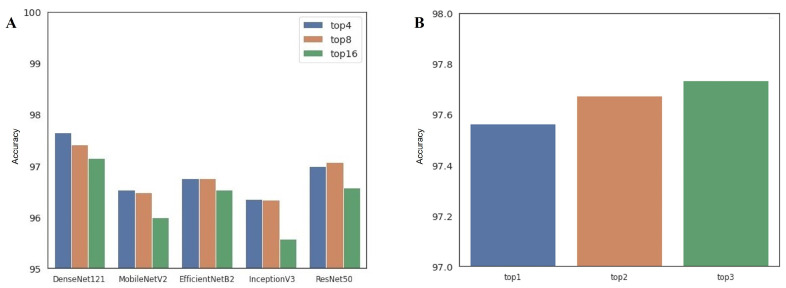
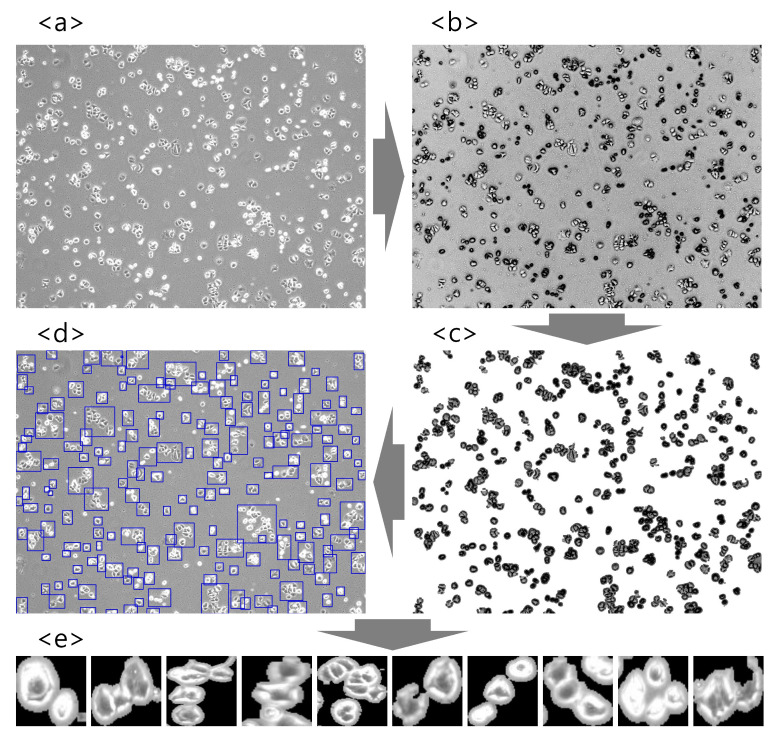
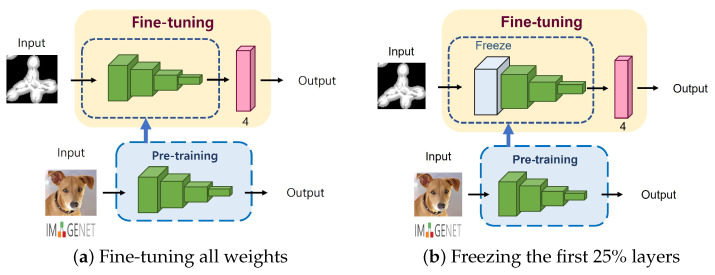
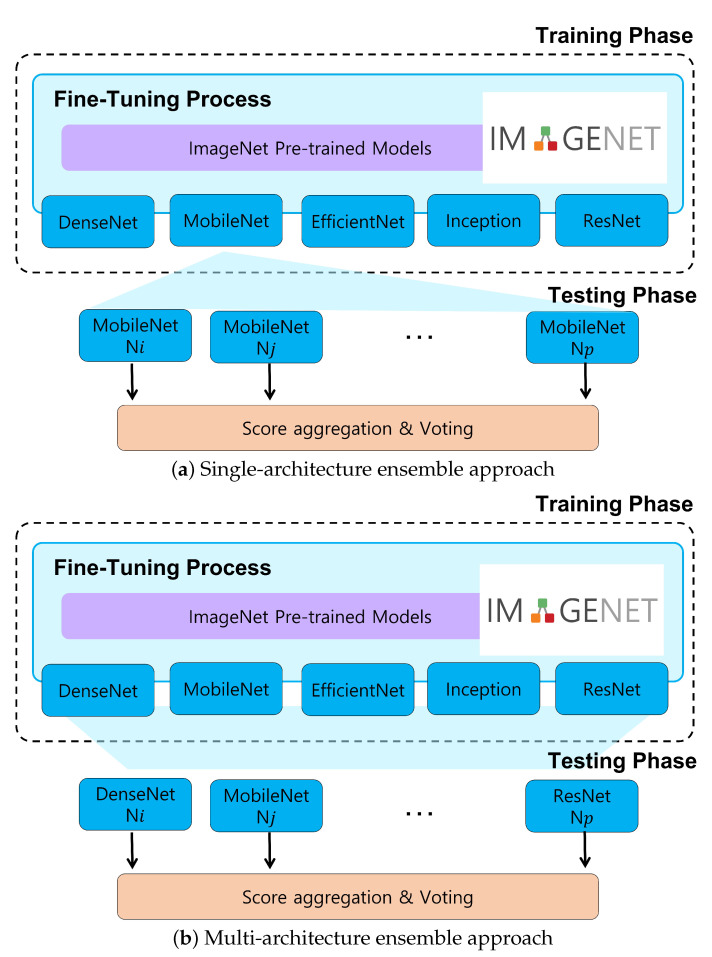
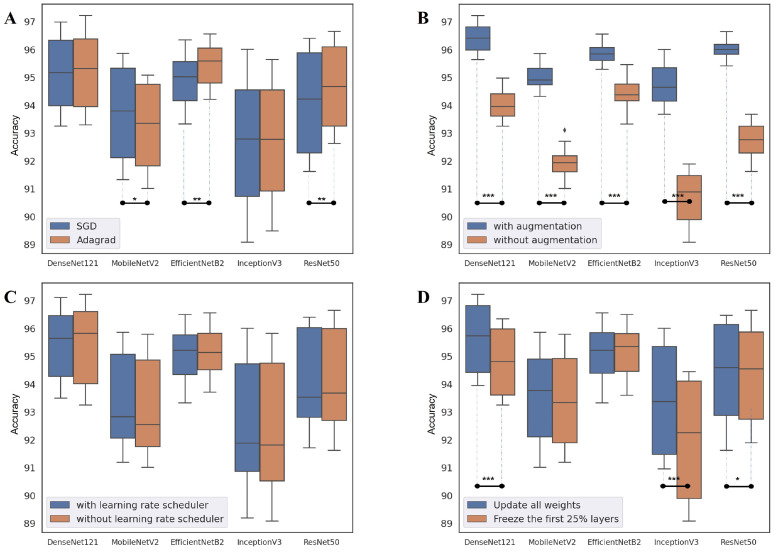
Microscopic image-based analysis has been intensively performed for pathological studies and diagnosis of diseases. However, mis-authentication of cell lines due to misjudgments by pathologists has been recognized as a serious problem. To address this problem, we propose a deep-learning-based approach for the automatic taxonomy of cancer cell types. A total of 889 bright-field microscopic images of four cancer cell lines were acquired using a benchtop microscope. Individual cells were further segmented and augmented to increase the image dataset. Afterward, deep transfer learning was adopted to accelerate the classification of cancer types. Experiments revealed that the deep-learning-based methods outperformed traditional machine-learning-based methods. Moreover, the Wilcoxon signed-rank test showed that deep ensemble approaches outperformed individual deep-learning-based models (p < 0.001) and were in effect to achieve the classification accuracy up to 97.735%. Additional investigation with the Wilcoxon signed-rank test was conducted to consider various network design choices, such as the type of optimizer, type of learning rate scheduler, degree of fine-tuning, and use of data augmentation. Finally, it was found that the using data augmentation and updating all the weights of a network during fine-tuning improve the overall performance of individual convolutional neural network models.
基于显微镜图像的分析已被广泛应用于疾病的病理学研究和诊断。然而,病理学家的误判导致细胞系的错误鉴定已被视为一个严重问题。为了解决这个问题,我们提出了一种基于深度学习的癌细胞类型自动分类方法。使用台式显微镜采集了四种癌细胞系的总共889张明场显微镜图像。对单个细胞进行进一步分割和增强以增加图像数据集。之后,采用深度迁移学习来加速癌症类型的分类。实验表明,基于深度学习的方法优于传统的基于机器学习的方法。此外,威尔科克森符号秩检验表明,深度集成方法优于基于深度学习的单个模型(p < 0.001),并有效地实现了高达97.735%的分类准确率。通过威尔科克森符号秩检验进行了额外的研究,以考虑各种网络设计选择,如优化器类型、学习率调度器类型、微调程度和数据增强的使用。最后发现,在微调期间使用数据增强和更新网络的所有权重可提高单个卷积神经网络模型的整体性能。