Banerjee Ananya, Cai Shurui, Xie Guozhen, Li Na, Bai Xuetao, Lavudi Kousalya, Wang Kevin, Zhang Xiaoli, Zhang Junran, Patnaik Srinivas, Backes Floor J, Bennett Chad, Wang Qi-En
Department of Radiation Oncology, College of Medicine, The Ohio State University, Columbus, OH 43210, USA.
Comprehensive Cancer Center, The Ohio State University, Columbus, OH 43210, USA.
Cancers (Basel). 2022 May 6;14(9):2311. doi: 10.3390/cancers14092311.
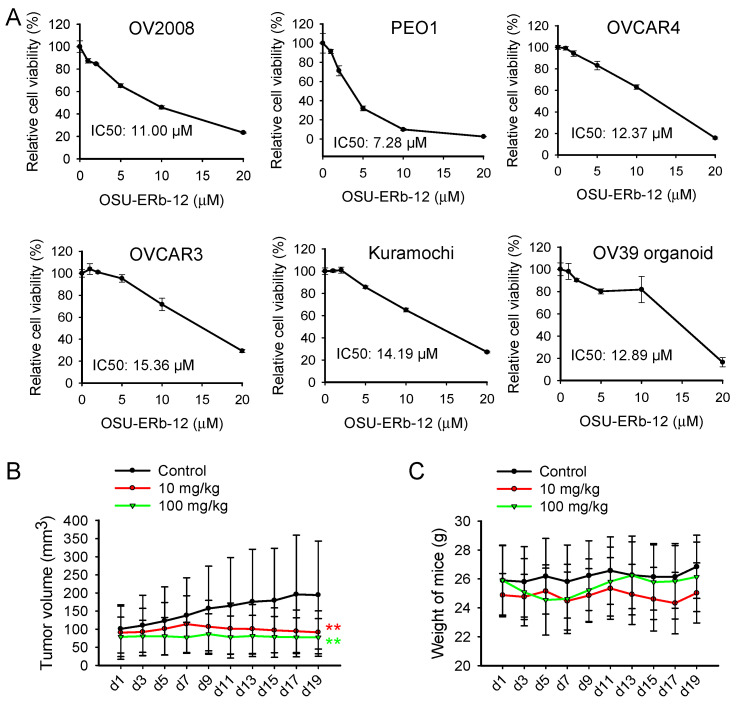
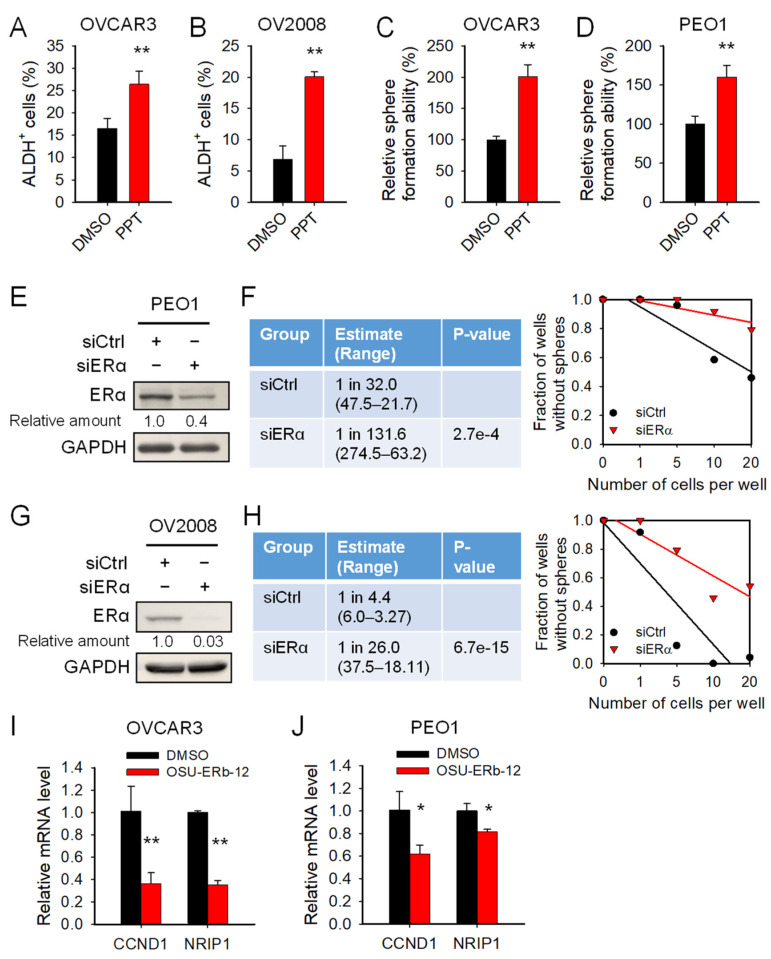
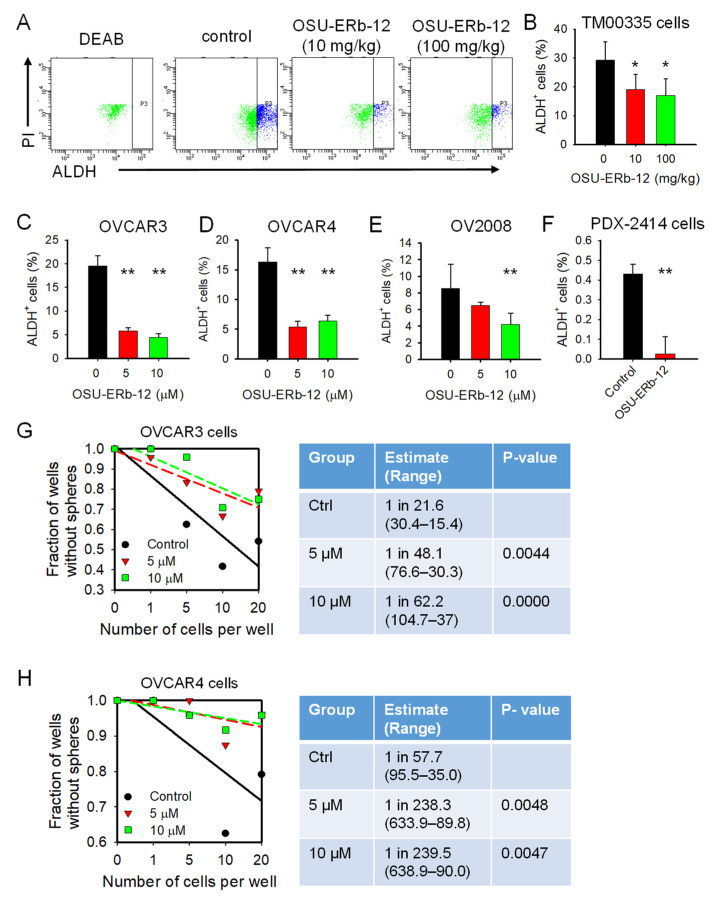
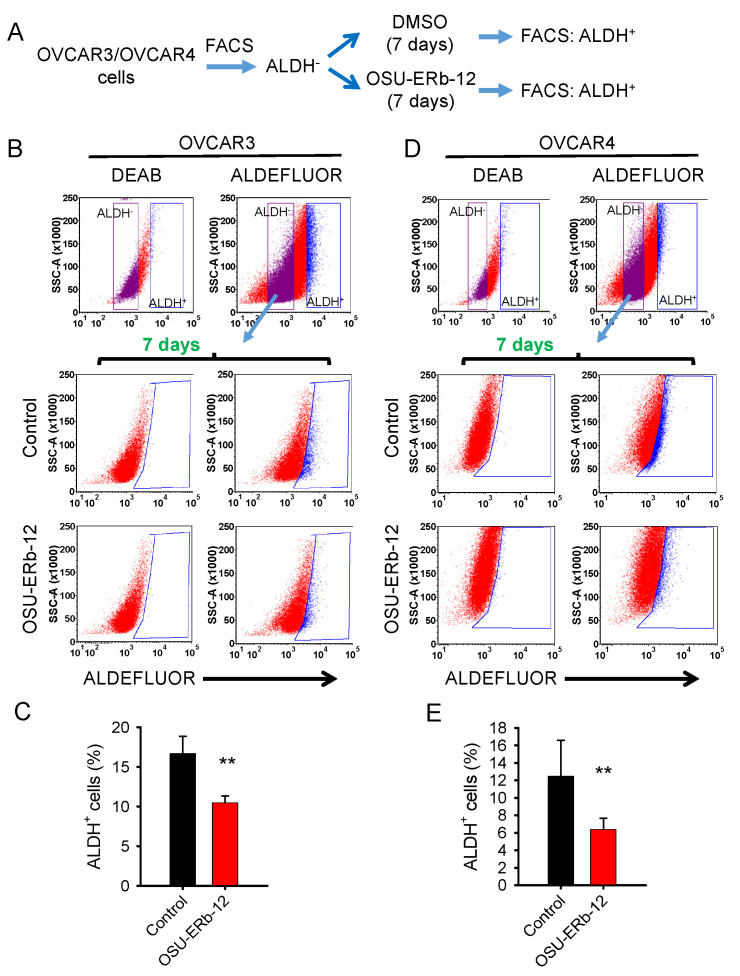
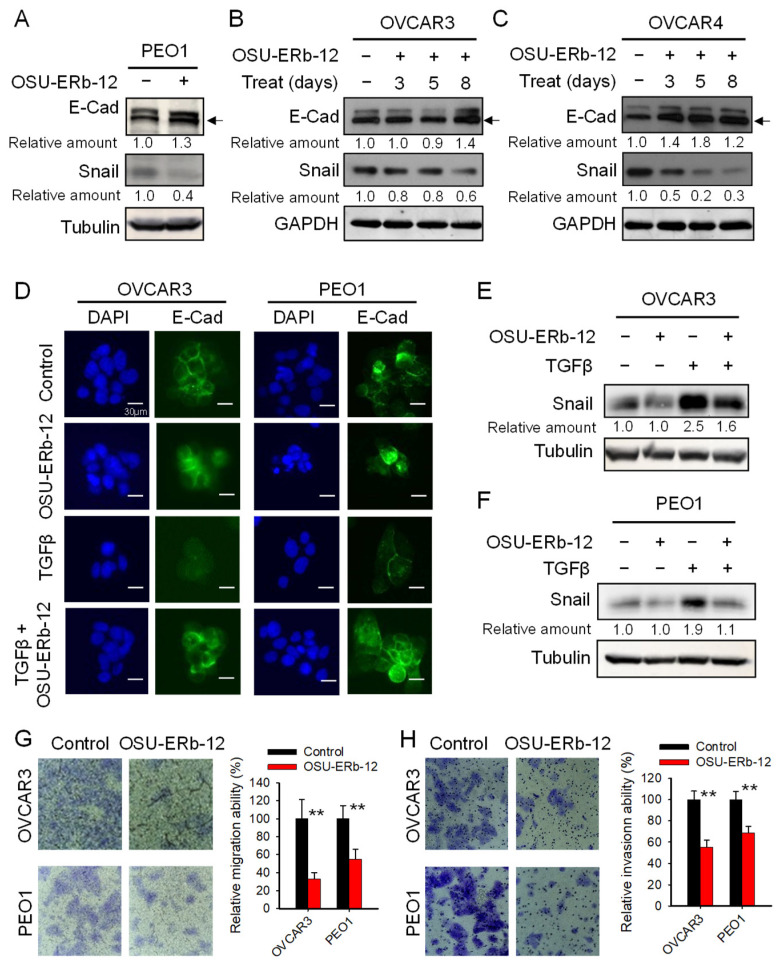
Epithelial ovarian cancer is the most lethal malignancy of the female reproductive tract. A healthy ovary expresses both Estrogen Receptor α (ERα) and β (ERβ). Given that ERα is generally considered to promote cell survival and proliferation, thereby, enhancing tumor growth, while ERβ shows a protective effect against the development and progression of tumors, the activation of ERβ by its agonists could be therapeutically beneficial for ovarian cancer. Here, we demonstrate that the activation of ERβ using a newly developed ERβ agonist, OSU-ERb-12, can impede ovarian cancer cell expansion and tumor growth in an ERα-independent manner. More interestingly, we found that OSU-ERb-12 also reduces the cancer stem cell (CSC) population in ovarian cancer by compromising non-CSC-to-CSC conversion. Mechanistically, we revealed that OSU-ERb-12 decreased the expression of Snail, a master regulator of the epithelial-to-mesenchymal transition (EMT), which is associated with de novo CSC generation. Given that ERα can mediate EMT and facilitate maintenance of the CSC subpopulation and that OSU-ERb-12 can block the transactivity of ERα, we conclude that OSU-ERb-12 reduces the CSC subpopulation by inhibiting EMT in an ERα-dependent manner. Taken together, our data indicate that the ERβ agonist OSU-ERb-12 could be used to hinder tumor progression and limit the CSC subpopulation with the potential to prevent tumor relapse and metastasis in patients with ovarian cancer.
上皮性卵巢癌是女性生殖道中最致命的恶性肿瘤。健康的卵巢同时表达雌激素受体α(ERα)和β(ERβ)。鉴于ERα通常被认为可促进细胞存活和增殖,从而促进肿瘤生长,而ERβ对肿瘤的发生和发展具有保护作用,其激动剂对ERβ的激活可能对卵巢癌具有治疗益处。在此,我们证明使用新开发的ERβ激动剂OSU-ERb-12激活ERβ可以以不依赖ERα的方式阻碍卵巢癌细胞的扩增和肿瘤生长。更有趣的是,我们发现OSU-ERb-12还通过损害非癌症干细胞(CSC)向CSC的转化来减少卵巢癌中的CSC群体。从机制上讲,我们发现OSU-ERb-12降低了Snail的表达,Snail是上皮-间质转化(EMT)的主要调节因子,与新生CSC的产生有关。鉴于ERα可以介导EMT并促进CSC亚群的维持,并且OSU-ERb-12可以阻断ERα的反式活性,我们得出结论,OSU-ERb-12通过以ERα依赖的方式抑制EMT来减少CSC亚群。综上所述,我们的数据表明,ERβ激动剂OSU-ERb-12可用于阻碍肿瘤进展并限制CSC亚群,有可能预防卵巢癌患者的肿瘤复发和转移。