Baselga Marta, Güemes Antonio, Alba Juan J, Schuhmacher Alberto J
Institute for Health Research Aragon (IIS Aragón), 50009 Zaragoza, Spain.
Department of Surgery, University of Zaragoza, 50009 Zaragoza, Spain.
J Clin Med. 2022 May 6;11(9):2607. doi: 10.3390/jcm11092607.
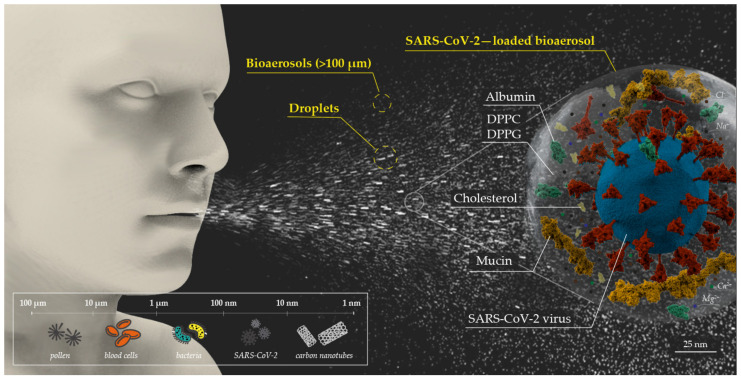
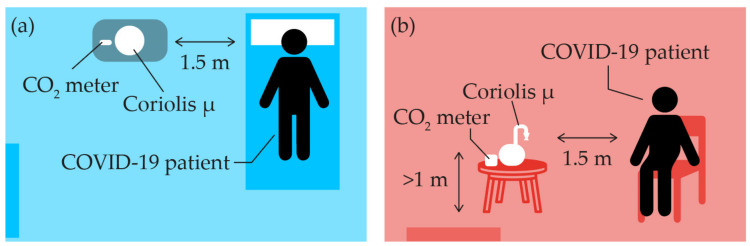
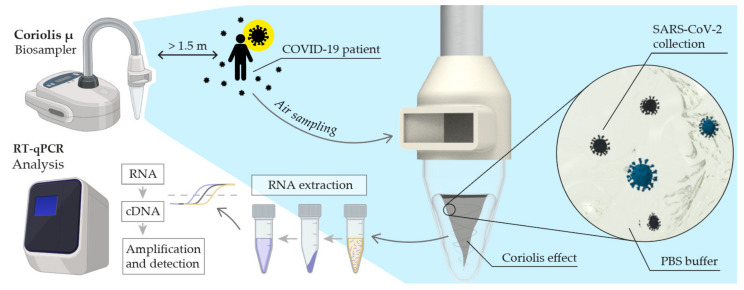
The spread dynamics of the SARS-CoV-2 virus have not yet been fully understood after two years of the pandemic. The virus's global spread represented a unique scenario for advancing infectious disease research. Consequently, mechanistic epidemiological theories were quickly dismissed, and more attention was paid to other approaches that considered heterogeneity in the spread. One of the most critical advances in aerial pathogens transmission was the global acceptance of the airborne model, where the airway is presented as the epicenter of the spread of the disease. Although the aerodynamics and persistence of the SARS-CoV-2 virus in the air have been extensively studied, the actual probability of contagion is still unknown. In this work, the individual heterogeneity in the transmission of 22 patients infected with COVID-19 was analyzed by close contact (cough samples) and air (environmental samples). Viral RNA was detected in 2/19 cough samples from patient subgroups, with a mean Ct (Cycle Threshold in Quantitative Polymerase Chain Reaction analysis) of 25.7 ± 7.0. Nevertheless, viral RNA was only detected in air samples from 1/8 patients, with an average Ct of 25.0 ± 4.0. Viral load in cough samples ranged from 7.3 × 10 to 8.7 × 10 copies/mL among patients, while concentrations between 1.1-4.8 copies/m were found in air, consistent with other reports in the literature. In patients undergoing follow-up, no viral load was found (neither in coughs nor in the air) after the third day of symptoms, which could help define quarantine periods in infected individuals. In addition, it was found that the patient's Ct should not be considered an indicator of infectiousness, since it could not be correlated with the viral load disseminated. The results of this work are in line with proposed hypotheses of superspreaders, which can attribute part of the heterogeneity of the spread to the oversized emission of a small percentage of infected people.
在新冠疫情爆发两年后,严重急性呼吸综合征冠状病毒2(SARS-CoV-2)病毒的传播动态仍未被完全了解。该病毒的全球传播为推进传染病研究呈现了一种独特的情形。因此,机械流行病学理论很快被摒弃,更多的注意力被投向了其他考虑传播异质性的方法。空气传播病原体传播方面最关键的进展之一是空气传播模型被全球接受,在该模型中,呼吸道被视为疾病传播的中心。尽管对SARS-CoV-2病毒在空气中的空气动力学和持久性进行了广泛研究,但实际的传染概率仍然未知。在这项研究中,通过密切接触(咳嗽样本)和空气(环境样本)分析了22例新冠病毒感染患者传播中的个体异质性。在患者亚组的19份咳嗽样本中有2份检测到病毒RNA,定量聚合酶链反应分析中的平均循环阈值(Ct)为25.7±7.0。然而,仅在8例患者的空气样本中检测到病毒RNA,平均Ct为25.0±4.0。患者咳嗽样本中的病毒载量在7.3×10至8.7×10拷贝/毫升之间,而空气中的浓度在1.1 - 4.8拷贝/立方米之间,这与文献中的其他报道一致。在接受随访的患者中,症状出现第三天后未发现病毒载量(咳嗽样本和空气样本中均未发现),这有助于确定感染个体的隔离期。此外,研究发现患者的Ct不应被视为传染性指标,因为它与传播的病毒载量无关。这项研究的结果与超级传播者的假设相符,该假设可将传播异质性的部分原因归结为一小部分感染者的超大排放量。