Khadem Elham, Kharaziha Mahshid, Bakhsheshi-Rad Hamid Reza, Das Oisik, Berto Filippo
Department of Materials Engineering, Isfahan University of Technology, Isfahan 84156-83111, Iran.
Advanced Materials Research Center, Department of Materials Engineering, Najafabad Branch, Islamic Azad University, Najafabad, Iran.
Polymers (Basel). 2022 Apr 22;14(9):1709. doi: 10.3390/polym14091709.
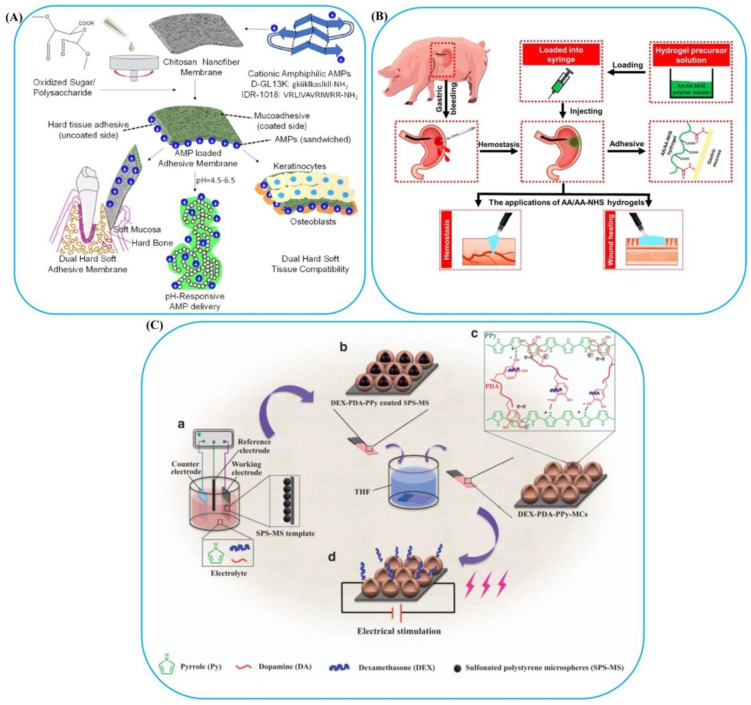
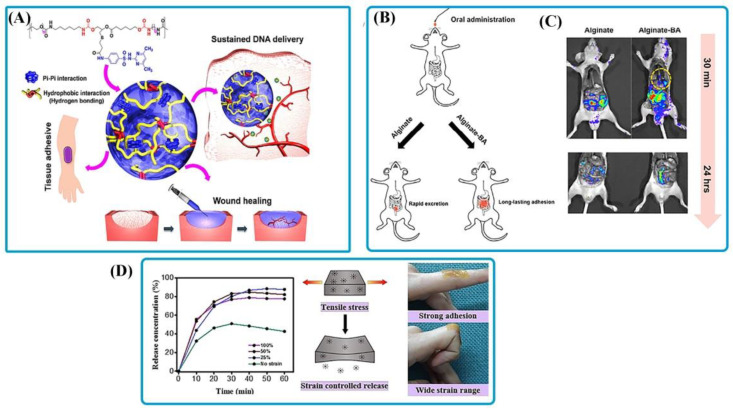
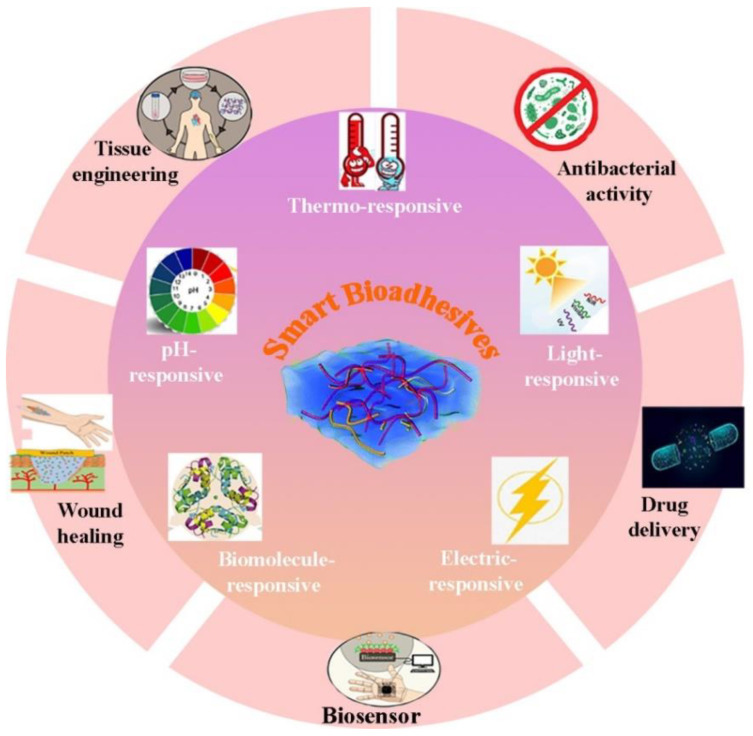
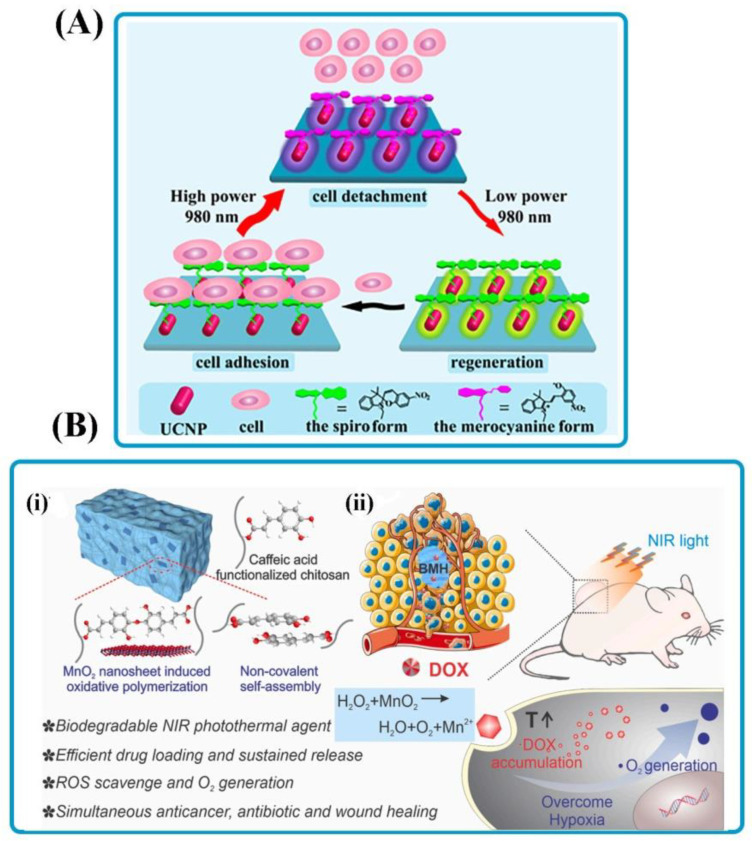
With the advent of "intelligent" materials, the design of smart bioadhesives responding to chemical, physical, or biological stimuli has been widely developed in biomedical applications to minimize the risk of wounds reopening, chronic pain, and inflammation. Intelligent bioadhesives are free-flowing liquid solutions passing through a phase shift in the physiological environment due to stimuli such as light, temperature, pH, and electric field. They possess great merits, such as ease to access and the ability to sustained release as well as the spatial transfer of a biomolecule with reduced side effects. Tissue engineering, wound healing, drug delivery, regenerative biomedicine, cancer therapy, and other fields have benefited from smart bioadhesives. Recently, many disciplinary attempts have been performed to promote the functionality of smart bioadhesives and discover innovative compositions. However, according to our knowledge, the development of multifunctional bioadhesives for various biomedical applications has not been adequately explored. This review aims to summarize the most recent cutting-edge strategies (years 2015-2021) developed for stimuli-sensitive bioadhesives responding to external stimuli. We first focus on five primary categories of stimuli-responsive bioadhesive systems (pH, thermal, light, electric field, and biomolecules), their properties, and limitations. Following the introduction of principal criteria for smart bioadhesives, their performances are discussed, and certain smart polymeric materials employed in their creation in 2015 are studied. Finally, advantages, disadvantages, and future directions regarding smart bioadhesives for biomedical applications are surveyed.
随着“智能”材料的出现,能够响应化学、物理或生物刺激的智能生物粘合剂的设计在生物医学应用中得到了广泛发展,以将伤口重新裂开、慢性疼痛和炎症的风险降至最低。智能生物粘合剂是自由流动的液体溶液,由于光、温度、pH值和电场等刺激,在生理环境中会发生相转变。它们具有诸多优点,如易于获取、能够持续释放以及生物分子的空间转移且副作用较小。组织工程、伤口愈合、药物递送、再生生物医学、癌症治疗等领域都受益于智能生物粘合剂。最近,人们进行了许多跨学科尝试,以提升智能生物粘合剂的功能并发现创新的成分。然而,据我们所知,针对各种生物医学应用的多功能生物粘合剂的开发尚未得到充分探索。本综述旨在总结为响应外部刺激的刺激敏感型生物粘合剂所开发的最新前沿策略(2015年至2021年)。我们首先关注刺激响应型生物粘合剂系统的五个主要类别(pH值、热、光、电场和生物分子)、它们的特性及局限性。在介绍了智能生物粘合剂的主要标准之后,讨论了它们的性能,并研究了2015年用于其制备的某些智能高分子材料。最后,对生物医学应用中智能生物粘合剂的优点、缺点及未来方向进行了综述。