Ajith Akhila, Milnes Phillip J, Johnson Giles N, Lockyer Nicholas P
Department of Chemistry, Photon Science Institute, University of Manchester, Manchester M13 9PL, UK.
Syngenta, Jeolott's Hill International Research Centre, Bracknell RG42 6EY, UK.
Plants (Basel). 2022 May 2;11(9):1234. doi: 10.3390/plants11091234.
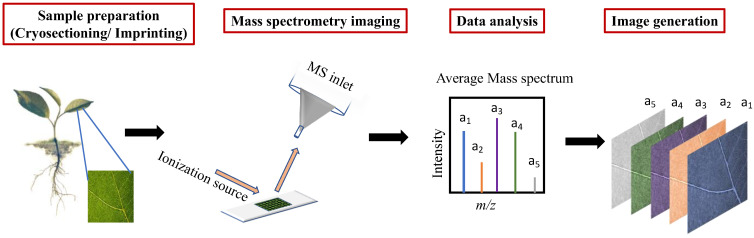
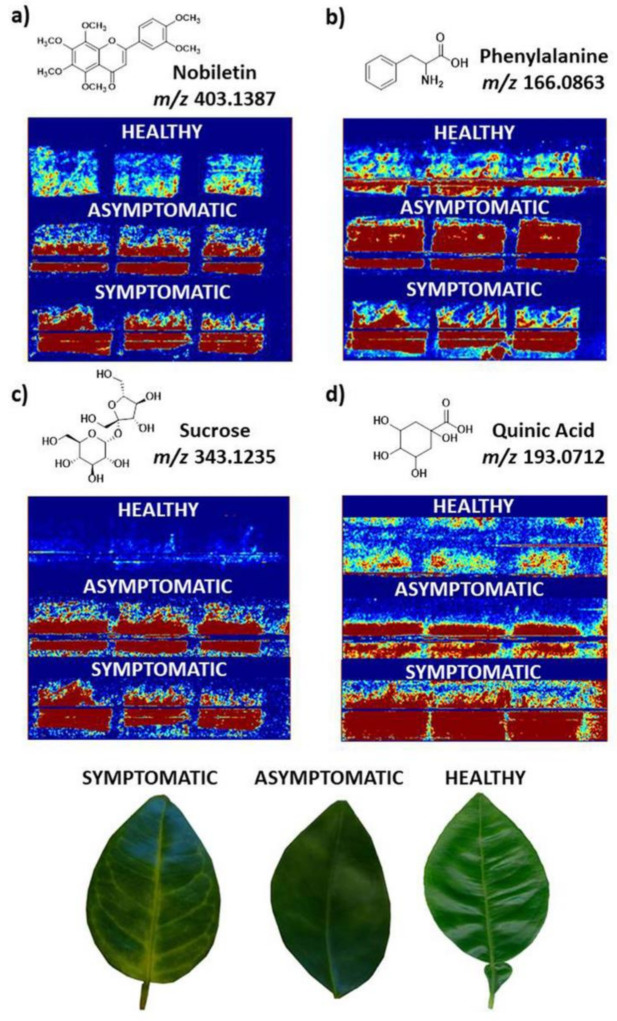
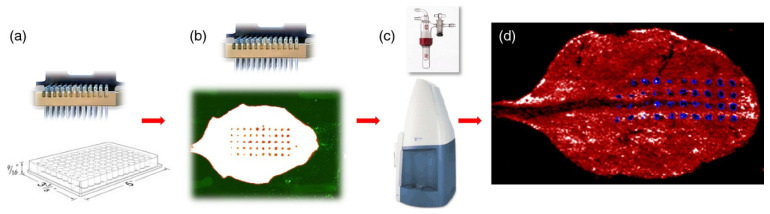
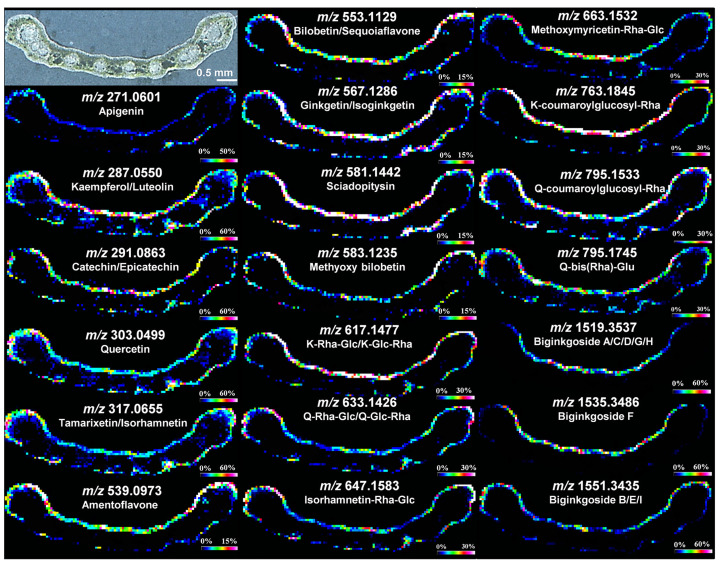
The detection of chemical species and understanding their respective localisations in tissues have important implications in plant science. The conventional methods for imaging spatial localisation of chemical species are often restricted by the number of species that can be identified and is mostly done in a targeted manner. Mass spectrometry imaging combines the ability of traditional mass spectrometry to detect numerous chemical species in a sample with their spatial localisation information by analysing the specimen in a 2D manner. This article details the popular mass spectrometry imaging methodologies which are widely pursued along with their respective sample preparation and the data analysis methods that are commonly used. We also review the advancements through the years in the usage of the technique for the spatial profiling of endogenous metabolites, detection of xenobiotic agrochemicals and disease detection in plants. As an actively pursued area of research, we also address the hurdles in the analysis of plant tissues, the future scopes and an integrated approach to analyse samples combining different mass spectrometry imaging methods to obtain the most information from a sample of interest.
化学物质的检测及其在组织中的各自定位的理解在植物科学中具有重要意义。用于化学物质空间定位成像的传统方法通常受到可识别物质数量的限制,并且大多是以靶向方式进行的。质谱成像通过以二维方式分析样本,将传统质谱检测样本中众多化学物质的能力与其空间定位信息相结合。本文详细介绍了广泛采用的流行质谱成像方法及其各自的样本制备方法和常用的数据分析方法。我们还回顾了多年来该技术在内源代谢物空间分析、异源农用化学品检测和植物疾病检测方面的进展。作为一个积极开展的研究领域,我们还讨论了植物组织分析中的障碍、未来的研究范围以及一种结合不同质谱成像方法分析样本以从感兴趣的样本中获取最多信息的综合方法。