Centro Nacional de Investigaciones Cardiovasculares (CNIC), c/Melchor Fernández Almagro 3, Madrid 28029, Spain.
Cardiology Department, IIS-Fundación Jiménez Díaz University Hospital, Madrid, Spain.
Eur Heart J. 2022 May 14;43(19):1809-1828. doi: 10.1093/eurheartj/ehac102. Epub 2022 Mar 11.
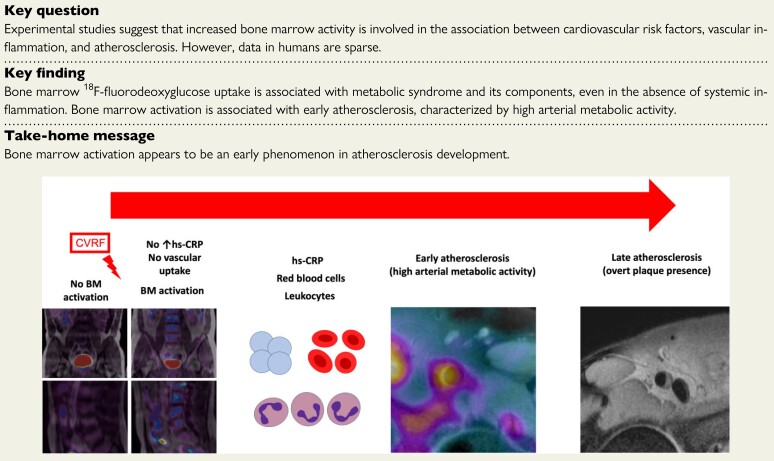
Experimental studies suggest that increased bone marrow (BM) activity is involved in the association between cardiovascular risk factors and inflammation in atherosclerosis. However, human data to support this association are sparse. The purpose was to study the association between cardiovascular risk factors, BM activation, and subclinical atherosclerosis.
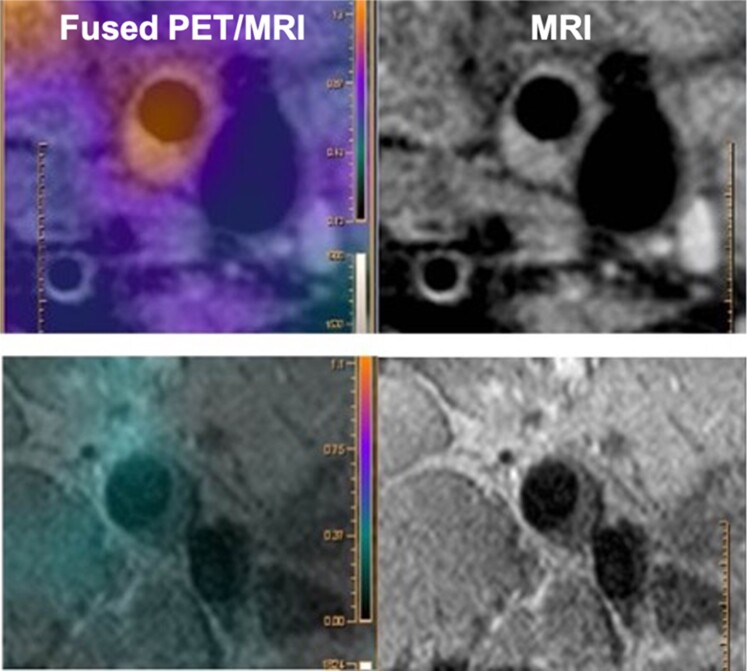
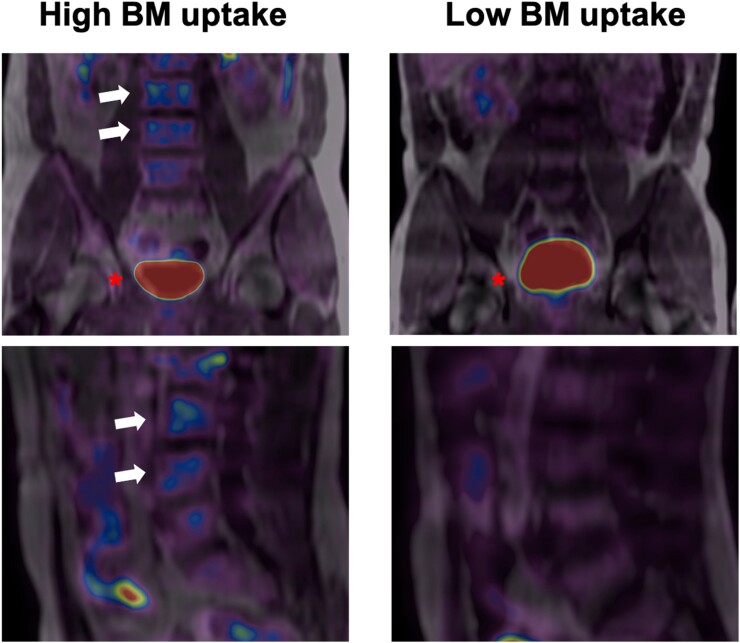
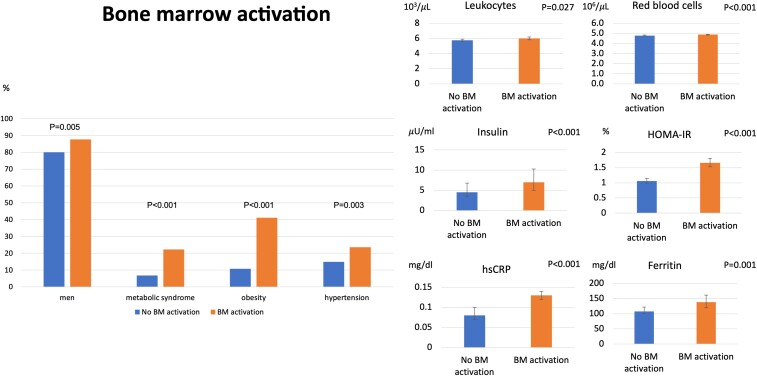
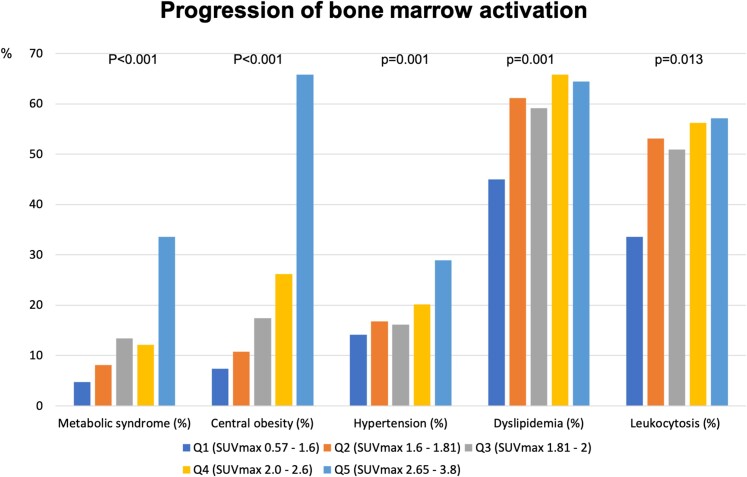
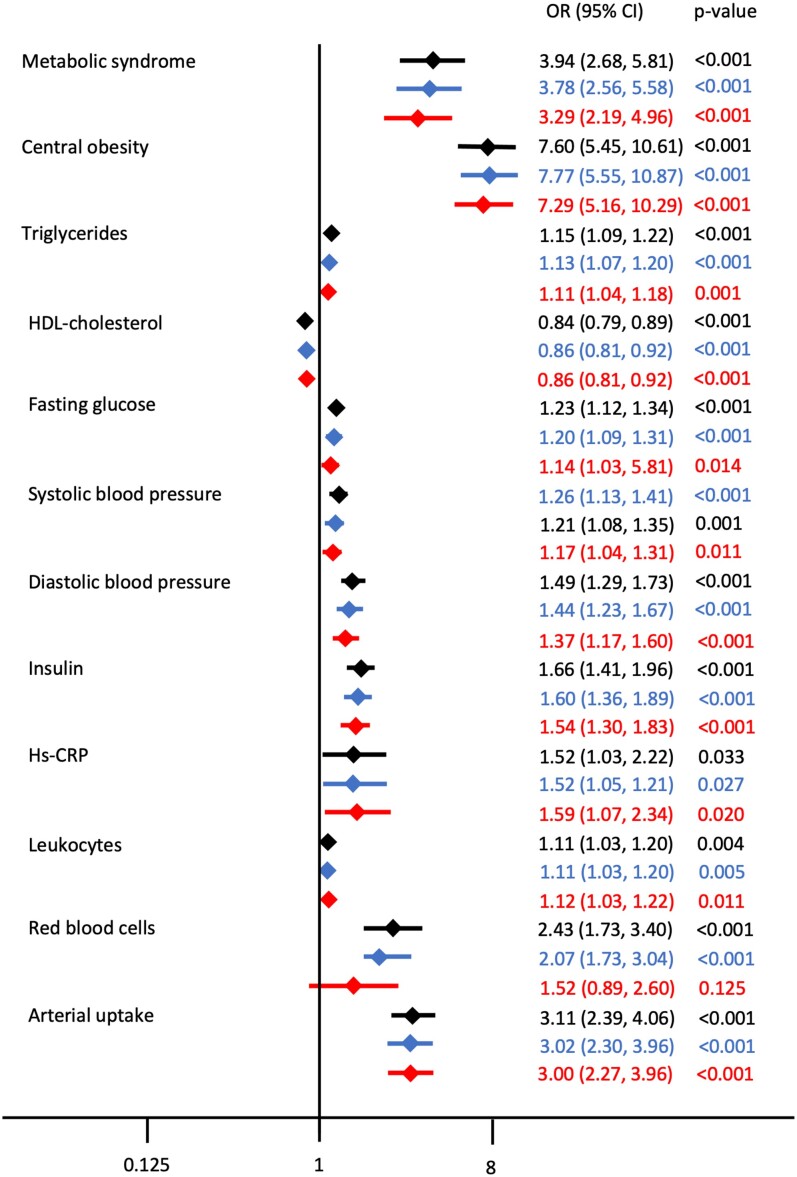
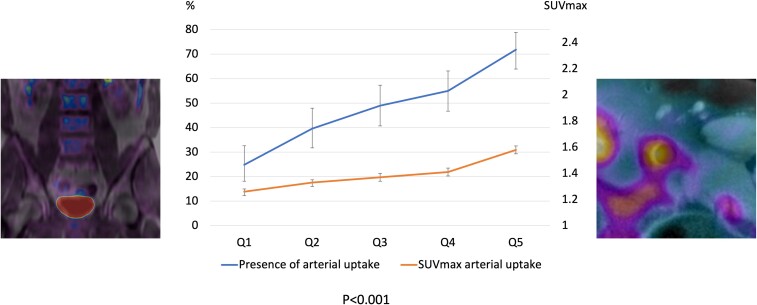
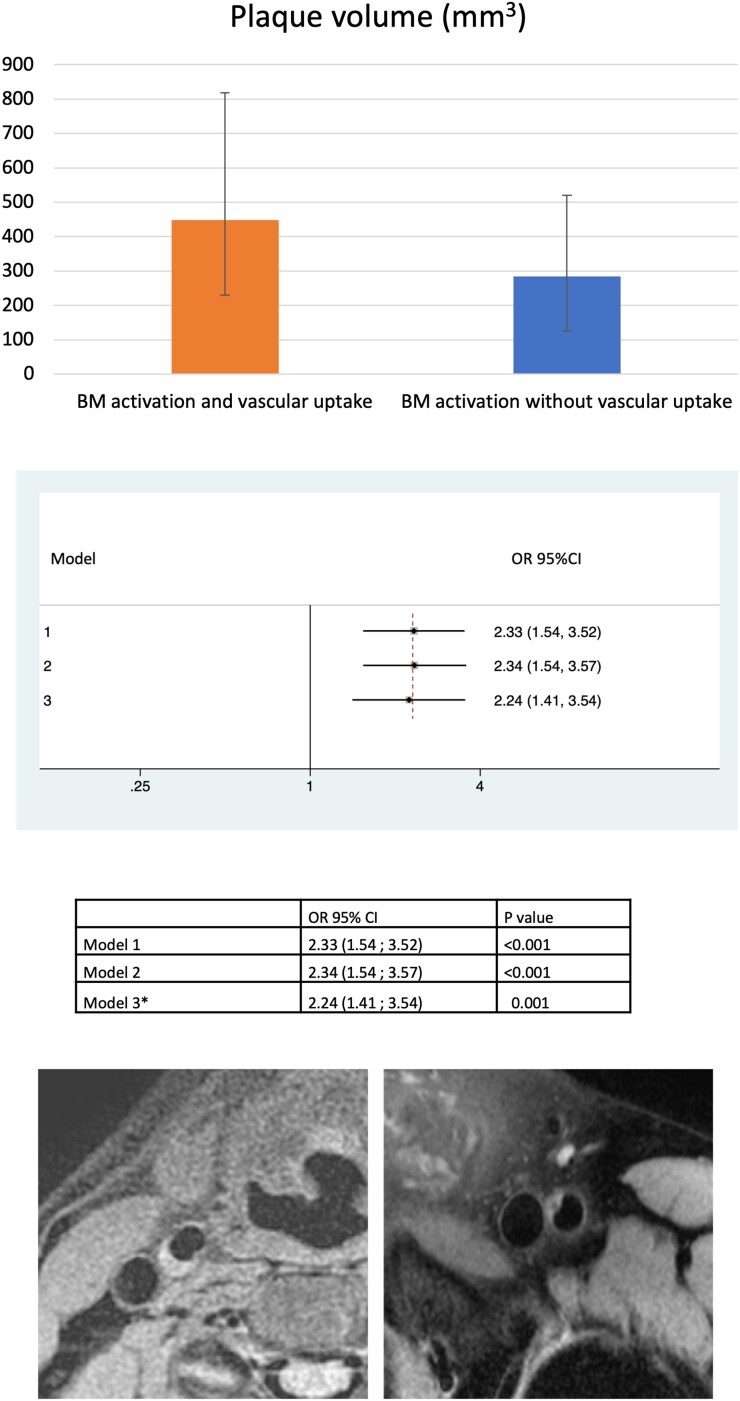
Whole body vascular 18F-fluorodeoxyglucose positron emission tomography/magnetic resonance imaging (18F-FDG PET/MRI) was performed in 745 apparently healthy individuals [median age 50.5 (46.8-53.6) years, 83.8% men] from the Progression of Early Subclinical Atherosclerosis (PESA) study. Bone marrow activation (defined as BM 18F-FDG uptake above the median maximal standardized uptake value) was assessed in the lumbar vertebrae (L3-L4). Systemic inflammation was indexed from circulating biomarkers. Early atherosclerosis was evaluated by arterial metabolic activity by 18F-FDG uptake in five vascular territories. Late atherosclerosis was evaluated by fully formed plaques on MRI. Subjects with BM activation were more frequently men (87.6 vs. 80.0%, P = 0.005) and more frequently had metabolic syndrome (MetS) (22.2 vs. 6.7%, P < 0.001). Bone marrow activation was significantly associated with all MetS components. Bone marrow activation was also associated with increased haematopoiesis-characterized by significantly elevated leucocyte (mainly neutrophil and monocytes) and erythrocyte counts-and with markers of systemic inflammation including high-sensitivity C-reactive protein, ferritin, fibrinogen, P-selectin, and vascular cell adhesion molecule-1. The associations between BM activation and MetS (and its components) and increased erythropoiesis were maintained in the subgroup of participants with no systemic inflammation. Bone marrow activation was significantly associated with high arterial metabolic activity (18F-FDG uptake). The co-occurrence of BM activation and arterial 18F-FDG uptake was associated with more advanced atherosclerosis (i.e. plaque presence and burden).
In apparently healthy individuals, BM 18F-FDG uptake is associated with MetS and its components, even in the absence of systemic inflammation, and with elevated counts of circulating leucocytes. Bone marrow activation is associated with early atherosclerosis, characterized by high arterial metabolic activity. Bone marrow activation appears to be an early phenomenon in atherosclerosis development.[Progression of Early Subclinical Atherosclerosis (PESA); NCT01410318].
实验研究表明,骨髓(BM)活性增加与动脉粥样硬化中心血管危险因素和炎症之间存在关联。然而,支持这种关联的人体数据还很有限。本研究旨在研究心血管危险因素、BM 激活与亚临床动脉粥样硬化之间的关系。
来自早期亚临床动脉粥样硬化进展研究(PESA)的 745 名貌似健康的个体[中位数年龄 50.5(46.8-53.6)岁,83.8%为男性]进行了全身血管 18F-氟脱氧葡萄糖正电子发射断层扫描/磁共振成像(18F-FDG PET/MRI)。在腰椎(L3-L4)评估骨髓激活(定义为骨髓 18F-FDG 摄取量高于最大标准化摄取值中位数)。循环生物标志物用于评估全身炎症。通过五个血管区域的 18F-FDG 摄取评估早期动脉粥样硬化的代谢活性。通过 MRI 评估完全形成的斑块评估晚期动脉粥样硬化。骨髓激活的患者更常为男性(87.6%比 80.0%,P=0.005),更常患有代谢综合征(MetS)(22.2%比 6.7%,P<0.001)。骨髓激活与所有 MetS 成分显著相关。骨髓激活还与升高的造血特征(白细胞[主要是中性粒细胞和单核细胞]和红细胞计数)以及全身性炎症标志物包括高敏 C 反应蛋白、铁蛋白、纤维蛋白原、P-选择素和血管细胞黏附分子-1 相关。在没有全身炎症的参与者亚组中,骨髓激活与 MetS(及其成分)和红细胞生成增加之间的关联仍然存在。骨髓激活与高动脉代谢活性(18F-FDG 摄取)显著相关。骨髓激活和动脉 18F-FDG 摄取的共同发生与更严重的动脉粥样硬化(即斑块存在和负担)相关。
在貌似健康的个体中,骨髓 18F-FDG 摄取与 MetS 及其成分相关,即使在没有全身炎症的情况下,也与循环白细胞计数升高相关。骨髓激活与早期动脉粥样硬化(以高动脉代谢活性为特征)相关。骨髓激活似乎是动脉粥样硬化发展的早期现象。[早期亚临床动脉粥样硬化进展(PESA);NCT01410318]。