Division of Infectious Diseases, Chongqing Public Health Medical Center, Southwest University, Chongqing, China.
Department of Tuberculosis, Chongqing Public Health Medical Center, Southwest University, Chongqing, China.
Respir Res. 2022 May 14;23(1):125. doi: 10.1186/s12931-022-02035-4.
Blood transcriptomics can be used for confirmation of tuberculosis diagnosis or sputumless triage, and a comparison of their practical diagnostic accuracy is needed to assess their usefulness. In this study, we investigated potential biomarkers to improve our understanding of the pathogenesis of active pulmonary tuberculosis (PTB) using bioinformatics methods.
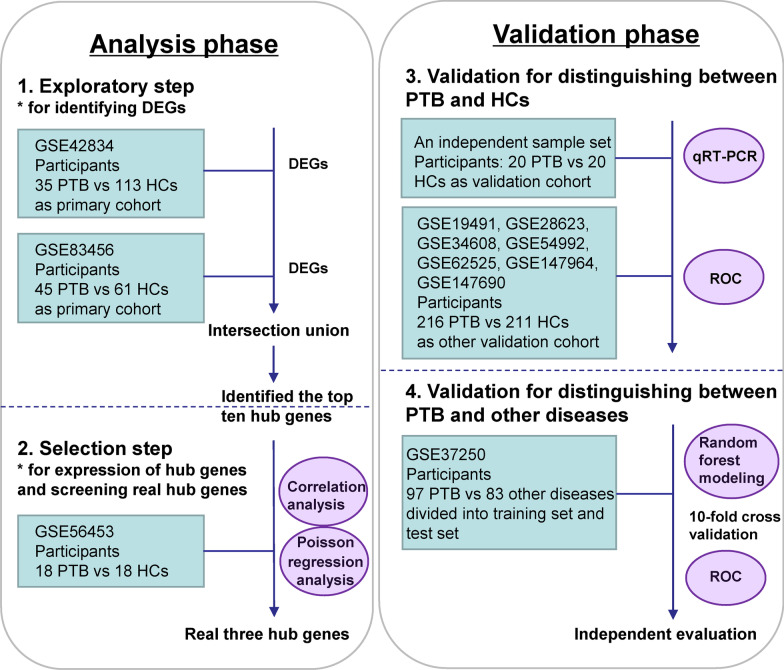
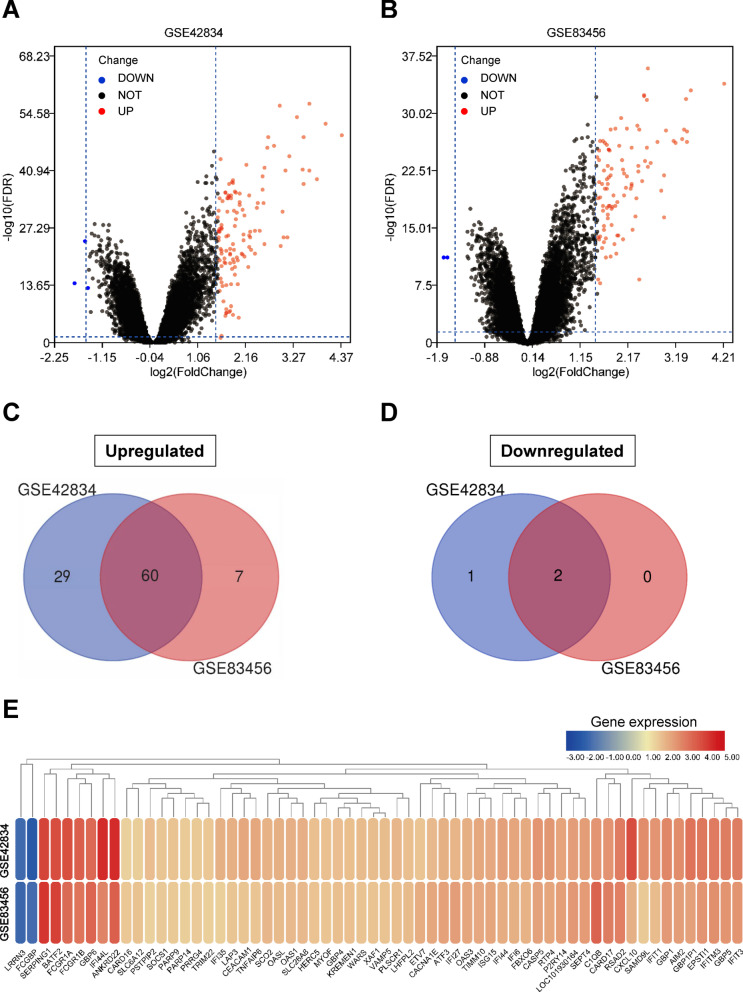
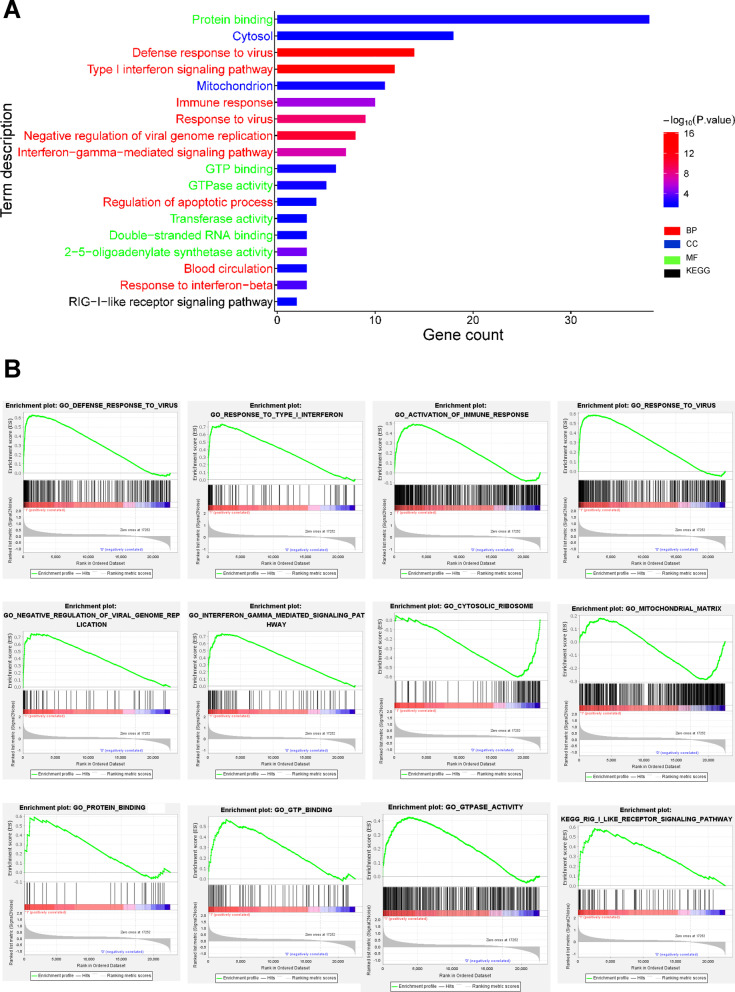
Differentially expressed genes (DEGs) were analyzed between PTB and healthy controls (HCs) based on two microarray datasets. Pathways and functional annotation of DEGs were identified and ten hub genes were selected. They were further analyzed and selected, then verified with an independent sample set. Finally, their diagnostic power was further evaluated between PTB and HCs or other diseases.
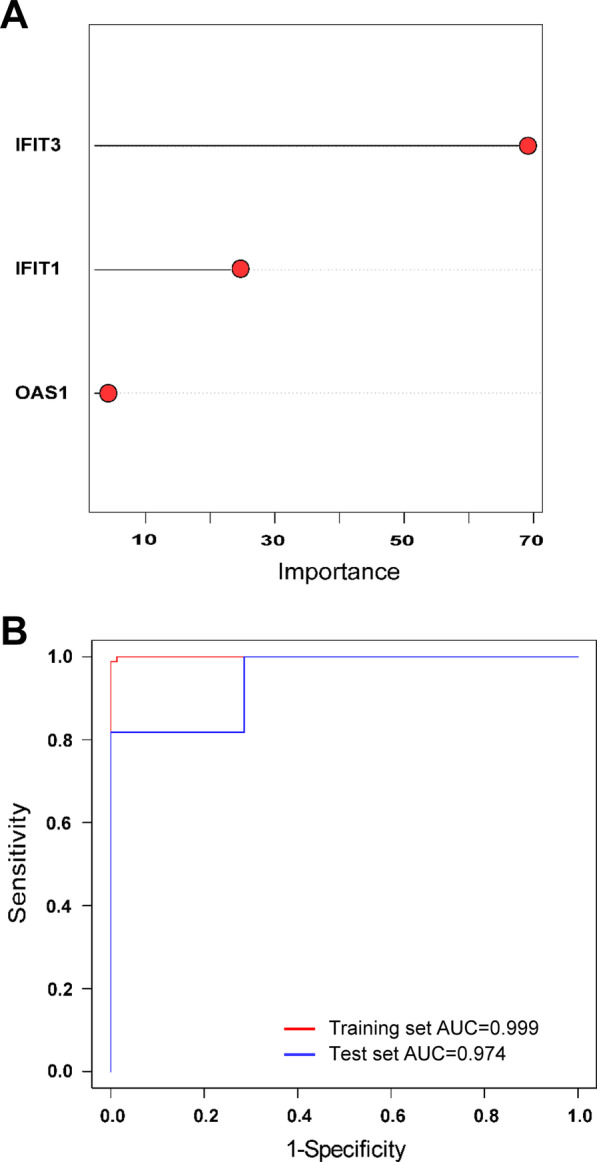
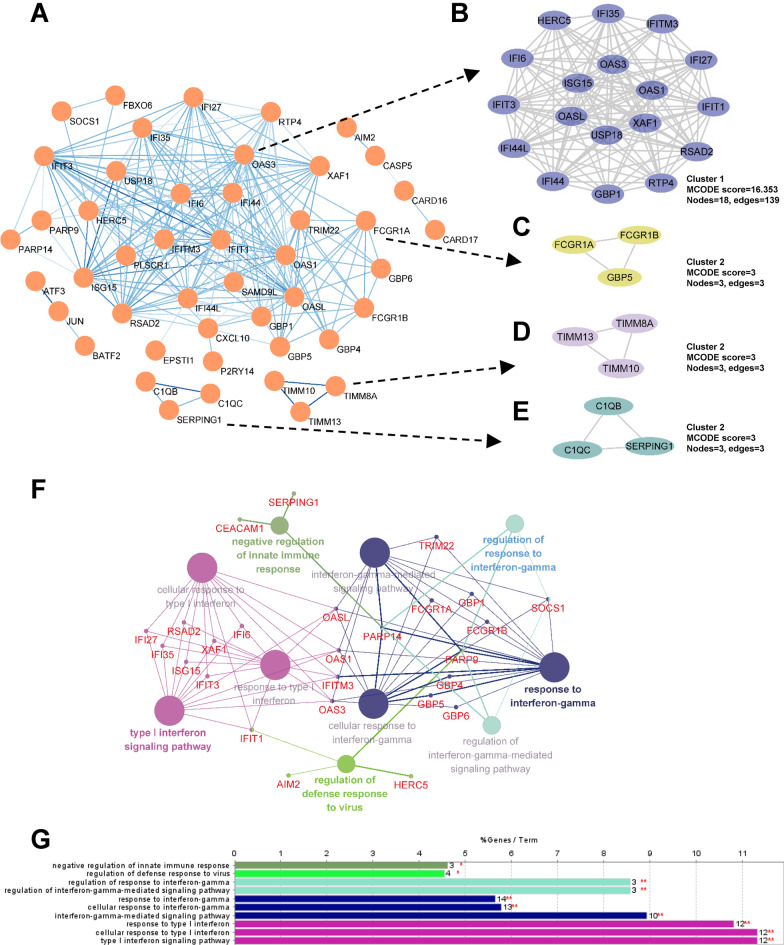
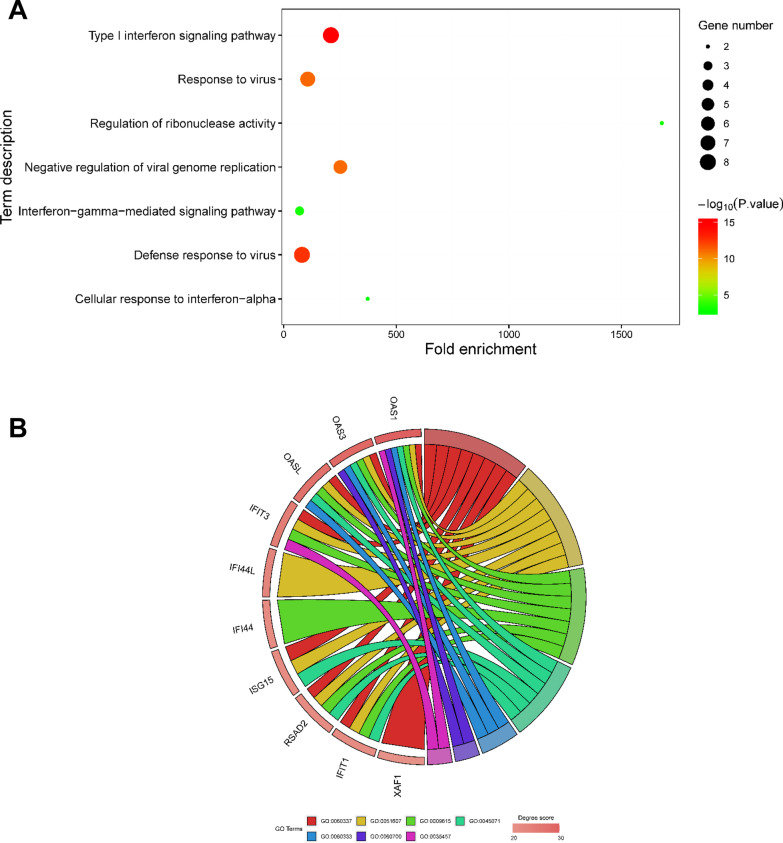
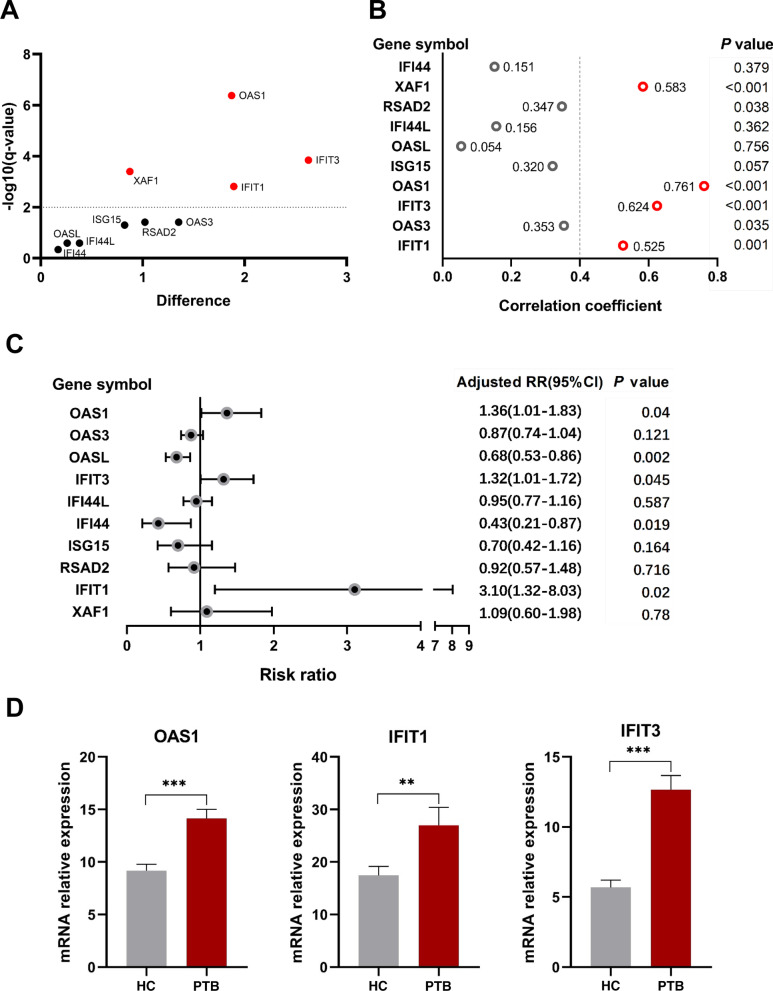
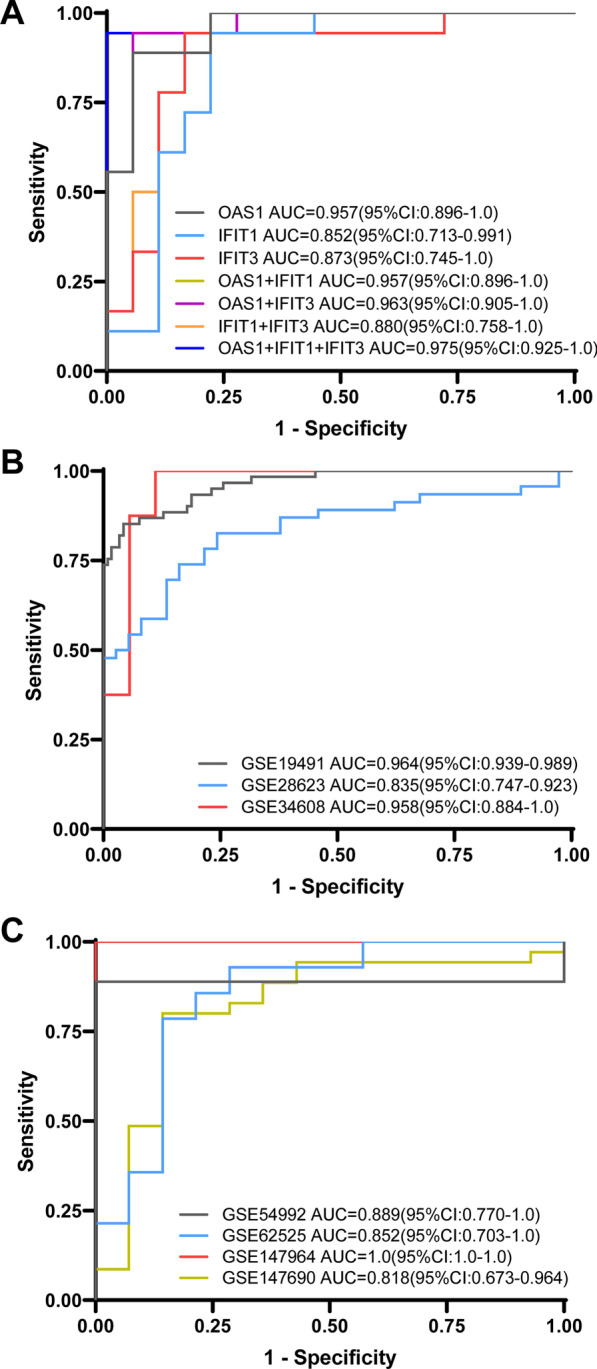
62 DEGs mostly related to type I IFN pathway, IFN-γ-mediated pathway, etc. in GO term and immune process, and especially RIG-I-like receptor pathway were acquired. Among them, OAS1, IFIT1 and IFIT3 were upregulated and were the main risk factors for predicting PTB, with adjusted risk ratios of 1.36, 3.10, and 1.32, respectively. These results further verified that peripheral blood mRNA expression levels of OAS1, IFIT1 and IFIT3 were significantly higher in PTB patients than HCs (all P < 0.01). The performance of a combination of these three genes (three-gene set) had exceeded that of all pairwise combinations of them in discriminating TB from HCs, with mean AUC reaching as high as 0.975 with a sensitivity of 94.4% and a specificity of 100%. The good discernibility capacity was evaluated d via 7 independent datasets with an AUC of 0.902, as well as mean sensitivity of 87.9% and mean specificity of 90.2%. In regards to discriminating PTB from other diseases (i.e., initially considered to be possible TB, but rejected in differential diagnosis), the three-gene set equally exhibited an overall strong ability to separate PTB from other diseases with an AUC of 0.999 (sensitivity: 99.0%; specificity: 100%) in the training set, and 0.974 with a sensitivity of 96.4% and a specificity of 98.6% in the test set.
The described commonalities and unique signatures in the blood profiles of PTB and the other control samples have considerable implications for PTB biosignature design and future diagnosis, and provide insights into the biological processes underlying PTB.
血液转录组学可用于确认结核病诊断或无痰分诊,需要比较其实际诊断准确性以评估其有用性。在这项研究中,我们使用生物信息学方法研究了潜在的生物标志物,以加深我们对活动性肺结核(PTB)发病机制的理解。
根据两个微阵列数据集,分析 PTB 与健康对照(HC)之间的差异表达基因(DEG)。鉴定 DEG 的途径和功能注释,并选择十个枢纽基因。进一步分析和选择,然后使用独立样本集进行验证。最后,评估其在 PTB 与 HCs 或其他疾病之间的诊断能力。
62 个 DEG 主要与 GO 术语中的 I 型 IFN 途径、IFN-γ 介导的途径等有关,与免疫过程有关,特别是 RIG-I 样受体途径。其中,OAS1、IFIT1 和 IFIT3 上调,是预测 PTB 的主要危险因素,调整后的风险比分别为 1.36、3.10 和 1.32。这些结果进一步验证了外周血 mRNA 表达水平在 PTB 患者中明显高于 HCs(均 P<0.01)。这三个基因(三基因集)的组合在区分 TB 与 HCs 方面的表现优于它们之间的所有两两组合,平均 AUC 高达 0.975,灵敏度为 94.4%,特异性为 100%。通过 7 个独立数据集评估了良好的辨别能力,AUC 为 0.902,平均灵敏度为 87.9%,平均特异性为 90.2%。关于区分 PTB 与其他疾病(即最初被认为可能是 TB,但在鉴别诊断中被排除),三基因集在训练集中同样表现出将 PTB 与其他疾病分开的整体强大能力,AUC 为 0.999(灵敏度:99.0%;特异性:100%),在测试集中 AUC 为 0.974,灵敏度为 96.4%,特异性为 98.6%。
PTB 和其他对照样本血液特征中描述的共性和独特特征对 PTB 生物标志物设计和未来诊断具有重要意义,并为 PTB 发病机制提供了深入了解。