Department of Geriatrics, The Second Xiangya Hospital, Central South University, Changsha, Hunan, 410011, PR China.
Institute of Aging and Age-related Disease Research, Central South University, Changsha, Hunan, 410011, PR China.
Biol Rev Camb Philos Soc. 2022 Oct;97(5):1844-1867. doi: 10.1111/brv.12866. Epub 2022 May 15.
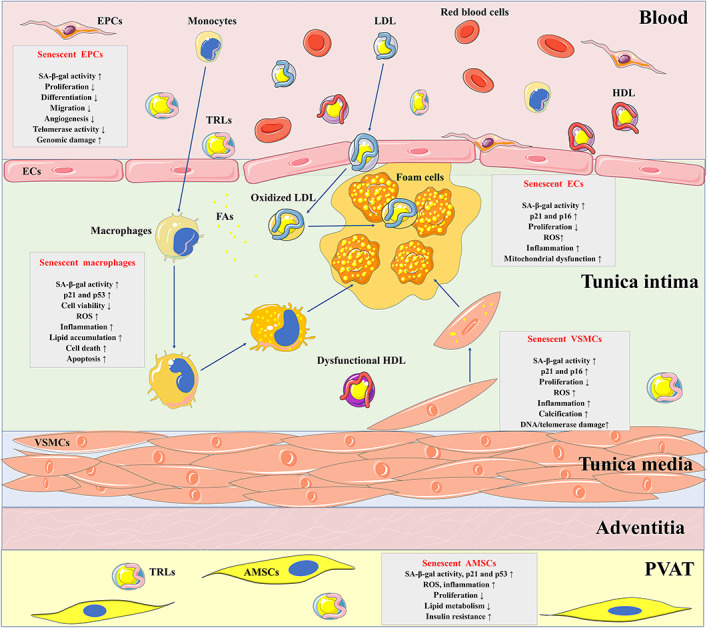
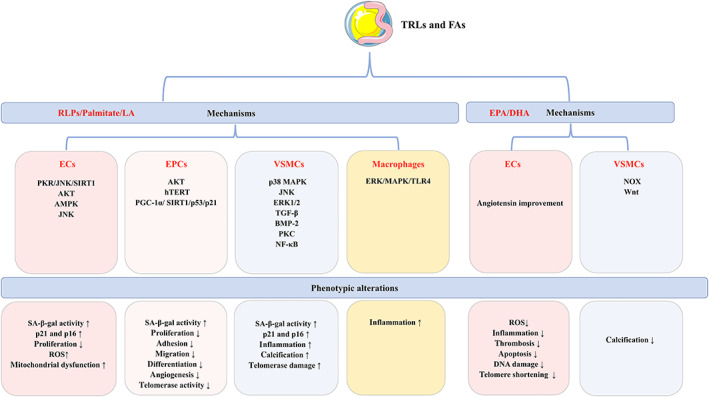
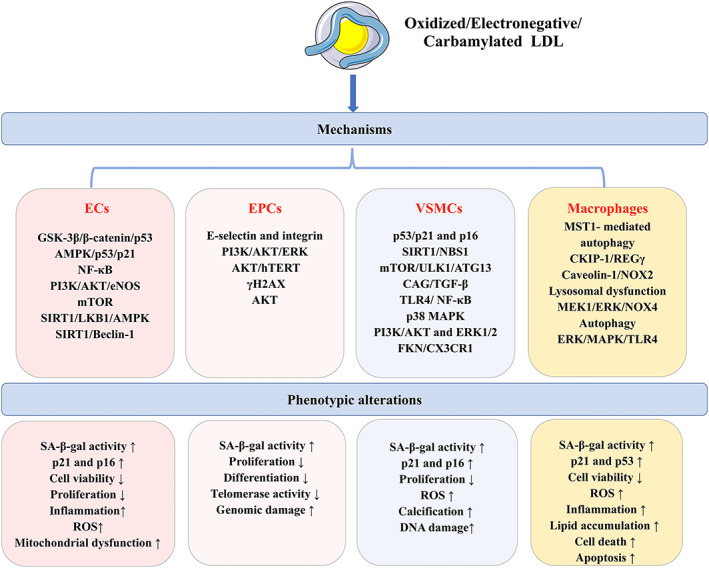
Atherosclerosis, characterized by lipid-rich plaques in the arterial wall, is an age-related disorder and a leading cause of mortality worldwide. However, the specific mechanisms remain complex. Recently, emerging evidence has demonstrated that senescence of various types of cells, such as endothelial cells (ECs), vascular smooth muscle cells (VSMCs), macrophages, endothelial progenitor cells (EPCs), and adipose-derived mesenchymal stem cells (AMSCs) contributes to atherosclerosis. Cellular senescence and atherosclerosis share various causative stimuli, in which dyslipidemia has attracted much attention. Dyslipidemia, mainly referred to elevated plasma levels of atherogenic lipids or lipoproteins, or functional impairment of anti-atherogenic lipids or lipoproteins, plays a pivotal role both in cellular senescence and atherosclerosis. In this review, we summarize the current evidence for dyslipidemia-induced cellular senescence during atherosclerosis, with a focus on low-density lipoprotein (LDL) and its modifications, hydrolysate of triglyceride-rich lipoproteins (TRLs), and high-density lipoprotein (HDL), respectively. Furthermore, we describe the underlying mechanisms linking dyslipidemia-induced cellular senescence and atherosclerosis. Finally, we discuss the senescence-related therapeutic strategies for atherosclerosis, with special attention given to the anti-atherosclerotic effects of promising geroprotectors as well as anti-senescence effects of current lipid-lowering drugs.
动脉粥样硬化(atherosclerosis)以动脉壁中的富含脂质斑块为特征,是一种与年龄相关的疾病,也是全球范围内主要的致死原因。然而,其具体机制仍然复杂。最近,新出现的证据表明,各种类型的细胞衰老,如内皮细胞(endothelial cells,ECs)、血管平滑肌细胞(vascular smooth muscle cells,VSMCs)、巨噬细胞、内皮祖细胞(endothelial progenitor cells,EPCs)和脂肪来源的间充质干细胞(adipose-derived mesenchymal stem cells,AMSCs),都与动脉粥样硬化有关。细胞衰老和动脉粥样硬化具有共同的致病刺激因素,其中血脂异常备受关注。血脂异常主要指致动脉粥样硬化脂质或脂蛋白的血浆水平升高,或抗动脉粥样硬化脂质或脂蛋白的功能受损,在细胞衰老和动脉粥样硬化中都起着关键作用。在这篇综述中,我们总结了血脂异常诱导动脉粥样硬化过程中细胞衰老的现有证据,重点介绍了低密度脂蛋白(low-density lipoprotein,LDL)及其修饰物、富含甘油三酯脂蛋白(triglyceride-rich lipoproteins,TRLs)的水解产物和高密度脂蛋白(high-density lipoprotein,HDL)。此外,我们描述了将血脂异常诱导的细胞衰老与动脉粥样硬化联系起来的潜在机制。最后,我们讨论了与动脉粥样硬化相关的衰老治疗策略,特别关注有前途的抗衰老剂的抗动脉粥样硬化作用以及现有降脂药物的抗衰老作用。