Recktenwald Steffen M, Lopes Marcelle G M, Peter Stephana, Hof Sebastian, Simionato Greta, Peikert Kevin, Hermann Andreas, Danek Adrian, van Bentum Kai, Eichler Hermann, Wagner Christian, Quint Stephan, Kaestner Lars
Experimental Physics, Saarland University, Saarbruecken, Germany.
Cysmic GmbH, Saarbruecken, Germany.
Front Physiol. 2022 Apr 27;13:884690. doi: 10.3389/fphys.2022.884690. eCollection 2022.
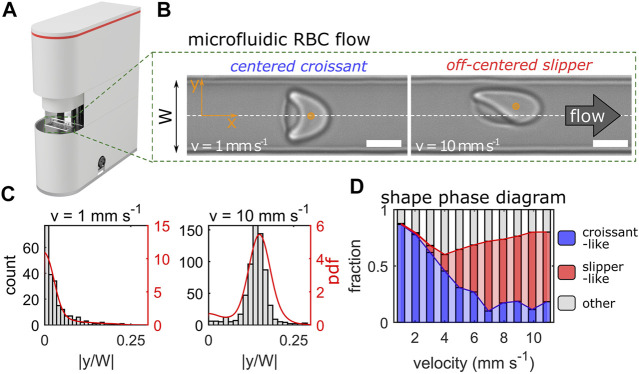
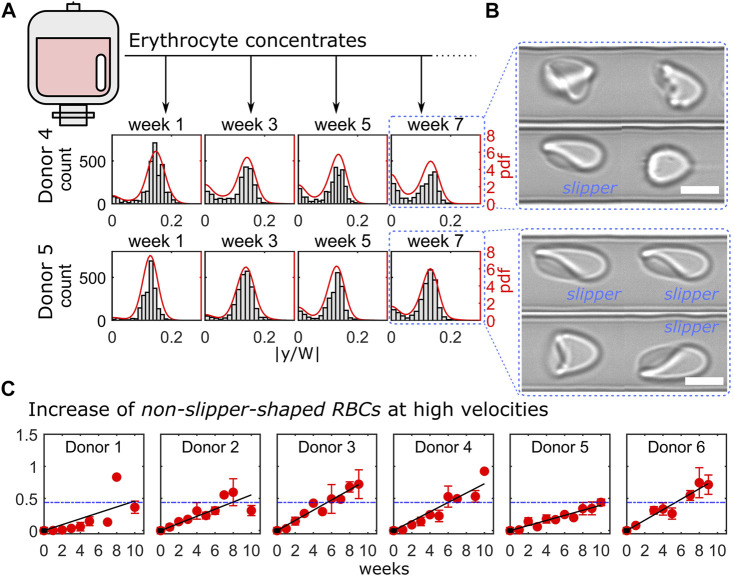
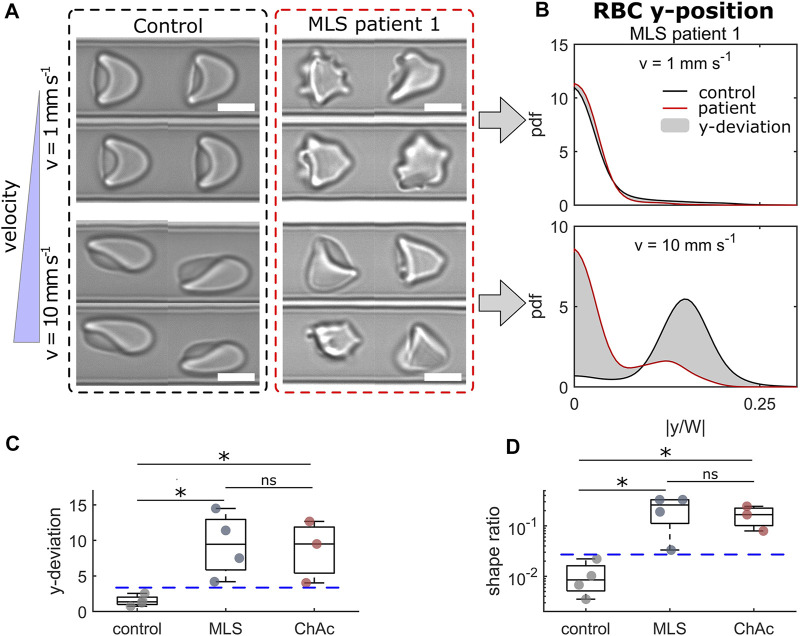
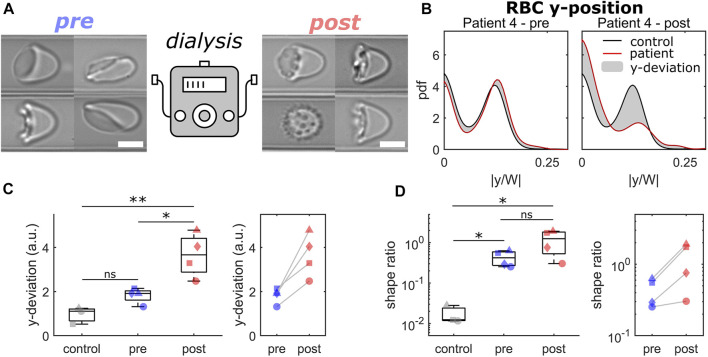
In many medical disciplines, red blood cells are discovered to be biomarkers since they "experience" various conditions in basically all organs of the body. Classical examples are diabetes and hypercholesterolemia. However, recently the red blood cell distribution width (RDW), is often referred to, as an unspecific parameter/marker (e.g., for cardiac events or in oncological studies). The measurement of RDW requires venous blood samples to perform the complete blood cell count (CBC). Here, we introduce Erysense, a lab-on-a-chip-based point-of-care device, to evaluate red blood cell flow properties. The capillary chip technology in combination with algorithms based on artificial neural networks allows the detection of very subtle changes in the red blood cell morphology. This flow-based method closely resembles conditions and blood sample volumes in the sub-microliter range are sufficient. We provide clinical examples for potential applications of Erysense as a diagnostic tool [here: neuroacanthocytosis syndromes (NAS)] and as cellular quality control for red blood cells [here: hemodiafiltration (HDF) and erythrocyte concentrate (EC) storage]. Due to the wide range of the applicable flow velocities (0.1-10 mm/s) different mechanical properties of the red blood cells can be addressed with Erysense providing the opportunity for differential diagnosis/judgments. Due to these versatile properties, we anticipate the value of Erysense for further diagnostic, prognostic, and theragnostic applications including but not limited to diabetes, iron deficiency, COVID-19, rheumatism, various red blood cell disorders and anemia, as well as inflammation-based diseases including sepsis.
在许多医学学科中,红细胞被发现是生物标志物,因为它们在人体基本上所有器官中“经历”各种状况。典型例子是糖尿病和高胆固醇血症。然而,最近红细胞分布宽度(RDW)常被提及,作为一个非特异性参数/标志物(例如,用于心脏事件或肿瘤学研究)。测量RDW需要采集静脉血样本以进行全血细胞计数(CBC)。在此,我们介绍Erysense,一种基于芯片实验室的即时检测设备,用于评估红细胞的流动特性。毛细管芯片技术与基于人工神经网络的算法相结合,能够检测红细胞形态中非常细微的变化。这种基于流动的方法与实际状况非常相似,亚微升范围内的血样体积就足够了。我们提供了Erysense作为诊断工具[此处:神经棘红细胞增多症综合征(NAS)]以及作为红细胞细胞质量控制[此处:血液透析滤过(HDF)和红细胞浓缩液(EC)储存]的潜在应用的临床实例。由于适用的流速范围很广(0.1 - 10毫米/秒),Erysense可以检测红细胞的不同机械特性,为鉴别诊断/判断提供了机会。由于这些多功能特性,我们预计Erysense在进一步的诊断、预后和治疗诊断应用中具有价值,包括但不限于糖尿病、缺铁、COVID - 19、风湿病、各种红细胞疾病和贫血,以及包括败血症在内的炎症性疾病。