Zhan Choujun, Zheng Yufan, Zhang Haijun, Wen Quansi
School of Electronical and Computer EngineeringNanfang College of Sun Yat-sen University Guangzhou 510970 China.
School of ComputingSouth China Normal University Guangzhou 510641 China.
IEEE Internet Things J. 2021 Mar 17;8(21):15906-15918. doi: 10.1109/JIOT.2021.3066575. eCollection 2021 Nov.
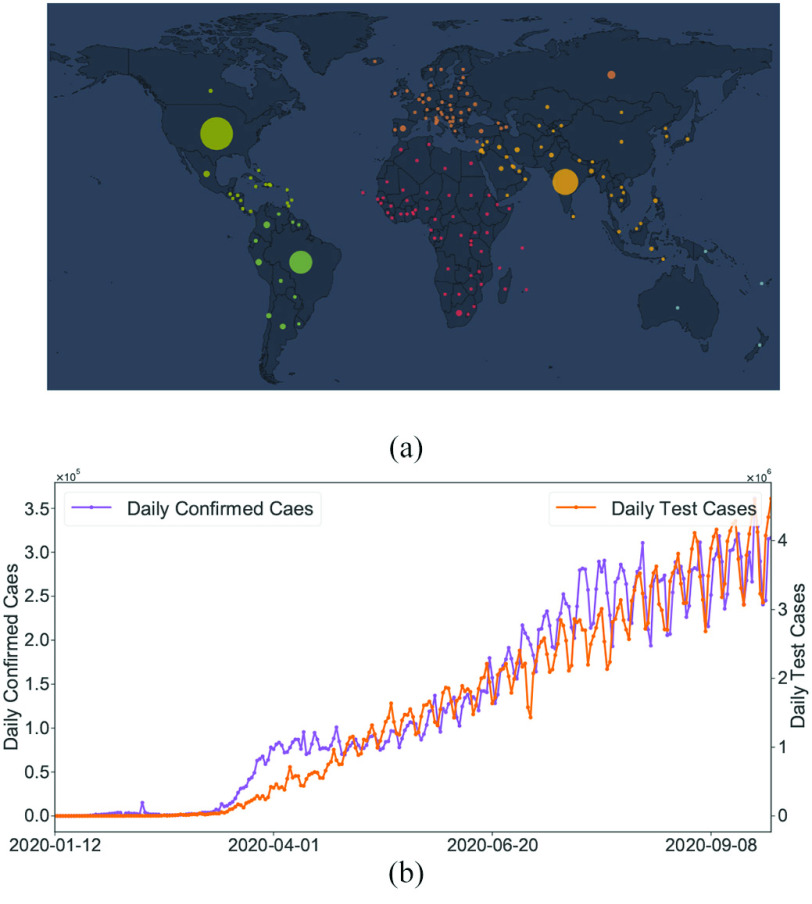
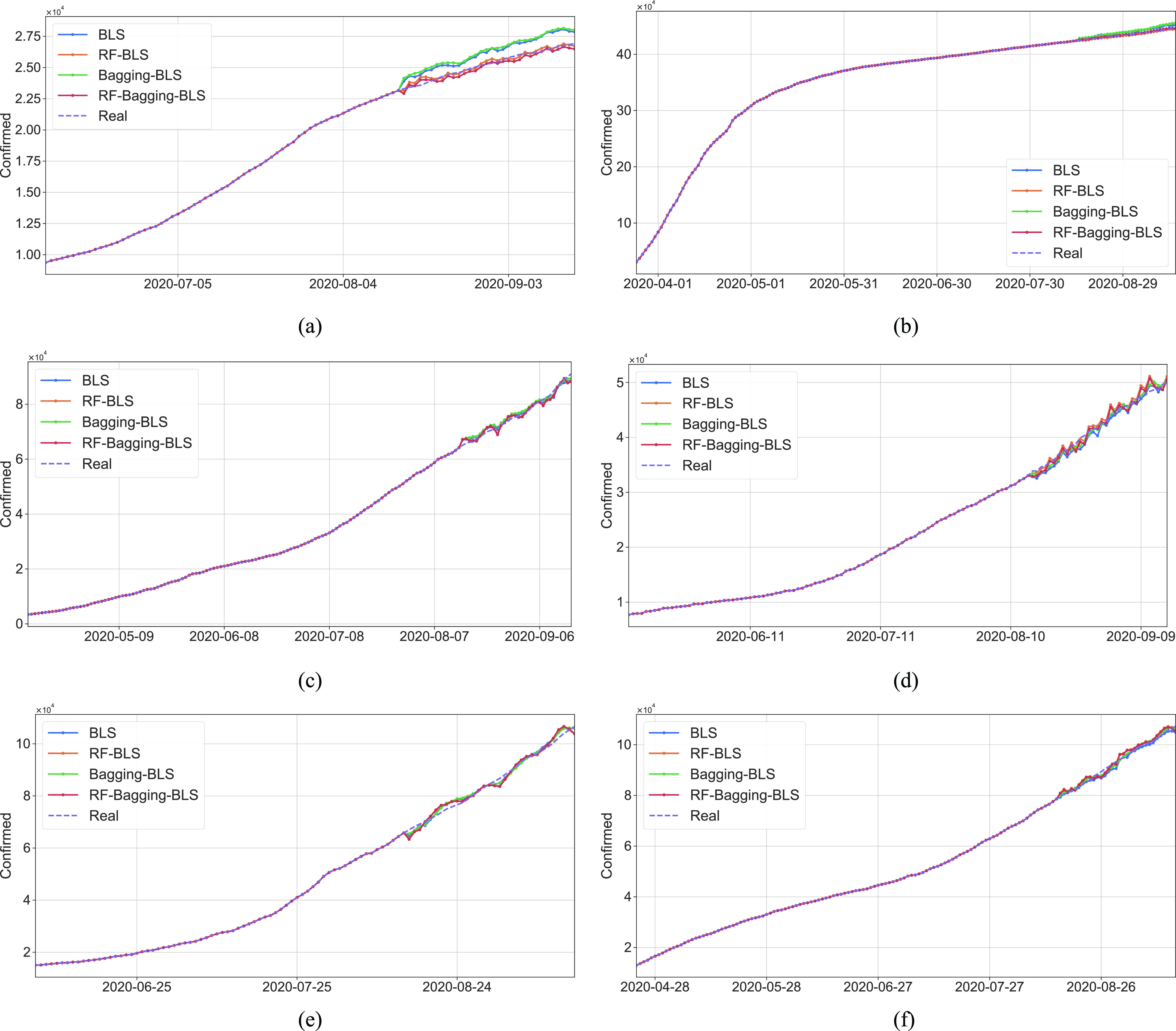
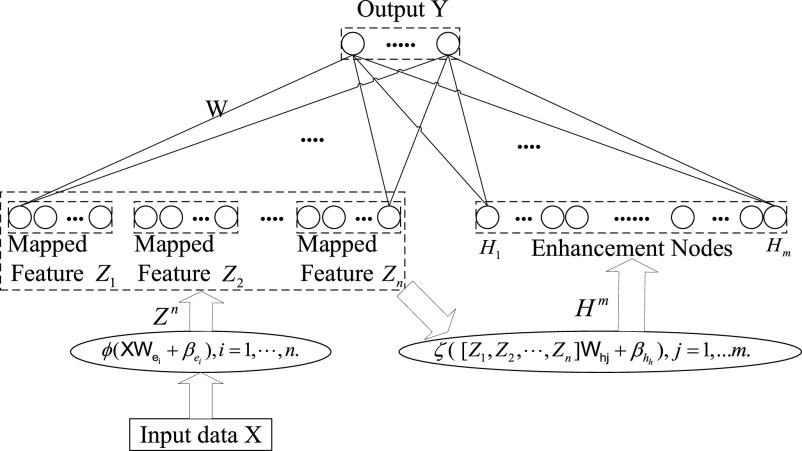
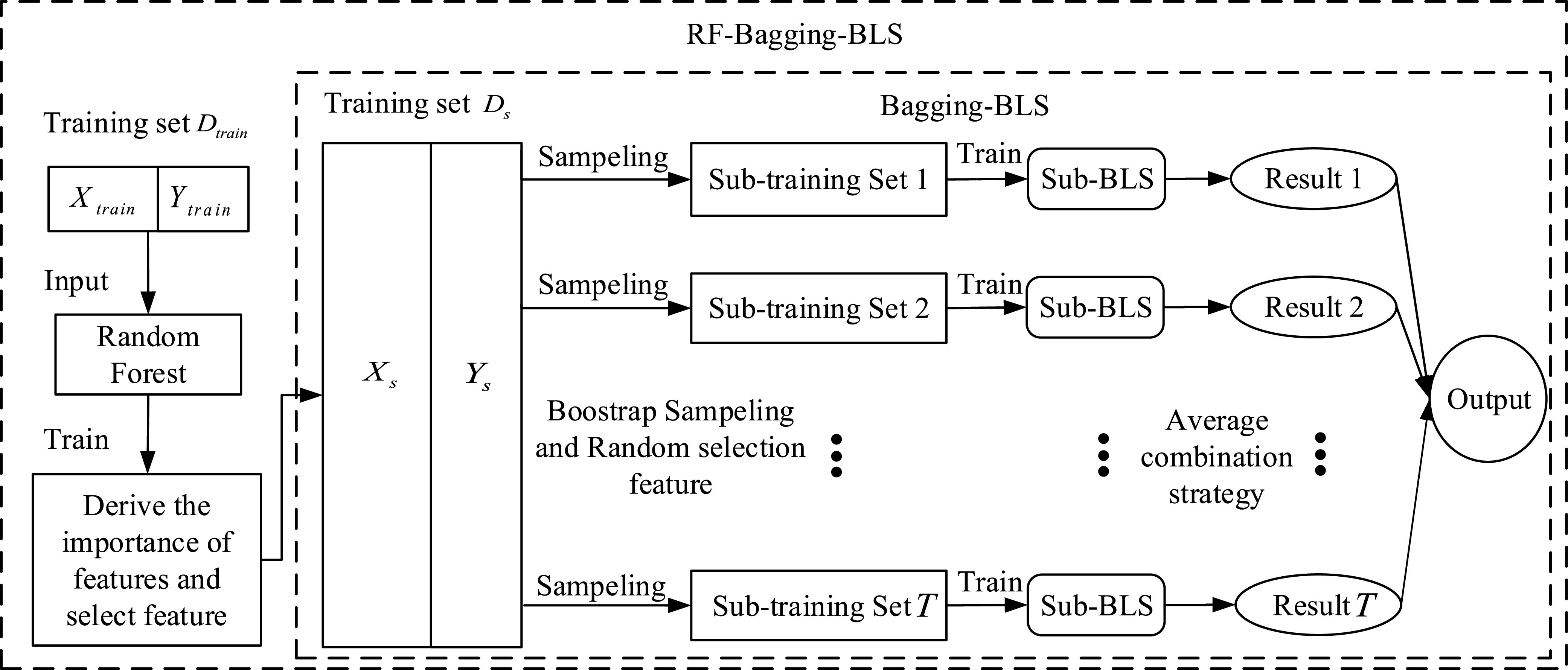
The rapid geographic spread of COVID-19, to which various factors may have contributed, has caused a global health crisis. Recently, the analysis and forecast of the COVID-19 pandemic have attracted worldwide attention. In this work, a large COVID-19 data set consisting of COVID-19 pandemic, COVID-19 testing capacity, economic level, demographic information, and geographic location data in 184 countries and 1241 areas from December 18, 2019, to September 30, 2020, were developed from public reports released by national health authorities and bureau of statistics. We proposed a machine learning model for COVID-19 prediction based on the broad learning system (BLS). Here, we leveraged random forest (RF) to screen out the key features. Then, we combine the bagging strategy and BLS to develop a random-forest-bagging BLS (RF-Bagging-BLS) approach to forecast the trend of the COVID-19 pandemic. In addition, we compared the forecasting results with linear regression (LR) model, [Formula: see text]-nearest neighbors (KNN), decision tree (DT), adaptive boosting (Ada), RF, gradient boosting DT (GBDT), support vector regression (SVR), extra trees (ETs) regressor, CatBoost (CAT), LightGBM (LGB), XGBoost (XGB), and BLS.The RF-Bagging BLS model showed better forecasting performance in terms of relative mean-square error (RMSE), coefficient of determination ([Formula: see text]), adjusted coefficient of determination ([Formula: see text]), median absolute error (MAD), and mean absolute percentage error (MAPE) than other models. Hence, the proposed model demonstrates superior predictive power over other benchmark models.
新冠病毒病(COVID-19)的迅速地理传播可能由多种因素导致,已引发全球健康危机。近期,对COVID-19大流行的分析和预测已引起全球关注。在本研究中,一个大型COVID-19数据集由184个国家和1241个地区在2019年12月18日至2020年9月30日期间的COVID-19大流行情况、COVID-19检测能力、经济水平、人口信息和地理位置数据组成,这些数据来自各国卫生当局和统计局发布的公开报告。我们提出了一种基于广义学习系统(BLS)的用于COVID-19预测的机器学习模型。在此,我们利用随机森林(RF)筛选出关键特征。然后,我们将装袋策略与BLS相结合,开发出一种随机森林装袋BLS(RF-Bagging-BLS)方法来预测COVID-19大流行的趋势。此外,我们将预测结果与线性回归(LR)模型、K近邻(KNN)、决策树(DT)、自适应增强(Ada)、RF、梯度提升决策树(GBDT)、支持向量回归(SVR)、极端随机树(ETs)回归器、CatBoost(CAT)、LightGBM(LGB)、XGBoost(XGB)和BLS进行了比较。RF-Bagging BLS模型在相对均方误差(RMSE)、决定系数(R²)、调整决定系数(adj.R²)、中位数绝对误差(MAD)和平均绝对百分比误差(MAPE)方面比其他模型表现出更好的预测性能。因此,所提出的模型相较于其他基准模型展现出卓越的预测能力。