• 文献检索
  • 文档翻译
  • 深度研究
  • 学术资讯
  • Suppr Zotero 插件Zotero 插件
  • 邀请有礼
  • 套餐&价格
  • 历史记录
应用&插件
Suppr Zotero 插件Zotero 插件浏览器插件Mac 客户端Windows 客户端微信小程序
定价
高级版会员购买积分包购买API积分包
服务
文献检索文档翻译深度研究API 文档MCP 服务
关于我们
关于 Suppr公司介绍联系我们用户协议隐私条款
关注我们

Suppr 超能文献

核心技术专利:CN118964589B侵权必究
粤ICP备2023148730 号-1Suppr @ 2026

文献检索

告别复杂PubMed语法,用中文像聊天一样搜索,搜遍4000万医学文献。AI智能推荐,让科研检索更轻松。

立即免费搜索

文件翻译

保留排版,准确专业,支持PDF/Word/PPT等文件格式,支持 12+语言互译。

免费翻译文档

深度研究

AI帮你快速写综述,25分钟生成高质量综述,智能提取关键信息,辅助科研写作。

立即免费体验

用于COVID-19疫情管理的机器学习应用。

Machine learning applications for COVID-19 outbreak management.

作者信息

Heidari Arash, Jafari Navimipour Nima, Unal Mehmet, Toumaj Shiva

机构信息

Department of Computer Engineering, Tabriz Branch, Islamic Azad University, Tabriz, Iran.

Department of Computer Engineering, Shabestar Branch, Islamic Azad University, Shabestar, Iran.

出版信息

Neural Comput Appl. 2022;34(18):15313-15348. doi: 10.1007/s00521-022-07424-w. Epub 2022 Jun 10.

DOI:10.1007/s00521-022-07424-w
PMID:35702664
原文链接:https://pmc.ncbi.nlm.nih.gov/articles/PMC9186489/
Abstract

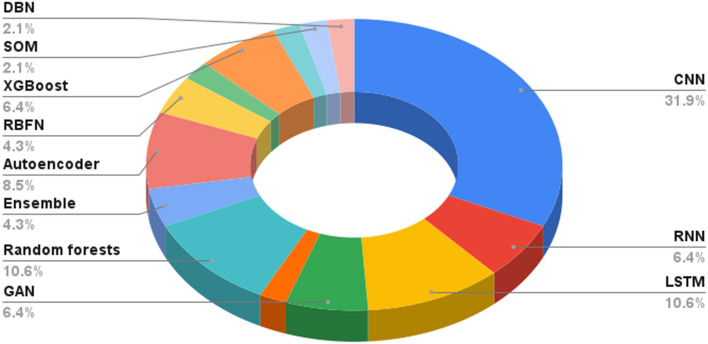
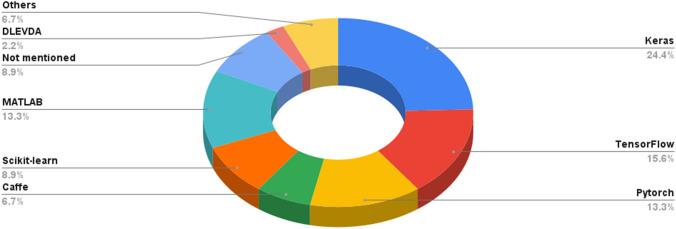
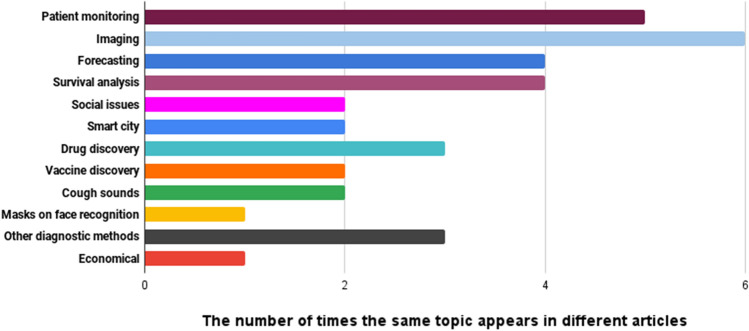
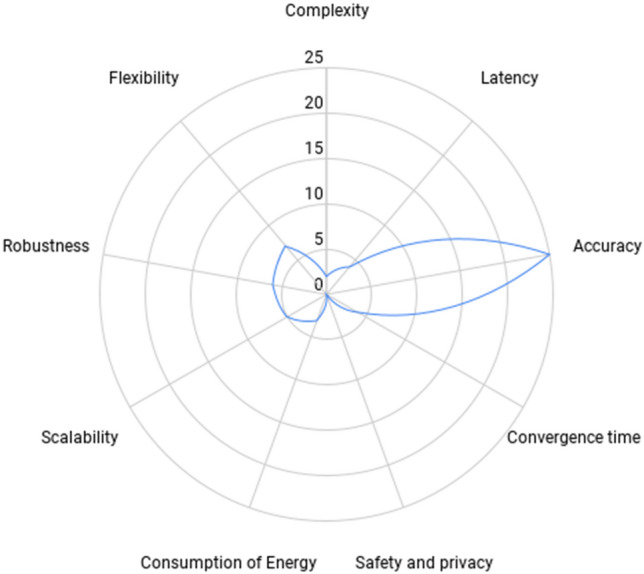
Recently, the COVID-19 epidemic has resulted in millions of deaths and has impacted practically every area of human life. Several machine learning (ML) approaches are employed in the medical field in many applications, including detecting and monitoring patients, notably in COVID-19 management. Different medical imaging systems, such as computed tomography (CT) and X-ray, offer ML an excellent platform for combating the pandemic. Because of this need, a significant quantity of study has been carried out; thus, in this work, we employed a systematic literature review (SLR) to cover all aspects of outcomes from related papers. Imaging methods, survival analysis, forecasting, economic and geographical issues, monitoring methods, medication development, and hybrid apps are the seven key uses of applications employed in the COVID-19 pandemic. Conventional neural networks (CNNs), long short-term memory networks (LSTM), recurrent neural networks (RNNs), generative adversarial networks (GANs), autoencoders, random forest, and other ML techniques are frequently used in such scenarios. Next, cutting-edge applications related to ML techniques for pandemic medical issues are discussed. Various problems and challenges linked with ML applications for this pandemic were reviewed. It is expected that additional research will be conducted in the upcoming to limit the spread and catastrophe management. According to the data, most papers are evaluated mainly on characteristics such as flexibility and accuracy, while other factors such as safety are overlooked. Also, Keras was the most often used library in the research studied, accounting for 24.4 percent of the time. Furthermore, medical imaging systems are employed for diagnostic reasons in 20.4 percent of applications.

摘要

最近,新冠疫情已导致数百万人死亡,并几乎影响到人类生活的各个领域。机器学习(ML)方法在医学领域的许多应用中得到了应用,包括对患者的检测和监测,尤其是在新冠疫情管理方面。不同的医学成像系统,如计算机断层扫描(CT)和X射线,为ML抗击疫情提供了一个绝佳的平台。由于这种需求,已经开展了大量的研究;因此,在这项工作中,我们采用了系统文献综述(SLR)来涵盖相关论文成果的各个方面。成像方法、生存分析、预测、经济和地理问题、监测方法、药物研发以及混合应用是新冠疫情中所采用应用的七个关键用途。传统神经网络(CNN)、长短期记忆网络(LSTM)、循环神经网络(RNN)、生成对抗网络(GAN)、自动编码器、随机森林和其他ML技术经常用于此类场景。接下来,将讨论与大流行医疗问题的ML技术相关的前沿应用。回顾了与ML应用于此次疫情相关的各种问题和挑战。预计在未来将进行更多研究以限制疫情传播和进行灾难管理。根据数据,大多数论文主要根据灵活性和准确性等特征进行评估,而诸如安全性等其他因素则被忽视。此外,在所研究的论文中,Keras是最常使用的库,使用时间占比24.4%。此外,在20.4%的应用中,医学成像系统用于诊断目的。
https://cdn.ncbi.nlm.nih.gov/pmc/blobs/77f8/9186489/21d930dbda7f/521_2022_7424_Fig14_HTML.jpg
https://cdn.ncbi.nlm.nih.gov/pmc/blobs/77f8/9186489/51367b72a05d/521_2022_7424_Fig1_HTML.jpg
https://cdn.ncbi.nlm.nih.gov/pmc/blobs/77f8/9186489/da15b96067e3/521_2022_7424_Fig2_HTML.jpg
https://cdn.ncbi.nlm.nih.gov/pmc/blobs/77f8/9186489/223e1d86b933/521_2022_7424_Fig3_HTML.jpg
https://cdn.ncbi.nlm.nih.gov/pmc/blobs/77f8/9186489/f8d088b9a6ef/521_2022_7424_Fig4_HTML.jpg
https://cdn.ncbi.nlm.nih.gov/pmc/blobs/77f8/9186489/5b9c49d89098/521_2022_7424_Fig5_HTML.jpg
https://cdn.ncbi.nlm.nih.gov/pmc/blobs/77f8/9186489/f353395e82aa/521_2022_7424_Fig6_HTML.jpg
https://cdn.ncbi.nlm.nih.gov/pmc/blobs/77f8/9186489/4fcfc02ba69c/521_2022_7424_Fig7_HTML.jpg
https://cdn.ncbi.nlm.nih.gov/pmc/blobs/77f8/9186489/d3a04fbaf7f5/521_2022_7424_Fig8_HTML.jpg
https://cdn.ncbi.nlm.nih.gov/pmc/blobs/77f8/9186489/03fa53373f5a/521_2022_7424_Fig9_HTML.jpg
https://cdn.ncbi.nlm.nih.gov/pmc/blobs/77f8/9186489/7dd379e01350/521_2022_7424_Fig10_HTML.jpg
https://cdn.ncbi.nlm.nih.gov/pmc/blobs/77f8/9186489/5ad07e1694ea/521_2022_7424_Fig11_HTML.jpg
https://cdn.ncbi.nlm.nih.gov/pmc/blobs/77f8/9186489/68db6c768342/521_2022_7424_Fig12_HTML.jpg
https://cdn.ncbi.nlm.nih.gov/pmc/blobs/77f8/9186489/fbe9acef1655/521_2022_7424_Fig13_HTML.jpg
https://cdn.ncbi.nlm.nih.gov/pmc/blobs/77f8/9186489/21d930dbda7f/521_2022_7424_Fig14_HTML.jpg
https://cdn.ncbi.nlm.nih.gov/pmc/blobs/77f8/9186489/51367b72a05d/521_2022_7424_Fig1_HTML.jpg
https://cdn.ncbi.nlm.nih.gov/pmc/blobs/77f8/9186489/da15b96067e3/521_2022_7424_Fig2_HTML.jpg
https://cdn.ncbi.nlm.nih.gov/pmc/blobs/77f8/9186489/223e1d86b933/521_2022_7424_Fig3_HTML.jpg
https://cdn.ncbi.nlm.nih.gov/pmc/blobs/77f8/9186489/f8d088b9a6ef/521_2022_7424_Fig4_HTML.jpg
https://cdn.ncbi.nlm.nih.gov/pmc/blobs/77f8/9186489/5b9c49d89098/521_2022_7424_Fig5_HTML.jpg
https://cdn.ncbi.nlm.nih.gov/pmc/blobs/77f8/9186489/f353395e82aa/521_2022_7424_Fig6_HTML.jpg
https://cdn.ncbi.nlm.nih.gov/pmc/blobs/77f8/9186489/4fcfc02ba69c/521_2022_7424_Fig7_HTML.jpg
https://cdn.ncbi.nlm.nih.gov/pmc/blobs/77f8/9186489/d3a04fbaf7f5/521_2022_7424_Fig8_HTML.jpg
https://cdn.ncbi.nlm.nih.gov/pmc/blobs/77f8/9186489/03fa53373f5a/521_2022_7424_Fig9_HTML.jpg
https://cdn.ncbi.nlm.nih.gov/pmc/blobs/77f8/9186489/7dd379e01350/521_2022_7424_Fig10_HTML.jpg
https://cdn.ncbi.nlm.nih.gov/pmc/blobs/77f8/9186489/5ad07e1694ea/521_2022_7424_Fig11_HTML.jpg
https://cdn.ncbi.nlm.nih.gov/pmc/blobs/77f8/9186489/68db6c768342/521_2022_7424_Fig12_HTML.jpg
https://cdn.ncbi.nlm.nih.gov/pmc/blobs/77f8/9186489/fbe9acef1655/521_2022_7424_Fig13_HTML.jpg
https://cdn.ncbi.nlm.nih.gov/pmc/blobs/77f8/9186489/21d930dbda7f/521_2022_7424_Fig14_HTML.jpg

相似文献

1
Machine learning applications for COVID-19 outbreak management.用于COVID-19疫情管理的机器学习应用。
Neural Comput Appl. 2022;34(18):15313-15348. doi: 10.1007/s00521-022-07424-w. Epub 2022 Jun 10.
2
The COVID-19 epidemic analysis and diagnosis using deep learning: A systematic literature review and future directions.利用深度学习进行 COVID-19 疫情分析和诊断:系统文献回顾及未来方向。
Comput Biol Med. 2022 Feb;141:105141. doi: 10.1016/j.compbiomed.2021.105141. Epub 2021 Dec 14.
3
Combating COVID-19 Using Generative Adversarial Networks and Artificial Intelligence for Medical Images: Scoping Review.利用生成对抗网络和人工智能进行医学图像分析抗击新冠疫情:综述
JMIR Med Inform. 2022 Jun 29;10(6):e37365. doi: 10.2196/37365.
4
Medical image analysis using deep learning algorithms.医学影像的深度学习算法分析。
Front Public Health. 2023 Nov 7;11:1273253. doi: 10.3389/fpubh.2023.1273253. eCollection 2023.
5
Cancer Diagnosis Using Deep Learning: A Bibliographic Review.使用深度学习进行癌症诊断:文献综述
Cancers (Basel). 2019 Aug 23;11(9):1235. doi: 10.3390/cancers11091235.
6
Comparative study of machine learning methods for COVID-19 transmission forecasting.机器学习方法在 COVID-19 传播预测中的比较研究。
J Biomed Inform. 2021 Jun;118:103791. doi: 10.1016/j.jbi.2021.103791. Epub 2021 Apr 26.
7
Trends in using deep learning algorithms in biomedical prediction systems.生物医学预测系统中深度学习算法的应用趋势。
Front Neurosci. 2023 Nov 9;17:1256351. doi: 10.3389/fnins.2023.1256351. eCollection 2023.
8
Generative machine learning for de novo drug discovery: A systematic review.生成式机器学习在从头药物发现中的应用:系统评价。
Comput Biol Med. 2022 Jun;145:105403. doi: 10.1016/j.compbiomed.2022.105403. Epub 2022 Mar 13.
9
Time series forecasting of new cases and new deaths rate for COVID-19 using deep learning methods.使用深度学习方法对COVID-19的新增病例和新增死亡率进行时间序列预测。
Results Phys. 2021 Aug;27:104495. doi: 10.1016/j.rinp.2021.104495. Epub 2021 Jun 26.
10
Artificial Intelligence and COVID-19: Deep Learning Approaches for Diagnosis and Treatment.人工智能与新冠肺炎:用于诊断和治疗的深度学习方法
IEEE Access. 2020 Jun 12;8:109581-109595. doi: 10.1109/ACCESS.2020.3001973. eCollection 2020.

引用本文的文献

1
COVID-19 risk stratification among older adults: a machine learning approach to identify personal and health-related risk factors.老年人中的新冠病毒疾病风险分层:一种用于识别个人及健康相关风险因素的机器学习方法
BMC Public Health. 2025 Jul 29;25(1):2577. doi: 10.1186/s12889-025-23862-2.
2
IMPACT: an interactive multi-disease prevention and counterfactual treatment system using explainable AI and a multimodal LLM.IMPACT:一个使用可解释人工智能和多模态语言模型的交互式多疾病预防与反事实治疗系统。
PeerJ Comput Sci. 2025 Apr 29;11:e2839. doi: 10.7717/peerj-cs.2839. eCollection 2025.
3
Effectiveness of WeChat Official Accounts in health communication: A comparative study of hospitals and centers for disease control and prevention on resident participation in Shenzhen.

本文引用的文献

1
EDL-COVID: Ensemble Deep Learning for COVID-19 Case Detection From Chest X-Ray Images.EDL-COVID:用于从胸部X光图像中检测COVID-19病例的集成深度学习
IEEE Trans Industr Inform. 2021 Feb 8;17(9):6539-6549. doi: 10.1109/TII.2021.3057683. eCollection 2021 Sep.
2
A Review of the Machine Learning Algorithms for Covid-19 Case Analysis.用于新冠病例分析的机器学习算法综述
IEEE Trans Artif Intell. 2022 Jan 11;4(1):44-59. doi: 10.1109/TAI.2022.3142241. eCollection 2023 Feb.
3
A novel fusion-based deep learning model for sentiment analysis of COVID-19 tweets.
微信公众号在健康传播中的有效性:深圳医院与疾病预防控制中心关于居民参与度的比较研究
Digit Health. 2025 Mar 28;11:20552076251331797. doi: 10.1177/20552076251331797. eCollection 2025 Jan-Dec.
4
Machine learning and deep learning-based approach in smart healthcare: Recent advances, applications, challenges and opportunities.智能医疗保健中基于机器学习和深度学习的方法:最新进展、应用、挑战与机遇。
AIMS Public Health. 2024 Jan 5;11(1):58-109. doi: 10.3934/publichealth.2024004. eCollection 2024.
5
A dynamic approach to support outbreak management using reinforcement learning and semi-connected SEIQR models.一种使用强化学习和半连接SEIQR模型来支持疫情管理的动态方法。
BMC Public Health. 2024 Mar 11;24(1):751. doi: 10.1186/s12889-024-18251-0.
6
Applications of Machine Learning (ML) and Mathematical Modeling (MM) in Healthcare with Special Focus on Cancer Prognosis and Anticancer Therapy: Current Status and Challenges.机器学习(ML)和数学建模(MM)在医疗保健中的应用,特别关注癌症预后和抗癌治疗:现状与挑战
Pharmaceutics. 2024 Feb 9;16(2):260. doi: 10.3390/pharmaceutics16020260.
7
Concordance and generalization of an AI algorithm with real-world clinical data in the pre-omicron and omicron era.人工智能算法在奥密克戎毒株出现之前和奥密克戎毒株时代与真实世界临床数据的一致性和普遍性。
Heliyon. 2024 Feb 2;10(3):e25410. doi: 10.1016/j.heliyon.2024.e25410. eCollection 2024 Feb 15.
8
Intolerance of uncertainty and mental health in China "Post-pandemic" age: The mediating role of difficulties in emotion regulation.中国“后疫情”时代不确定性容忍度与心理健康:情绪调节困难的中介作用
PLoS One. 2024 Feb 1;19(2):e0298044. doi: 10.1371/journal.pone.0298044. eCollection 2024.
9
Enhancing COVID-19 Classification Accuracy with a Hybrid SVM-LR Model.使用混合支持向量机-逻辑回归模型提高新冠病毒疾病分类准确率
Bioengineering (Basel). 2023 Nov 15;10(11):1318. doi: 10.3390/bioengineering10111318.
10
Learner satisfaction with synchronous and asynchronous virtual learning systems during the COVID-19 pandemic in Tehran university of medical sciences: a comparative analysis.德黑兰医科大学 COVID-19 大流行期间学习者对同步和异步虚拟学习系统的满意度:比较分析。
BMC Med Educ. 2023 Nov 21;23(1):886. doi: 10.1186/s12909-023-04872-3.
一种用于新冠疫情推文情感分析的新型基于融合的深度学习模型。
Knowl Based Syst. 2021 Sep 27;228:107242. doi: 10.1016/j.knosys.2021.107242. Epub 2021 Jun 25.
4
A Generic Deep Learning Based Cough Analysis System From Clinically Validated Samples for Point-of-Need Covid-19 Test and Severity Levels.一种基于深度学习的通用咳嗽分析系统,该系统来自经临床验证的样本,用于即时新冠病毒检测和严重程度分级。
IEEE Trans Serv Comput. 2021 Feb 23;15(3):1220-1232. doi: 10.1109/TSC.2021.3061402. eCollection 2022 May.
5
The Role of Internet of Things to Control the Outbreak of COVID-19 Pandemic.物联网在控制新冠疫情爆发中的作用。
IEEE Internet Things J. 2021 Apr 1;8(21):16072-16082. doi: 10.1109/JIOT.2021.3070306. eCollection 2021 Nov.
6
Emotion-Aware and Intelligent Internet of Medical Things Toward Emotion Recognition During COVID-19 Pandemic.面向新冠疫情期间情感识别的情感感知与智能医疗物联网
IEEE Internet Things J. 2020 Nov 17;8(21):16002-16013. doi: 10.1109/JIOT.2020.3038631. eCollection 2021 Nov 1.
7
Trustworthy and Intelligent COVID-19 Diagnostic IoMT Through XR and Deep-Learning-Based Clinic Data Access.通过基于XR和深度学习的临床数据访问实现值得信赖且智能的COVID-19诊断物联网医疗设备
IEEE Internet Things J. 2021 Feb 1;8(21):15965-15976. doi: 10.1109/JIOT.2021.3055804. eCollection 2021 Nov 1.
8
Random-Forest-Bagging Broad Learning System With Applications for COVID-19 Pandemic.用于COVID-19大流行的随机森林装袋广义学习系统
IEEE Internet Things J. 2021 Mar 17;8(21):15906-15918. doi: 10.1109/JIOT.2021.3066575. eCollection 2021 Nov.
9
Detection and diagnosis of COVID-19 infection in lungs images using deep learning techniques.利用深度学习技术对肺部图像中的新冠病毒感染进行检测与诊断。
Int J Imaging Syst Technol. 2022 Mar;32(2):462-475. doi: 10.1002/ima.22697. Epub 2022 Jan 17.
10
A privacy-aware method for COVID-19 detection in chest CT images using lightweight deep conventional neural network and blockchain.使用轻量级深度传统神经网络和区块链进行胸部 CT 图像中 COVID-19 检测的隐私感知方法。
Comput Biol Med. 2022 Jun;145:105461. doi: 10.1016/j.compbiomed.2022.105461. Epub 2022 Mar 28.