Abd Elhameed Ali Rasha, Ahmed Ghaleb Alaa, Abokresha Seham Ahmed
Public Health & Community Medicine, Faculty of Medicine, Sohag University, Sohag.
Internal Medicine, Faculty of Medicine, Sohag University, Sohag, Egypt.
J Public Health Res. 2021 Mar 5;10(1):1943. doi: 10.4081/jphr.2020.1943. eCollection 2021 Jan 14.
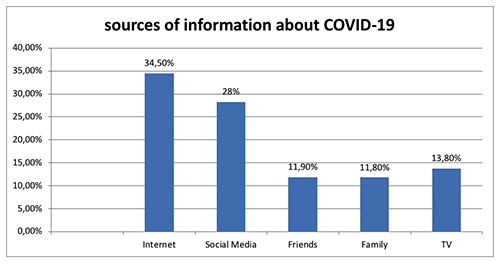
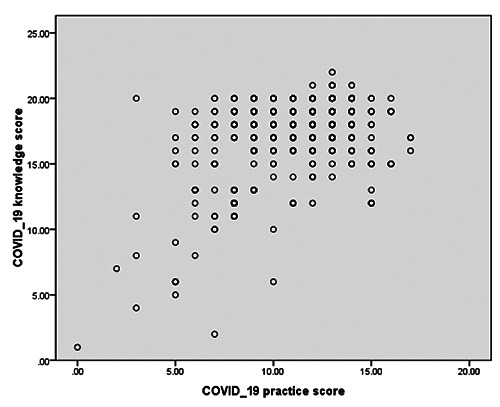
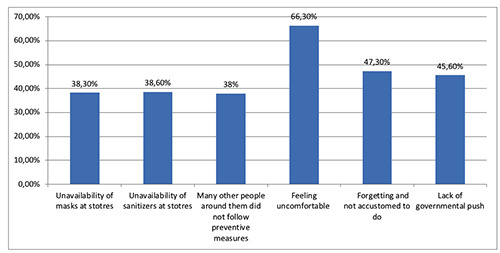
This study aims to assess COVID-19 related knowledge and practice among the Egyptians in Upper Egypt and to identify barriers that hinder adherence to these preventive measures. We conducted a cross-sectional study using a structured questionnaire. Data was collected from 21 to 30 August 2020, via both online survey and personal interviews using a non-probability self-nominated sample. A total of 731 participants completed the questionnaire. The mean age was 32.1± 2.1 and 64.3% were females. The main sources of knowledge were, Internet and Social Media followed by TV then family and friends. More than 96% of the respondents knew the origin, nature, the main symptoms, and the modes of transmission of COVID-19, however, 37.6% of them thought that COVID-19 patients must develop symptoms. 75.8% and 73.6% of the participants respectively covered their nose and mouth during sneezing and washed their hands regularly, 65.4% wore masks in crowded places, while only 31.1% and 30% of them respectively avoided touching their faces or shaking hands with friends. Knowledge and practice were positively correlated and both were linked to younger age and higher education and the female gender was also a predictor of better practice. The most common perceived barriers to adherence to preventive measures were feeling uncomfortable, forgetfulness then financial causes. the study subjects were aware of COVID-19 and its preventive measures however adherence to some of these measures was not prevalent amongst them, indicating an urgent need of addressing and targeting barriers that hinder adherence to COVID-19 preventive measures in the future policies to prevent the spread of COVID-19 in Egypt.
本研究旨在评估上埃及地区埃及人对新冠肺炎相关知识的掌握情况及实践情况,并确定阻碍他们遵守这些预防措施的障碍。我们使用结构化问卷进行了一项横断面研究。2020年8月21日至30日,通过在线调查和个人访谈,采用非概率自我提名样本收集数据。共有731名参与者完成了问卷。平均年龄为32.1±2.1岁,女性占64.3%。知识的主要来源是互联网和社交媒体,其次是电视,然后是家人和朋友。超过96%的受访者了解新冠肺炎的起源、性质、主要症状和传播方式,然而,其中37.6%的人认为新冠肺炎患者一定会出现症状。75.8%和73.6%的参与者在打喷嚏时分别捂住口鼻并定期洗手,65.4%的人在拥挤的地方戴口罩,而分别只有31.1%和30%的人避免触摸面部或与朋友握手。知识与实践呈正相关,且二者均与年龄较小、教育程度较高有关,女性也是实践较好的一个预测因素。遵守预防措施最常见的感知障碍是感觉不舒服、健忘,然后是经济原因。研究对象了解新冠肺炎及其预防措施,然而其中一些措施的遵守情况并不普遍,这表明在未来政策中迫切需要解决和针对阻碍遵守新冠肺炎预防措施的障碍,以防止新冠肺炎在埃及传播。