Information and Management Systems Engineering, Nagaoka University of Technology, 1603-1 Kamitomioka, Nagaoka 940-2188, Niigata, Japan.
Department Information Science and Engineering, National Institute of Technology, Tomakomai College, 443 Aza-Nishikioka, Tomakomai 059-1275, Hokkaido, Japan.
Sensors (Basel). 2022 Apr 25;22(9):3296. doi: 10.3390/s22093296.
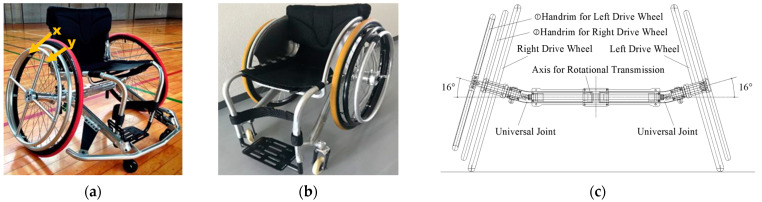
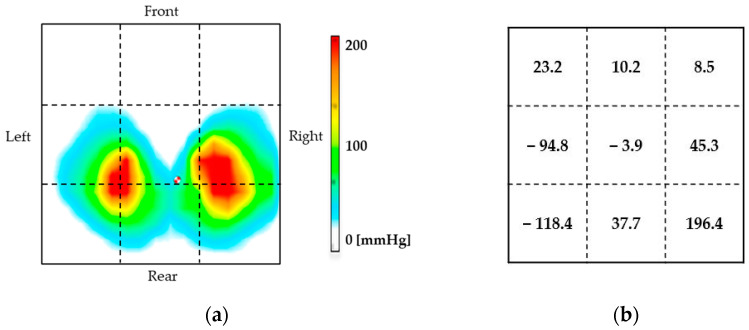
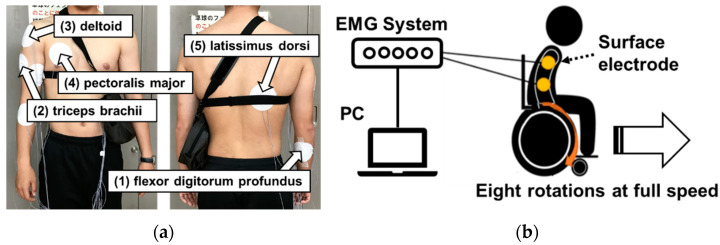
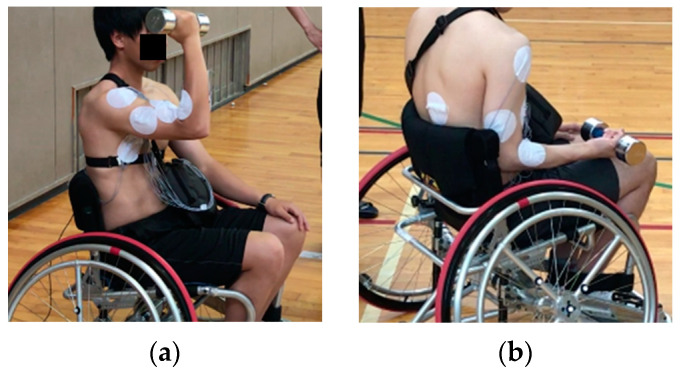
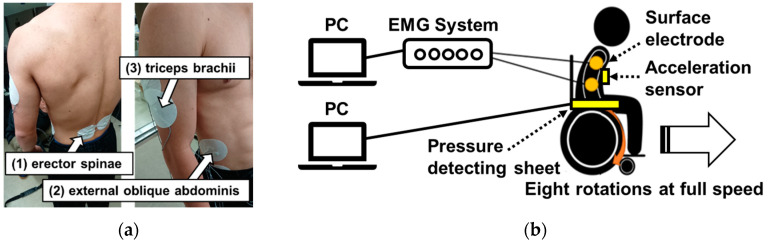
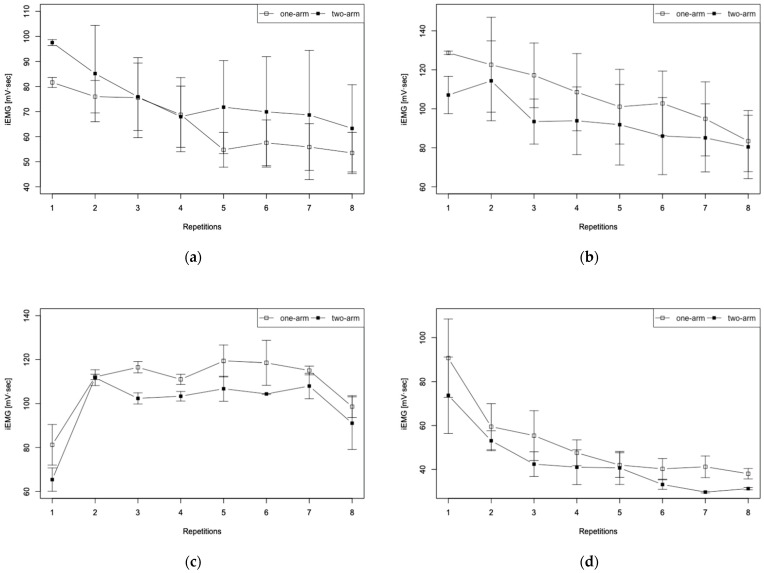
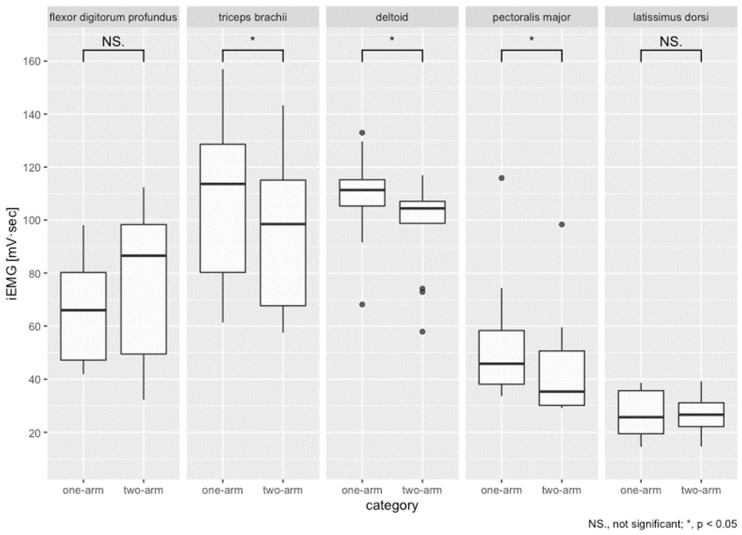
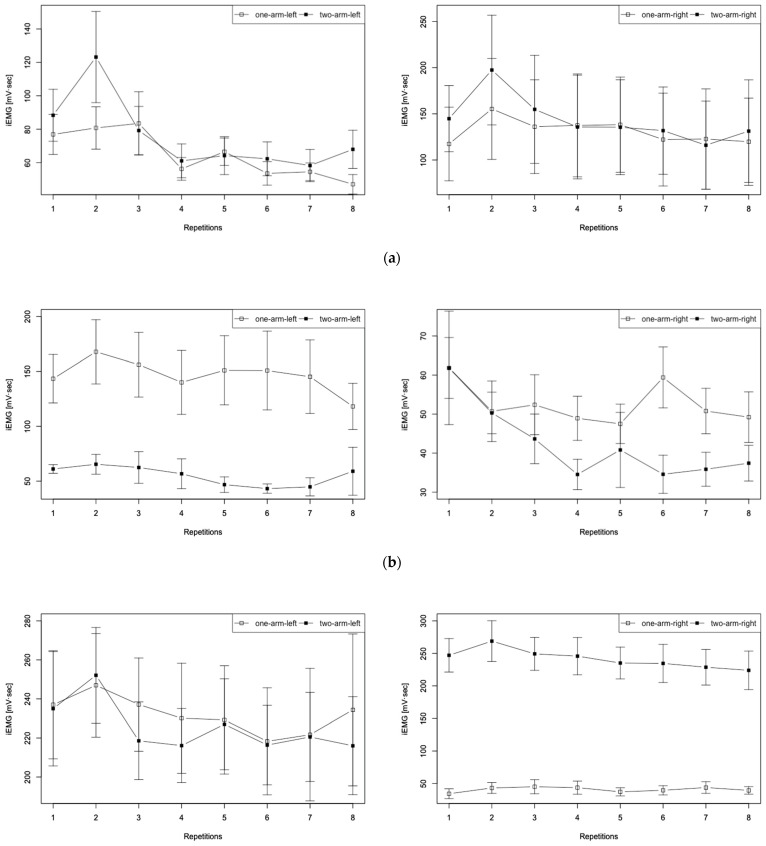
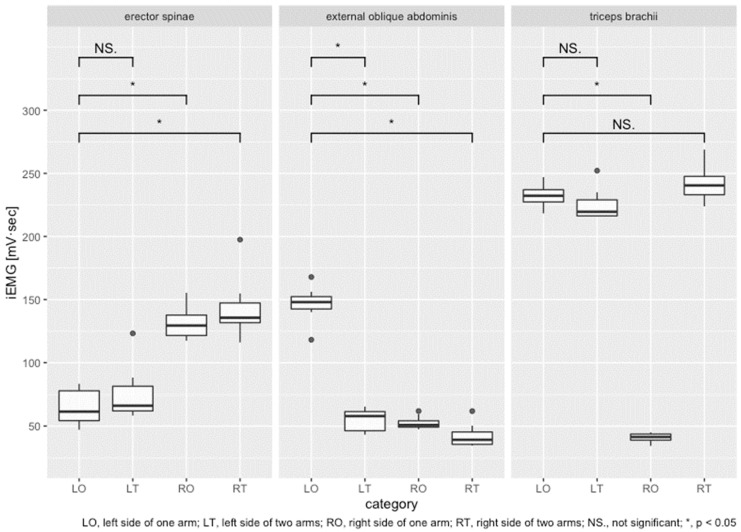
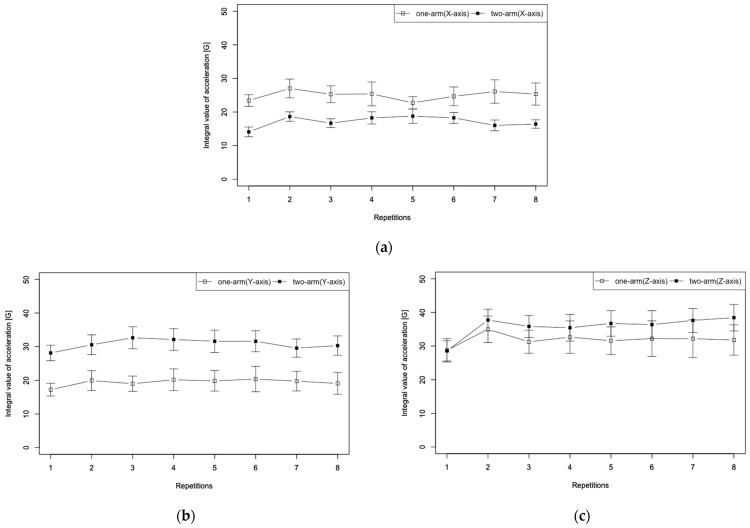
This study examined competitive wheelchairs that facilitate sports participation. They can be moved straight ahead using only one arm. Our designed and developed competitive wheel-chairs have a dual hand-rim system. Their two hand-rims, attached to a drive wheel on one side, can be operated simultaneously for straight-ahead movement. Specifically, based on integrated electromyography (iEMG) data calculated from surface electromyography (sEMG), we examined the wheelchair loading characteristics, posture estimation, and effects on body posture during one-arm propulsion movement. The first experiment yielded insights into arm and shoulder-joint muscle activation from iEMG results obtained for two-hand propulsion and dual hand-rim system propulsion. Results suggest that muscle activation of one arm can produce equal propulsive force to that produced by two arms. The second experiment estimated the movement posture from iEMG during one-arm wheelchair propulsion. The external oblique abdominis is particularly important for one-arm wheelchair propulsion. The iEMG posture estimation validity was verified based on changes in the user body axis and seat pressure distribution. In conclusion, as confirmed by iEMG, which is useful to estimate posture during movement, one-arm wheelchair use requires different muscle activation sites and posture than when using two arms.
本研究考察了有助于体育参与的竞技轮椅。它们可以只用一只手臂直线前进。我们设计和开发的竞技轮椅有一个双把手系统。它们的两个把手,连接在一侧的驱动轮上,可以同时操作以实现直线前进。具体来说,基于从表面肌电图(sEMG)计算得出的集成肌电图(iEMG)数据,我们研究了轮椅的负载特性、姿势估计以及在单臂推进运动中对身体姿势的影响。第一项实验深入研究了双手推进和双手柄系统推进时从 iEMG 获得的手臂和肩关节肌肉的激活情况。结果表明,一只手臂的肌肉激活可以产生与两只手臂相同的推进力。第二项实验根据单臂轮椅推进过程中的 iEMG 估计运动姿势。腹外斜肌在单臂轮椅推进中尤为重要。基于用户身体轴线和座椅压力分布的变化,验证了 iEMG 姿势估计的有效性。总之,正如运动过程中有用的 iEMG 所证实的那样,单臂轮椅的使用需要与双臂使用不同的肌肉激活部位和姿势。