Snitz Kobi, Honigstein Danielle, Weissgross Reut, Ravia Aharon, Mishor Eva, Perl Ofer, Karagach Shiri, Medhanie Abebe, Harel Nir, Shushan Sagit, Roth Yehudah, Iravani Behzad, Arshamian Artin, Ernst Gernot, Okamoto Masako, Poo Cindy, Bonacchi Niccolò, Mainen Zachary, Monteleone Erminio, Dinnella Caterina, Spinelli Sara, Mariño-Sánchez Franklin, Ferdenzi Camille, Smeets Monique, Touhara Kazushige, Bensafi Moustafa, Hummel Thomas, Lundström Johan N, Sobel Noam
Department of Neurobiology, Weizmann Institute of Science, Rehovot, Israel.
Department of Fine Arts, Bezalel Academy of Fine Arts and Design, Jerusalem, Israel.
Commun Med (Lond). 2022 Apr 5;2:34. doi: 10.1038/s43856-022-00095-7. eCollection 2022.
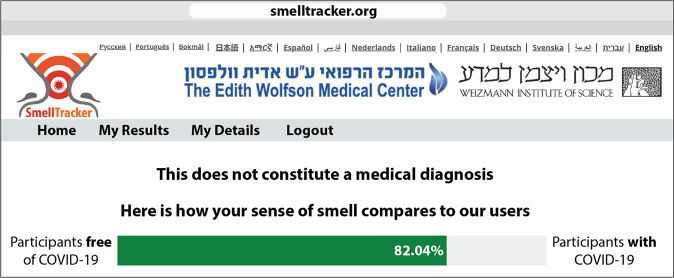
Key to curtailing the COVID-19 pandemic are wide-scale screening strategies. An ideal screen is one that would not rely on transporting, distributing, and collecting physical specimens. Given the olfactory impairment associated with COVID-19, we developed a perceptual measure of olfaction that relies on smelling household odorants and rating them online.
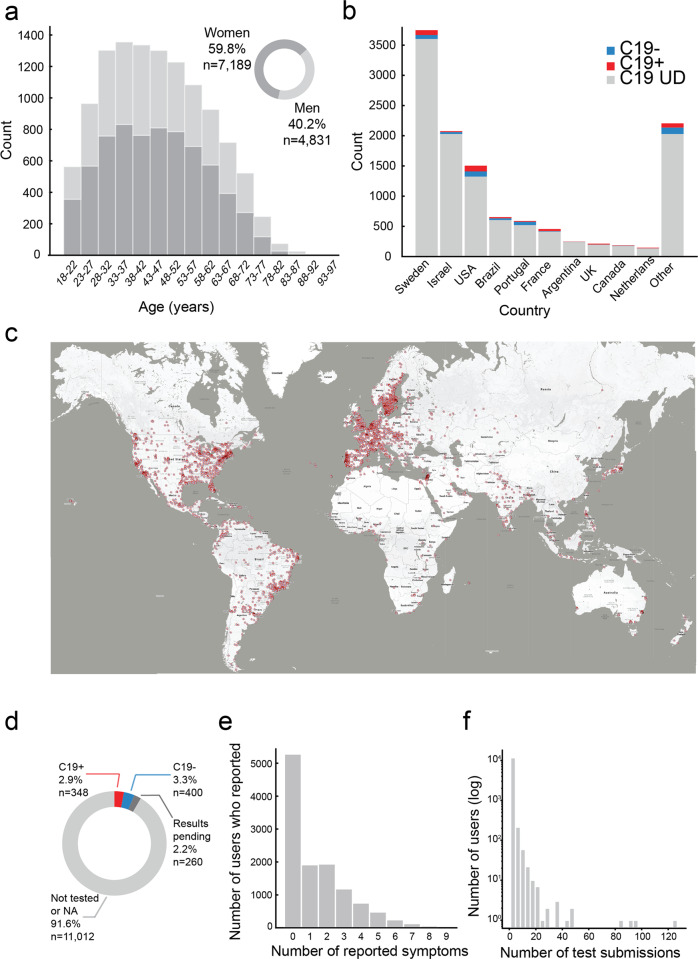
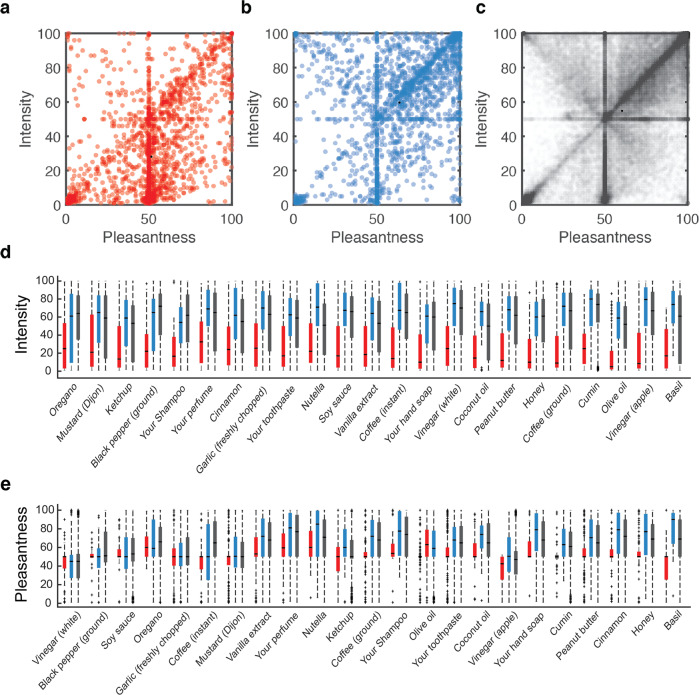
Each participant was instructed to select 5 household items, and rate their perceived odor pleasantness and intensity using an online visual analogue scale. We used this data to assign an olfactory perceptual fingerprint, a value that reflects the perceived difference between odorants. We tested the performance of this real-time tool in a total of 13,484 participants (462 COVID-19 positive) from 134 countries who provided 178,820 perceptual ratings of 60 different household odorants.
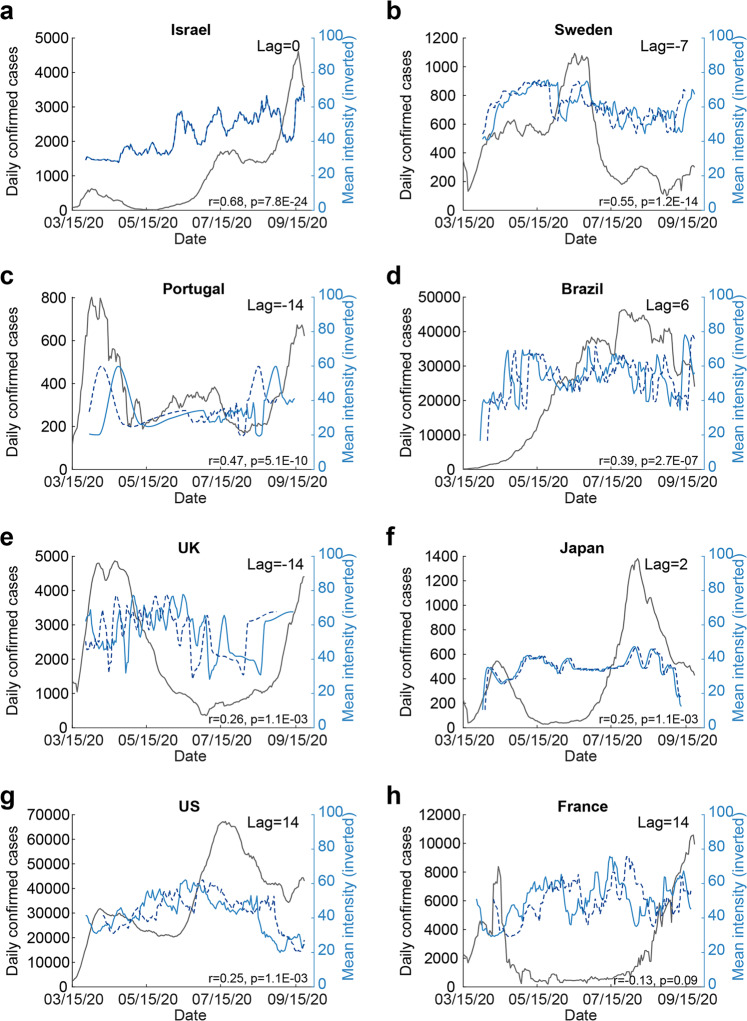
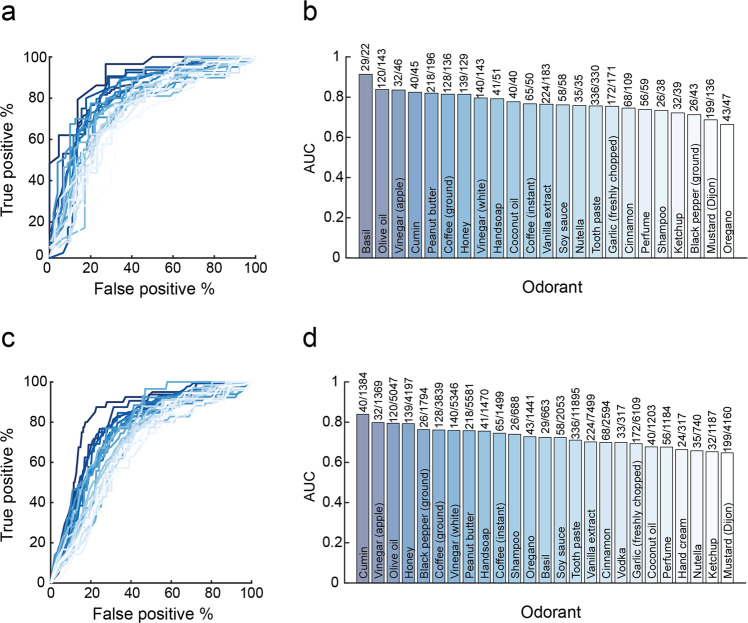
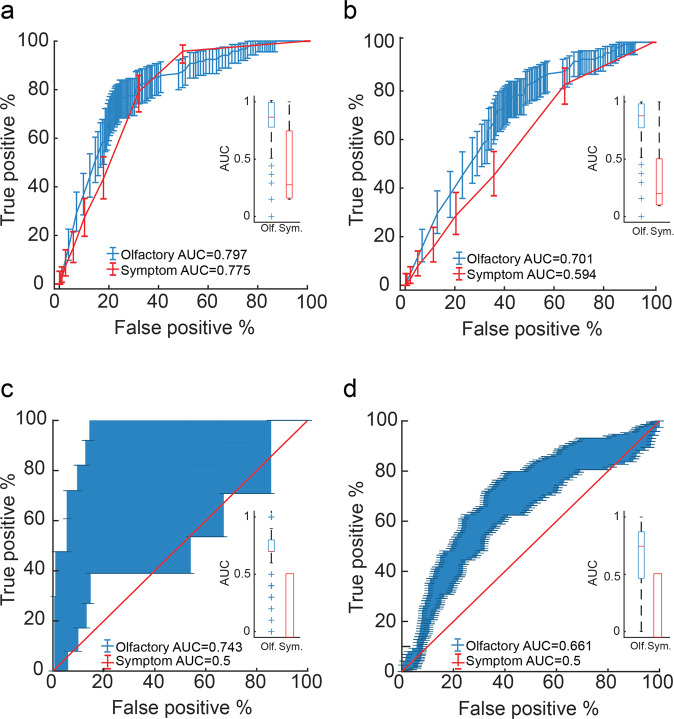
We observe that olfactory ratings are indicative of COVID-19 status in a country, significantly correlating with national infection rates over time. More importantly, we observe indicative power at the individual level (79% sensitivity and 87% specificity). Critically, this olfactory screen remains effective in participants with COVID-19 but without symptoms, and in participants with symptoms but without COVID-19.
The current odorant-based olfactory screen adds a component to online symptom-checkers, to potentially provide an added first line of defense that can help fight disease progression at the population level. The data derived from this tool may allow better understanding of the link between COVID-19 and olfaction.
大规模筛查策略是遏制新冠疫情的关键。理想的筛查方法不应依赖于运输、分发和收集实物样本。鉴于新冠病毒感染与嗅觉障碍有关,我们开发了一种嗅觉感知测量方法,该方法依赖于闻常见家用气味剂并在线对其进行评分。
指导每位参与者选择5种家用物品,并使用在线视觉模拟量表对其感知到的气味愉悦度和强度进行评分。我们利用这些数据生成一个嗅觉感知指纹,该值反映了不同气味剂之间的感知差异。我们在来自134个国家的总共13484名参与者(462名新冠病毒检测呈阳性)中测试了这种实时工具的性能,这些参与者对60种不同家用气味剂提供了178820次感知评分。
我们观察到,嗅觉评分可表明一个国家的新冠疫情状况,与国家感染率随时间的变化显著相关。更重要的是,我们在个体层面观察到了其指示作用(灵敏度为79%,特异性为87%)。关键的是,这种嗅觉筛查方法对新冠病毒感染但无症状的参与者以及有症状但未感染新冠病毒的参与者仍然有效。
目前基于气味剂的嗅觉筛查为在线症状检查工具增加了一个组成部分,有可能提供额外的第一道防线,有助于在人群层面抗击疾病进展。从该工具获得的数据可能有助于更好地理解新冠病毒感染与嗅觉之间的联系。