Shaanxi Key Laboratory of Agricultural and Environmental Microbiology, College of Life Sciences, Northwest A&F University, Yangling, Shaanxi, China.
mBio. 2022 Jun 28;13(3):e0363221. doi: 10.1128/mbio.03632-21. Epub 2022 May 23.
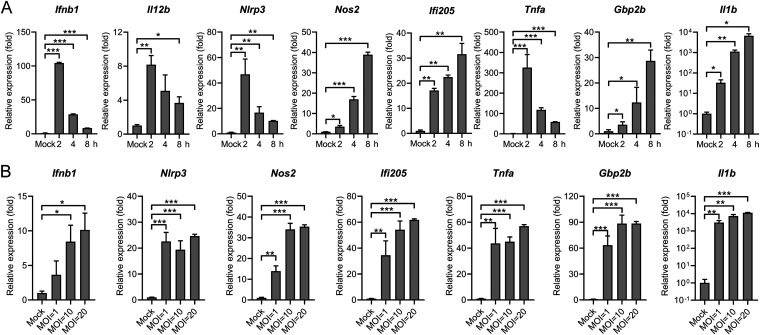
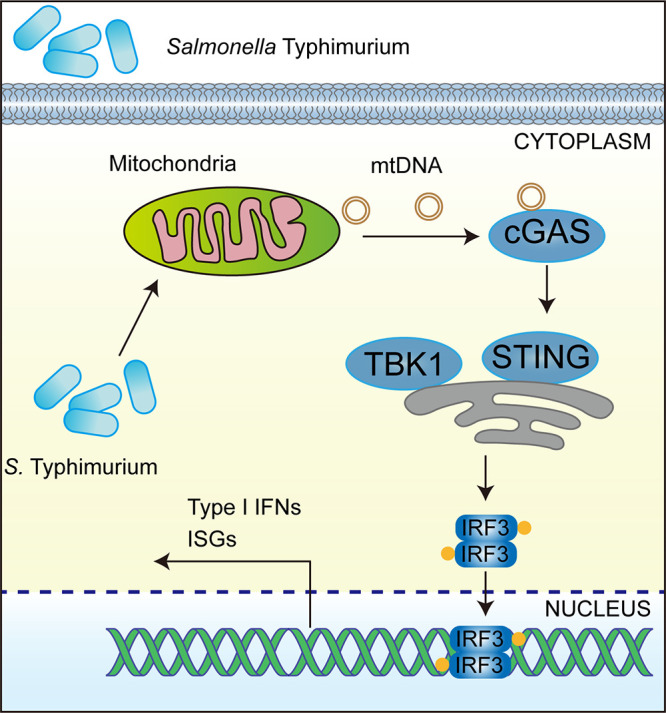
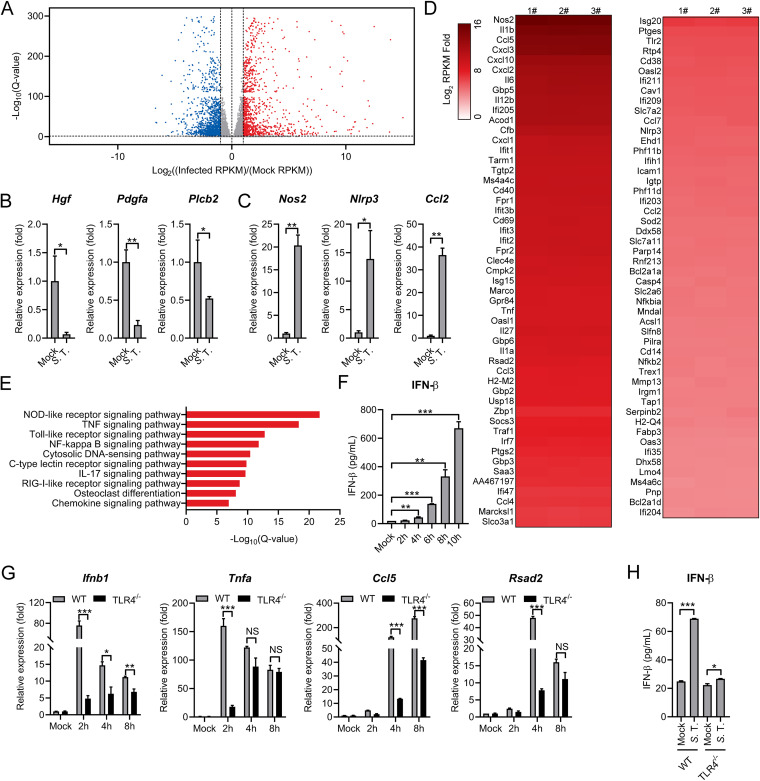
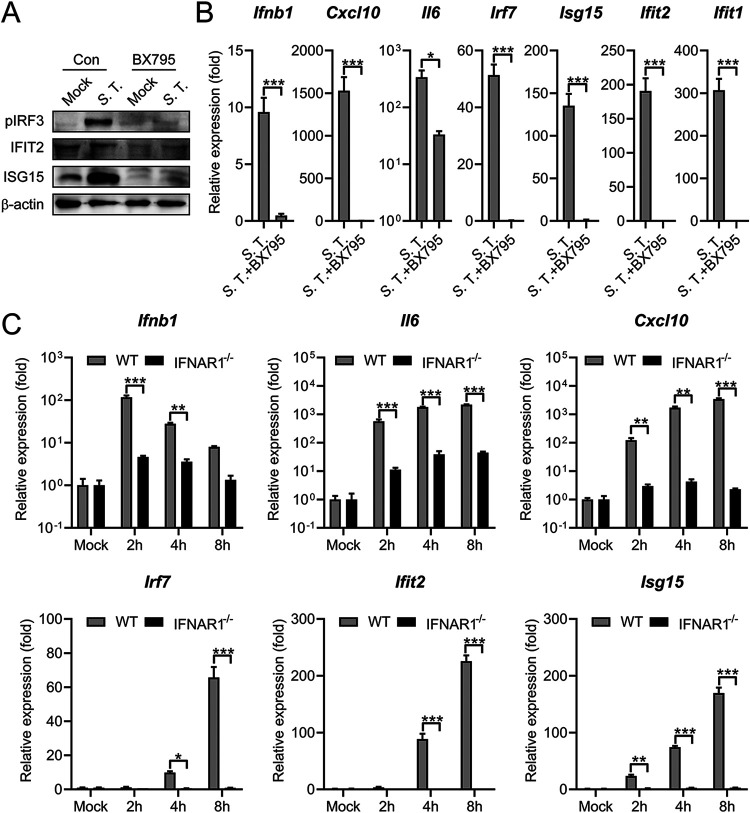
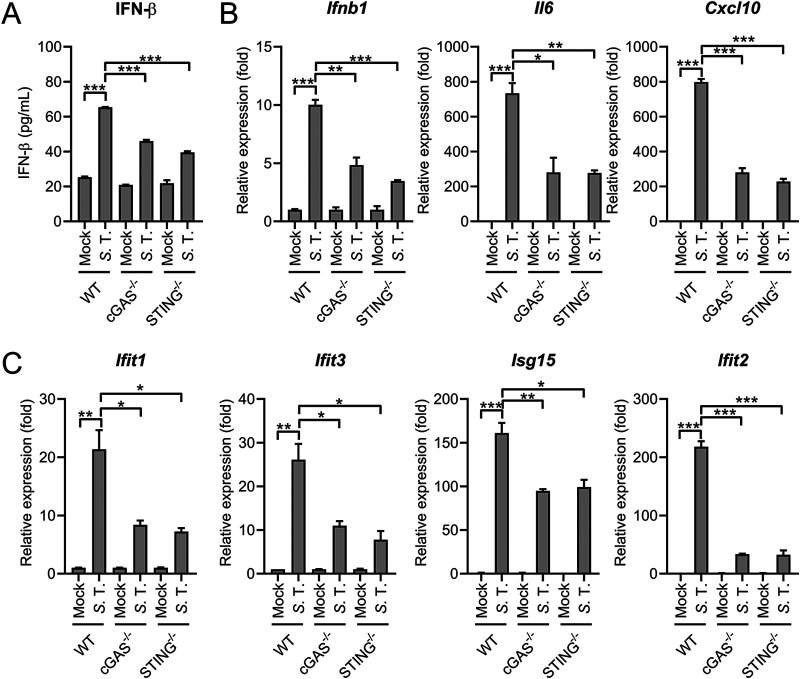
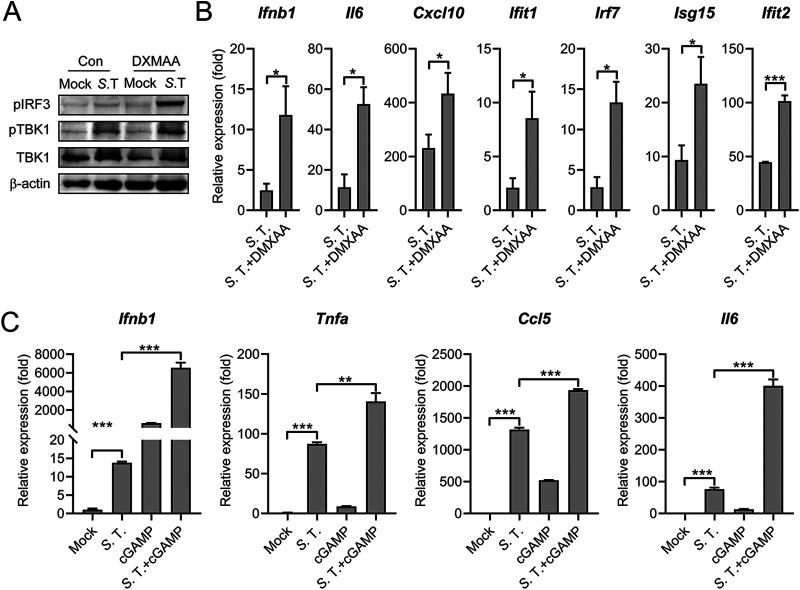
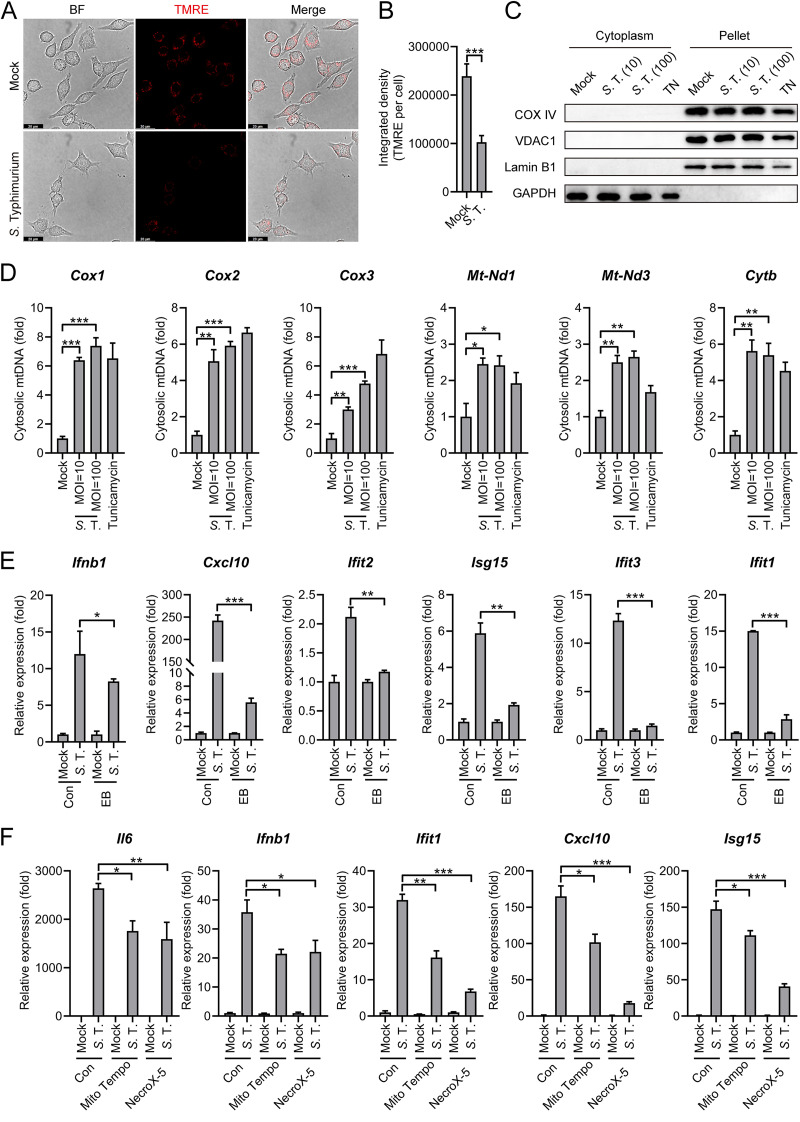
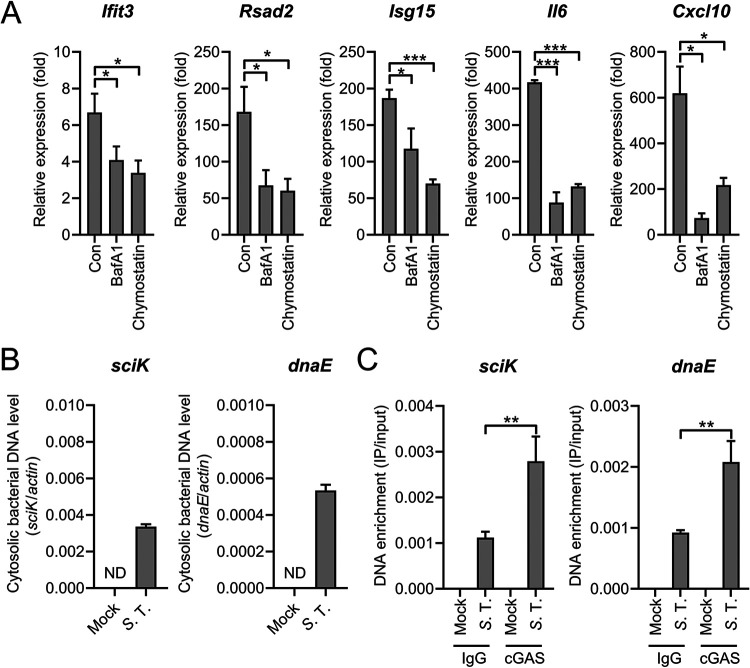
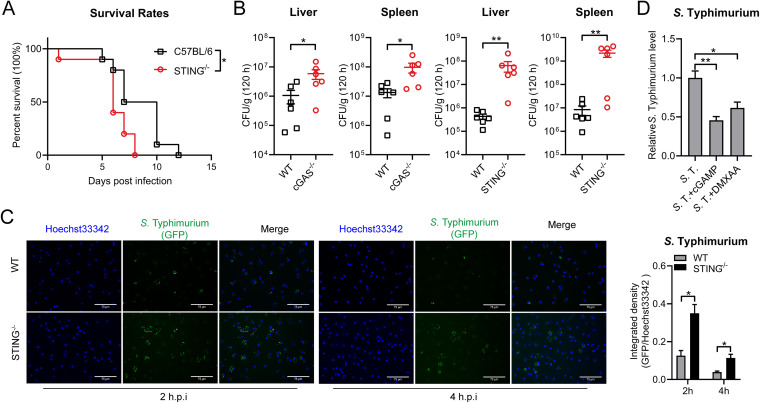
Salmonella enterica serovar Typhimurium ( Typhimurium) elicited strong innate immune responses in macrophages. To activate innate immunity, pattern recognition receptors (PRRs) in host cells can recognize highly conserved pathogen-associated molecular patterns (PAMPs). Here, we showed that Typhimurium induced a robust type I interferon (IFN) response in murine macrophages. Exposure of macrophages to Typhimurium activated a Toll-like receptor 4 (TLR4)-dependent type I IFN response. Next, we showed that type I IFN and IFN-stimulated genes (ISGs) were elicited in a TBK1-IFN-dependent manner. Furthermore, cytosolic DNA sensor cyclic GMP-AMP synthase (cGAS) and immune adaptor protein stimulator of interferon genes (STING) were also required for the induction of type I IFN response during infection. Intriguingly, Typhimurium infection triggered mitochondrial DNA (mtDNA) release into the cytosol to activate the type I IFN response. In addition, we also showed that bacterial DNA was enriched in cGAS during infection, which may contribute to cGAS activation. Finally, we showed that cGAS and STING deficient mice and cells were more susceptible to Typhimurium infection, signifying the critical role of the cGAS-STING pathway in host defense against Typhimurium infection. In conclusion, in addition to TLR4-dependent innate immune response, we demonstrated that Typhimurium induced the type I IFN response in a cGAS-STING-dependent manner and the Typhimurium-induced mtDNA release was important for the induction of type I IFN. This study elucidated a new mechanism by which bacterial pathogen activated the cGAS-STING pathway and also characterized the important role of cGAS-STING during Typhimurium infection. As one of the most common foodborne transmitted zoonotic pathogens, Typhimurium infection causes diarrheal disease in humans and animals. Typhimurium infection has been implicated as an inducer for the type I interferon (IFN) response in macrophages, but the mechanisms are not fully understood. In this study, we reported that in addition to TLR4-dependent response, the cytosolic surveillance pathway (CSP) cGAS-STING is also required for the activation of type I IFN response during Typhimurium infection. We further showed that the infection of Typhimurium triggered mtDNA release into the cytosol, which induces the type I IFN response. In addition, physical interactions between cGAS and Typhimurium DNA have been identified in the context of infection. Importantly, we also provided convincing and evidence that the cGAS-STING pathway was potently implicated in the host defense against Typhimurium infection. Together, we uncovered a mechanism by which type I IFN response is elicited during Typhimurium infection in murine macrophages in an mtDNA-cGAS-STING-dependent manner.
鼠伤寒沙门氏菌(鼠伤寒)在巨噬细胞中引发强烈的固有免疫反应。为了激活先天免疫,宿主细胞中的模式识别受体(PRRs)可以识别高度保守的病原体相关分子模式(PAMPs)。在这里,我们表明鼠伤寒诱导了小鼠巨噬细胞中强烈的 I 型干扰素(IFN)反应。巨噬细胞暴露于鼠伤寒会激活 TLR4 依赖性 I 型 IFN 反应。接下来,我们表明 I 型 IFN 和 IFN 刺激基因(ISGs)以 TBK1-IFN 依赖性方式被诱导。此外,在感染过程中,I 型 IFN 反应的诱导还需要细胞质 DNA 传感器环鸟苷酸-腺苷酸合酶(cGAS)和免疫衔接蛋白干扰素基因刺激物(STING)。有趣的是,鼠伤寒感染引发线粒体 DNA(mtDNA)释放到细胞质中以激活 I 型 IFN 反应。此外,我们还表明,在感染过程中,细菌 DNA 在 cGAS 中富集,这可能有助于 cGAS 激活。最后,我们表明 cGAS 和 STING 缺陷型小鼠和细胞更容易感染鼠伤寒,这表明 cGAS-STING 途径在宿主防御鼠伤寒感染中起着关键作用。总之,除了 TLR4 依赖性先天免疫反应外,我们还证明鼠伤寒以 cGAS-STING 依赖性方式诱导 I 型 IFN 反应,并且鼠伤寒诱导的 mtDNA 释放对于诱导 I 型 IFN 反应很重要。本研究阐明了细菌病原体激活 cGAS-STING 途径的新机制,并描述了 cGAS-STING 在鼠伤寒感染期间的重要作用。作为最常见的食源性病原体之一,鼠伤寒会引起人类和动物的腹泻病。鼠伤寒感染被认为是巨噬细胞中 I 型干扰素(IFN)反应的诱导剂,但机制尚不完全清楚。在这项研究中,我们报道了除 TLR4 依赖性反应外,细胞质监测途径(CSP)cGAS-STING 也需要在鼠伤寒感染期间激活 I 型 IFN 反应。我们进一步表明,鼠伤寒的感染会触发 mtDNA 释放到细胞质中,从而诱导 I 型 IFN 反应。此外,在感染的情况下,已经鉴定出 cGAS 和鼠伤寒 DNA 之间的物理相互作用。重要的是,我们还提供了令人信服的证据表明 cGAS-STING 途径在宿主防御鼠伤寒感染中起着重要作用。综上所述,我们揭示了一种机制,即在鼠伤寒感染的小鼠巨噬细胞中,I 型 IFN 反应以 mtDNA-cGAS-STING 依赖性方式被诱导。