Department of Cognitive Science, Johns Hopkins University, Baltimore, United States.
Department of Psychological and Brain Sciences, Johns Hopkins University, Baltimore, United States.
Elife. 2022 May 24;11:e75027. doi: 10.7554/eLife.75027.
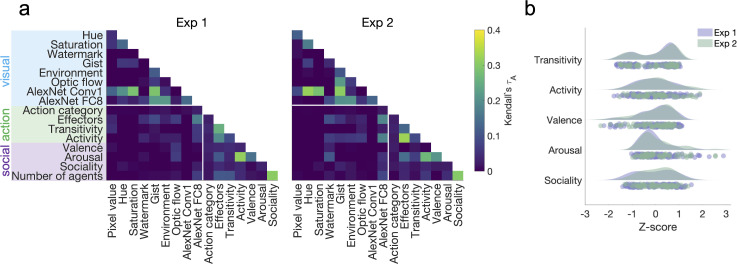
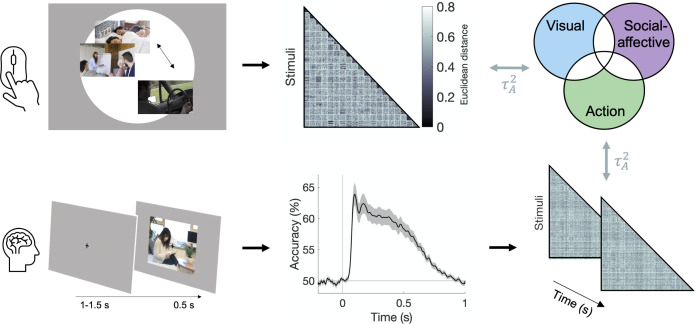
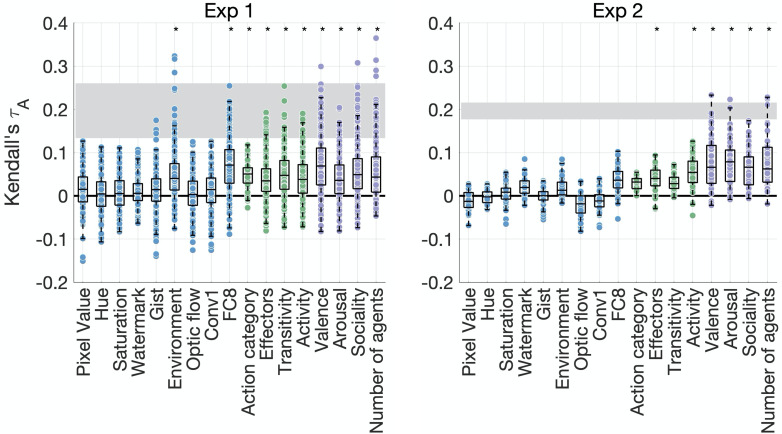
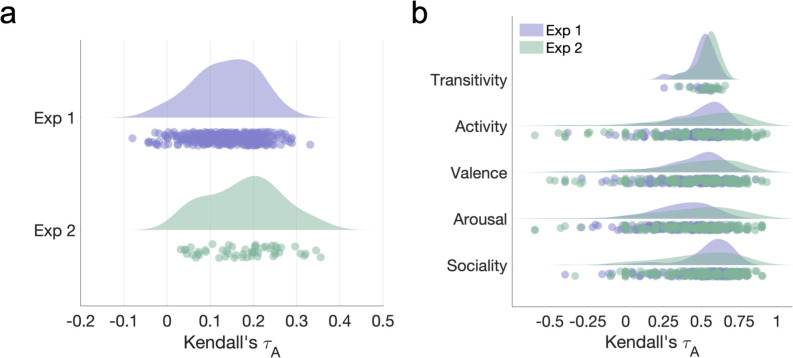
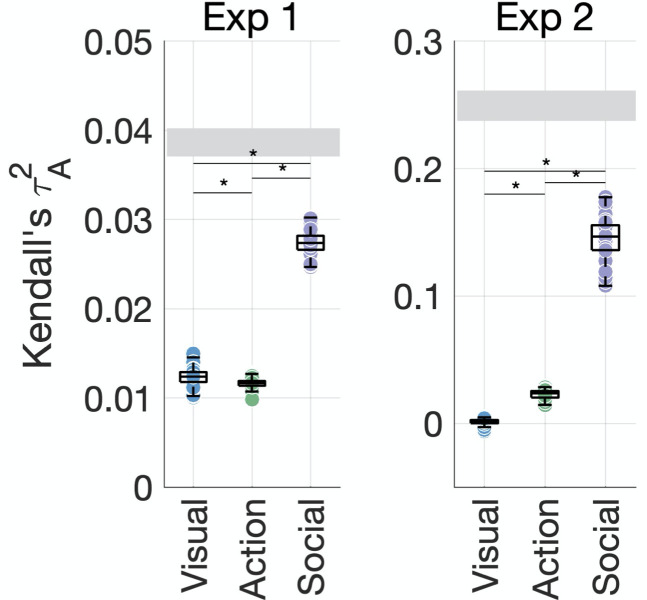
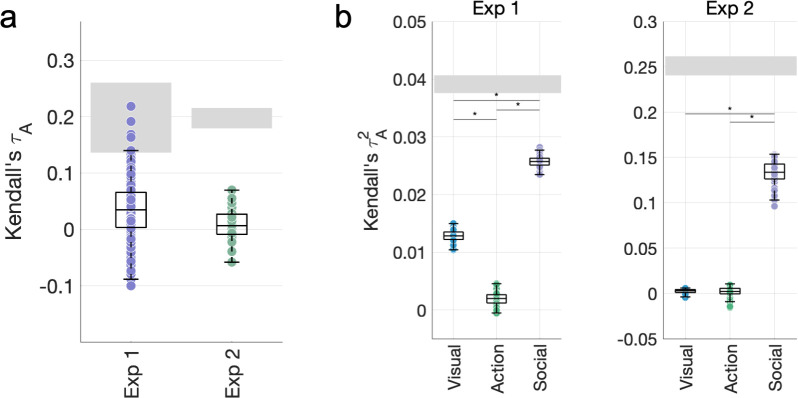
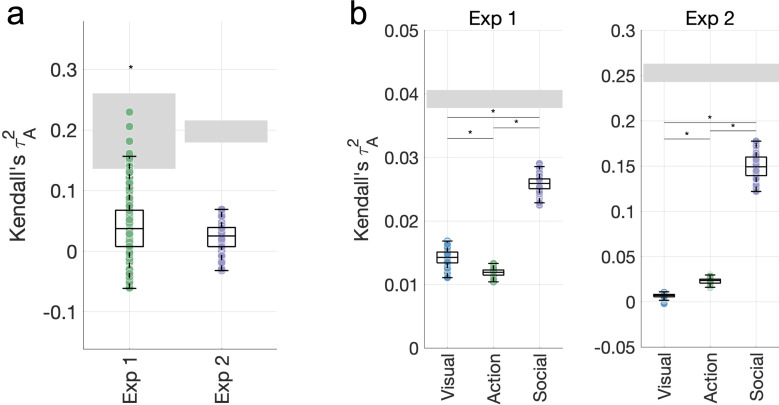
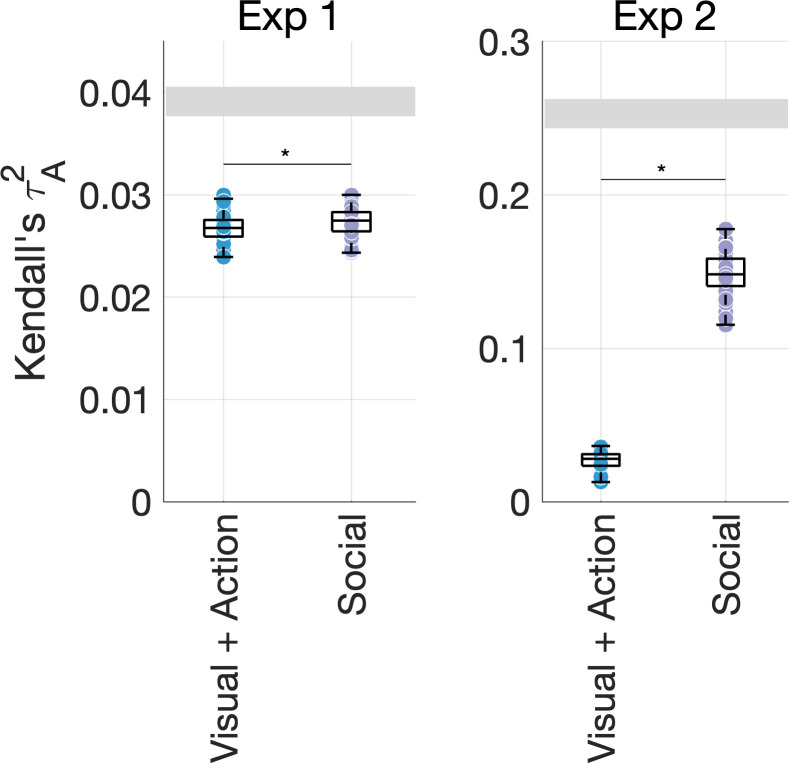
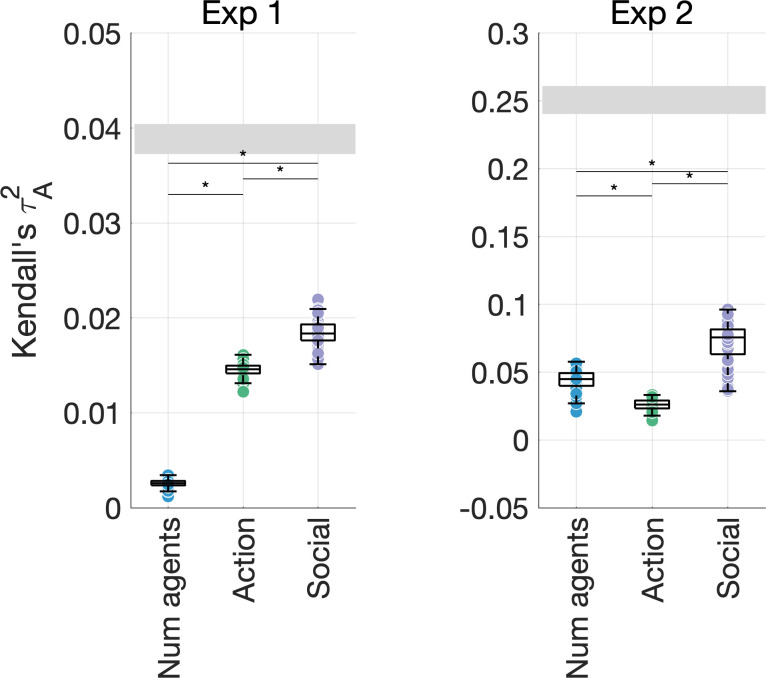
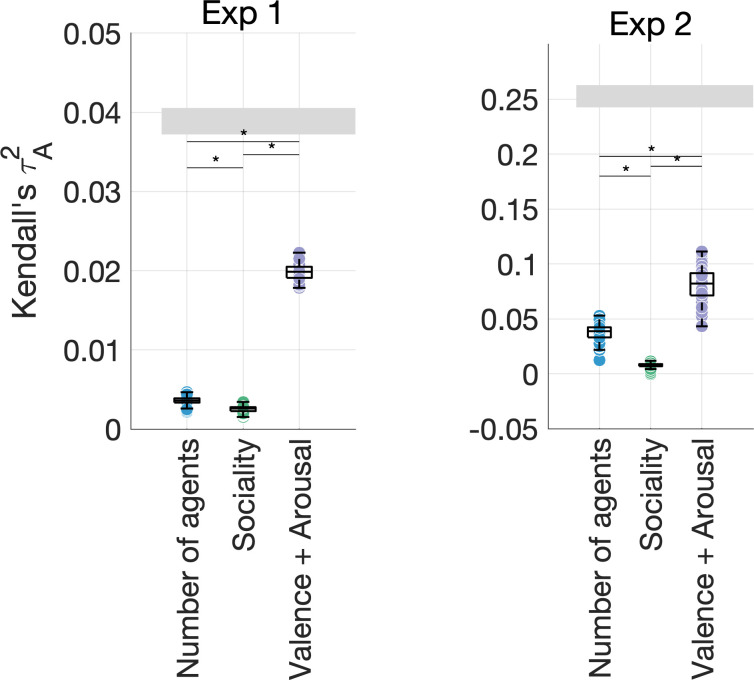
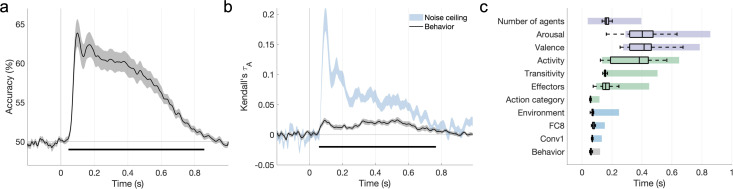
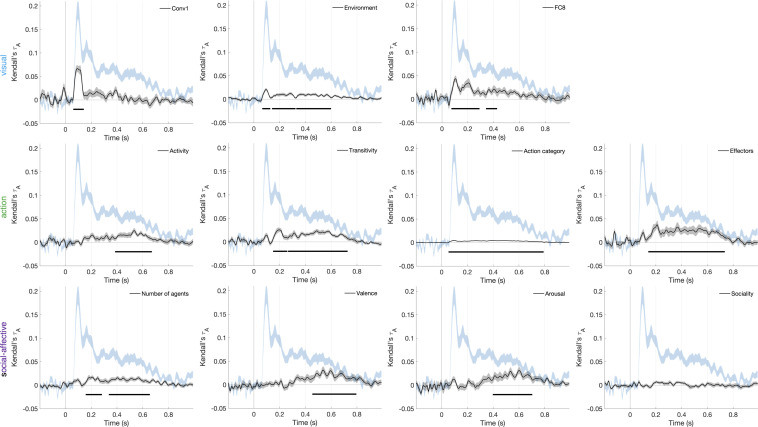
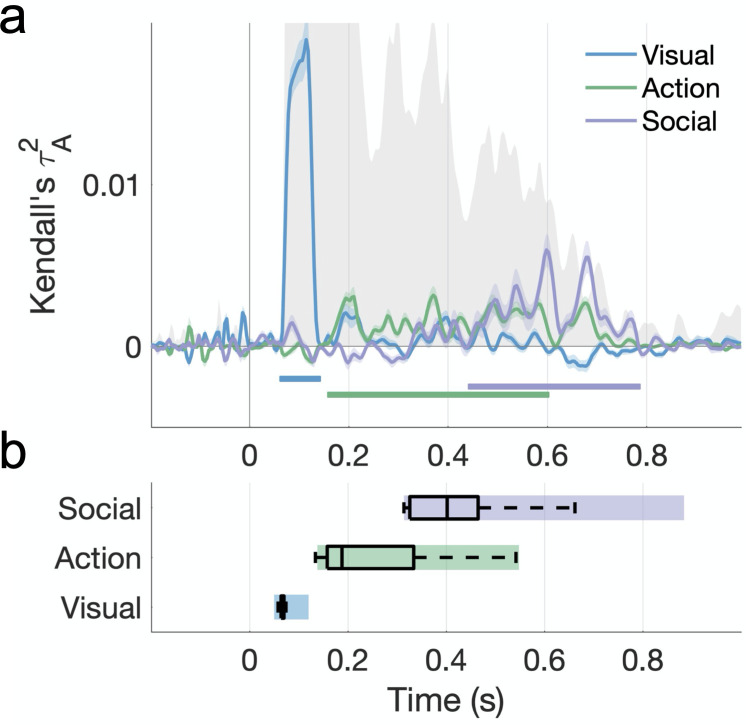
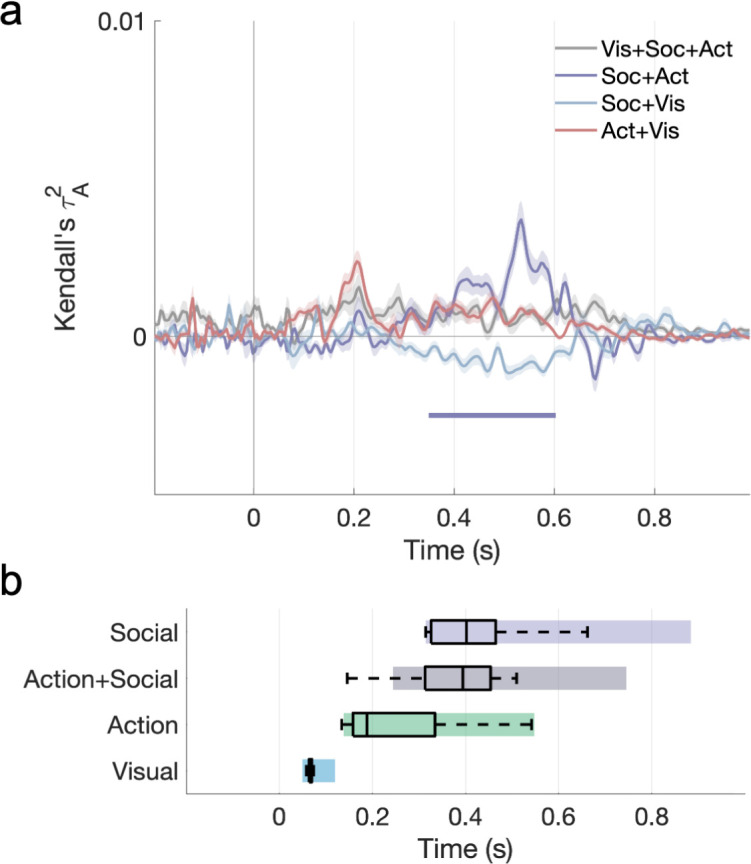
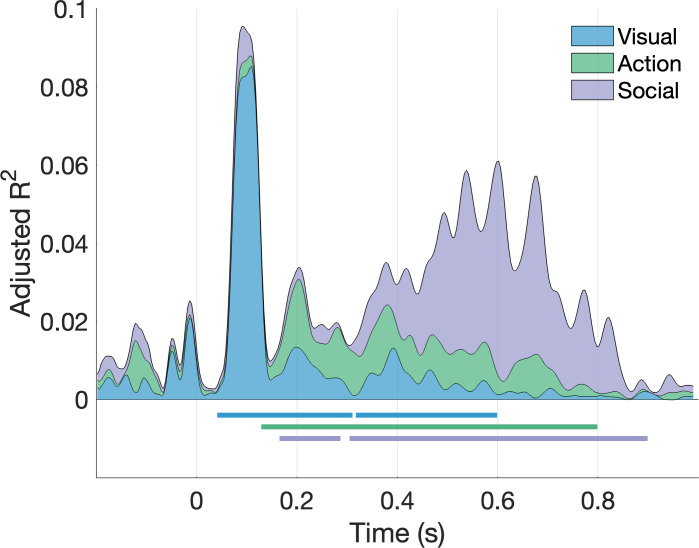
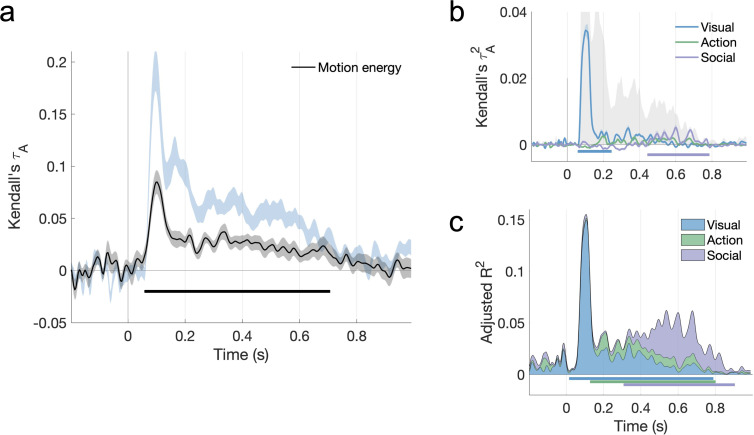
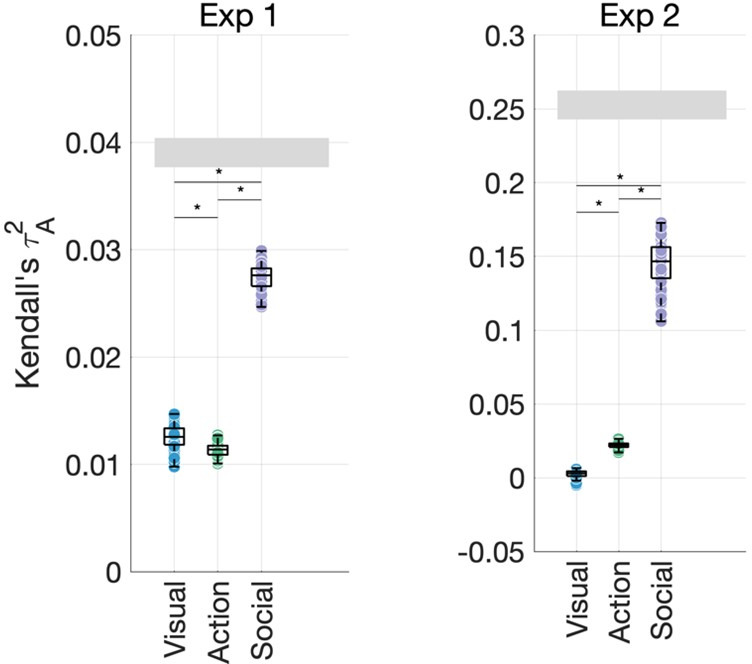
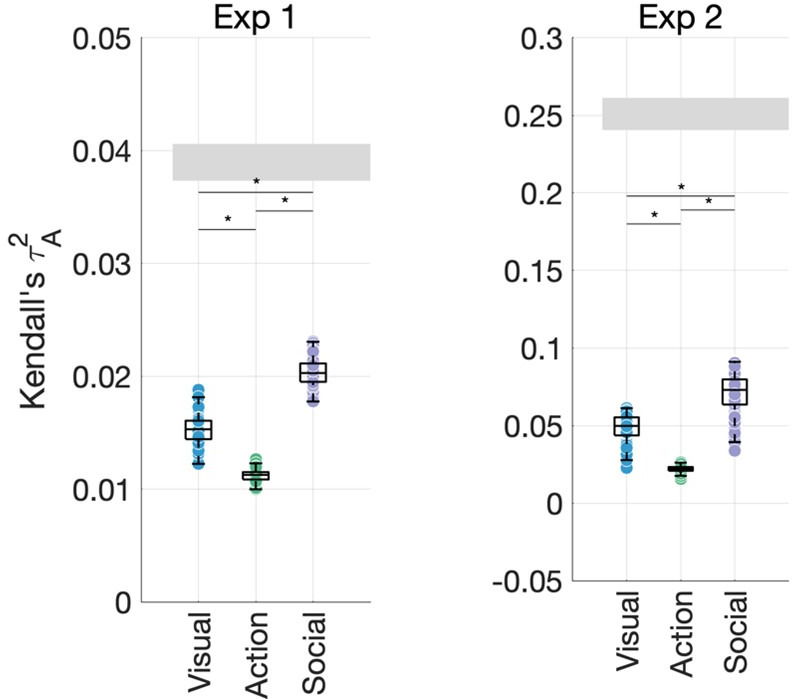
Humans observe actions performed by others in many different visual and social settings. What features do we extract and attend when we view such complex scenes, and how are they processed in the brain? To answer these questions, we curated two large-scale sets of naturalistic videos of everyday actions and estimated their perceived similarity in two behavioral experiments. We normed and quantified a large range of visual, action-related, and social-affective features across the stimulus sets. Using a cross-validated variance partitioning analysis, we found that social-affective features predicted similarity judgments better than, and independently of, visual and action features in both behavioral experiments. Next, we conducted an electroencephalography experiment, which revealed a sustained correlation between neural responses to videos and their behavioral similarity. Visual, action, and social-affective features predicted neural patterns at early, intermediate, and late stages, respectively, during this behaviorally relevant time window. Together, these findings show that social-affective features are important for perceiving naturalistic actions and are extracted at the final stage of a temporal gradient in the brain.
人类在许多不同的视觉和社交环境中观察他人的行为。当我们观看如此复杂的场景时,我们会提取和关注哪些特征,这些特征又是如何在大脑中处理的?为了回答这些问题,我们策划了两个大规模的自然行为视频集,并在两个行为实验中估计了它们的感知相似性。我们对刺激集进行了大范围的视觉、动作相关和社交情感特征的规范和量化。使用交叉验证的方差分解分析,我们发现,在两个行为实验中,社交情感特征比视觉和动作特征更好地预测了相似性判断,而且是独立于这些特征的。接下来,我们进行了一项脑电图实验,结果显示视频的神经反应与其行为相似性之间存在持续的相关性。在这个与行为相关的时间窗口内,视觉、动作和社交情感特征分别在早期、中期和晚期预测了神经模式。这些发现表明,社交情感特征对于感知自然行为很重要,并且是在大脑中的时间梯度的最后阶段提取出来的。