Taub Institute for Research on Alzheimer's Disease and the Aging Brain, College of Physicians and Surgeons, Columbia University, 630 West 168th Street, New York, NY, 10032, USA.
The Gertrude H. Sergievsky Center, College of Physicians and Surgeons, Columbia University, 630 West 168th Street, New York, NY, 10032, USA.
Acta Neuropathol. 2022 Jul;144(1):59-79. doi: 10.1007/s00401-022-02431-6. Epub 2022 May 24.
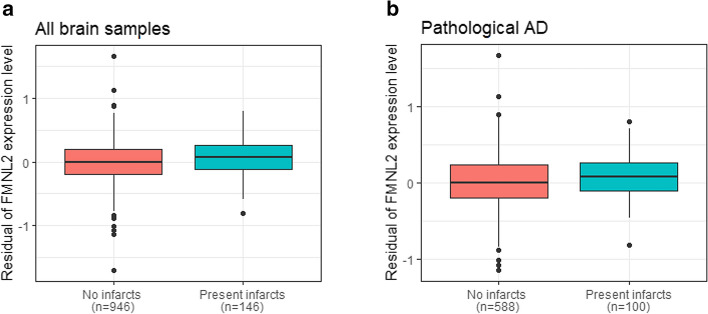
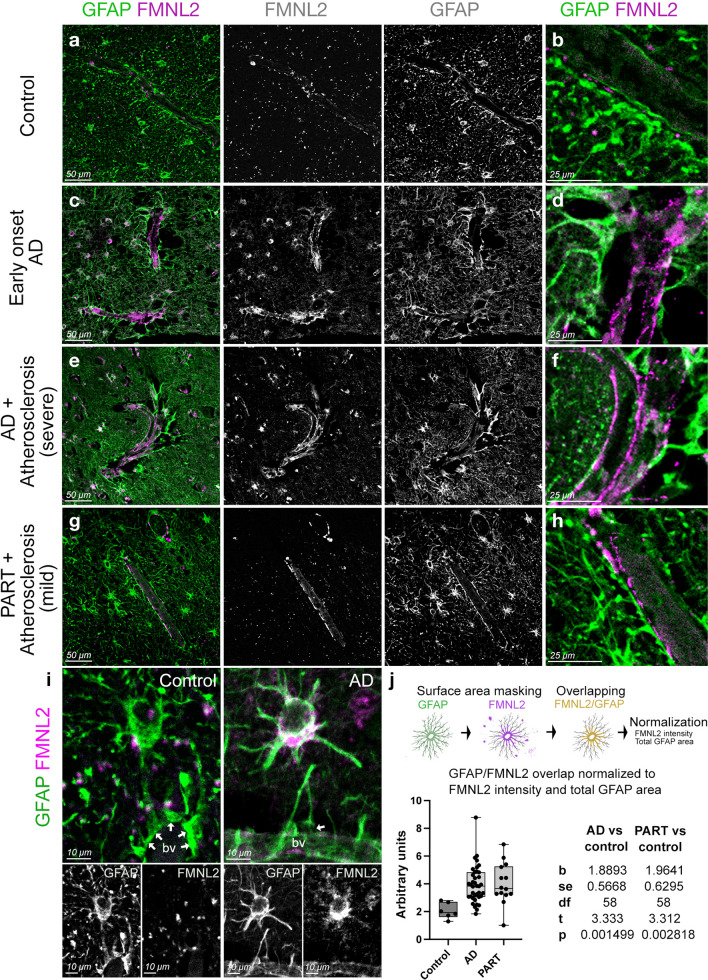
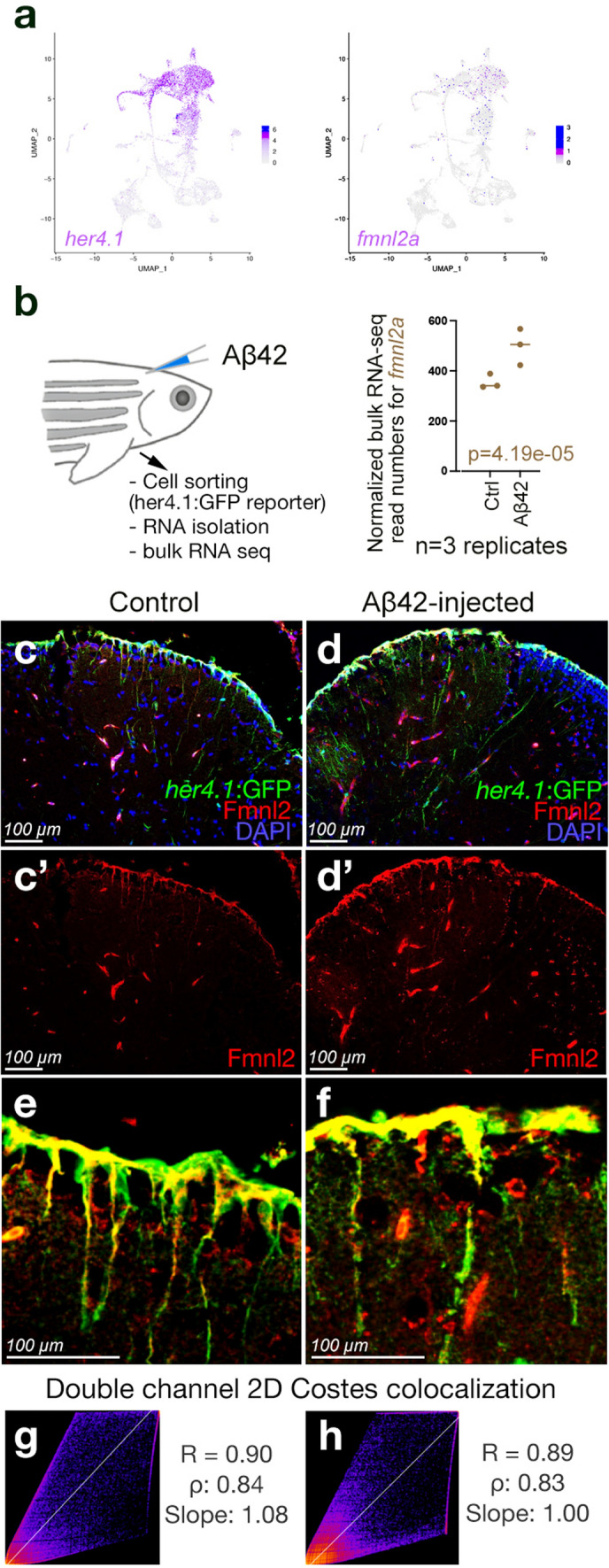
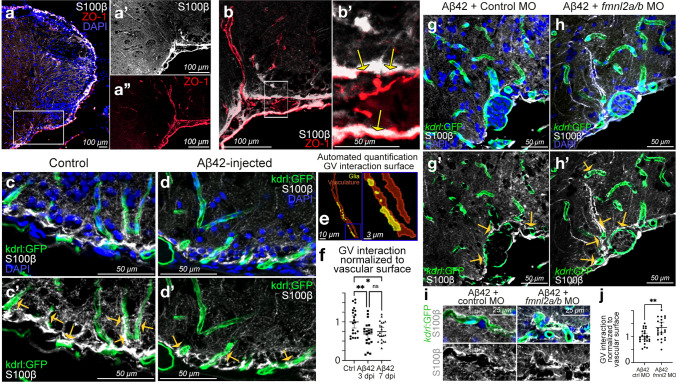
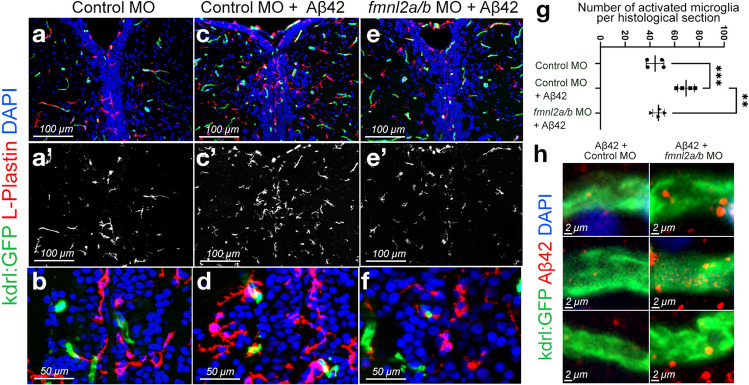
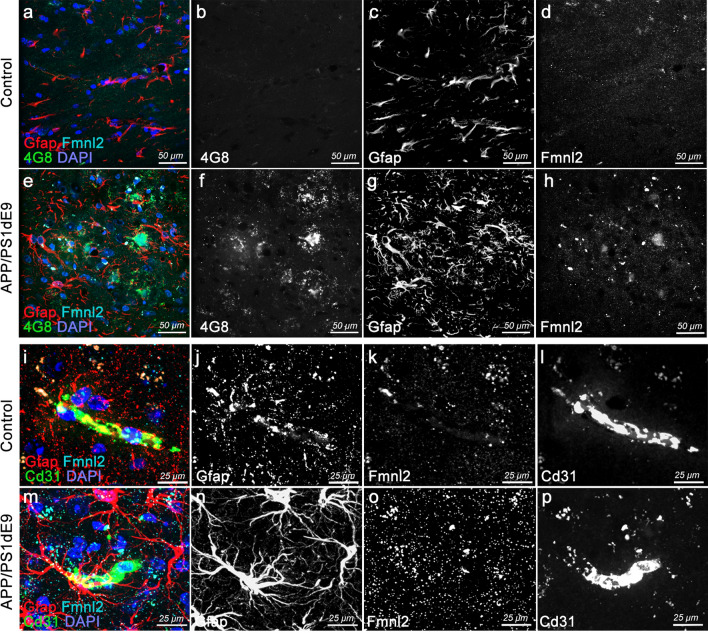
Alzheimer's disease (AD) has been associated with cardiovascular and cerebrovascular risk factors (CVRFs) during middle age and later and is frequently accompanied by cerebrovascular pathology at death. An interaction between CVRFs and genetic variants might explain the pathogenesis. Genome-wide, gene by CVRF interaction analyses for AD, in 6568 patients and 8101 controls identified FMNL2 (p = 6.6 × 10). A significant increase in FMNL2 expression was observed in the brains of patients with brain infarcts and AD pathology and was associated with amyloid and phosphorylated tau deposition. FMNL2 was also prominent in astroglia in AD among those with cerebrovascular pathology. Amyloid toxicity in zebrafish increased fmnl2a expression in astroglia with detachment of astroglial end feet from blood vessels. Knockdown of fmnl2a prevented gliovascular remodeling, reduced microglial activity and enhanced amyloidosis. APP/PS1dE9 AD mice also displayed increased Fmnl2 expression and reduced the gliovascular contacts independent of the gliotic response. Based on this work, we propose that FMNL2 regulates pathology-dependent plasticity of the blood-brain-barrier by controlling gliovascular interactions and stimulating the clearance of extracellular aggregates. Therefore, in AD cerebrovascular risk factors promote cerebrovascular pathology which in turn, interacts with FMNL2 altering the normal astroglial-vascular mechanisms underlying the clearance of amyloid and tau increasing their deposition in brain.
阿尔茨海默病(AD)与中年及以后的心血管和脑血管危险因素(CVRFs)有关,并且在死亡时常伴有脑血管病理学改变。CVRFs 和遗传变异之间的相互作用可能解释了发病机制。在 6568 名患者和 8101 名对照中,对 AD 进行全基因组、基因与 CVRF 相互作用分析,鉴定出 FMNL2(p=6.6×10)。在有脑梗死和 AD 病理学的患者的大脑中观察到 FMNL2 表达显著增加,并且与淀粉样蛋白和磷酸化 tau 沉积有关。在伴有脑血管病理学的 AD 中,FMNL2 在星形胶质细胞中也很明显。在斑马鱼中,淀粉样蛋白毒性增加了星形胶质细胞中 fmnl2a 的表达,同时星形胶质细胞的终足从血管中分离出来。FMNL2a 的敲低可防止神经胶质重塑,减少小胶质细胞的活性,并增强淀粉样变性。APP/PS1dE9 AD 小鼠也表现出 FMNL2 表达增加,以及与神经胶质反应无关的神经胶质血管接触减少。基于这项工作,我们提出 FMNL2 通过控制神经胶质血管相互作用并刺激细胞外聚集物的清除来调节血脑屏障的病理依赖性可塑性。因此,在 AD 中,脑血管危险因素促进了脑血管病理学的发展,而脑血管病理学又与 FMNL2 相互作用,改变了清除淀粉样蛋白和 tau 的正常星形胶质细胞-血管机制,从而增加了它们在大脑中的沉积。