Cancer Data Science Laboratory (CDSL), National Cancer Institute (NCI), National Institutes of Health (NIH), Bethesda, MD, USA.
Department of Computer Science, University of Maryland, College Park, MD, USA.
Nat Commun. 2022 May 24;13(1):2896. doi: 10.1038/s41467-022-30512-3.
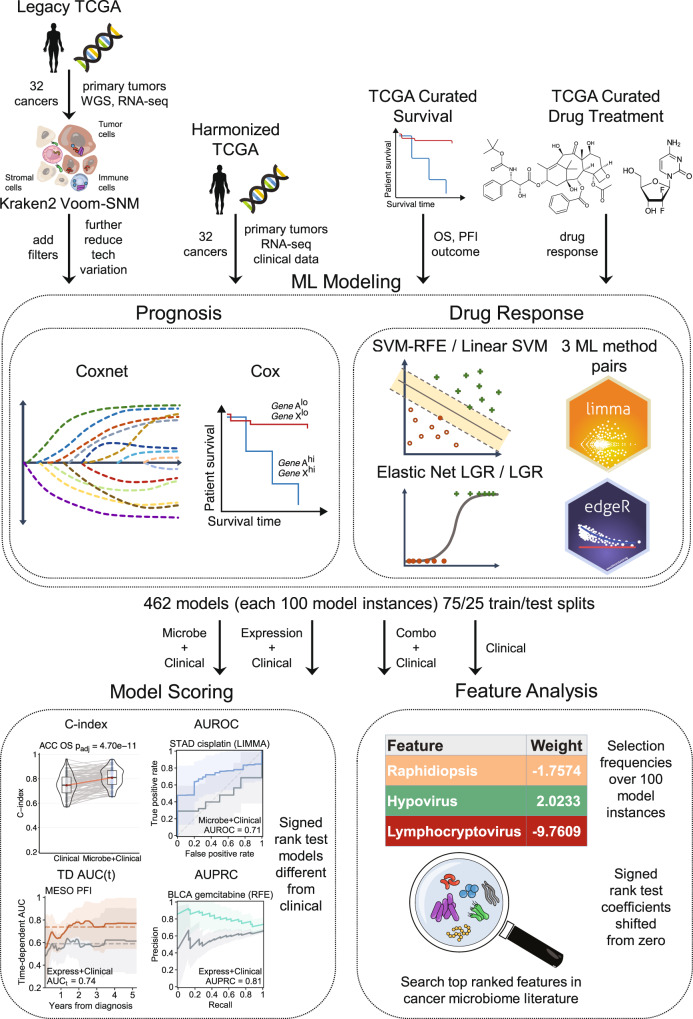
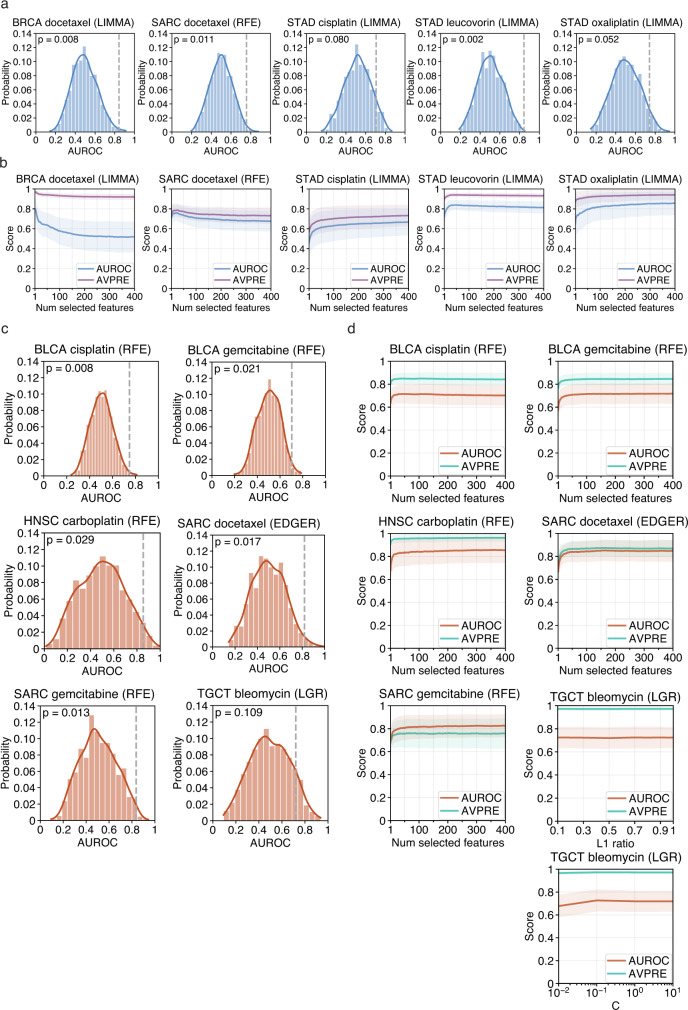
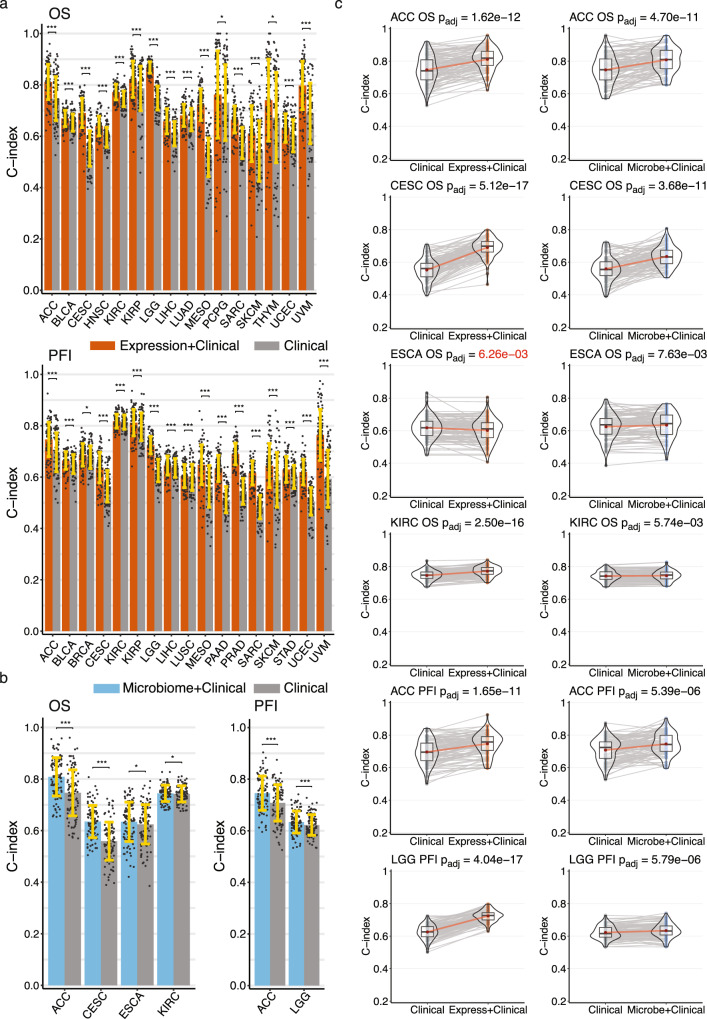
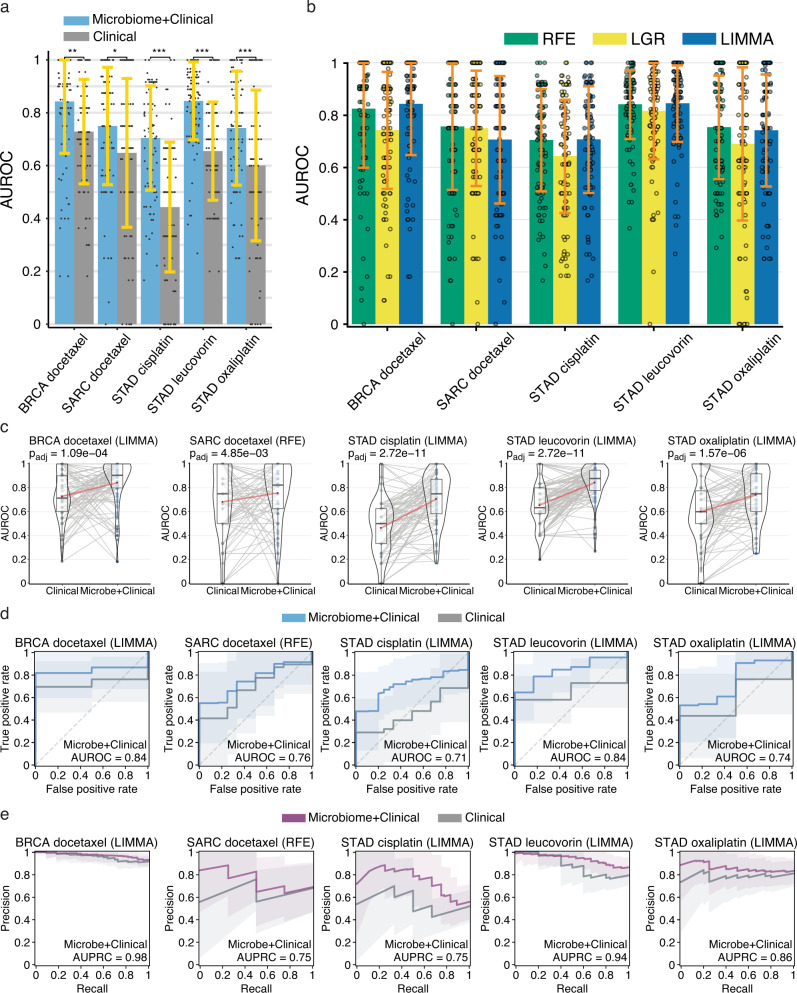
Tumor gene expression is predictive of patient prognosis in some cancers. However, RNA-seq and whole genome sequencing data contain not only reads from host tumor and normal tissue, but also reads from the tumor microbiome, which can be used to infer the microbial abundances in each tumor. Here, we show that tumor microbial abundances, alone or in combination with tumor gene expression, can predict cancer prognosis and drug response to some extent-microbial abundances are significantly less predictive of prognosis than gene expression, although similarly as predictive of drug response, but in mostly different cancer-drug combinations. Thus, it appears possible to leverage existing sequencing technology, or develop new protocols, to obtain more non-redundant information about prognosis and drug response from RNA-seq and whole genome sequencing experiments than could be obtained from tumor gene expression or genomic data alone.
肿瘤基因表达可预测某些癌症患者的预后。然而,RNA-seq 和全基因组测序数据不仅包含来自宿主肿瘤和正常组织的reads,还包含来自肿瘤微生物组的reads,可用于推断每个肿瘤中的微生物丰度。在这里,我们表明肿瘤微生物丰度(单独或与肿瘤基因表达结合使用)在一定程度上可以预测癌症的预后和药物反应-微生物丰度对预后的预测性不如基因表达,但与药物反应的预测性相似,但在大多数不同的癌症-药物组合中。因此,似乎可以利用现有的测序技术或开发新的方案,从 RNA-seq 和全基因组测序实验中获得比仅从肿瘤基因表达或基因组数据中获得更多关于预后和药物反应的非冗余信息。