State Key Laboratory of Space Medicine Fundamentals and Application, China Astronaut Research and Training Center, 100094, Beijing, China.
Key Laboratory of Molecular Biophysics, Hebei Province, Institute of Biophysics, School of Health Sciences and Biomedical Engineering, Hebei University of Technology, 300401, Tianjin, China.
Nat Commun. 2022 May 24;13(1):2899. doi: 10.1038/s41467-022-30625-9.
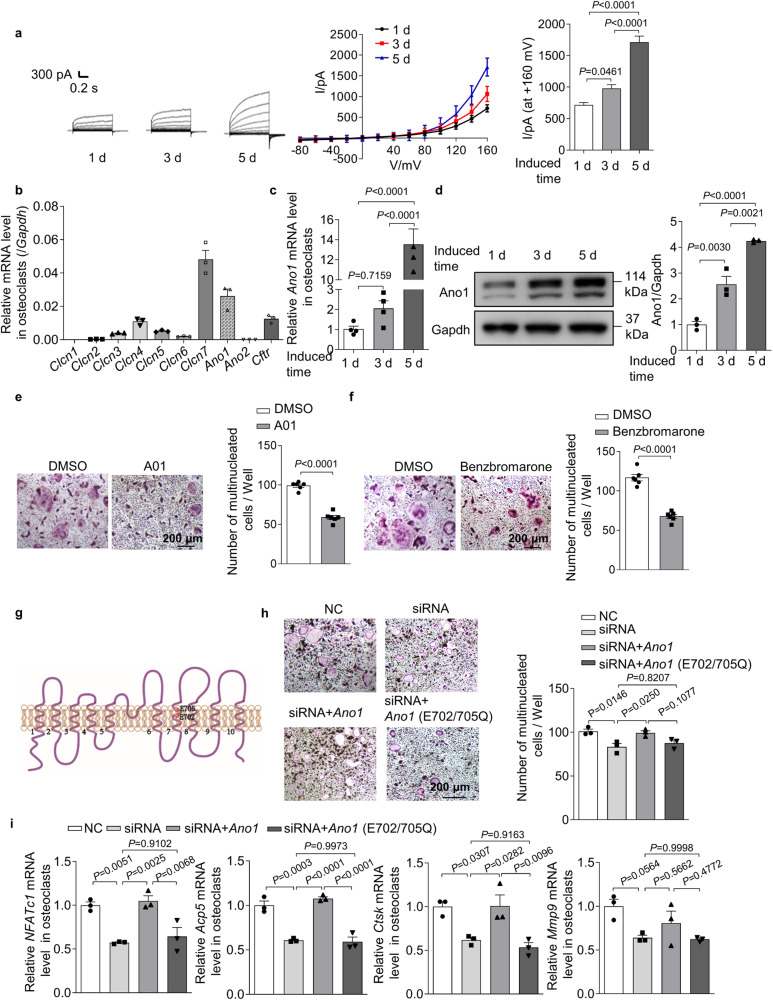
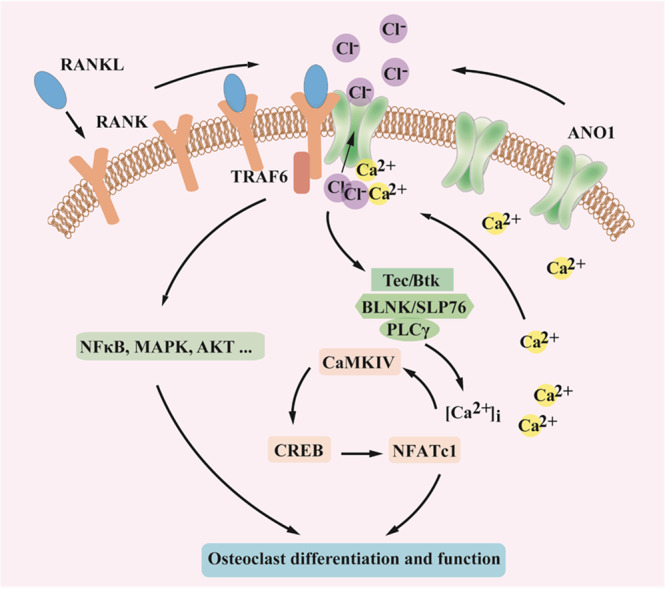
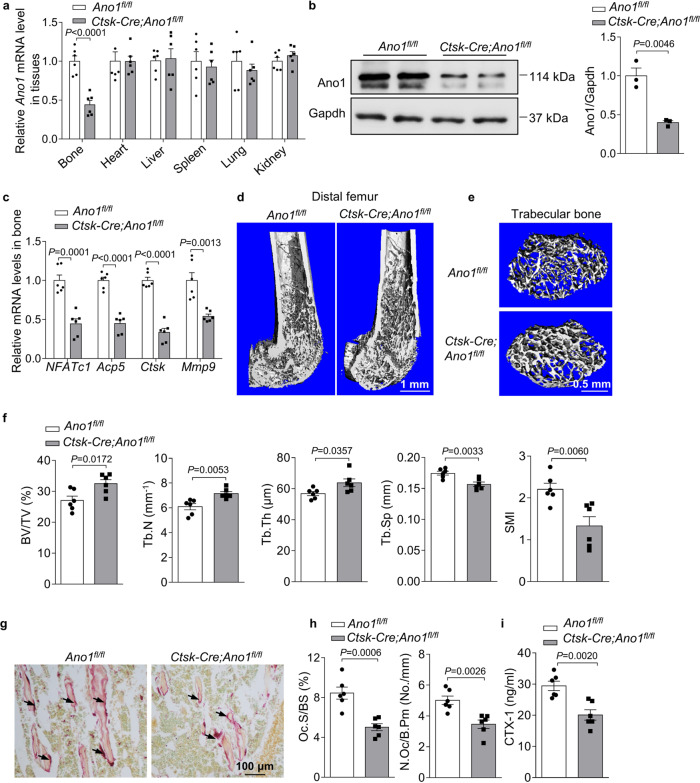
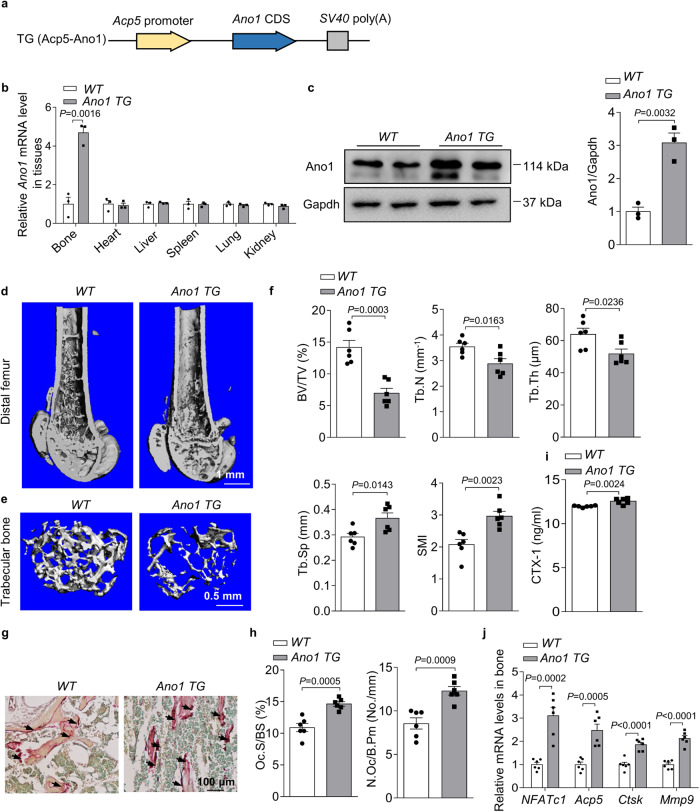
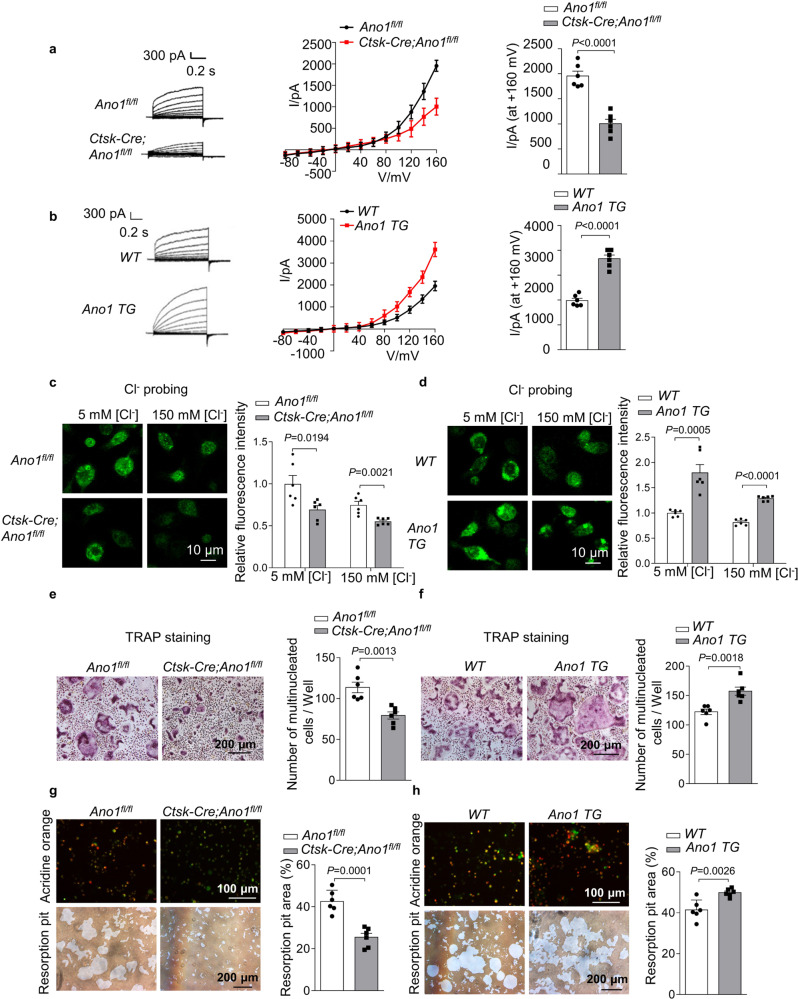
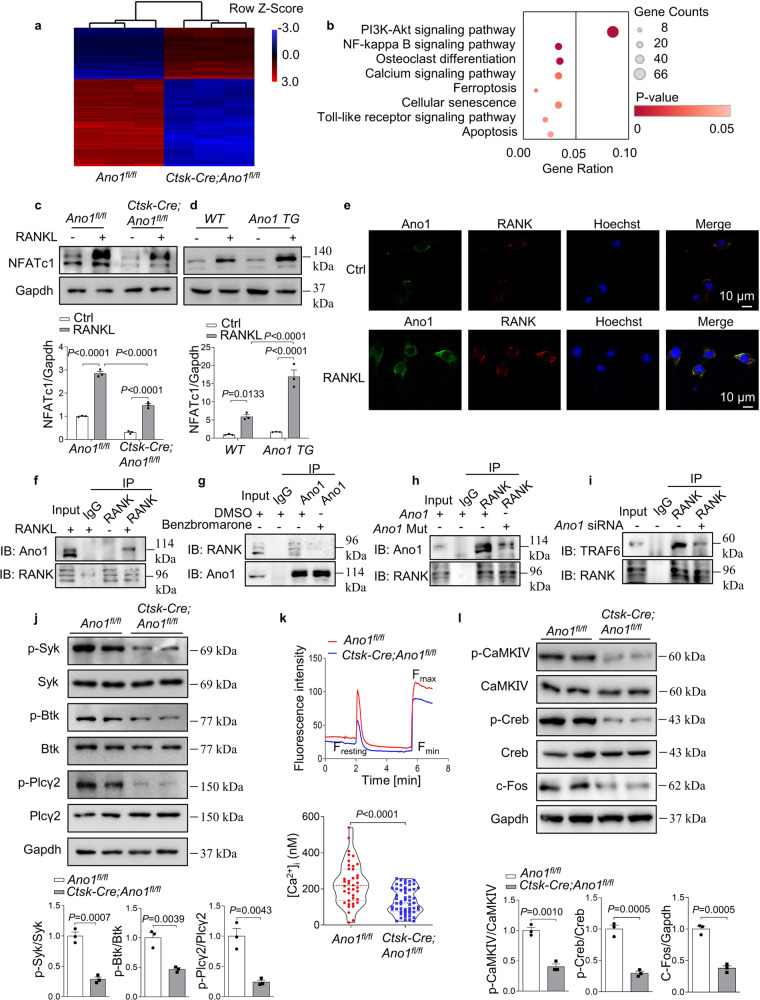
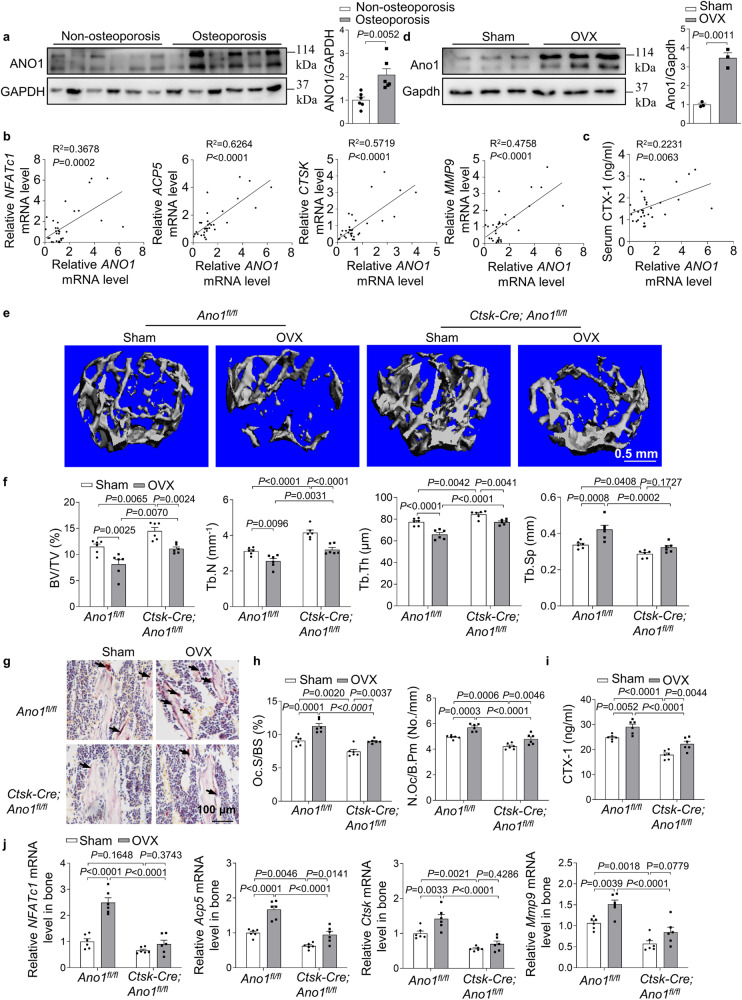
Osteoclast over-activation leads to bone loss and chloride homeostasis is fundamental importance for osteoclast function. The calcium-activated chloride channel Anoctamin 1 (also known as TMEM16A) is an important chloride channel involved in many physiological processes. However, its role in osteoclast remains unresolved. Here, we identified the existence of Anoctamin 1 in osteoclast and show that its expression positively correlates with osteoclast activity. Osteoclast-specific Anoctamin 1 knockout mice exhibit increased bone mass and decreased bone resorption. Mechanistically, Anoctamin 1 deletion increases intracellular Cl concentration, decreases H secretion and reduces bone resorption. Notably, Anoctamin 1 physically interacts with RANK and this interaction is dependent upon Anoctamin 1 channel activity, jointly promoting RANKL-induced downstream signaling pathways. Anoctamin 1 protein levels are substantially increased in osteoporosis patients and this closely correlates with osteoclast activity. Finally, Anoctamin 1 deletion significantly alleviates ovariectomy induced osteoporosis. These results collectively establish Anoctamin 1 as an essential regulator in osteoclast function and suggest a potential therapeutic target for osteoporosis.
破骨细胞过度激活会导致骨质流失,而氯离子稳态对破骨细胞功能至关重要。钙激活氯离子通道 Aniodamin 1(也称为 TMEM16A)是一种参与许多生理过程的重要氯离子通道。然而,其在破骨细胞中的作用仍未得到解决。在这里,我们鉴定出破骨细胞中存在 Aniodamin 1,并表明其表达与破骨细胞活性呈正相关。破骨细胞特异性敲除 Aniodamin 1 的小鼠表现出骨量增加和骨吸收减少。机制上,Aniodamin 1 缺失会增加细胞内 Cl 浓度,减少 H 分泌并减少骨吸收。值得注意的是,Aniodamin 1 与 RANK 发生物理相互作用,这种相互作用依赖于 Aniodamin 1 通道活性,共同促进 RANKL 诱导的下游信号通路。骨质疏松症患者的 Aniodamin 1 蛋白水平显著增加,这与破骨细胞活性密切相关。最后,Aniodamin 1 缺失显著缓解卵巢切除诱导的骨质疏松症。这些结果共同确立了 Aniodamin 1 作为破骨细胞功能的重要调节剂,并为骨质疏松症提供了一个潜在的治疗靶点。