Laboratory of Integrative Oncology, National Cancer Center Research Institute, Tokyo 104-0045, Japan.
Department of Life Science and Medical Bioscience, School of Advanced Science and Engineering, Waseda University, Tokyo 162-8480, Japan.
Dis Model Mech. 2022 Jun 1;15(6). doi: 10.1242/dmm.049538. Epub 2022 Jun 23.
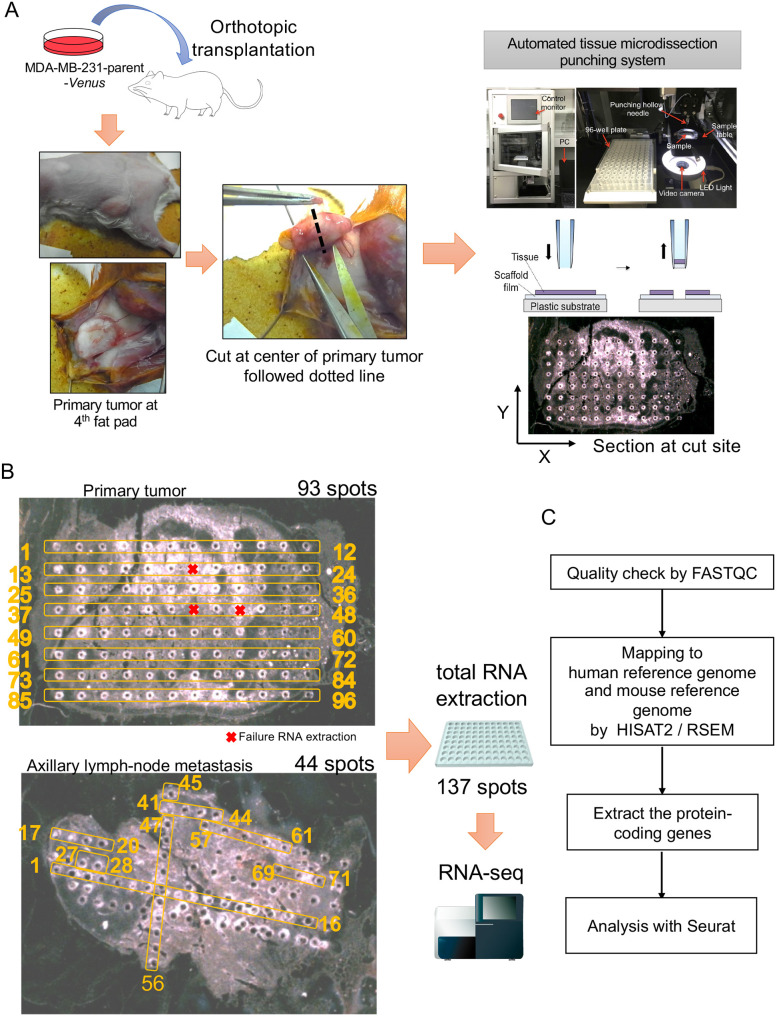
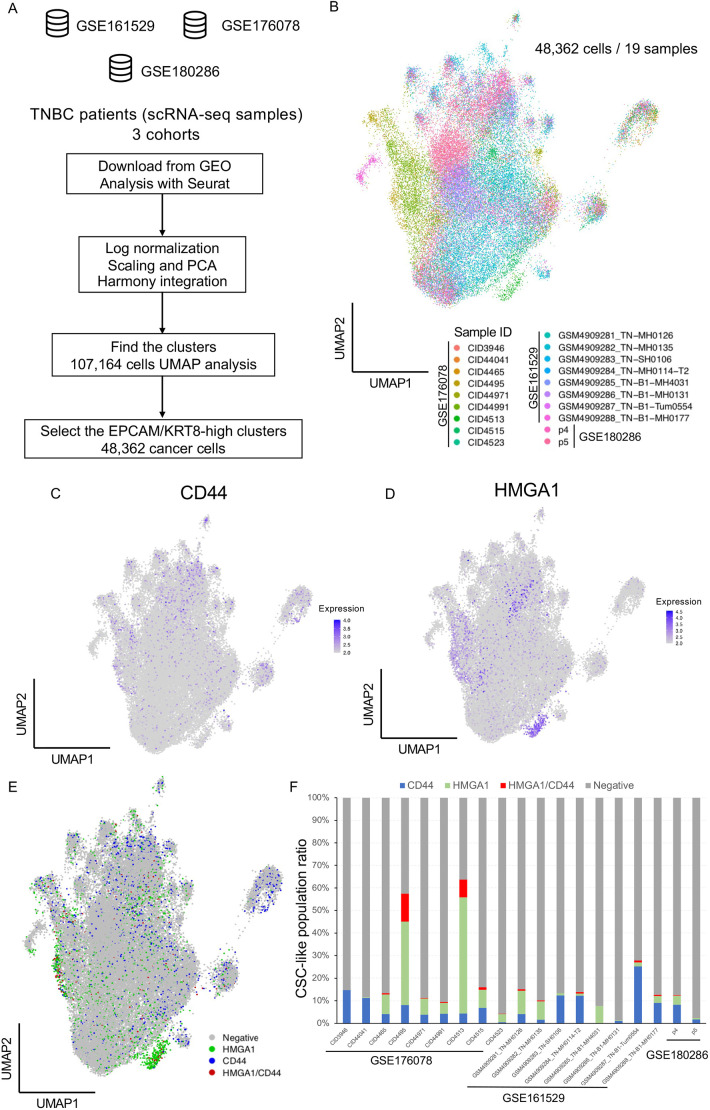
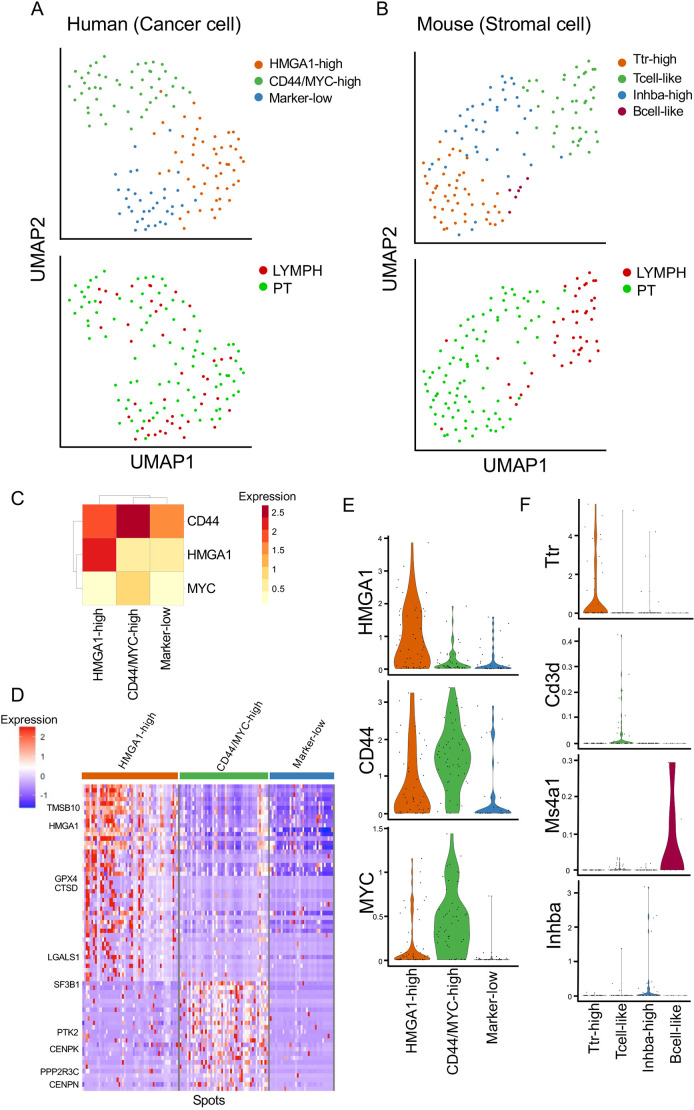
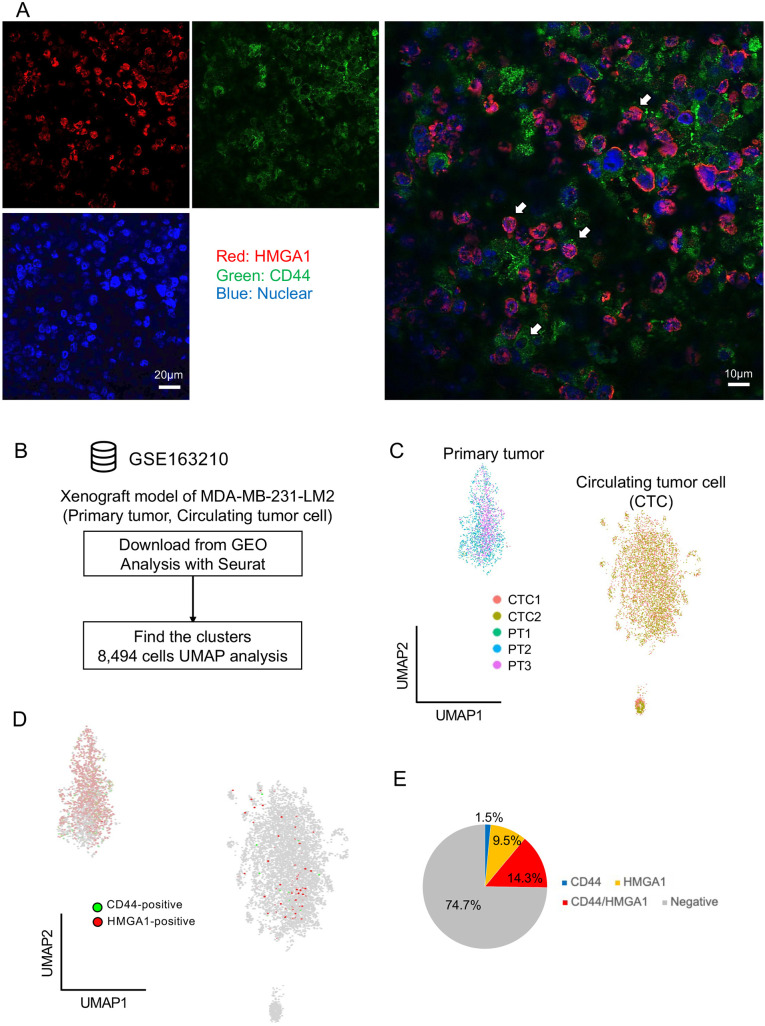
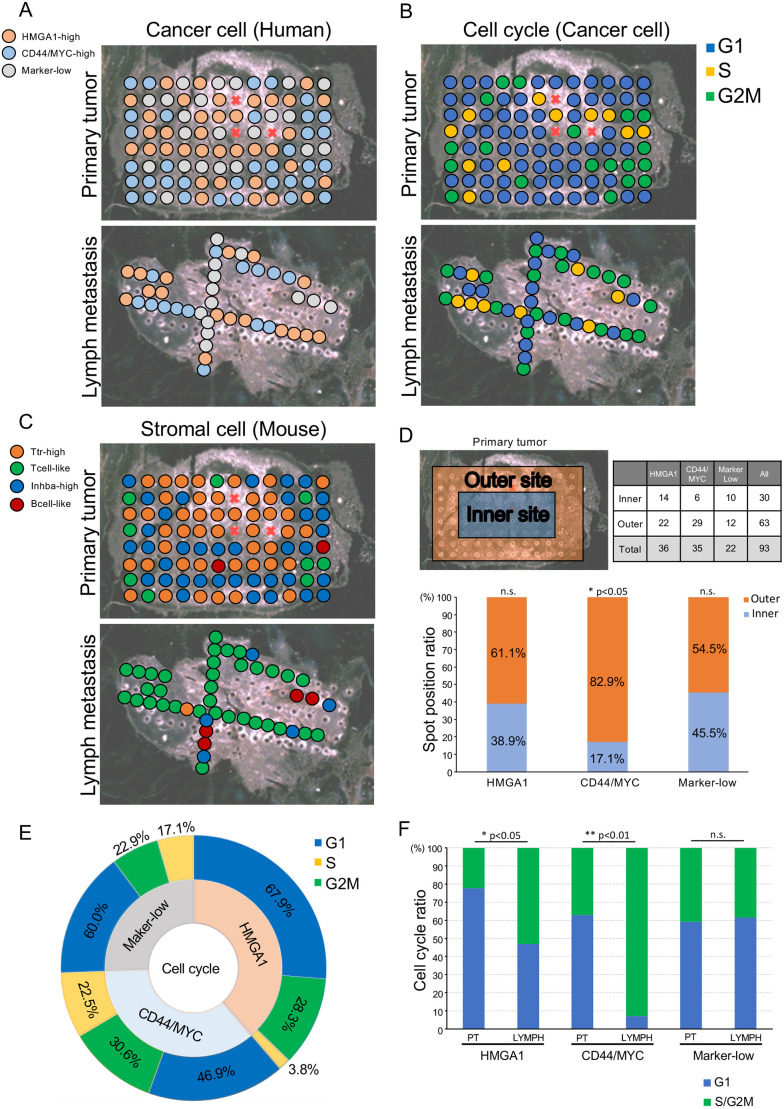
Gene expression analysis at the single-cell level by next-generation sequencing has revealed the existence of clonal dissemination and microheterogeneity in cancer metastasis. The current spatial analysis technologies can elucidate the heterogeneity of cell-cell interactions in situ. To reveal the regional and expressional heterogeneity in primary tumors and metastases, we performed transcriptomic analysis of microtissues dissected from a triple-negative breast cancer (TNBC) cell line MDA-MB-231 xenograft model with our automated tissue microdissection punching technology. This multiple-microtissue transcriptome analysis revealed three cancer cell-type clusters in the primary tumor and axillary lymph node metastasis, two of which were cancer stem cell (CSC)-like clusters (CD44/MYC-high, HMGA1-high). Reanalysis of public single-cell RNA-sequencing datasets confirmed that the two CSC-like populations existed in TNBC xenograft models and in TNBC patients. The diversity of these multiple CSC-like populations could cause differential anticancer drug resistance, increasing the difficulty of curing this cancer.
通过下一代测序对单细胞水平的基因表达分析揭示了癌症转移中的克隆传播和微异质性的存在。目前的空间分析技术可以阐明细胞间相互作用的异质性。为了揭示原发性肿瘤和转移灶中的区域和表达异质性,我们使用自动化组织微切割打孔技术,对三阴性乳腺癌(TNBC)细胞系 MDA-MB-231 异种移植模型中分离的微组织进行了转录组分析。这项多微组织转录组分析揭示了原发性肿瘤和腋窝淋巴结转移中的三个癌细胞类型簇,其中两个为癌症干细胞(CSC)样簇(CD44/MYC-高,HMGA1-高)。对公共单细胞 RNA-seq 数据集的重新分析证实,这两个 CSC 样群体存在于 TNBC 异种移植模型和 TNBC 患者中。这些多个 CSC 样群体的多样性可能导致对抗癌药物的不同耐药性,增加了治愈这种癌症的难度。