Abdishu Mohammedawel, Gobena Tesfaye, Damena Melake, Abdi Hassen, Birhanu Abdi
Public Health Emergency Management Officer at Gursum District Health Office, Gursum, Oromia Region, Ethiopia.
Haramaya University, College of Health and Medical Sciences, School of Public Health, Harar, Ethiopia.
Pediatric Health Med Ther. 2022 May 18;13:183-193. doi: 10.2147/PHMT.S347621. eCollection 2022.
Understanding the determinants of malaria morbidity offers helpful insights toward the changing malaria situation, which might lead to the adjustment of malaria program activities. Even though the determinants of malaria morbidity remain unknown, school-aged children were the highest malaria morbidity contributors in the East Hararghe Zone. Therefore, this study aimed to assess the determinants of malaria morbidity among school-aged children in the study area from February 1 to May 31, 2020.
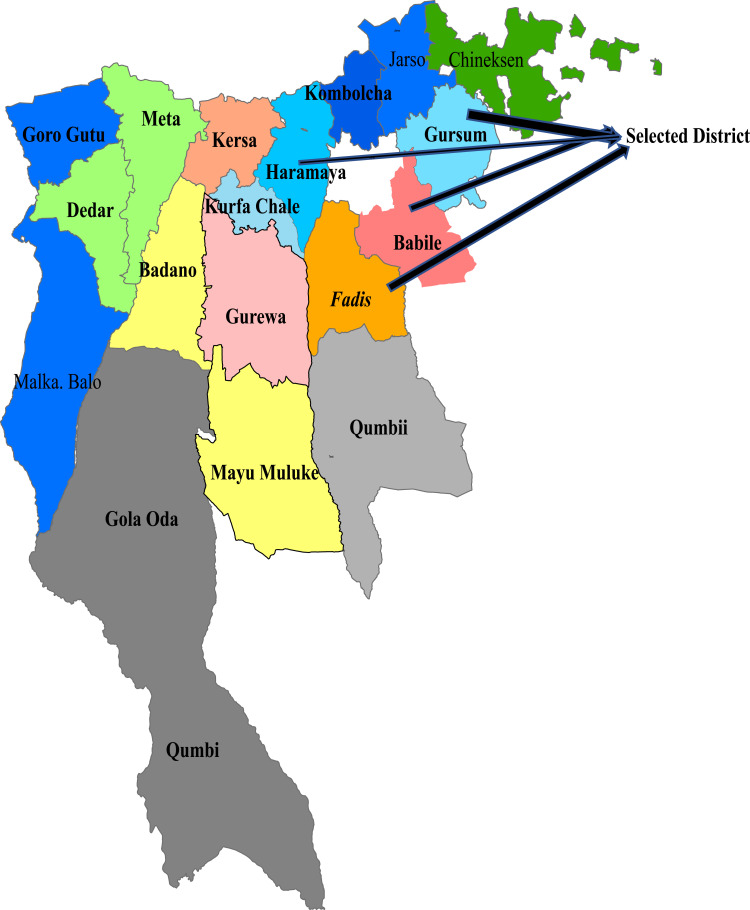
A case-control study was conducted among school-aged children living in ten randomly selected low, moderate, and high malaria transmission . Cases were confirmed as positive for malaria, while controls were confirmed as negative for malaria among randomly selected school-aged children. Rapid diagnostic testing (RDT) and blood film (BF) malaria testing methods were used. Multivariable logistic regression was used to identify association between malaria and its determinants.
The determinants of malaria infection were having no formal education (adjusted odds ratio (AOR)=4.91, 95% CI: 1.20-20.17), low family wealth index (AOR=2.50, 95% CI: 1.22-5.12), being from rural residence (AOR=2.34, 95% CI: 1.87-4.12), living near to stagnant water (AOR=2.01, 95% CI: 1.14-3.54), having a maximum of three family members (AOR=0.37, 95% CI: 0.18-0.78), using indoor residual spraying (IRS) (AOR=0.15, 95% CI: 0.08-0.29) and long-lasting insecticide-treated net (LLITN) over the last night (AOR=0.19, 95% CI: 0.10-0.35), and living in the house surrounded by cultivated land(AOR=0.24, 95%CI: 0.10-0.60) compared with their counterparts.
This study revealed that residence, family size, education, wealth index, stagnant water existence, and using LLITN and IRS had significant association with malaria morbidity. Thus, all concerned bodies, including the community should strengthen working on stagnant water elimination around their house to cut the breeding site of the malaria vector mosquito. Moreover, the findings have an important implication for improving interventions targeting the economic status and literacy of the society that may help in the reduction of the risk of malaria in the school-aged children.
了解疟疾发病的决定因素有助于洞察疟疾形势的变化,这可能会促使调整疟疾防治项目活动。尽管疟疾发病的决定因素尚不清楚,但在东哈勒尔盖地区,学龄儿童是疟疾发病的最大贡献群体。因此,本研究旨在评估2020年2月1日至5月31日研究区域内学龄儿童疟疾发病的决定因素。
在随机选取的疟疾传播程度低、中、高的十个地区居住的学龄儿童中开展病例对照研究。在随机选取的学龄儿童中,确诊为疟疾阳性的为病例组,确诊为疟疾阴性的为对照组。采用快速诊断检测(RDT)和血涂片(BF)疟疾检测方法。使用多变量逻辑回归来确定疟疾与其决定因素之间的关联。
疟疾感染的决定因素包括未接受正规教育(调整比值比(AOR)=4.91,95%置信区间:1.20-20.17)、家庭财富指数低(AOR=2.50,95%置信区间:1.22-5.12)、来自农村(AOR=2.34,95%置信区间:1.87-4.12)、居住在死水附近(AOR=2.01,95%置信区间:1.14-3.54)、家庭成员最多三人(AOR=0.37,95%置信区间:0.18-0.