Department of Pediatrics and Child Health Nursing, School of Nursing, College of Medicine and Health Sciences, University of Gondar, Gondar, Ethiopia
Department of Pediatrics and Child Health Nursing, School of Nursing, College of Medicine and Health Sciences, University of Gondar, Gondar, Ethiopia.
BMJ Open. 2022 May 26;12(5):e059405. doi: 10.1136/bmjopen-2021-059405.
This study aimed to investigate the spatial distributions and determinants of anaemia among adolescent girls in Ethiopia. Exploring the spatial epidemiology of anaemia and identifying the risk factors would inform policymakers to come up with evidence-based prevention strategies for anaemia, especially in adolescent girls, who are the most affected segment of the population.
Secondary analysis of the Ethiopian Demographic and Health Survey 2016 was conducted. A total of 3172 adolescents were included in the analysis. The Bernoulli model was fitted using SaTScan V.9.6 to identify hotspot areas and the geospatial pattern and prediction of anaemia were mapped using ArcGIS V.10.8. A multilevel logistic regression model was fitted to identify factors associated with anaemia among adolescent girls. Adjusted OR with 95% CI was calculated and variables having a p value less than 0.05 were statistically significant factors of anaemia.
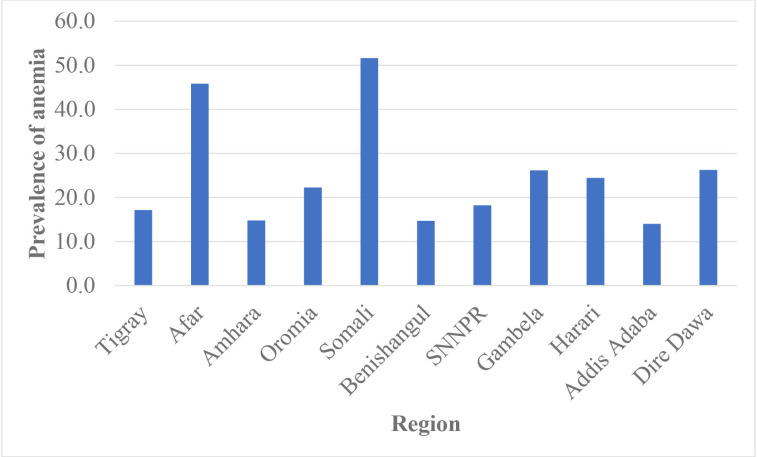
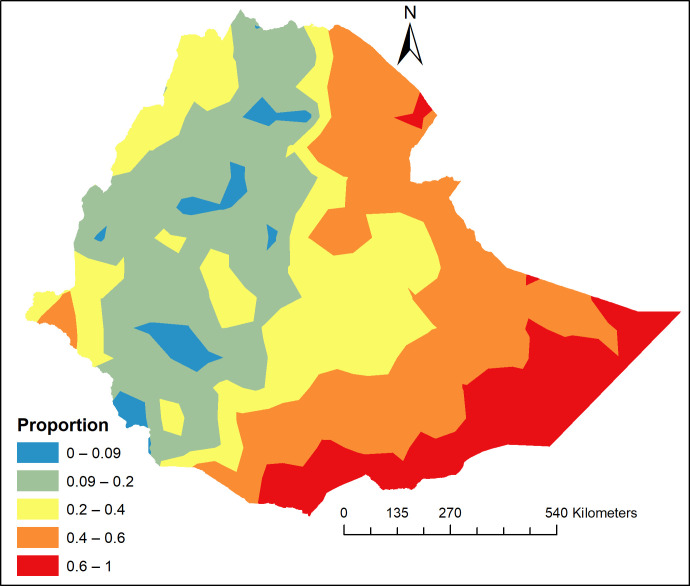
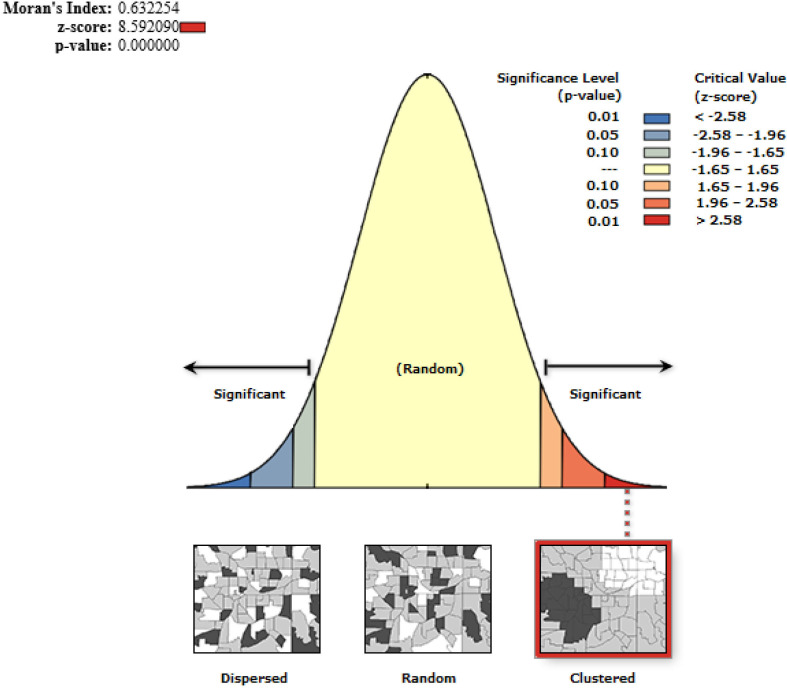
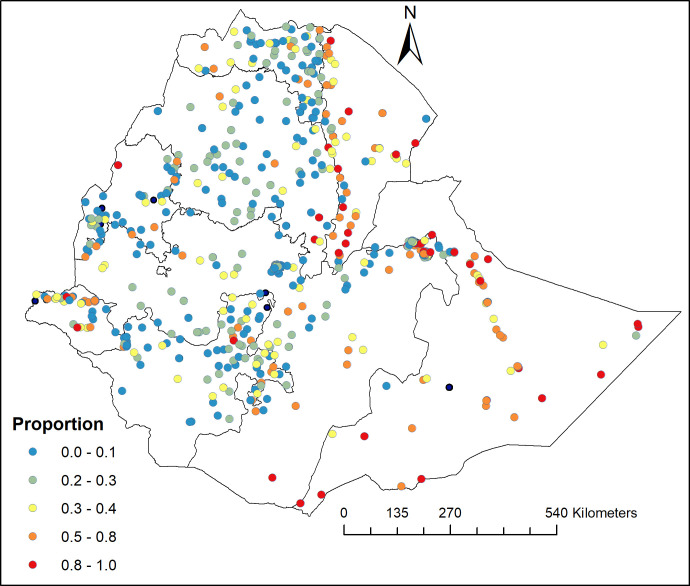
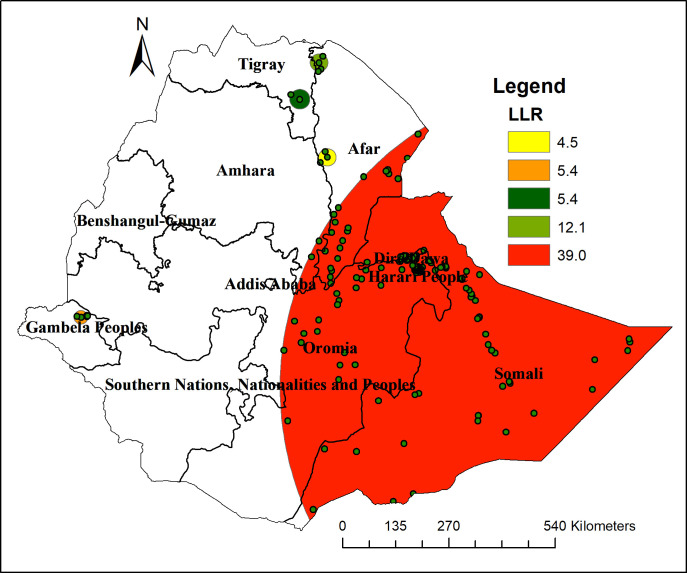
The overall prevalence of anaemia among adolescent girls in Ethiopia was 23.8 (22.4 to 25.3), with significant spatial variations across the country. The SaTScan analysis identified a primary cluster in the eastern, northeastern and southeastern parts of Ethiopia (loglikelihood ratio=39, p<0.001). High anaemia prevalence was observed in eastern parts of the country. In the multivariable multilevel logistic regression analysis, no formal education (adjusted OR (AOR)=1.49, 95% CI 1.05 to 2.12), Afar (AOR=3.36, 95% CI 1.87 to 6.05), Somali (AOR=4.63, 95% CI 2.61 to 8.23), Harari (AOR=1.90, 95% CI 1.32 to 4.10), Dire Dawa (AOR=2.32, 95% CI 1.32 to 4.10) and high cluster altitude (AOR=1.37, 95% CI 1.03 to 1.82) were significantly associated with anaemia.
The national distributions of anaemia varied substantially across Ethiopia. Educational status, region and cluster altitude were significantly associated with anaemia in the multivariable logistic regression model. Thus, targeted public health interventions for adolescent girls should be implemented in the hotspot areas.
本研究旨在探讨埃塞俄比亚少女贫血的空间分布及其决定因素。探索贫血的空间流行病学并确定风险因素,以便为决策者制定基于证据的贫血预防策略提供信息,特别是针对受影响最严重的少女群体。
对 2016 年埃塞俄比亚人口与健康调查进行二次分析。共纳入 3172 名青少年进行分析。使用 SaTScan V.9.6 拟合 Bernoulli 模型,以识别热点区域,并使用 ArcGIS V.10.8 映射贫血的地理空间模式和预测。使用多水平逻辑回归模型来确定与少女贫血相关的因素。计算调整后的比值比(OR)及其 95%置信区间(CI),p 值小于 0.05 的变量为贫血的统计学显著因素。
埃塞俄比亚少女贫血的总体患病率为 23.8%(22.4%至 25.3%),全国范围内存在显著的空间差异。SaTScan 分析在埃塞俄比亚东部、东北部和东南部发现了一个主要的聚类(似然比=39,p<0.001)。该国东部地区贫血患病率较高。在多变量多水平逻辑回归分析中,未接受正规教育(调整后的比值比(AOR)=1.49,95%置信区间(CI)1.05 至 2.12)、阿法尔(AOR=3.36,95%CI 1.87 至 6.05)、索马里(AOR=4.63,95%CI 2.61 至 8.23)、哈拉里(AOR=1.90,95%CI 1.32 至 4.10)、德雷达瓦(AOR=2.32,95%CI 1.32 至 4.10)和高聚类海拔(AOR=1.37,95%CI 1.03 至 1.82)与贫血显著相关。
埃塞俄比亚全国贫血分布差异较大。在多变量逻辑回归模型中,教育程度、地区和聚类海拔与贫血显著相关。因此,应在热点地区针对少女实施有针对性的公共卫生干预措施。