Departamento de Psiquiatria, Faculdade de Medicina FMUSP, Universidade de Sao Paulo, São Paulo, SP, Brazil.
Eur Child Adolesc Psychiatry. 2023 Jun;32(6):1083-1095. doi: 10.1007/s00787-022-02006-6. Epub 2022 May 27.
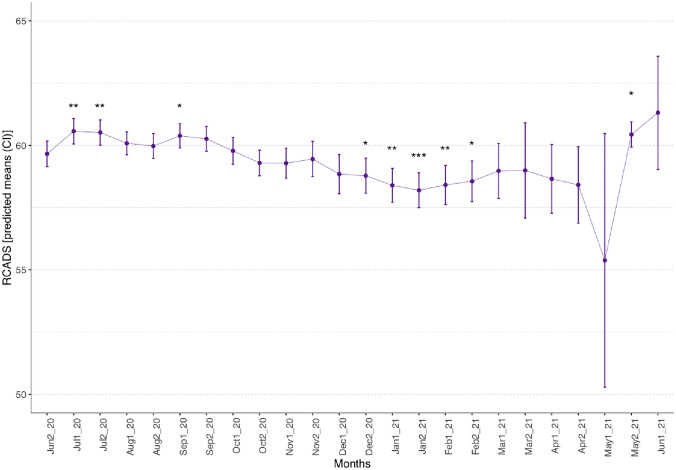
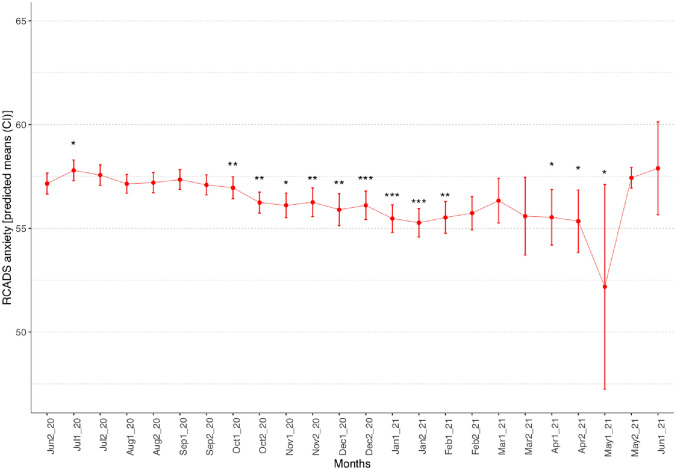
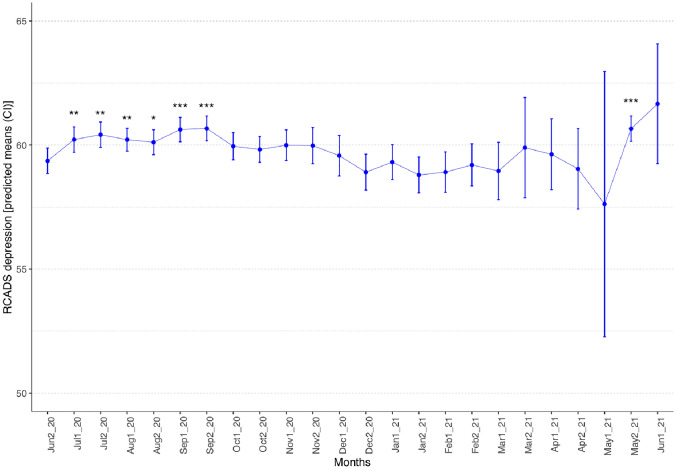
Brazil has been severely affected by the COVID-19 pandemic with one of the largest numbers of youth impacted by school closure globally. This longitudinal online survey assessed emotional problems in children and adolescents aged 5-17 years living in Brazil during the COVID-19 pandemic. Recruitment occurred between June to November 2020 and participants were invited for follow-up assessments every 15 days until June 2021. Participants were 5795 children and adolescents living across the country with mean age of 10.7 (SD 3.63) years at recruitment; 50.5% were boys and 69% of white ethnicity. Weighted prevalence rates of anxiety, depressive and total emotional symptoms at baseline were 29.7%, 36.1% and 36%, respectively. Longitudinal analysis included 3221 (55.6%) participants and revealed fluctuations in anxiety and depressive symptoms during one year follow-up, associated with periods of social mobility and mortality. Emotional problems significantly increased in July and September 2020 and decreased from December 2020 to February 2021 and then significantly increased in May 2021 relative to June 2020. Older age, feeling lonely, previous diagnosis of mental or neurodevelopmental disorder, previous exposure to traumatic events or psychological aggression, parental psychopathology, and sleeping less than 8/h a day were associated with increased rates of anxiety and depressive symptoms at baseline and over time. Food insecurity and less social contact with family and peers were associated with baseline anxiety and depressive symptoms, and lowest socio-economic strata, chronic disease requiring treatment and family members physically ill due to COVID-19 were associated with increasing rates over time. The pandemic severely affected youth, particularly those from vulnerable populations and in moments of increased mortality and decreased social mobility. Results underscore the need for allocation of resources to services and the continuous monitoring of mental health problems among children and adolescents.
巴西受到 COVID-19 大流行的严重影响,是受学校关闭影响的全球青少年数量最多的国家之一。这项纵向在线调查评估了 COVID-19 大流行期间居住在巴西的 5-17 岁儿童和青少年的情绪问题。招募工作于 2020 年 6 月至 11 月进行,邀请参与者每隔 15 天进行一次后续评估,直到 2021 年 6 月。参与者为全国范围内的 5795 名儿童和青少年,招募时的平均年龄为 10.7 岁(标准差为 3.63 岁);50.5%为男孩,69%为白种人。基线时焦虑、抑郁和总情绪症状的加权患病率分别为 29.7%、36.1%和 36%。纵向分析包括 3221 名(55.6%)参与者,结果显示,在一年的随访期间,焦虑和抑郁症状出现波动,与社会流动性和死亡率的变化有关。2020 年 7 月和 9 月情绪问题显著增加,2020 年 12 月至 2021 年 2 月下降,2021 年 5 月与 2020 年 6 月相比再次显著增加。年龄较大、感到孤独、以前患有精神或神经发育障碍、以前经历过创伤性事件或心理攻击、父母精神病理学以及每天睡眠不足 8 小时,与基线和随时间推移时焦虑和抑郁症状的发生率增加有关。食物不安全以及与家人和同伴的社交接触较少,与基线时的焦虑和抑郁症状有关,而社会经济地位最低、需要治疗的慢性病以及因 COVID-19 而身体不适的家庭成员,则与随时间推移时发生率的增加有关。大流行严重影响了青少年,尤其是弱势群体、死亡率上升和社会流动性下降时的青少年。研究结果强调需要为服务分配资源,并持续监测儿童和青少年的心理健康问题。