Yekta Abbasali, Hooshmand Elham, Saatchi Mohammad, Ostadimoghaddam Hadi, Asharlous Amir, Taheri Azadeh, Khabazkhoob Mehdi
Department of Optometry, School of Paramedical Sciences, Mashhad University of Medical Sciences, Mashhad, Iran.
Iranian Research Center on Aging, University of Social Welfare and Rehabilitation Sciences, Tehran, Iran.
J Curr Ophthalmol. 2022 Apr 16;34(1):1-15. doi: 10.4103/joco.joco_135_21. eCollection 2022 Jan-Mar.
To determine the global prevalence and common causes of visual impairment (VI) and blindness in children.
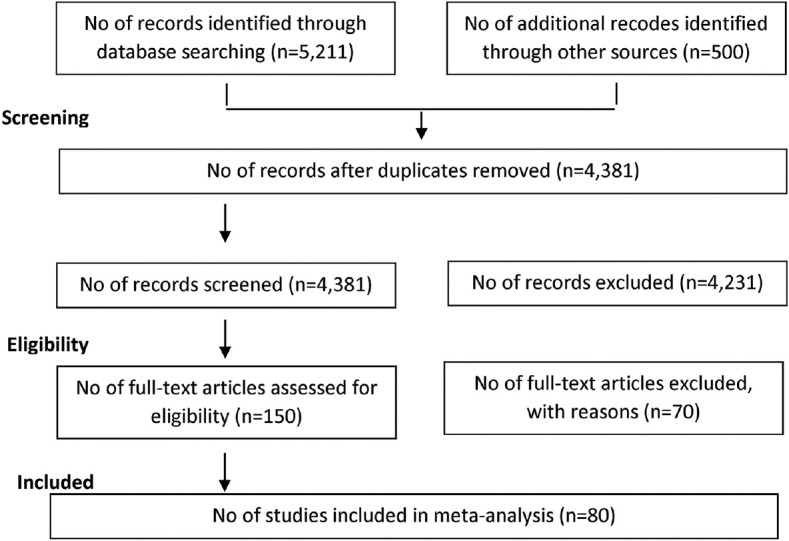
In this meta-analysis, a structured search strategy was applied to search electronic databases including PubMed, Scopus, and Web of Science, as well as the list of references in the selected articles to identify all population-based cross-sectional studies that concerned the prevalence of VI and blindness in populations under 20 years of age up to January 2018, regardless of the publication date and language, gender, region of residence, or race. VI was reported based on presenting visual acuity (PVA), uncorrected visual acuity (UCVA), and best corrected visual acuity (BCVA) of equal to 20/60 or worse in the better eye. Blindness was reported as visual acuity worse than 20/400 in the better eye.
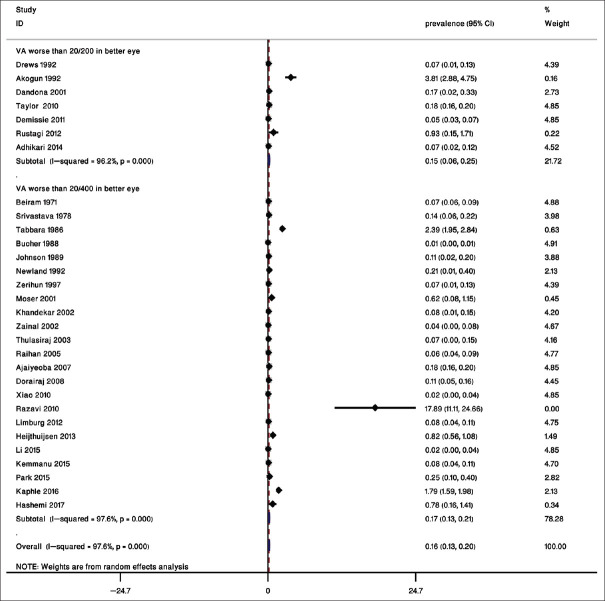
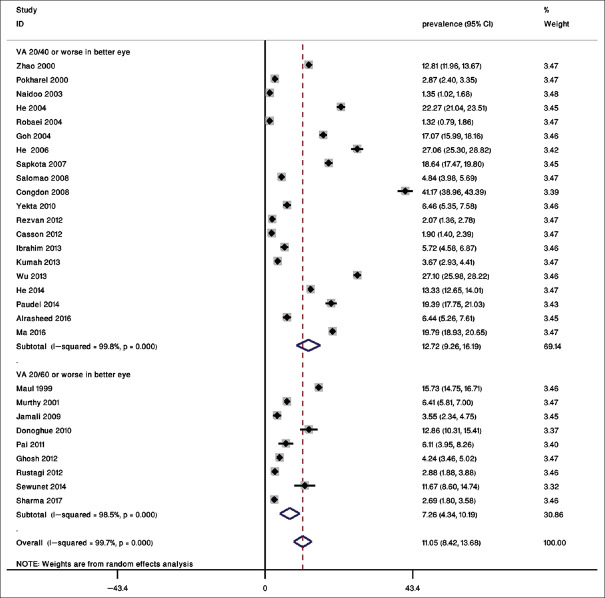
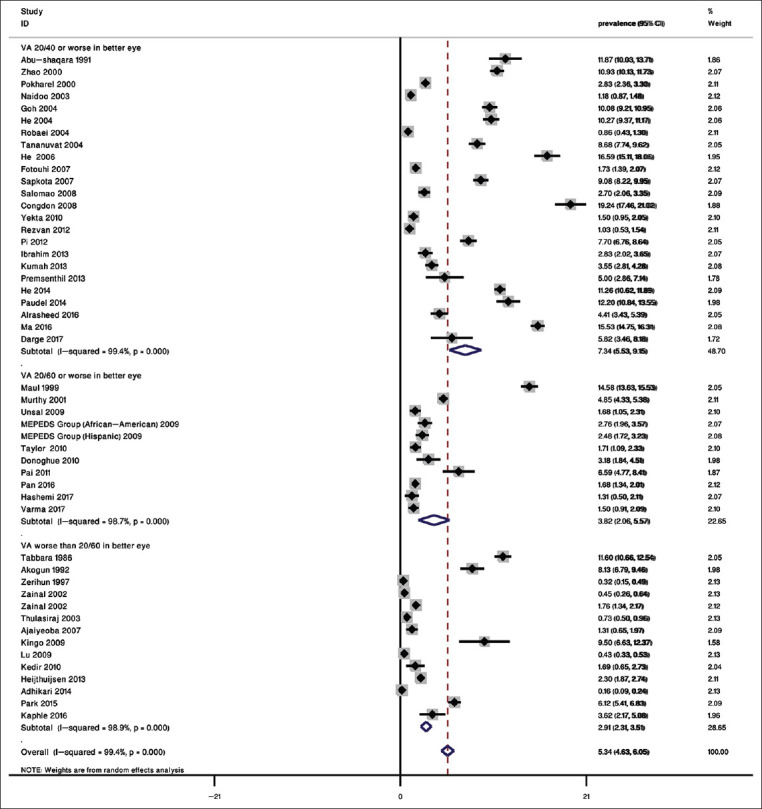
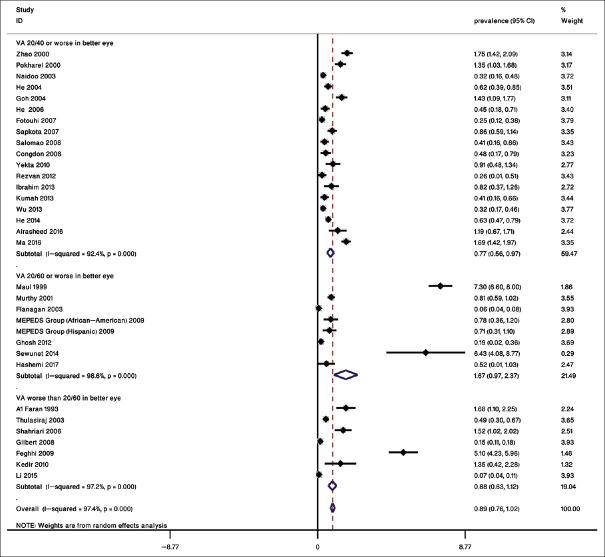
In the present study, 5711 articles were identified, and the final analyses were done on 80 articles including 769,720 people from twenty-eight different countries. The prevalence of VI based on UCVA was 7.26% (95% confidence interval [CI]: 4.34%-10.19%), PVA was 3.82% (95% CI: 2.06%-5.57%), BCVA was 1.67% (95% CI 0.97%-2.37%), and blindness was 0.17% (95% CI: 0.13%-0.21%). Refractive errors were the most common cause of VI in the subjects of selected articles (77.20% [95% CI: 73.40%-81.00%]). The prevalence of amblyopia was 7.60% (95% CI: 05.60%-09.10%) and congenital cataract was 0.60% (95% CI: 0.3%-0.9%).
Despite differences in the definition of VI and blindness, based on PVA, 3.82%, and based on BCVA, 1.67% of the examined samples suffer from VI.
确定全球儿童视力损害(VI)和失明的患病率及常见病因。
在这项荟萃分析中,应用结构化检索策略检索电子数据库,包括PubMed、Scopus和Web of Science,以及所选文章中的参考文献列表,以识别所有基于人群的横断面研究,这些研究涉及截至2018年1月20岁以下人群中VI和失明的患病率,不考虑出版日期、语言、性别、居住地区或种族。VI根据较好眼的表现视力(PVA)、未矫正视力(UCVA)和最佳矫正视力(BCVA)等于20/60或更差来报告。失明报告为较好眼视力低于20/400。
在本研究中,共识别出5711篇文章,最终对80篇文章进行了分析,这些文章涵盖来自28个不同国家的769,720人。基于UCVA的VI患病率为7.26%(95%置信区间[CI]:4.34%-10.19%),PVA为3.82%(95% CI:2.06%-5.57%),BCVA为1.67%(95% CI 0.97%-2.37%),失明率为0.17%(95% CI:0.13%-0.21%)。屈光不正为所选文章中受试者VI的最常见病因(77.20%[95% CI:73.40%-81.00%])。弱视患病率为7.60%(95% CI:05.60%-09.10%),先天性白内障患病率为0.60%(95% CI:0.3%-0.9%)。
尽管VI和失明的定义存在差异,但基于PVA,3.82%的受检样本患有VI,基于BCVA则为1.67%。