Barbiera Alessandra, Sorrentino Silvia, Fard Damon, Lepore Elisa, Sica Gigliola, Dobrowolny Gabriella, Tamagnone Luca, Scicchitano Bianca Maria
Sezione di Istologia ed Embriologia, Dipartimento di Scienze della Vita e Sanità Pubblica, Università Cattolica del Sacro Cuore, L.go Francesco Vito 1, 00168 Roma, Italy.
Fondazione Policlinico Universitario A. Gemelli IRCCS, L.go Francesco Vito 1, 00168 Roma, Italy.
Antioxidants (Basel). 2022 May 21;11(5):1016. doi: 10.3390/antiox11051016.
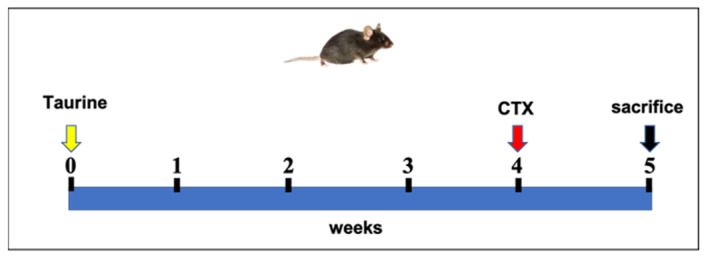
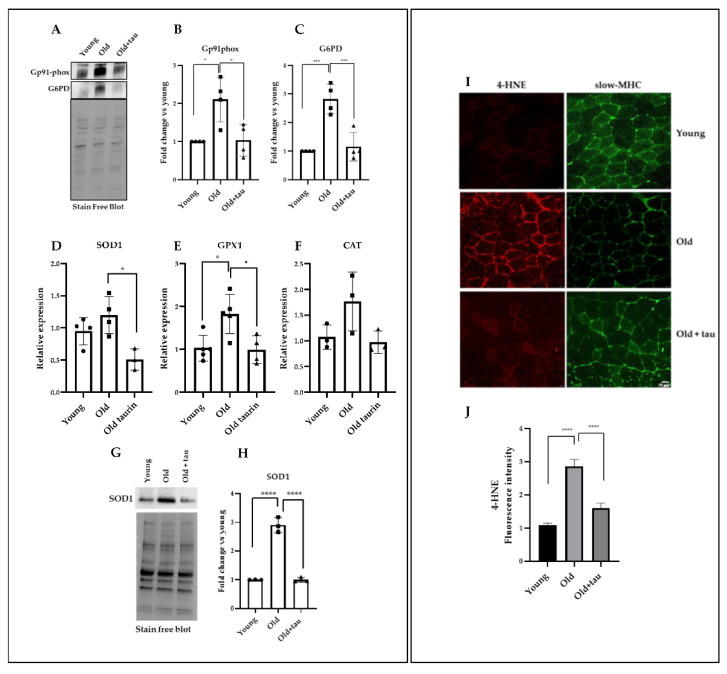
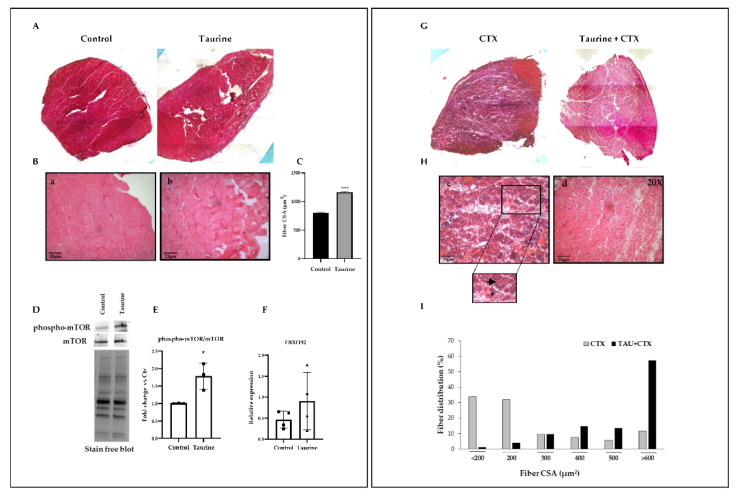
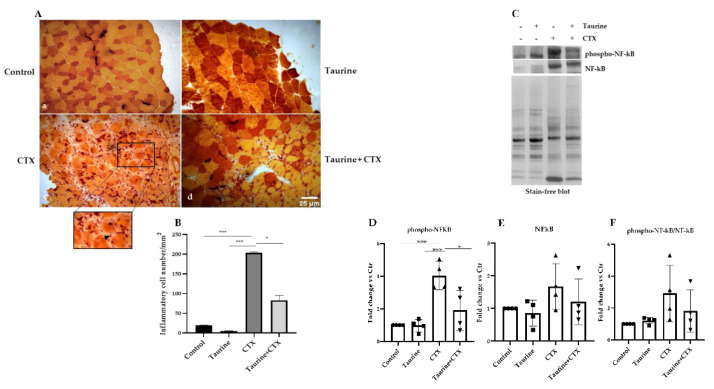
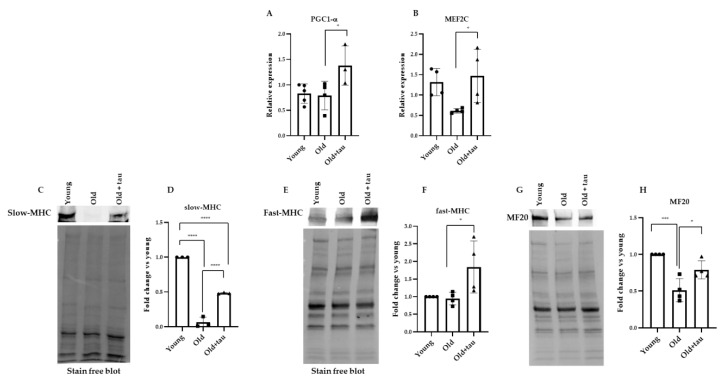
Sarcopenia, which occurs during aging, is characterized by the gradual loss of skeletal muscle mass and function, resulting in a functional decline in physical abilities. Several factors contribute to the onset of sarcopenia, including reduced regenerative capacity, chronic low-grade inflammation, mitochondrial dysfunction, and increased oxidative stress, leading to the activation of catabolic pathways. Physical activity and adequate protein intake are considered effective strategies able to reduce the incidence and severity of sarcopenia by exerting beneficial effects in improving the muscular anabolic response during aging. Taurine is a non-essential amino acid that is highly expressed in mammalian tissues and, particularly, in skeletal muscle where it is involved in the regulation of biological processes and where it acts as an antioxidant and anti-inflammatory factor. Here, we evaluated whether taurine administration in old mice counteracts the physiopathological effects of aging in skeletal muscle. We showed that, in injured muscle, taurine enhances the regenerative process by downregulating the inflammatory response and preserving muscle fiber integrity. Moreover, taurine attenuates ROS production in aged muscles by maintaining a proper cellular redox balance, acting as an antioxidant molecule. Although further studies are needed to better elucidate the molecular mechanisms responsible for the beneficial effect of taurine on skeletal muscle homeostasis, these data demonstrate that taurine administration ameliorates the microenvironment allowing an efficient regenerative process and attenuation of the catabolic pathways related to the onset of sarcopenia.
肌肉减少症发生于衰老过程中,其特征是骨骼肌质量和功能逐渐丧失,导致身体能力出现功能性衰退。多种因素促成了肌肉减少症的发生,包括再生能力降低、慢性低度炎症、线粒体功能障碍以及氧化应激增加,从而导致分解代谢途径的激活。体育活动和充足的蛋白质摄入被认为是有效的策略,能够通过在衰老过程中对改善肌肉合成代谢反应产生有益作用,来降低肌肉减少症的发生率和严重程度。牛磺酸是一种非必需氨基酸,在哺乳动物组织中高度表达,尤其是在骨骼肌中,它参与生物过程的调节,并作为一种抗氧化和抗炎因子发挥作用。在此,我们评估了给老年小鼠施用牛磺酸是否能抵消衰老对骨骼肌产生的生理病理影响。我们发现,在受损肌肉中,牛磺酸通过下调炎症反应和维持肌纤维完整性来增强再生过程。此外,牛磺酸通过维持适当的细胞氧化还原平衡,作为一种抗氧化分子来减少老年肌肉中的活性氧生成。尽管需要进一步研究以更好地阐明牛磺酸对骨骼肌稳态产生有益作用的分子机制,但这些数据表明,施用牛磺酸可改善微环境,从而实现高效的再生过程,并减轻与肌肉减少症发生相关的分解代谢途径。