School of Medicine, Deakin University, Geelong 3217, Vic, Australia.
BMC Geriatr. 2013 Oct 7;13:104. doi: 10.1186/1471-2318-13-104.
Sarcopenia is the progressive loss of skeletal muscle that contributes to the decline in physical function during aging. A higher level of oxidative stress has been implicated in aging sarcopenia. The current study aims to determine if the higher level of oxidative stress is a result of increased superoxide (O2‾) production by the NADPH oxidase (NOX) enzyme or decrease in endogenous antioxidant enzyme protection.
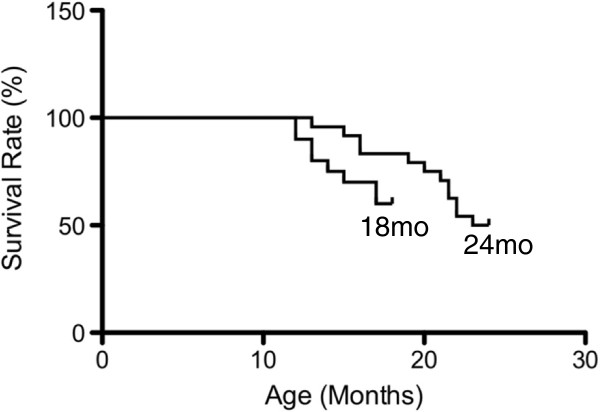
Female Balb/c mice were assigned to 4 age groups; 6, 12, 18 and 24 months. Body weight and animal survival rates were recorded over the course of the study. Skeletal muscle tissues were collected and used to measure NOX subunit mRNA, O2‾ levels and antioxidant enzymes.
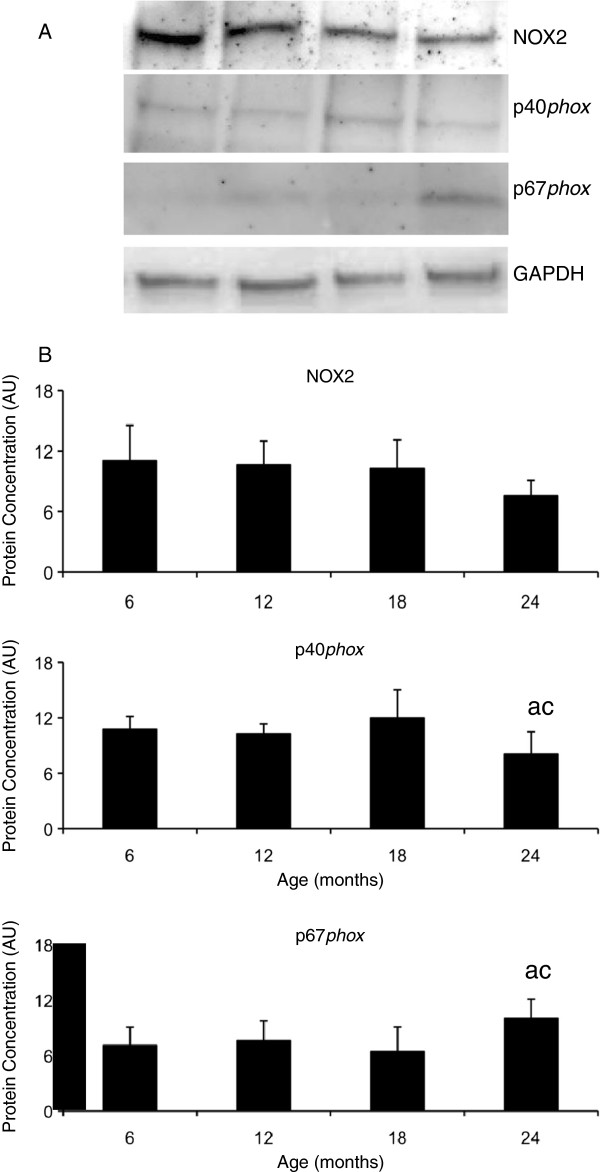
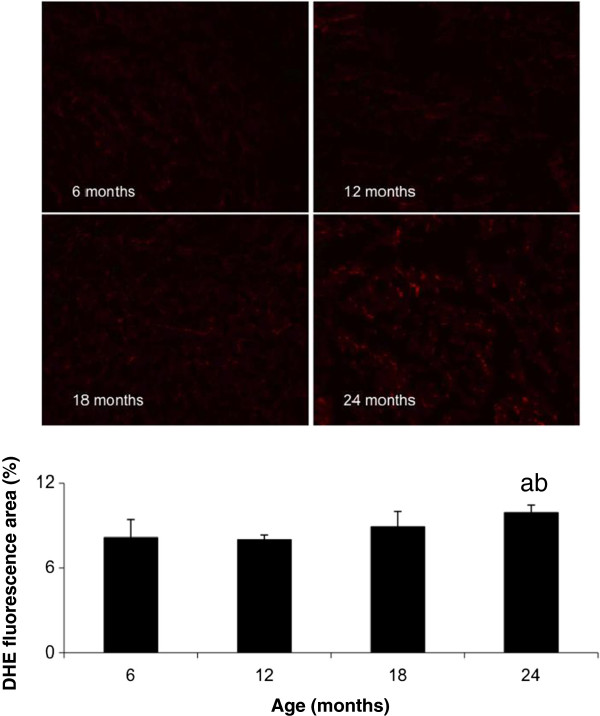
Key subunit components of NOX expression were elevated in skeletal muscle at 18 months, when sarcopenia was first evident. Increased superoxide dismutase 1 (SOD1) activity suggests an increase in O2‾ dismutation and this was further supported by elevated levels of hydrogen peroxide (H2O2) and decline in catalase and glutathione peroxidase (GPx) antioxidant protection in skeletal muscle at this time. NOX expression was also higher in skeletal muscle at 24 months, however this was coupled with elevated levels of O2‾ and a decline in SOD1 activity, compared to 6 and 12 months but was not associated with further loss of muscle mass.
While the source of ROS in sarcopenic muscle remains unknown, this study provides evidence that the NOX enzyme could be involved in ROS production by regulating superoxide in ageing muscles. This study also suggests that H2O2 is the key ROS in the onset of sarcopenia and that the decline in antioxidant protection by catalase and GPx is indicative of antioxidant dysfunction and may therefore be a major contributing factor in the development or onset of sarcopenia. Furthermore, the changes in ROS and antioxidant activity after sarcopenia was first evident gives some evidence for a compensatory mechanism, in response to insult, in order to maintain muscle integrity.
肌肉减少症是骨骼肌的进行性丧失,导致衰老过程中身体功能下降。氧化应激水平升高与衰老性肌肉减少症有关。本研究旨在确定氧化应激水平升高是否是由于 NADPH 氧化酶 (NOX) 酶产生的超氧化物 (O2‾) 增加,还是由于内源性抗氧化酶保护减少所致。
将雌性 Balb/c 小鼠分为 4 个年龄组;6、12、18 和 24 个月。在研究过程中记录体重和动物存活率。收集骨骼肌组织,用于测量 NOX 亚基 mRNA、O2‾水平和抗氧化酶。
NOX 表达的关键亚基成分在骨骼肌中升高,在肌肉减少症首次出现时的 18 个月。超氧化物歧化酶 1 (SOD1) 活性的增加表明 O2‾的歧化增加,这进一步得到了此时骨骼肌中过氧化氢 (H2O2) 水平升高和过氧化氢酶和谷胱甘肽过氧化物酶 (GPx) 抗氧化保护下降的支持。NOX 表达在 24 个月时也在骨骼肌中升高,但与 6 和 12 个月相比,这与 O2‾水平升高和 SOD1 活性下降有关,但与肌肉质量进一步丧失无关。
虽然肌肉减少症中 ROS 的来源尚不清楚,但本研究提供的证据表明,NOX 酶可能通过调节衰老肌肉中的超氧化物参与 ROS 的产生。本研究还表明,H2O2 是肌肉减少症发病的关键 ROS,过氧化氢酶和 GPx 的抗氧化保护下降表明抗氧化功能障碍,因此可能是肌肉减少症发展或发病的主要因素。此外,在肌肉减少症首次出现后,ROS 和抗氧化活性的变化为应对损伤而维持肌肉完整性的代偿机制提供了一些证据。