Gaebler Arnim Johannes, Finner-Prével Michelle, Sudar Federico Pacheco, Langer Felizia Hannah, Keskin Fatih, Gebel Annika, Zweerings Jana, Mathiak Klaus
Department of Psychiatry, Psychotherapy and Psychosomatics, Faculty of Medicine, RWTH Aachen University, 52062 Aachen, Germany.
JARA-Translational Brain Medicine, 52062 Aachen, Germany.
Biomedicines. 2022 May 9;10(5):1096. doi: 10.3390/biomedicines10051096.
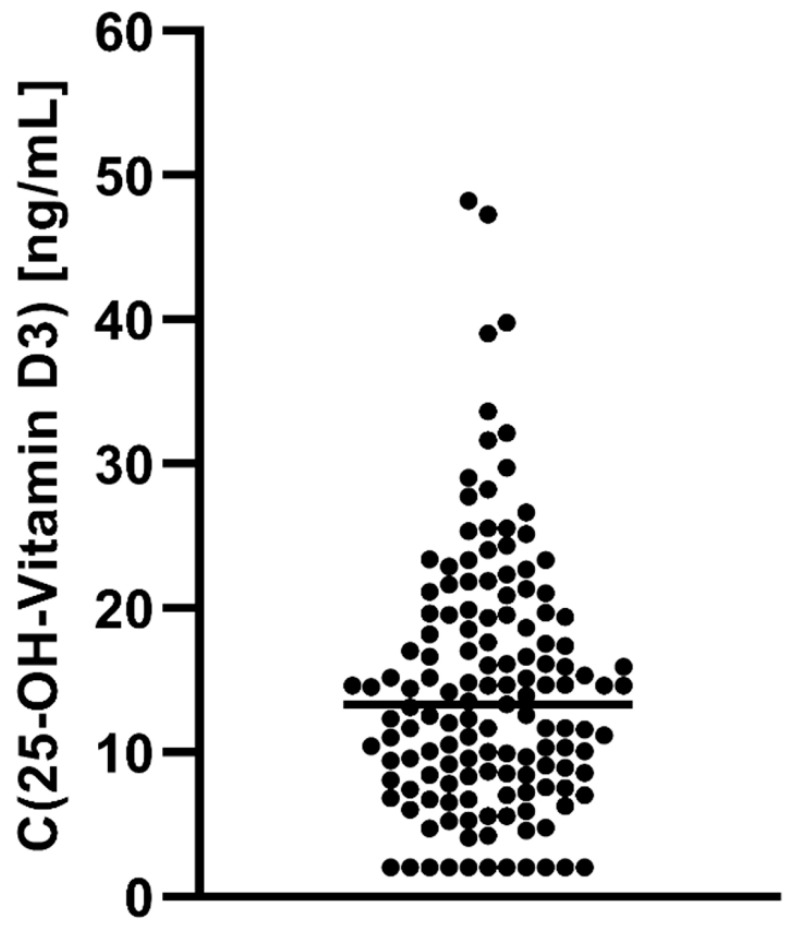
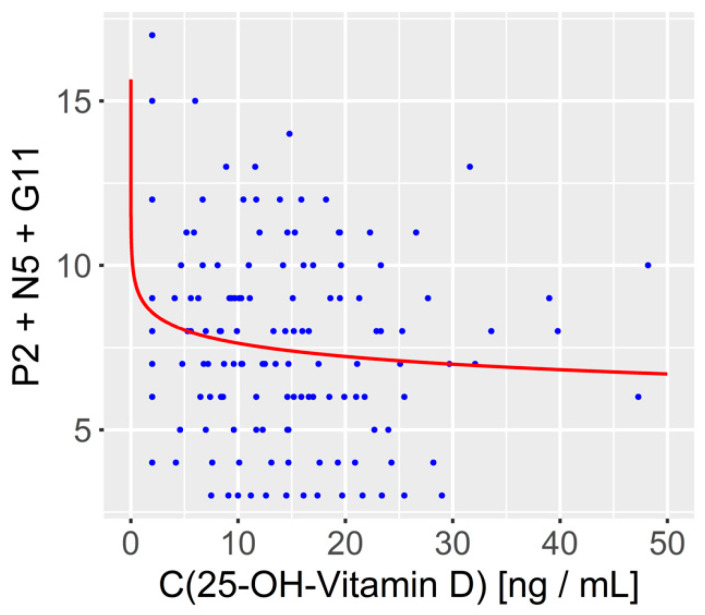
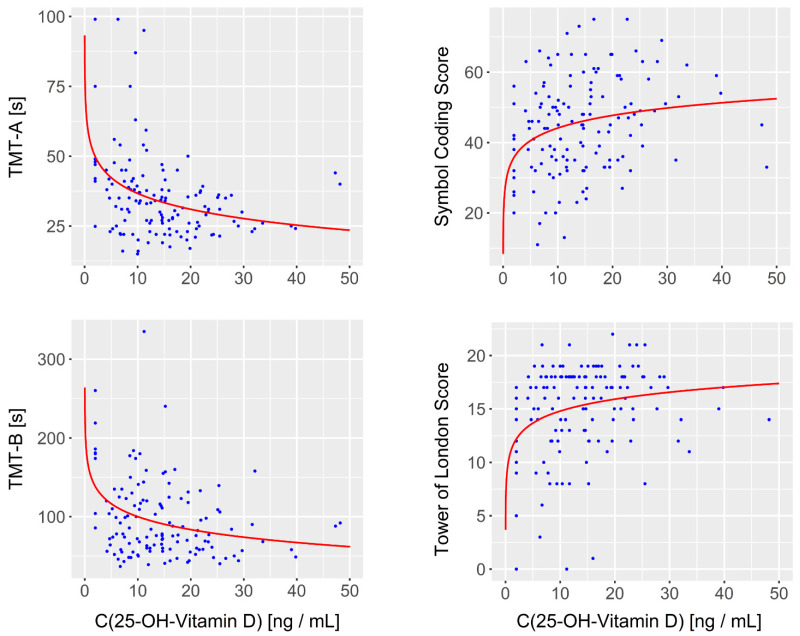
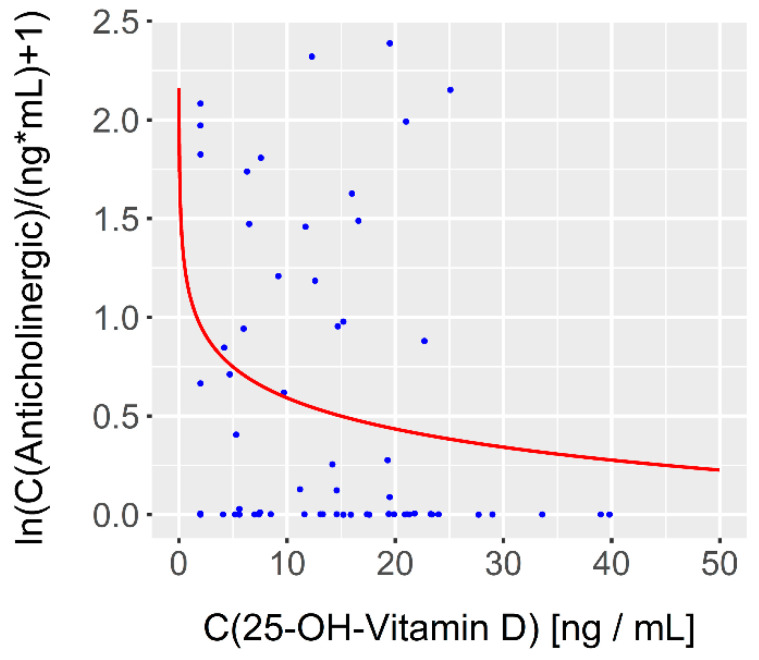
Vitamin D deficiency is a frequent finding in schizophrenia and may contribute to neurocognitive dysfunction, a core element of the disease. However, there is limited knowledge about the neuropsychological profile of vitamin D deficiency-related cognitive deficits and their underlying molecular mechanisms. As an inductor of cytochrome P450 3A4, a lack of vitamin D might aggravate cognitive deficits by increased exposure to anticholinergic antipsychotics. This cross-sectional study aims to assess the relationship between 25-OH-vitamin D-serum concentrations, anticholinergic drug exposure and neurocognitive functioning (Brief Assessment of Cognition in Schizophrenia, BACS, and Trail Making Test, TMT) in 141 patients with schizophrenia. The anticholinergic drug exposure was estimated by adjusting the concentration of each drug for its individual muscarinic receptor affinity. Using regression analysis, we observed a positive relationship between vitamin D levels and processing speed (TMT-A and BACS Symbol Coding) as well as executive functioning (TMT-B and BACS Tower of London). Moreover, a negative impact of vitamin D on anticholinergic drug exposure emerged, but the latter did not significantly affect cognition. When other cognitive items were included as regressors, the impact of vitamin D remained only significant for the TMT-A. Among the different cognitive impairments in schizophrenia, vitamin D deficiency may most directly affect processing speed, which in turn may aggravate deficits in executive functioning. This finding is not explained by a cytochrome P450-mediated increased exposure to anticholinergic antipsychotics.
维生素D缺乏在精神分裂症中很常见,可能导致神经认知功能障碍,这是该疾病的一个核心要素。然而,关于维生素D缺乏相关认知缺陷的神经心理学特征及其潜在分子机制的了解有限。作为细胞色素P450 3A4的诱导剂,维生素D缺乏可能通过增加对抗胆碱能抗精神病药物的暴露而加重认知缺陷。这项横断面研究旨在评估141例精神分裂症患者的25-羟基维生素D血清浓度、抗胆碱能药物暴露与神经认知功能(精神分裂症认知简短评估量表,BACS,以及连线测验,TMT)之间的关系。通过根据每种药物的个体毒蕈碱受体亲和力调整其浓度来估计抗胆碱能药物暴露。使用回归分析,我们观察到维生素D水平与处理速度(TMT-A和BACS符号编码)以及执行功能(TMT-B和BACS伦敦塔测验)之间呈正相关。此外,维生素D对抗胆碱能药物暴露有负面影响,但后者对认知没有显著影响。当将其他认知项目作为回归变量纳入时,维生素D的影响仅对TMT-A仍然显著。在精神分裂症的不同认知障碍中,维生素D缺乏可能最直接影响处理速度,进而可能加重执行功能缺陷。这一发现不能用细胞色素P450介导的对抗胆碱能抗精神病药物暴露增加来解释。