Extreme Events and Health Protection Team, UK Health Security Agency, London SW1P 3JR, UK.
Department of Social and Environmental Health Research, London School of Hygiene and Tropical Medicine, London WC1E 7HT, UK.
Int J Environ Res Public Health. 2022 May 18;19(10):6123. doi: 10.3390/ijerph19106123.
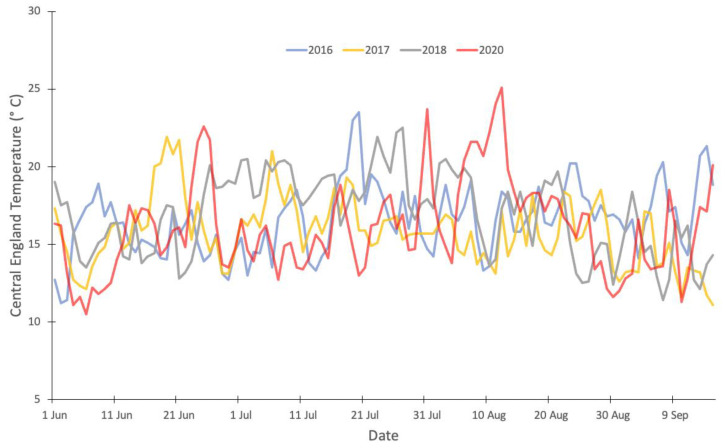
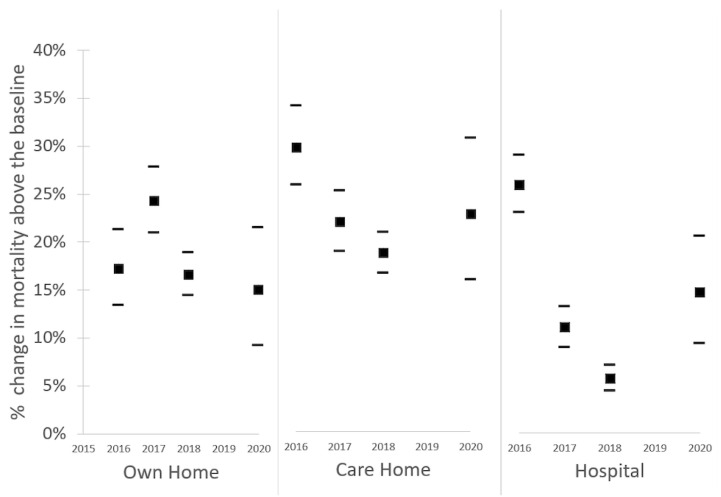
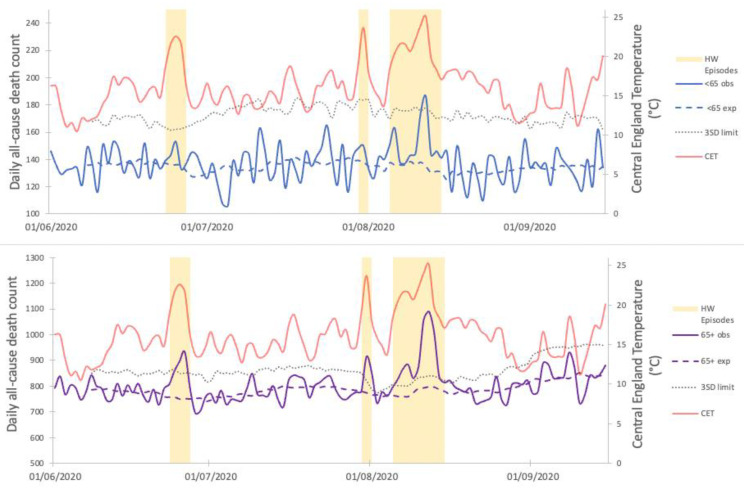
High ambient temperatures pose a significant risk to health. This study investigates the heatwave mortality in the summer of 2020 during the SARS-CoV-2 coronavirus (COVID-19) pandemic and related countermeasures. The heatwaves in 2020 caused more deaths than have been reported since the Heatwave Plan for England was introduced in 2004. The total and cause-specific mortality in 2020 was compared to previous heatwave events in England. The findings will help inform summer preparedness and planning in future years as society learns to live with COVID-19. Heatwave excess mortality in 2020 was similar to deaths occurring at home, in hospitals, and in care homes in the 65+ years group, and was comparable to the increases in previous years (2016-2018). The third heatwave in 2020 caused significant mortality in the younger age group (0-64) which has not been observed in previous years. Significant excess mortality was observed for cardiovascular disease, respiratory disease, and Alzheimer's and Dementia across all three heatwaves in persons aged 65+ years. There was no evidence that the heatwaves affected the proportional increase of people dying at home and not seeking heat-related health care. The most significant spike in daily mortality in August 2020 was associated with a period of high night-time temperatures. The results provide additional evidence that contextual factors are important for managing heatwave risks, particularly the importance of overheating in dwellings. The findings also suggest more action is also needed to address the vulnerability in the community and in health care settings during the acute response phase of a heatwave.
高温环境对健康构成重大威胁。本研究调查了 2020 年 SARS-CoV-2 冠状病毒(COVID-19)大流行期间夏季热浪的死亡率及其相关对策。与 2004 年英格兰热浪计划推出以来报告的死亡人数相比,2020 年的热浪造成的死亡人数更多。将 2020 年的总死亡率和特定病因死亡率与英格兰以前的热浪事件进行了比较。这些发现将有助于为未来几年的夏季准备和规划提供信息,因为社会正在学会与 COVID-19 共存。2020 年热浪的超额死亡率与 65 岁以上人群在家中、医院和养老院的死亡人数相似,与前几年的增幅相当(2016-2018 年)。2020 年的第三次热浪导致年轻年龄组(0-64 岁)的死亡率显著上升,而这在以前的年份中没有观察到。在所有三个热浪中,65 岁以上人群的心血管疾病、呼吸道疾病以及阿尔茨海默病和痴呆症的超额死亡率都很高。没有证据表明热浪对在家中死亡而未寻求与高温相关的医疗保健的人数的比例增加产生影响。2020 年 8 月每日死亡率的显著上升与夜间高温期有关。结果提供了额外的证据,表明环境因素对于管理热浪风险很重要,尤其是居住环境过热的重要性。调查结果还表明,在热浪急性反应阶段,需要采取更多行动来解决社区和医疗保健环境中的脆弱性问题。