Key Laboratory of Natural Pesticides and Chemical Biology, Ministry of Education, South China Agricultural University, Guangzhou 510642, China.
Int J Mol Sci. 2022 May 10;23(10):5329. doi: 10.3390/ijms23105329.
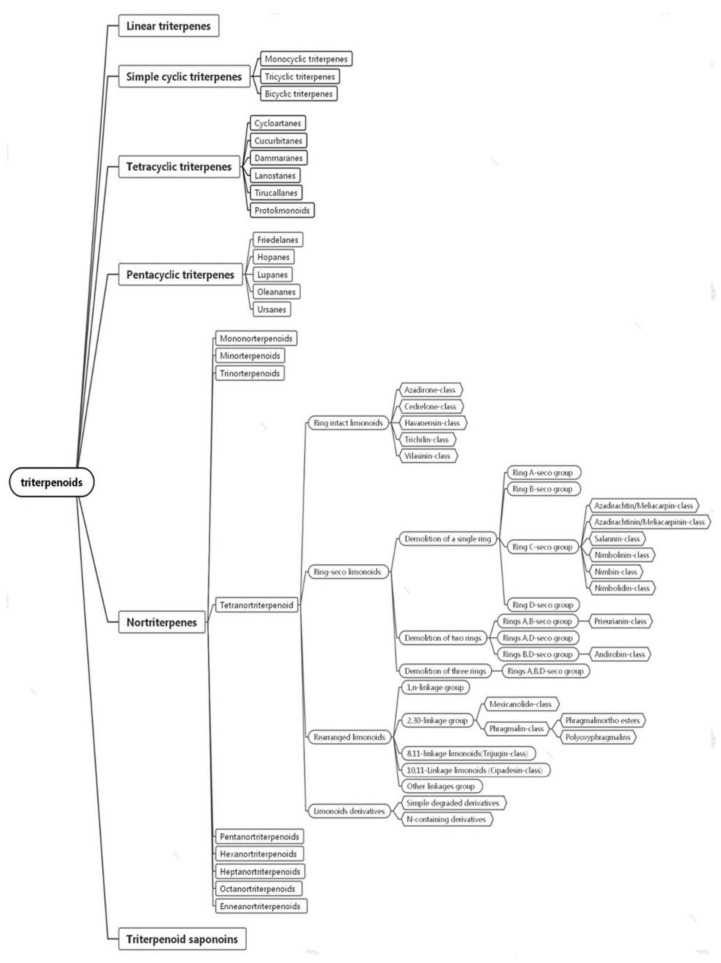
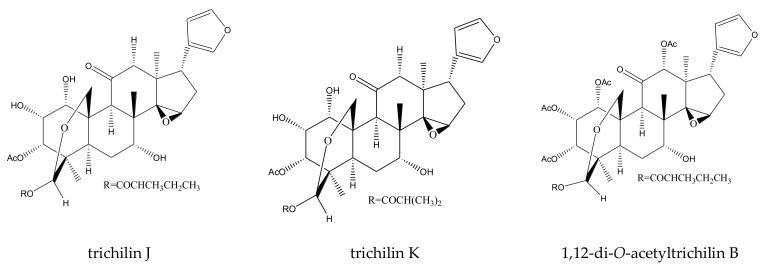
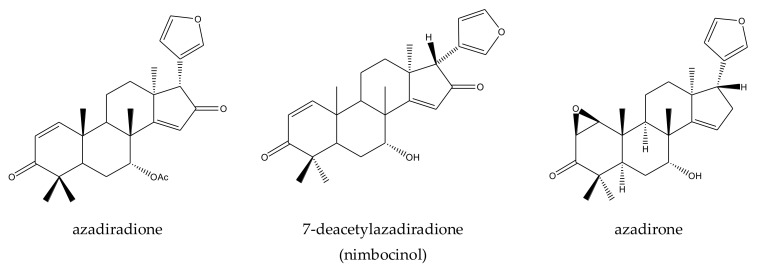
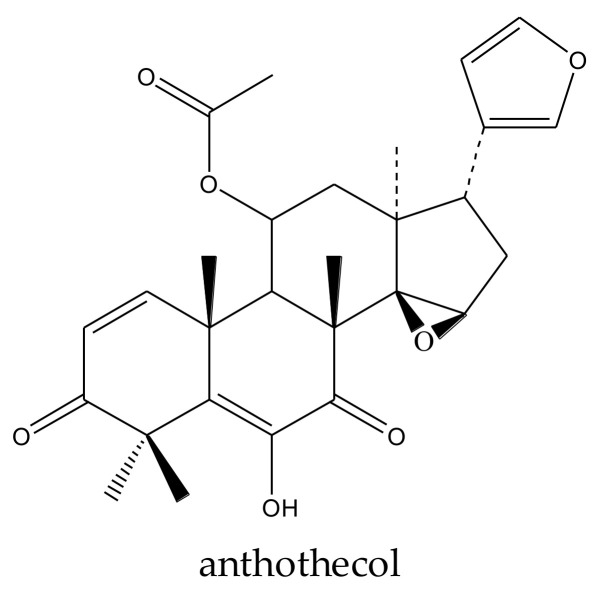
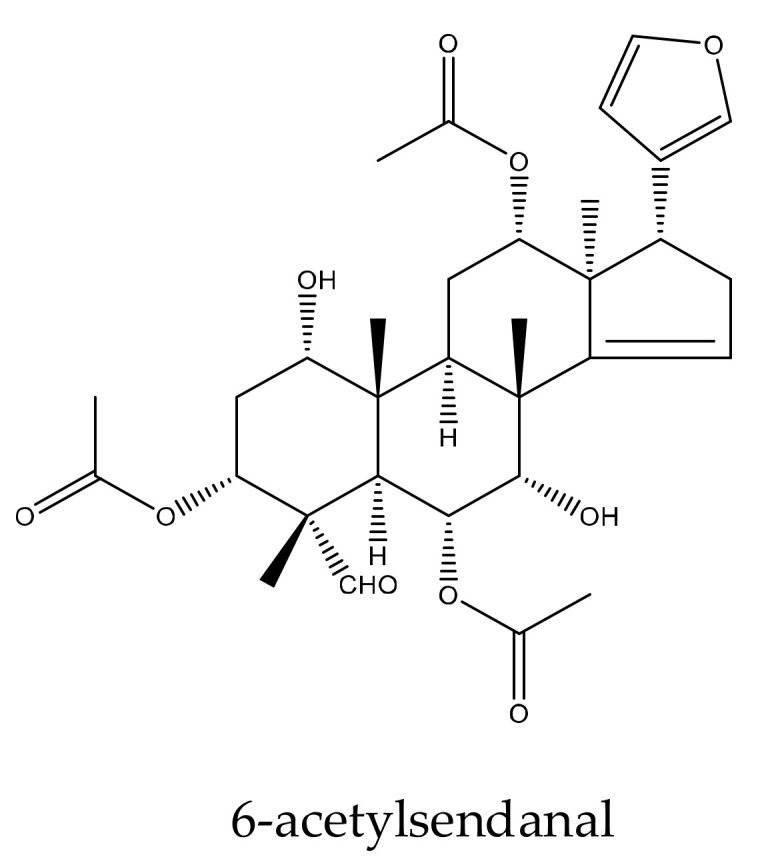
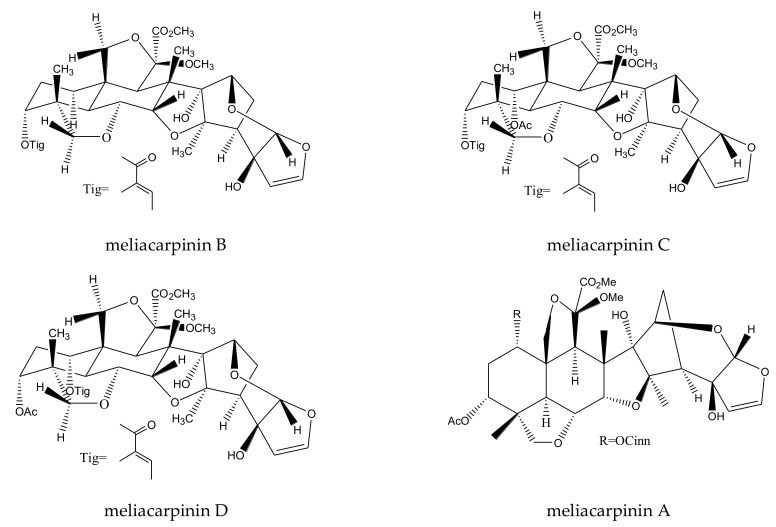
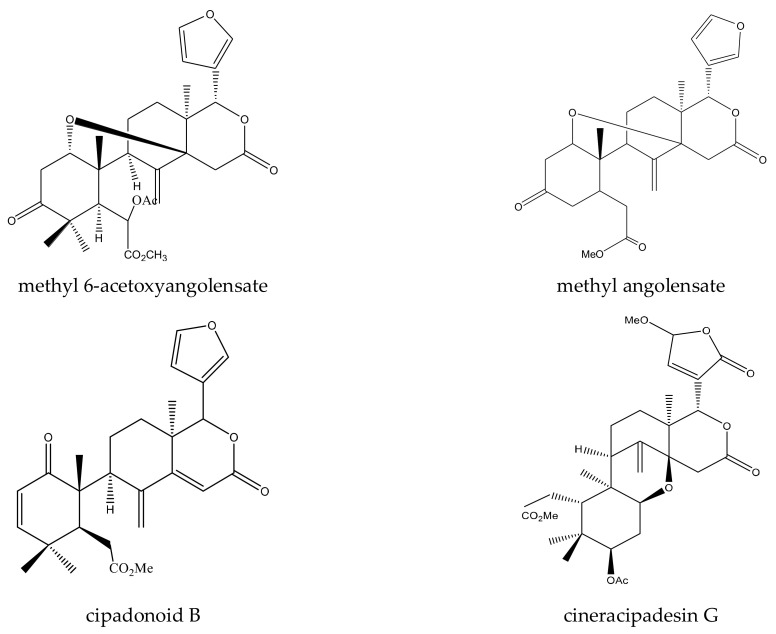
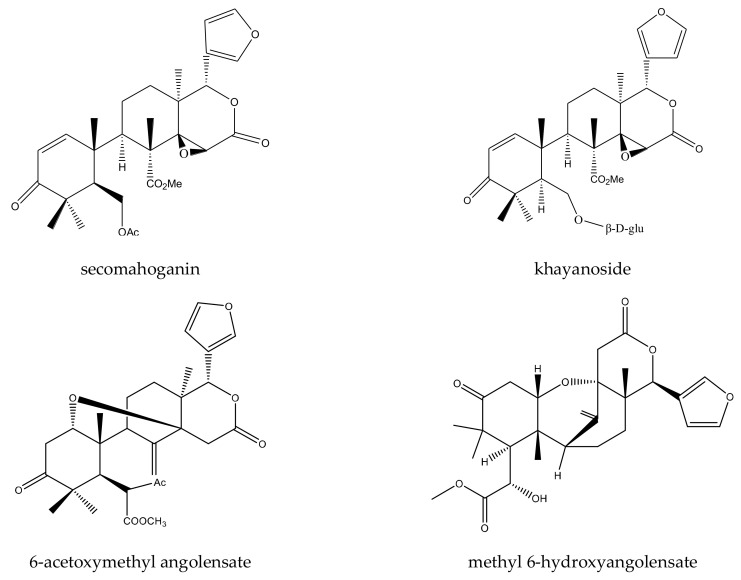
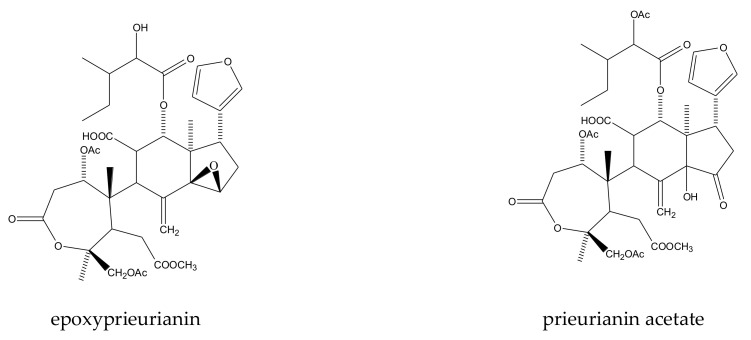
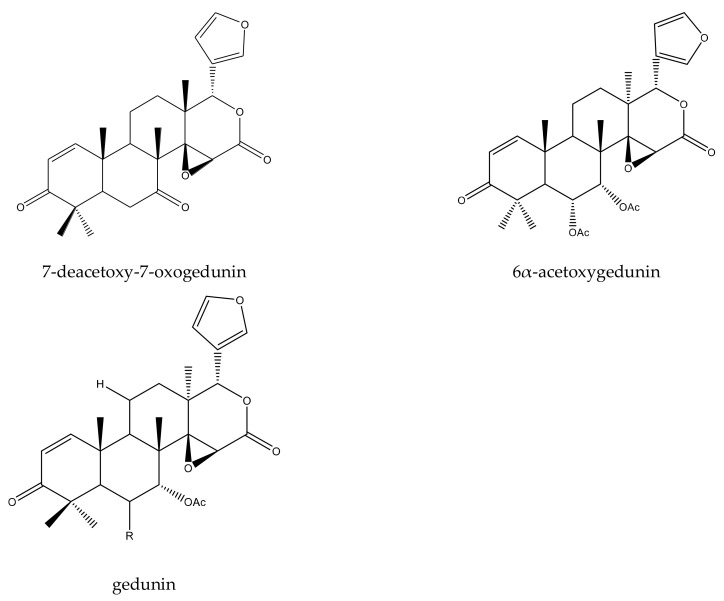
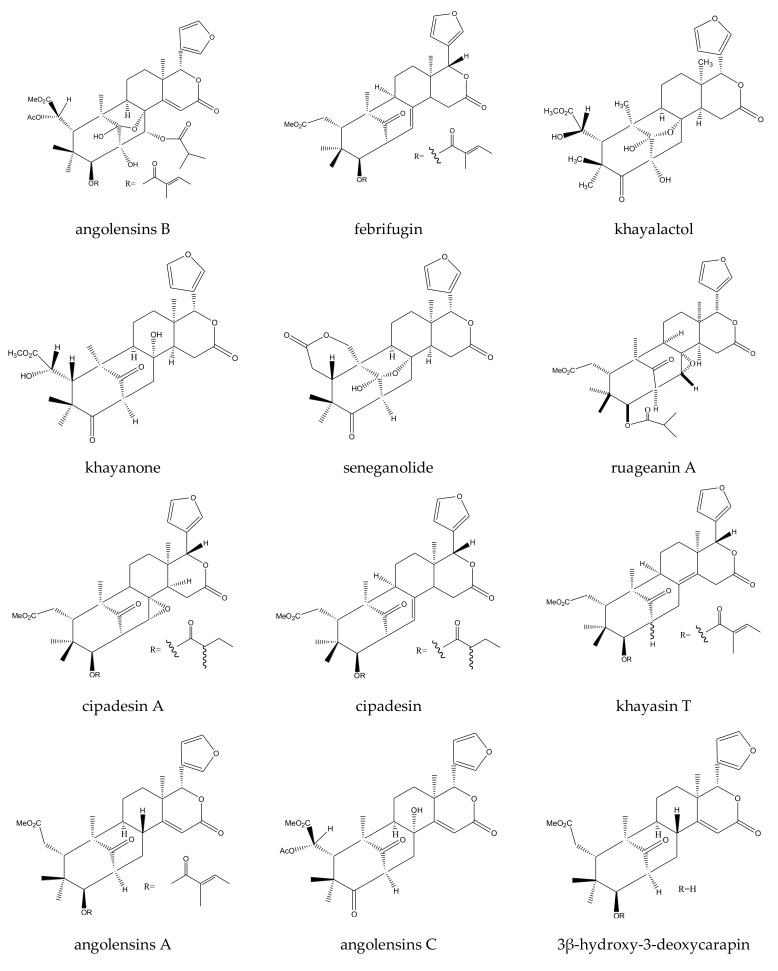
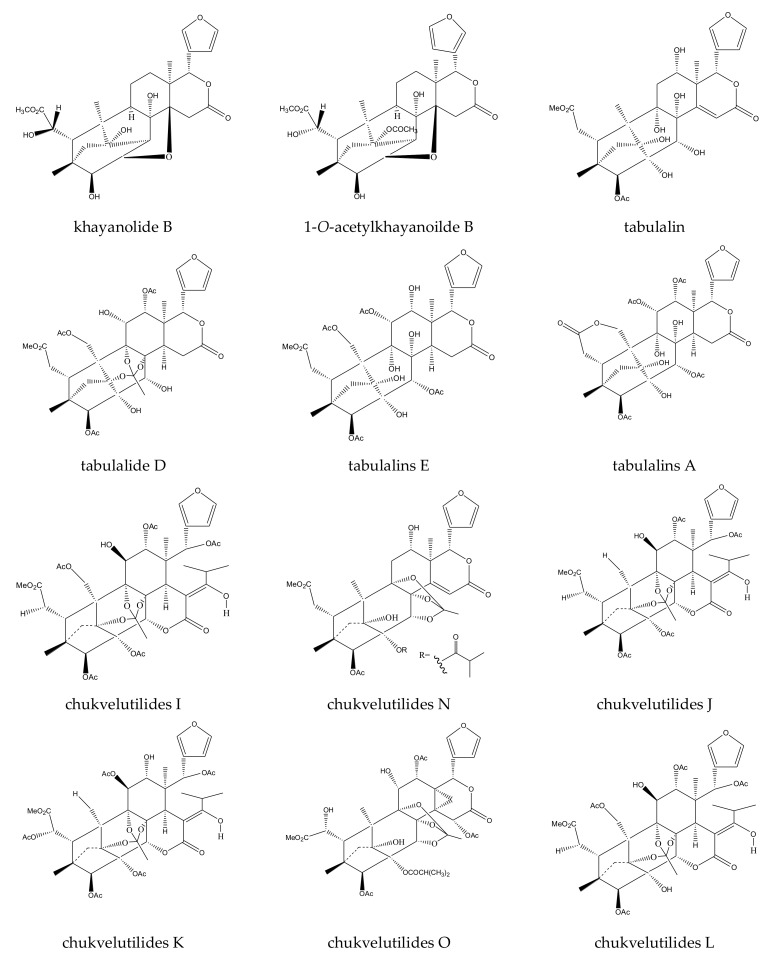
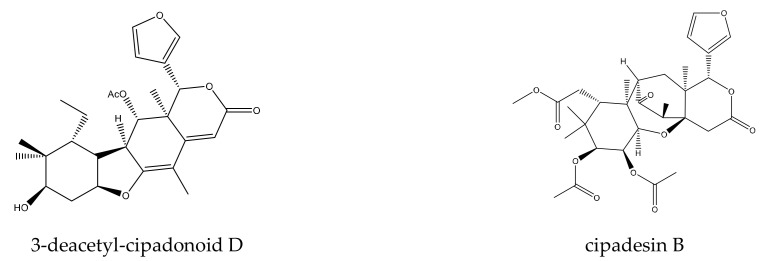
Plant-originated triterpenes are important insecticidal molecules. Research on the insecticidal activity of molecules from Meliaceae plants has always been a hotspot due to the molecules from this family showing a variety of insecticidal activities with diverse mechanisms of action. In this paper, we discussed 116 triterpenoid molecules with insecticidal activity from 22 plant species of five genera (, , , , and ) in Meliaceae. In these genera, the insecticidal activities of plants from and have attracted substantial research attention in recent years. Specifically, the insecticidal activities of plants from have been systemically studied for several decades. In total, the 116 insecticidal chemicals consisted of 34 ring-intact limonoids, 31 ring-seco limonoids, 48 rearranged limonoids, and 3 tetracyclic triterpenes. Furthermore, the 34 ring-intact limonoids included 29 trichilin-class chemicals, 3 azadirone-class chemicals, and 1 cedrelone-class and 1 havanensin-class limonoid. The 31 ring-seco limonoids consisted of 16 C-seco group chemicals, 8 B,D-seco group chemicals, 4 A,B-seco group chemicals, and 3 D-seco group chemicals. Furthermore, among the 48 rearranged limonoids, 46 were 2,30-linkage group chemicals and 2 were 10,11-linkage group chemicals. Specifically, the 46 chemicals belonging to the 2,30-linkage group could be subdivided into 24 mexicanolide-class chemicals and 22 phragmalin-class chemicals. Additionally, the three tetracyclic triterpenes were three protolimonoids. To sum up, 80 chemicals isolated from 19 plant species exhibited antifeedant activity toward 14 insect species; 18 chemicals isolated from 17 plant species exhibited poisonous activity toward 10 insect species; 16 chemicals isolated from 11 plant species possessed growth-regulatory activity toward 8 insect species. In particular, toosendanin was the most effective antifeedant and insect growth-regulatory agent. The antifeedant activity of toosendanin was significant. Owing to its high effect, toosendanin has been commercially applied. Three other molecules, 1,3-dicinnamoyl-11-hydroxymeliacarpin, 1-cinnamoyl-3-methacryl-11-hydroxymeliacarpin, and 1-cinnamoyl-3-acetyl-11-hydroxymeliacarpin, isolated from , exhibited a highly poisonous effect on ; thus, they deserve further attention.
植物源三萜类化合物是重要的昆虫icidal 分子。由于该家族的分子表现出多种杀虫活性和不同的作用机制,因此对桃金娘科植物中分子的杀虫活性的研究一直是一个热点。本文讨论了来自桃金娘科五个属( 、 、 、 和 )的 22 种植物的 116 种具有杀虫活性的三萜类化合物。在这些属中, 和 植物的杀虫活性近年来引起了大量的研究关注。具体来说, 植物的杀虫活性已经被系统地研究了几十年。总的来说,这 116 种杀虫化学物质包括 34 种完整环的柠檬苦素、31 种环裂柠檬苦素、48 种重排柠檬苦素和 3 种四环三萜。此外,34 种完整环的柠檬苦素包括 29 种 trichilin 类化合物、3 种 azadirone 类化合物和 1 种 cedrelone 类和 1 种 havanensin 类柠檬苦素。31 种环裂柠檬苦素包括 16 种 C-裂环化合物、8 种 B,D-裂环化合物、4 种 A,B-裂环化合物和 3 种 D-裂环化合物。此外,在 48 种重排柠檬苦素中,有 46 种是 2,30-键合基团化合物,有 2 种是 10,11-键合基团化合物。具体来说,属于 2,30-键合基团的 46 种化学物质可进一步细分为 24 种 mexicanolide 类化合物和 22 种 phragmalin 类化合物。此外,三种四环三萜是三种 protolimonoids。综上所述,从 19 种植物中分离得到的 80 种化学物质对 14 种昆虫表现出拒食活性;从 17 种植物中分离得到的 18 种化学物质对 10 种昆虫表现出毒性活性;从 11 种植物中分离得到的 16 种化学物质对 8 种昆虫具有生长调节活性。特别是,川楝素是最有效的拒食和昆虫生长调节剂。川楝素具有显著的拒食活性。由于其高效果,川楝素已被商业化应用。从 中分离得到的 1,3-二肉桂酰基-11-羟基杨梅素、1-肉桂酰基-3-甲酰基-11-羟基杨梅素和 1-肉桂酰基-3-乙酰基-11-羟基杨梅素对 具有高毒性作用,因此值得进一步关注。