Nuytens Philippe, D'haese Rani, Vandeweghe Stefan
Private Practice for Restorative Dentistry, Het Tandatelier, 8870 Izegem, Belgium.
Department of Reconstructive Dentistry, Dental School, Faculty of Medicine and Health Sciences, Ghent University, 9000 Ghent, Belgium.
J Clin Med. 2022 May 19;11(10):2882. doi: 10.3390/jcm11102882.
Information about full-digital protocols for bite registration with intraoral scanners on multiple implants in the edentulous jaw is scarce. The purpose of this comparative in vivo study was to investigate the reliability and time efficiency of a novel full-digital bite registration technique for the manufacture of full-arch maxillary fixed implant prostheses.
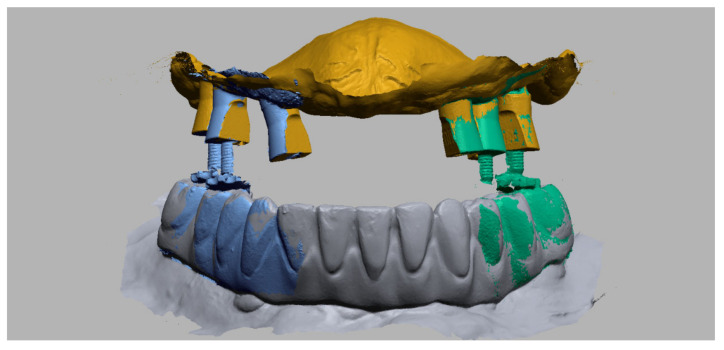
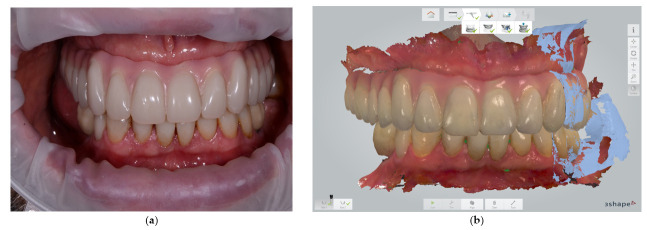
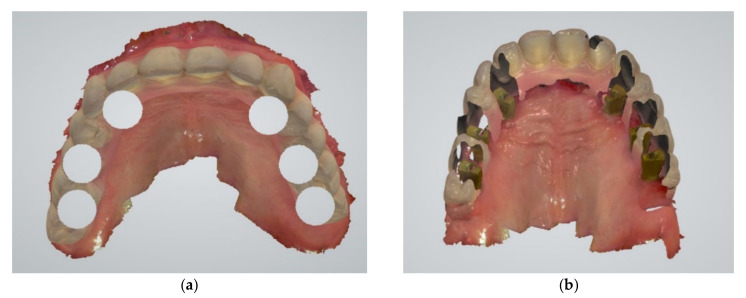
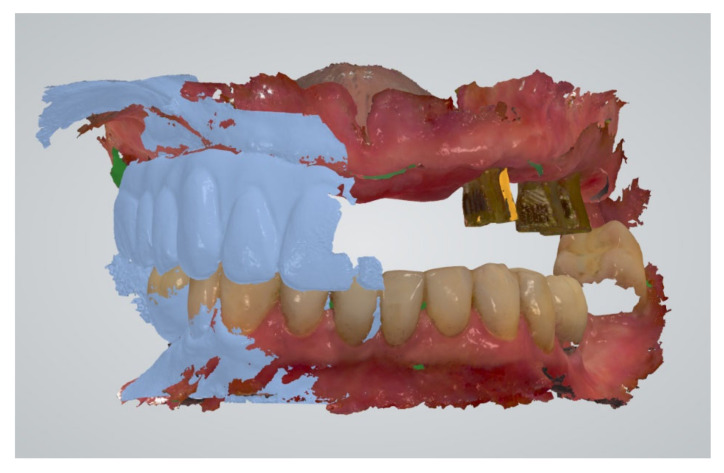
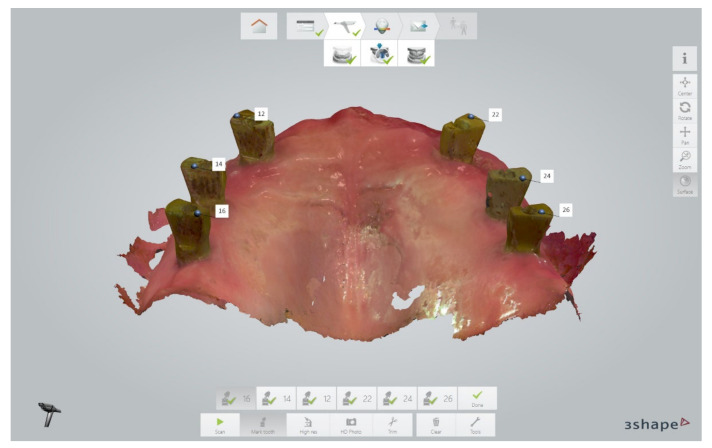
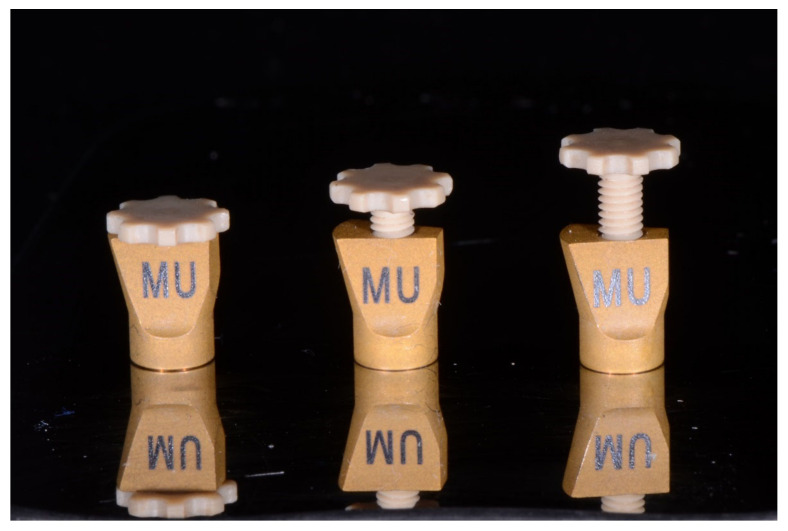
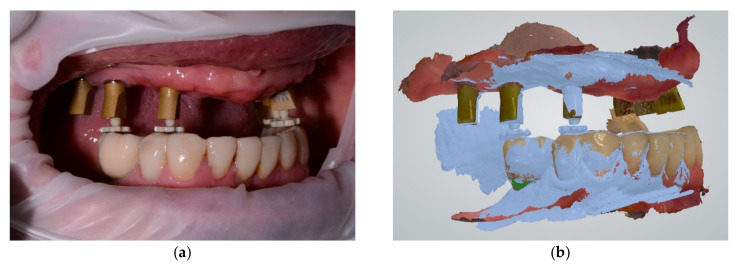
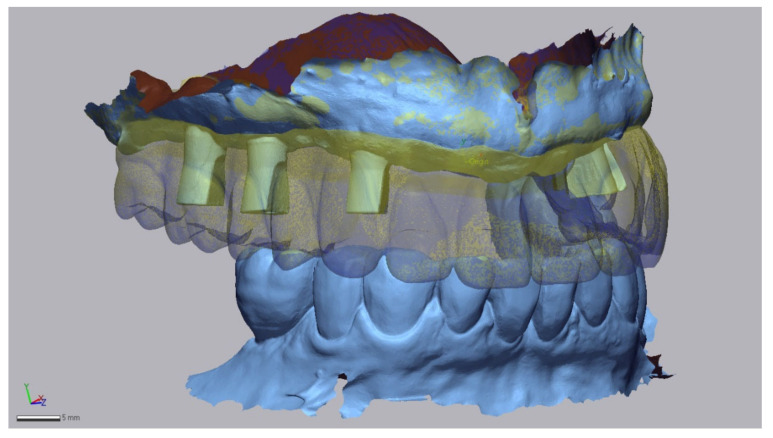
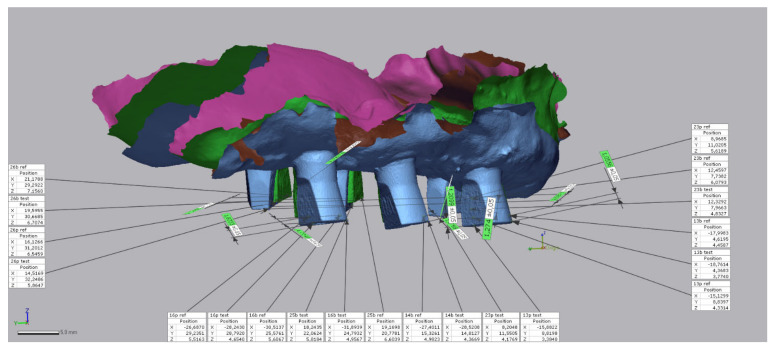
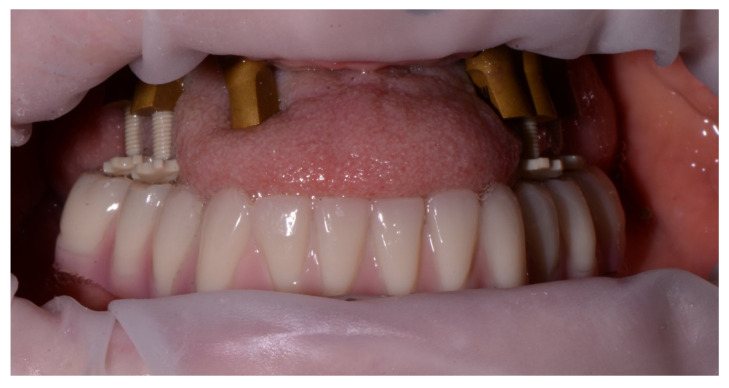
In ten patients, a full-arch maxillary fixed implant prosthesis was manufactured on multi-unit abutment level through an analog prosthetic workflow. The bite registration was performed with use of a screw-retained polymethyl methacrylate (PMMA) verification jig with detachable wax rim. To articulate the definitive edentulous maxillary implant cast in centric relation at the appropriate occlusal vertical dimension (OVD) to the mandibular antagonist cast, a type II articulator (Artex, Amann Girrbach) was used. Three to six months later, a full-digital bite registration was performed with use of dual-function scan bodies and bilateral connected bite pillars. The bite pillars screwed into the scan bodies were used to adjust and articulate the edentulous maxillary implant arch to the mandibular antagonist arch at the defined OVD. Treatment time for analog and digital bite registration technique was measured in each patient. The reliability of the digital bite registration technique was evaluated by 3D comparison of two sets of stereo lithographic (STL) files obtained from each patient. The three-dimensional deviation was defined along the X-, Y- and -axes (Geomagic Control X, 3D Systems Inc., Rock Hill, SC, USA).
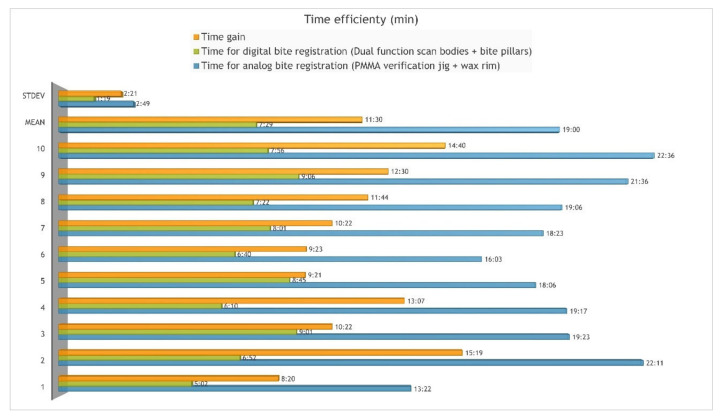
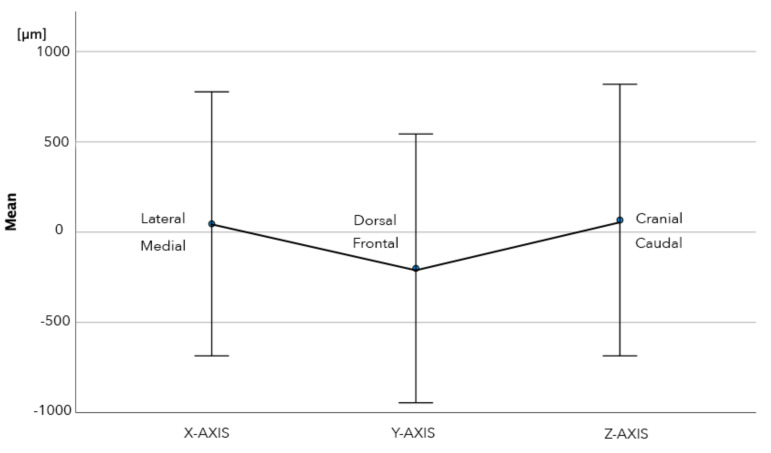
The treatment time for digital bite registration using dual-function scan bodies and bite pillars was significantly shorter than analog bite registration with verification jig and wax rim (60.30%, SD 5.72%). Minor differences between the two techniques were observed with a linear deviation range of 1115 µm (SD 668 µm) overall, 46.2 µm (SD 731.3 µm) along the -axis, -200.3 µm (SD 744.3 µm) along the -axis and 67.1 µm (SD 752.2 µm) along the -axis. Bilateral balanced contacts were registered in all patients during full-digital bite registration.
The novel digital bite registration technique with dual-function scan bodies and bite pillars allows for a full-digital workflow for full-arch implant supported restorations. The digital bite workflow was 60% faster, and the overall deviation was around 1 mm, which can be considered clinically acceptable.
关于使用口腔内扫描仪在无牙颌的多个种植体上进行咬合记录的全数字协议的信息很少。这项体内比较研究的目的是调查一种用于制造全牙弓上颌固定种植修复体的新型全数字咬合记录技术的可靠性和时间效率。
在10名患者中,通过模拟修复工作流程在多单位基台水平上制造全牙弓上颌固定种植修复体。使用带有可拆卸蜡边的螺丝固位聚甲基丙烯酸甲酯(PMMA)验证夹具进行咬合记录。为了将无牙上颌种植体模型在适当的咬合垂直距离(OVD)下以正中关系与下颌对颌模型进行咬合,使用了II型咬合架(Artex,阿曼吉尔巴赫)。三到六个月后,使用双功能扫描体和双侧连接的咬合柱进行全数字咬合记录。拧入扫描体的咬合柱用于在定义的OVD下将无牙上颌种植体牙弓与下颌对颌牙弓进行调整和咬合。测量每位患者模拟和数字咬合记录技术的治疗时间。通过对从每位患者获得的两组立体光刻(STL)文件进行三维比较,评估数字咬合记录技术的可靠性。三维偏差沿X、Y和Z轴定义(Geomagic Control X,3D Systems公司,美国南卡罗来纳州罗克希尔)。
使用双功能扫描体和咬合柱进行数字咬合记录的治疗时间明显短于使用验证夹具和蜡边的模拟咬合记录(60.30%,标准差5.72%)。观察到两种技术之间的微小差异,总体线性偏差范围为1115µm(标准差668µm),沿Z轴为46.2µm(标准差731.3µm),沿Y轴为-200.3µm(标准差744.3µm),沿X轴为67.1µm(标准差752.2µm)。在全数字咬合记录过程中,所有患者均记录到双侧平衡接触。
采用双功能扫描体和咬合柱的新型数字咬合记录技术可为全牙弓种植支持修复提供全数字工作流程。数字咬合工作流程快60%,总体偏差约为1mm,可认为在临床上是可接受的。