Parrish Amber N, Lange Iris, Šamec Dunja, Lange Bernd Markus
Institute of Biological Chemistry and M.J. Murdock Metabolomics Laboratory, Washington State University, Pullman, WA 99164-7411, USA.
Metabolites. 2022 Apr 29;12(5):403. doi: 10.3390/metabo12050403.
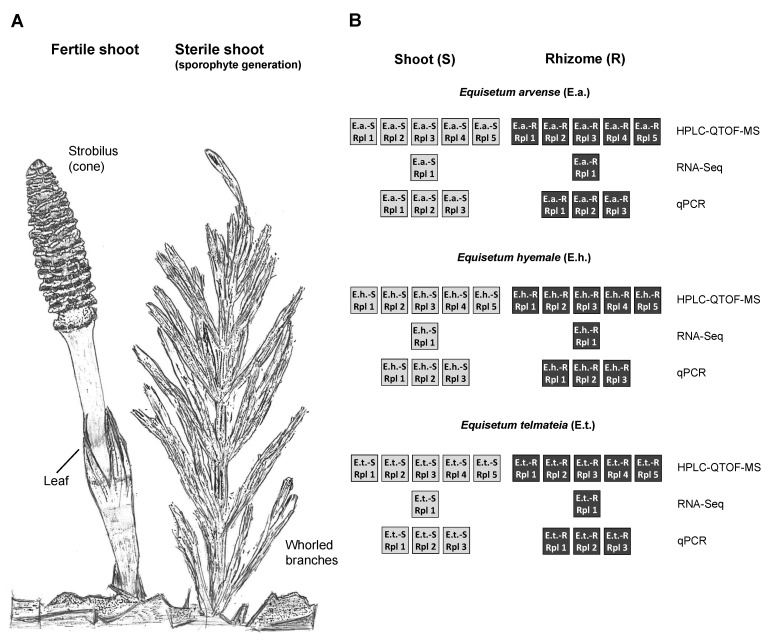
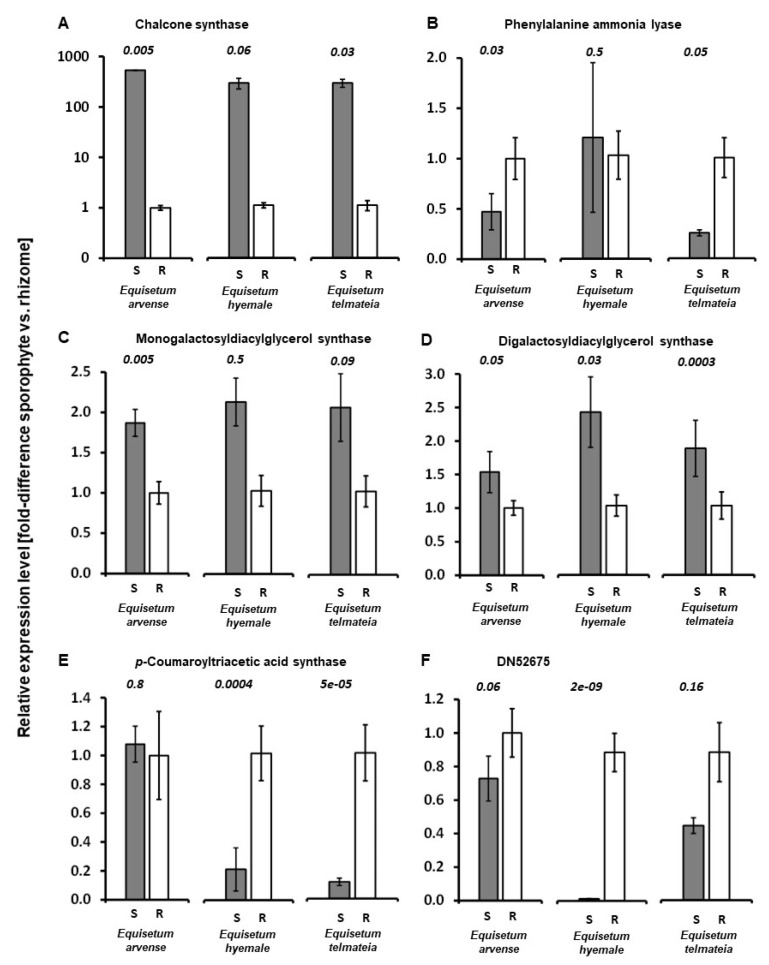
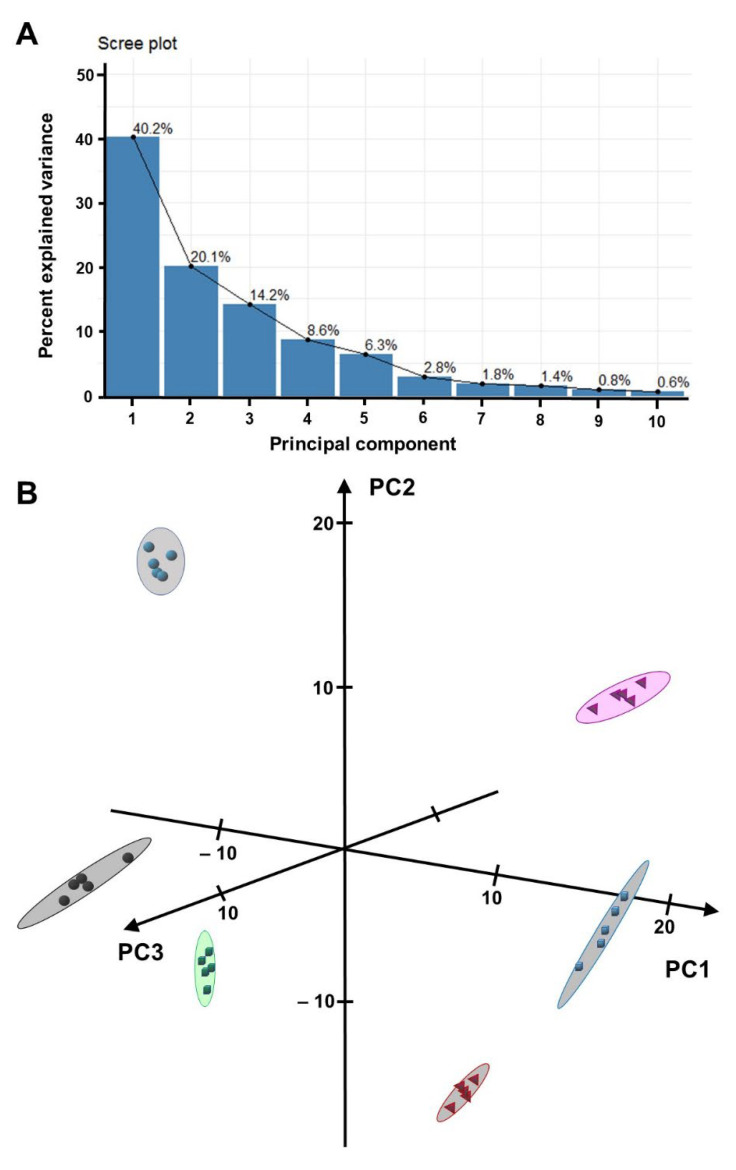
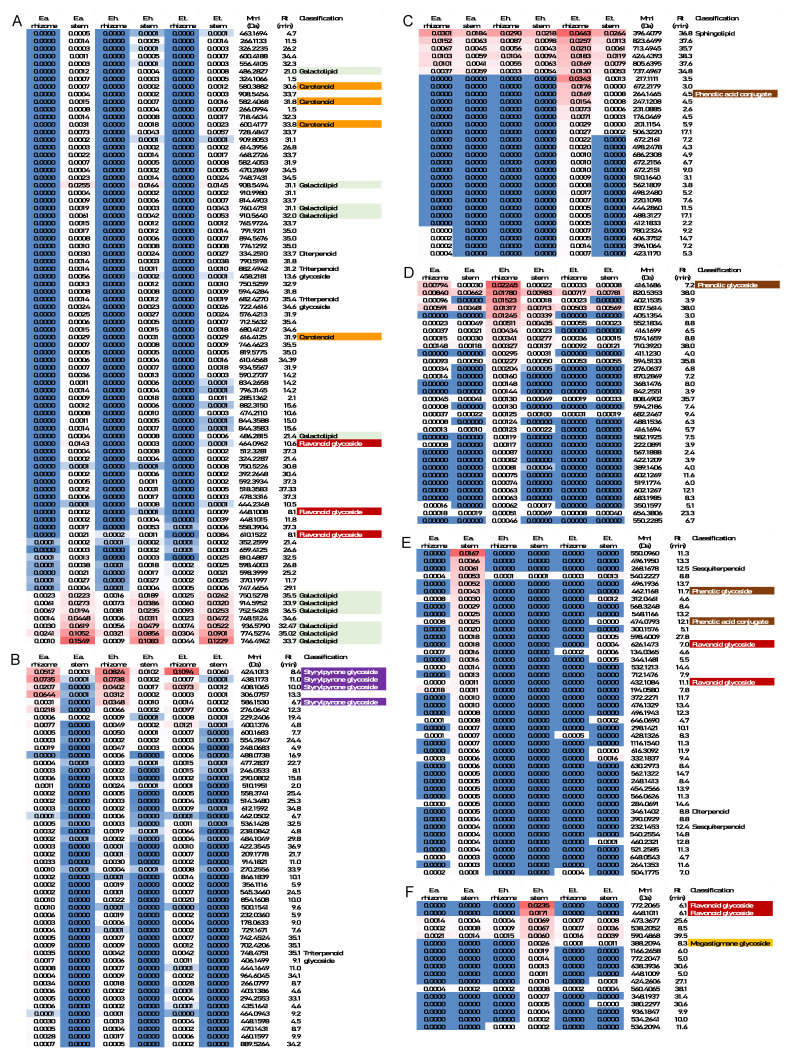
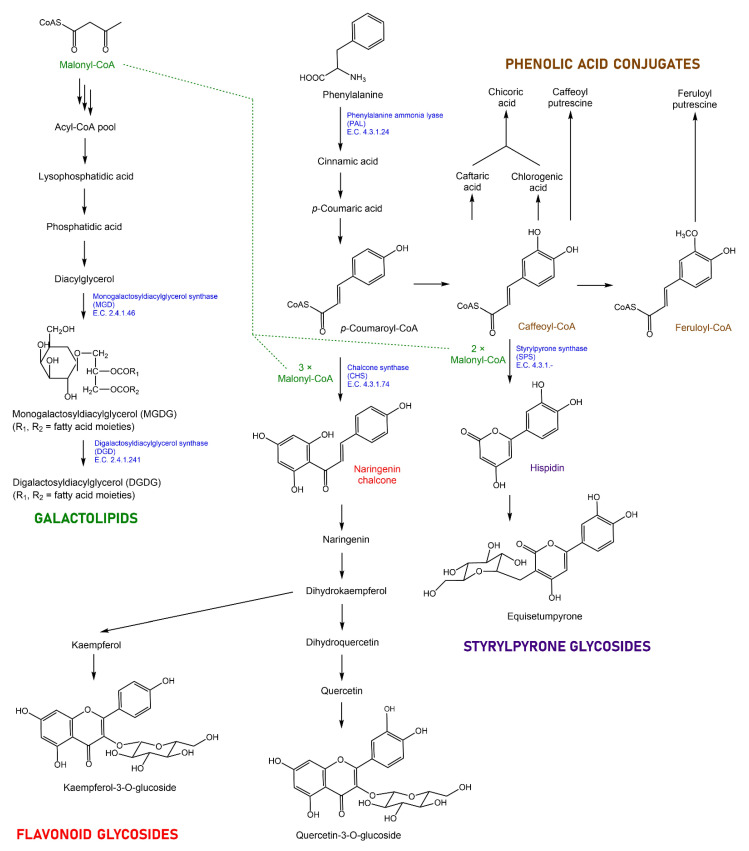
Three species of the genus (, and ) were selected for an analysis of chemical diversity in an ancient land plant lineage. Principal component analysis of metabolomics data obtained with above-ground shoot and below-ground rhizome extracts enabled a separation of all sample types, indicating species- and organ-specific patterns of metabolite accumulation. Follow-up efforts indicated that galactolipids, carotenoids, and flavonoid glycosides contributed positively to the separation of shoot samples, while stryrylpyrone glycosides and phenolic glycosides were the most prominent positive contributors to the separation of rhizome samples. Consistent with metabolite data, genes coding for enzymes of flavonoid and galactolipid biosynthesis were found to be expressed at elevated levels in shoot samples, whereas a putative styrylpyrone synthase gene was expressed preferentially in rhizomes. The current study builds a foundation for future endeavors to further interrogate the organ and tissue specificity of metabolism in the last living genus of a fern family that was prevalent in the forests of the late Paleozoic era.
从(、和)属中选择了三个物种,用于分析一个古老陆地植物谱系中的化学多样性。对地上茎和地下根茎提取物获得的代谢组学数据进行主成分分析,能够区分所有样本类型,表明代谢物积累具有物种和器官特异性模式。后续研究表明,半乳糖脂、类胡萝卜素和黄酮糖苷对茎样本的区分有正向贡献,而苯乙烯基吡喃酮糖苷和酚糖苷是根茎样本区分的最主要正向贡献物。与代谢物数据一致,发现编码黄酮和半乳糖脂生物合成酶的基因在茎样本中表达水平升高,而一个假定的苯乙烯基吡喃酮合酶基因在根茎中优先表达。本研究为未来进一步探究蕨类植物科最后一个现存属的代谢在器官和组织特异性方面奠定了基础,该科在晚古生代森林中很常见。