Abbas Haidy, Sayed Nesrine S El, Youssef Nancy Abdel Hamid Abou, M E Gaafar Passent, Mousa Mohamed R, Fayez Ahmed M, Elsheikh Manal A
Department of Pharmaceutics, Faculty of Pharmacy, Damanhour University, Damanhour 22511, Egypt.
Department of Pharmacology and Toxicology, Faculty of Pharmacy, Cairo University, Giza11562, Egypt.
Pharmaceutics. 2022 May 6;14(5):1003. doi: 10.3390/pharmaceutics14051003.
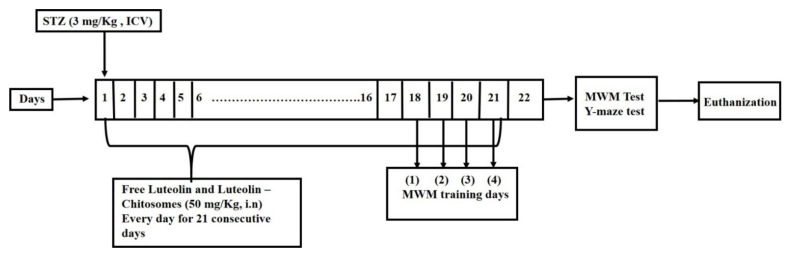
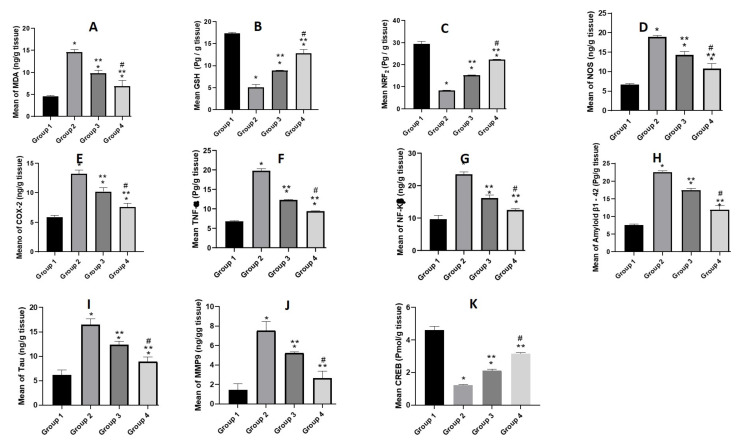
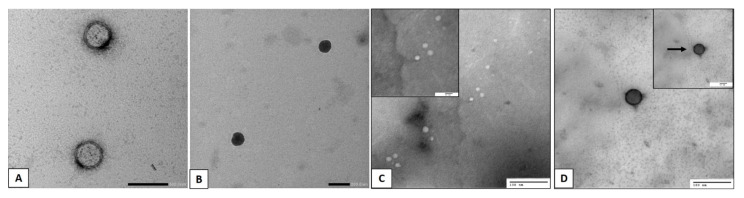
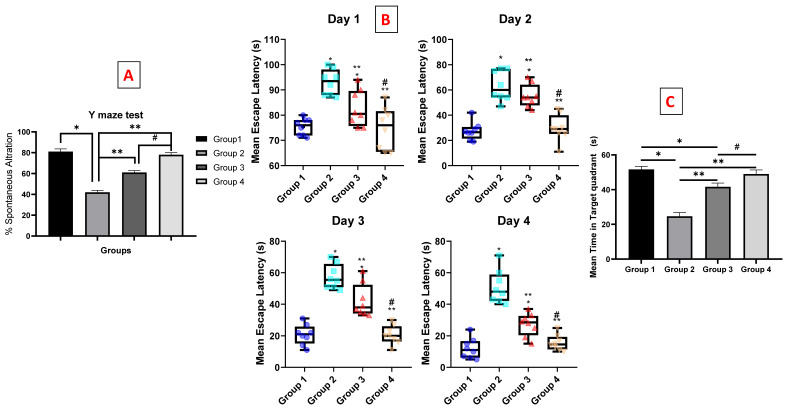
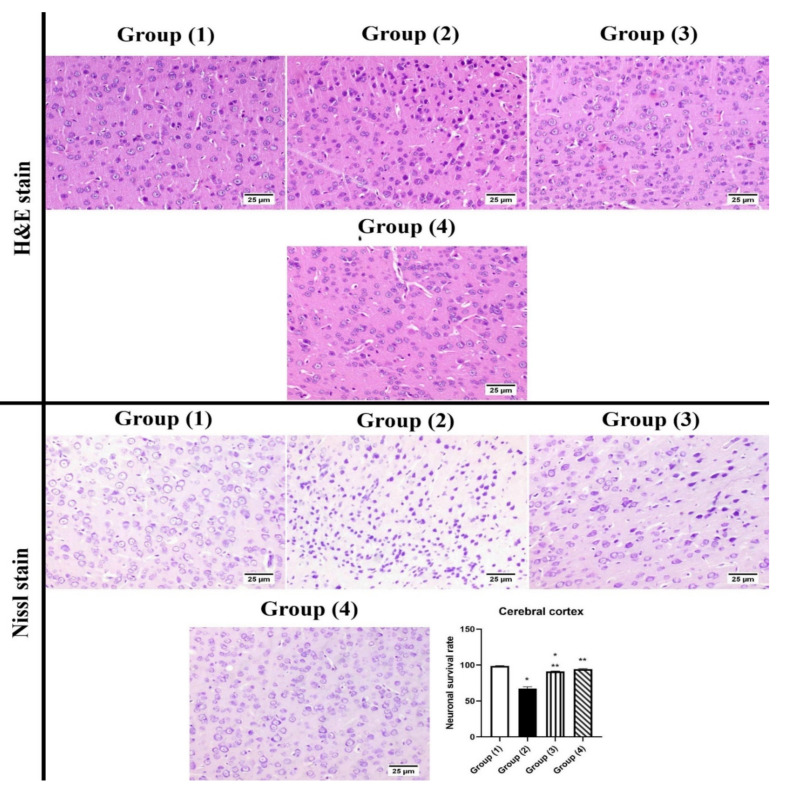
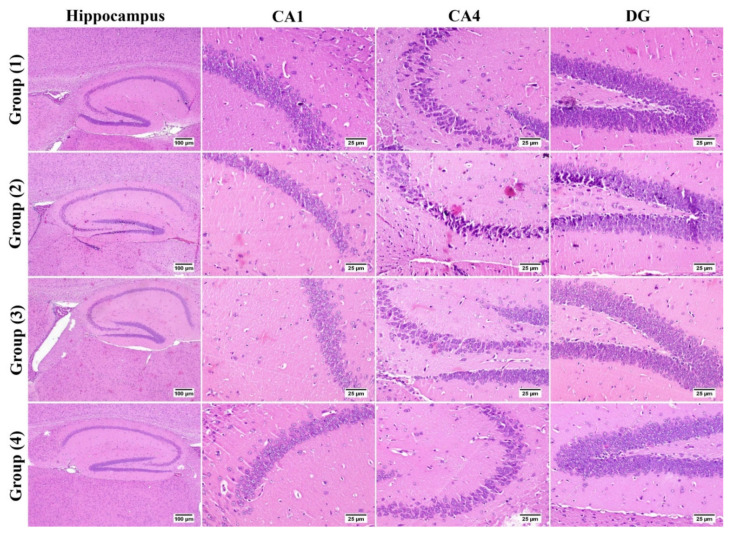
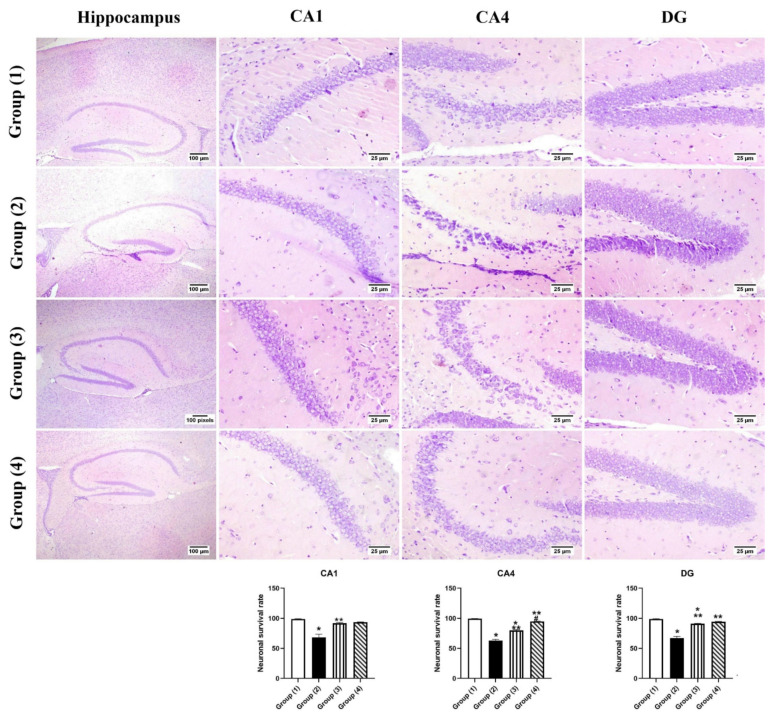
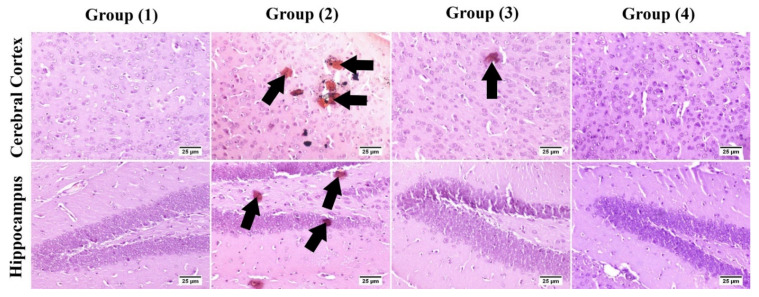
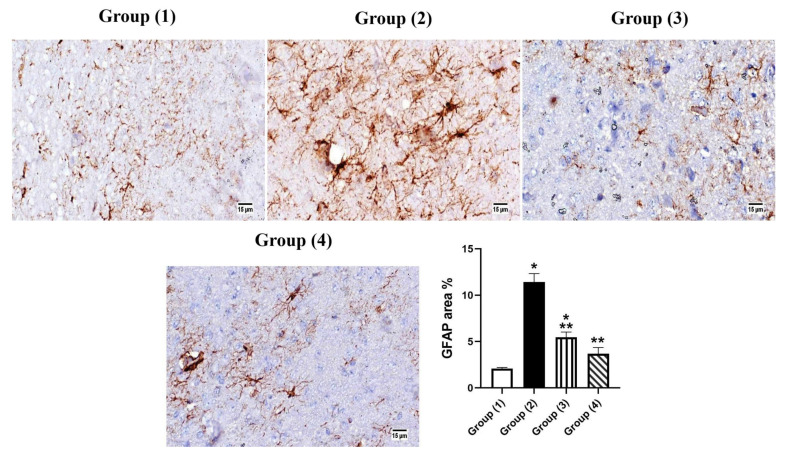
Preparation and evaluation of a non-invasive intranasal luteolin delivery for the management of cognitive dysfunction in Alzheimer's disease (AD) using novel chitosan decorated nanoparticles. Development of luteolin-loaded chitosomes was followed by full in vitro characterization. In vivo efficacy was evaluated using a sporadic Alzheimer's disease (SAD) animal model via intracerebroventricular injection of 3 mg/kg streptozotocin (ICV-STZ). Treatment groups of luteolin suspension and chitosomes (50 mg/kg) were then intranasally administered after 5 h of ICV-STZ followed by everyday administration for 21 consecutive days. Behavioral, histological, immunohistochemical, and biochemical studies were conducted. Chitosomes yielded promising quality attributes in terms of particle size (PS) (412.8 ± 3.28 nm), polydispersity index (PDI) (0.378 ± 0.07), Zeta potential (ZP) (37.4 ± 2.13 mv), and percentage entrapment efficiency (EE%) (86.6 ± 2.05%). Behavioral findings showed obvious improvement in the acquisition of short-term and long-term spatial memory. Furthermore, histological evaluation revealed an increased neuronal survival rate with a reduction in the number of amyloid plaques. Biochemical results showed improved antioxidant effects and reduced pro-inflammatory mediators' levels. In addition, a suppression by half was observed in the levels of both Aβ aggregation and hyperphosphorylated-tau protein in comparison to the model control group which in turn confirmed the capability of luteolin-loaded chitosomes (LUT-CHS) in attenuating the pathological changes of AD. The prepared nanoparticles are considered a promising safe, effective, and non-invasive nanodelivery system that improves cognitive function in SAD albino mice as opposed to luteolin suspension.
使用新型壳聚糖修饰纳米颗粒制备并评估用于治疗阿尔茨海默病(AD)认知功能障碍的非侵入性鼻内递送木犀草素。制备载有木犀草素的壳聚糖脂质体后进行全面的体外表征。通过脑室内注射3mg/kg链脲佐菌素(ICV-STZ),使用散发性阿尔茨海默病(SAD)动物模型评估体内疗效。在ICV-STZ注射5小时后,对木犀草素悬浮液和壳聚糖脂质体(50mg/kg)治疗组进行鼻内给药,随后连续21天每天给药。进行行为学、组织学、免疫组织化学和生物化学研究。壳聚糖脂质体在粒径(PS)(412.8±3.28nm)、多分散指数(PDI)(0.378±0.07)、zeta电位(ZP)(37.4±2.13mv)和包封率(EE%)(86.6±2.05%)方面具有良好的质量属性。行为学研究结果显示,短期和长期空间记忆的获取有明显改善。此外,组织学评估显示神经元存活率增加,淀粉样斑块数量减少。生物化学结果显示抗氧化作用增强,促炎介质水平降低。此外,与模型对照组相比,Aβ聚集和过度磷酸化tau蛋白水平均降低了一半,这反过来证实了载有木犀草素的壳聚糖脂质体(LUT-CHS)减轻AD病理变化的能力。与木犀草素悬浮液相比,所制备的纳米颗粒被认为是一种有前景的安全、有效且非侵入性的纳米递送系统,可改善SAD白化小鼠的认知功能。