Wang Linlin, Wang Chen, Wang Yuan, Quan Aojie, Keshavarz Masoumeh, Madeira Bernardo Pereira, Zhang Hemin, Wang Chenxi, Kraft Michael
Micro- and Nanosystems-MNS, Department of Electrical Engineering ESAT, KU Leuven, B-3001 Leuven, Belgium.
Department of Electrical and Electronic Engineering, Huazhong University of Science and Technology, Wuhan 430074, China.
Sensors (Basel). 2022 May 19;22(10):3857. doi: 10.3390/s22103857.
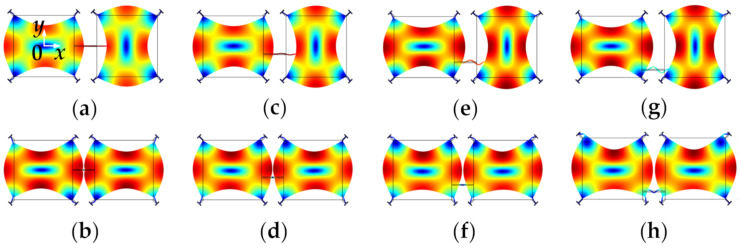
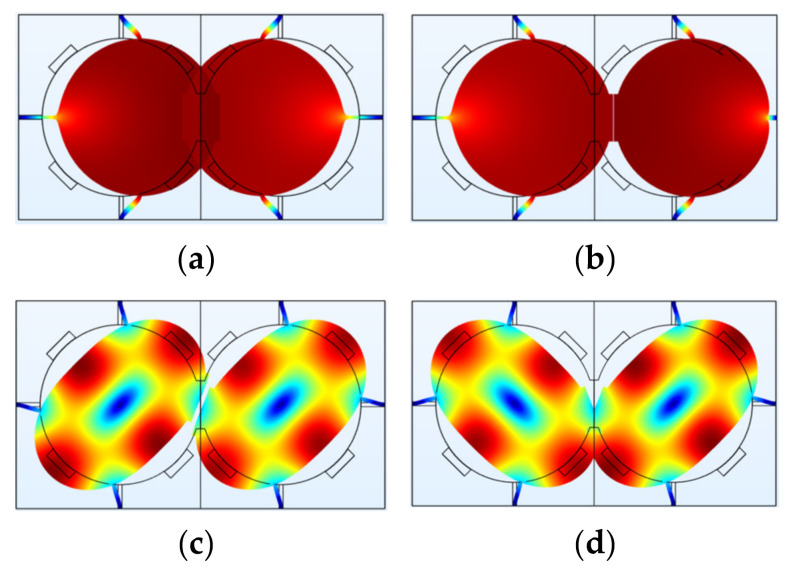
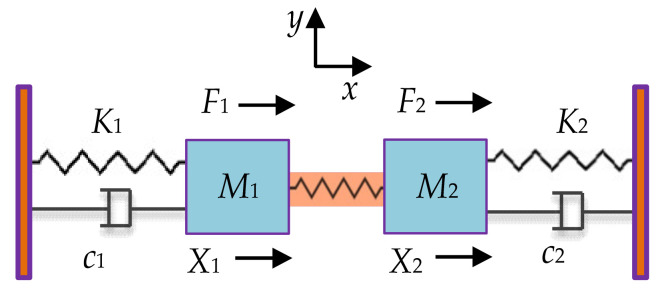
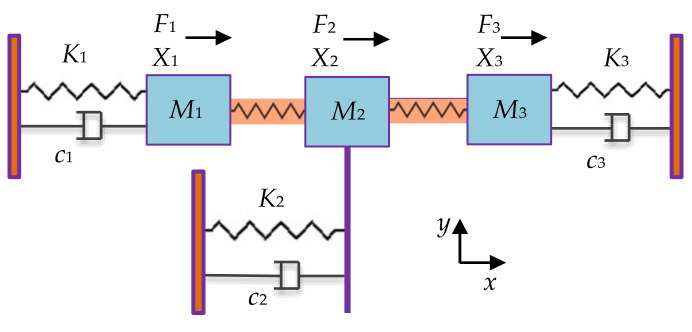
With the introduction of the working principle of coupled resonators, the coupled bulk acoustic wave (BAW) Micro-Electro-Mechanical System (MEMS) resonators have been attracting much attention. In this paper, coupled BAW MEMS resonators are discussed, including the coupling theory, the actuation and sensing theory, the transduction mechanism, and the applications. BAW MEMS resonators normally exhibit two types of vibration modes: lateral (in-plane) modes and flexural (out-of-plane) modes. Compared to flexural modes, lateral modes exhibit a higher stiffness with a higher operating frequency, resulting in a lower internal loss. Also, the lateral mode has a higher Q factor, as the fluid damping imposes less influence on the in-plane motion. The coupled BAW MEMS resonators in these two vibration modes are investigated in this work and their applications for sensing, timing, and frequency reference are also presented.
随着耦合谐振器工作原理的引入,耦合体声波(BAW)微机电系统(MEMS)谐振器一直备受关注。本文讨论了耦合BAW MEMS谐振器,包括耦合理论、驱动与传感理论、转换机制及应用。BAW MEMS谐振器通常呈现两种振动模式:横向(面内)模式和弯曲(面外)模式。与弯曲模式相比,横向模式具有更高的刚度和更高的工作频率,从而导致更低的内部损耗。此外,横向模式具有更高的品质因数,因为流体阻尼对面内运动的影响较小。本文研究了这两种振动模式下的耦合BAW MEMS谐振器,并介绍了它们在传感、计时和频率参考方面的应用。