Li Xinyue, Wang Xiaochen, Wang Ziming, Zhang Mingyi, Wang Song, Xiang Zuofu, Pan Huijuan, Li Ming
School of Ecology and Nature Conservation, Beijing Forestry University, Beijing, China.
CAS Key Laboratory of Animal Ecology and Conservation Biology, Institute of Zoology, Beijing, China.
Front Microbiol. 2022 May 11;13:899102. doi: 10.3389/fmicb.2022.899102. eCollection 2022.
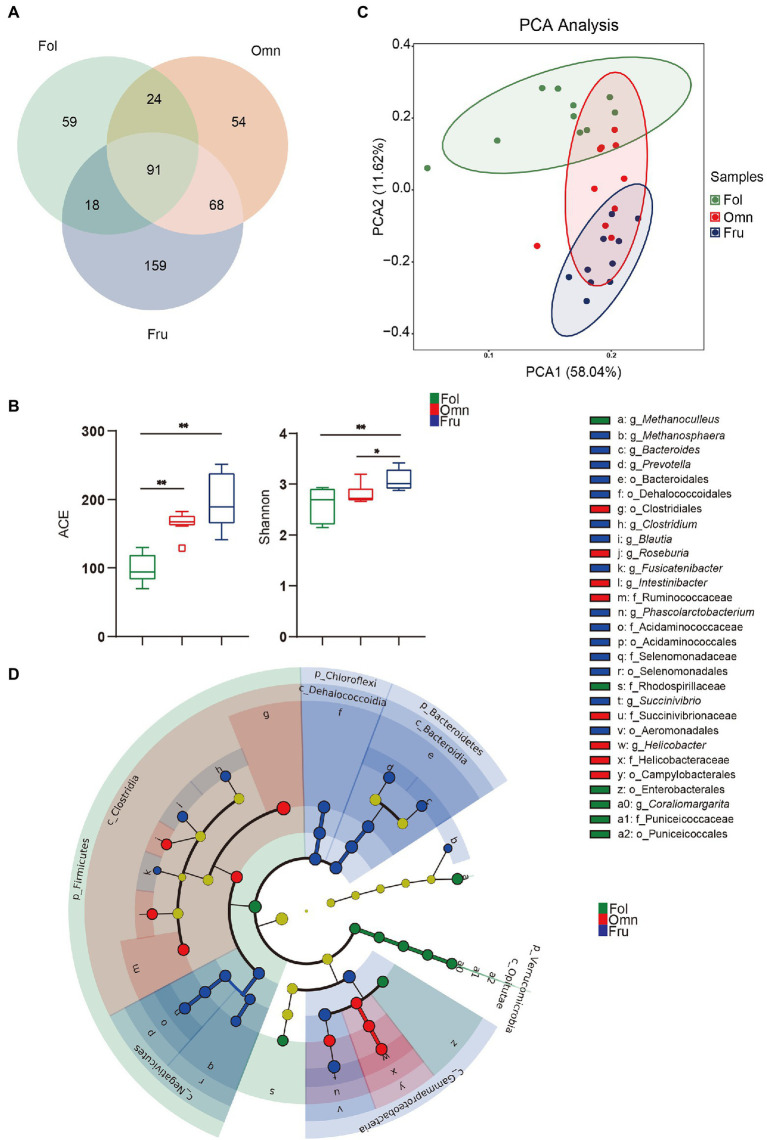
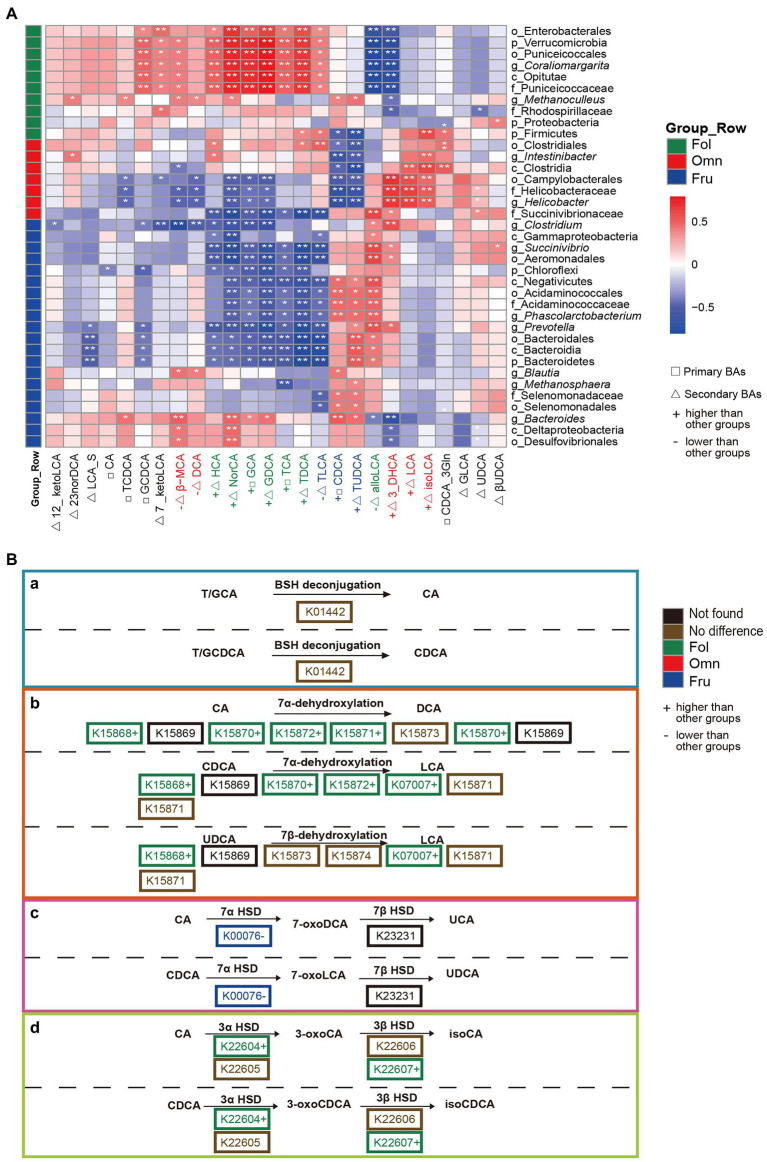
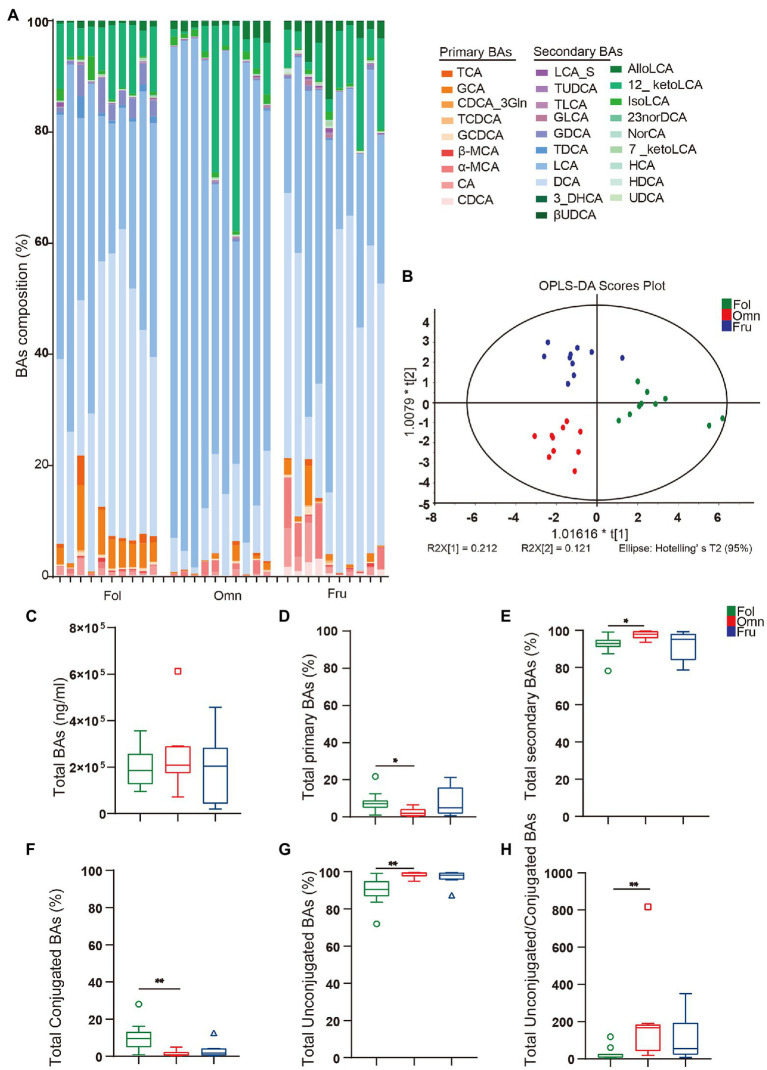
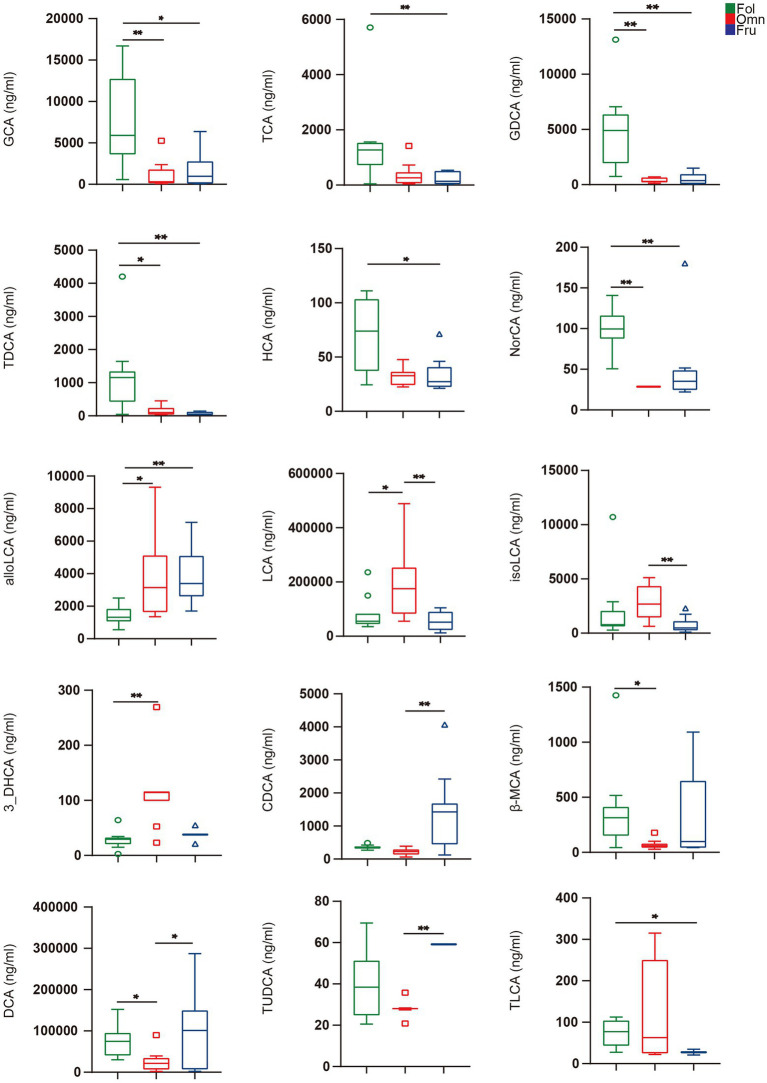
Primates have evolved a variety of feeding habits and intestinal physiological structure. Gut microbiome act as metabolic organs in many biological processes and play a vital role in adaptation to dietary niches. Gut microbiome also convert primary bile acids (BAs) to secondary. BAs profile and gut microbiome are together influenced by diets and play a significant role in nutrient absorption. The regulation between gut microbiome and BAs metabolism is bidirectional although the relationship in primates consuming diverse diets is still unclear. Here, we investigated gut microbiome structures, fecal BAs profile, and their relationship in primates preferring three distinct diets. We found that gut microbiome communities are well differentiated among dietary groups. Folivorous primates had higher Firmicutes abundance and lower to ratios, possibly related to fiber consumption. Frugivorous primates are colonized predominantly by and , pointing to an increased adaptation to high-sugar and simple carbohydrate diets. Likewise, BA profiles differ according to diet in a manner predictable from the known effects of BAs on metabolism. Folivorous primates have high conjugated bile acid levels and low unconjugated to conjugated BA ratios, consistent with their fiber-rich leaf-eating diet. Much of the differentiation in secondary and unconjugated BAs is associated with microbiome composition shifts and individual bile acid concentrations are correlated with the abundance of distinct bacterial taxonomic groups. Omnivores have higher concentrations of secondary BAs, mainly lithocholic acid (LCA). These levels are significantly positively correlated with the presence of Clostrida species, showing that the digestion requirements of omnivores are different from plant-eating primates. In conclusion, gut microbiome and BAs can respond to changes in diet and are associated with nutrient component consumption in each diet primate group. Our study is the first to demonstrate BA profile differentiation among primates preferring diverse diets. BAs thus appear to work with gut microbiome to help primates adapt to their diet.
灵长类动物已经进化出了各种各样的进食习惯和肠道生理结构。肠道微生物群在许多生物过程中充当代谢器官,在适应饮食生态位方面发挥着至关重要的作用。肠道微生物群还将初级胆汁酸(BAs)转化为次级胆汁酸。胆汁酸谱和肠道微生物群共同受到饮食的影响,并在营养吸收中发挥重要作用。尽管食用不同饮食的灵长类动物之间的关系尚不清楚,但肠道微生物群与胆汁酸代谢之间的调节是双向的。在这里,我们研究了偏好三种不同饮食的灵长类动物的肠道微生物群结构、粪便胆汁酸谱及其关系。我们发现,不同饮食组之间的肠道微生物群群落有明显差异。食叶灵长类动物的厚壁菌门丰度较高,而 与 的比例较低,这可能与纤维消耗有关。食果灵长类动物主要由 和 定殖,这表明它们对高糖和简单碳水化合物饮食的适应性增强。同样,胆汁酸谱根据饮食而有所不同,其方式可从胆汁酸对代谢的已知影响中预测出来。食叶灵长类动物具有较高的结合胆汁酸水平,未结合胆汁酸与结合胆汁酸的比例较低,这与其富含纤维的食叶饮食一致。次级胆汁酸和未结合胆汁酸的许多差异与微生物群组成的变化有关,个体胆汁酸浓度与不同细菌分类群的丰度相关。杂食动物的次级胆汁酸浓度较高,主要是石胆酸(LCA)。这些水平与梭菌属物种的存在呈显著正相关,表明杂食动物的消化需求与食草灵长类动物不同。总之,肠道微生物群和胆汁酸可以对饮食变化做出反应,并与每个饮食灵长类动物群体中的营养成分消耗相关。我们的研究首次证明了偏好不同饮食的灵长类动物之间胆汁酸谱的差异。因此,胆汁酸似乎与肠道微生物群协同作用,帮助灵长类动物适应其饮食。