Atchoumi Annie-Hortense, Vermeulen Joeri, Tsou Etienne, Lemay Céline, de Labrusse Claire, Morin Christine, Meyer Yvonne
Association of Midwives of Cameroon, Yaoundé, Cameroon.
Central African Midwifery Network, Yaoundé, Cameroon.
Eur J Midwifery. 2022 May 18;6:26. doi: 10.18332/ejm/146546. eCollection 2022.
In the French version of The Lancet Series (2014) midwifery has been translated as . Likewise, the term has recently been introduced in some countries to name (male) midwives. This change of terminology has not been the subject of broad stakeholder consultation. The aim of this study is to explore the opinion of African midwives on the use of the terminologies pratique de (midwifery) and (midwife).
A quantitative study was conducted using an online survey among members of francophone professional midwifery associations in 17 French-speaking African countries.
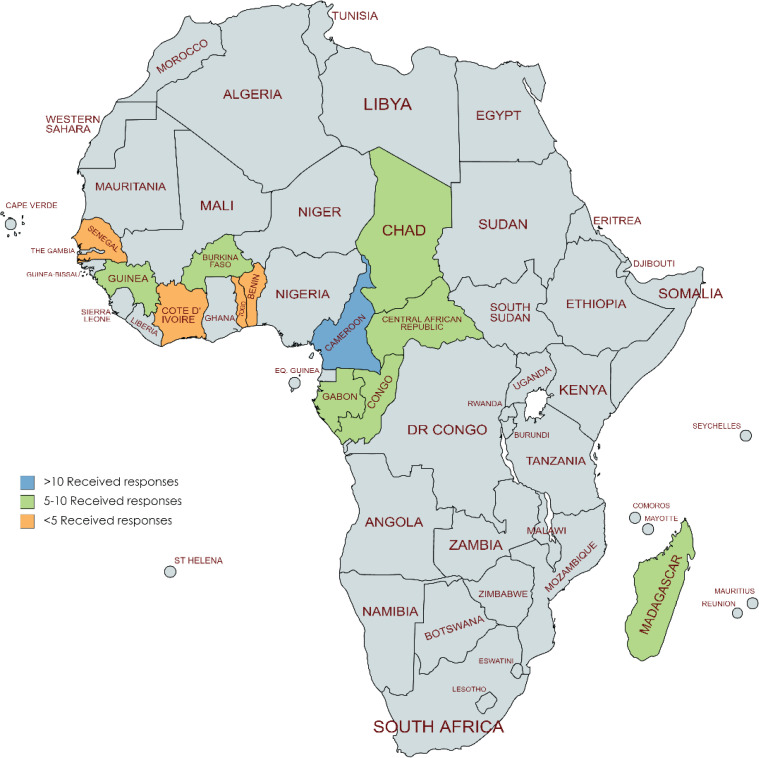
From 140 invited midwives, 82 responses were received. The respondents represented 12 francophone African countries. Respondents obviously prefer the terms pratique de and above and . The is acknowledged and deeply rooted in African society. Midwifery is comprehensive, while does not describe the full scope of midwifery. Though, some respondents believe that has the potential to differentiate sages-femmes from other health professionals, can diminishing role ambiguity, and value midwifery practice. Respondents in favor of the term are referring to the modernization of the midwifery profession and its scientific evolution.
Internationally, midwives closely follow the developments on the linguistic subject of . The results of this study may support current discussion about the evolution and modernization of terminology in the francophone community worldwide. Midwives need to be actively involved in these discussions. Nevertheless, at all times we need to be cautious not to break away from midwives' cherished historical, social, and cultural roots.
在《柳叶刀》系列的法语版(2014年)中,“助产术”被翻译为“pratique de sage-femme”。同样,最近一些国家引入了“sage-femme”一词来称呼(男性)助产士。这一术语的变化并未经过广泛的利益相关者协商。本研究的目的是探讨非洲助产士对使用“pratique de sage-femme”(助产术)和“sage-femme”(助产士)这两个术语的看法。
采用在线调查的方式,对17个非洲法语国家的法语专业助产士协会成员进行了定量研究。
在140名受邀助产士中,收到了82份回复。受访者代表了12个非洲法语国家。受访者显然更喜欢“pratique de sage-femme”和“sage-femme”这两个术语,而不是“midwifery”和“midwife”。“sage-femme”在非洲社会得到认可且根深蒂固。助产术是全面的,而“midwifery”并没有描述助产术的全部范围。不过,一些受访者认为“sage-femme”有可能将助产士与其他卫生专业人员区分开来,减少角色模糊性,并重视助产实践。支持“sage-femme”一词的受访者提到了助产士职业的现代化及其科学发展。
在国际上,助产士密切关注“midwifery”这一语言主题的发展。本研究结果可能有助于支持当前关于全球法语社区术语演变和现代化的讨论。助产士需要积极参与这些讨论。然而,我们始终需要谨慎,不要脱离助产士所珍视的历史、社会和文化根源。