Barbieri Maria Vittoria, Rodrigues Andreia Cm, Febbraio Ferdinando
Institute of Biochemistry and Cell Biology National Research Council Naples Italy.
EFSA J. 2022 May 25;20(Suppl 1):e200403. doi: 10.2903/j.efsa.2022.e200403. eCollection 2022 May.
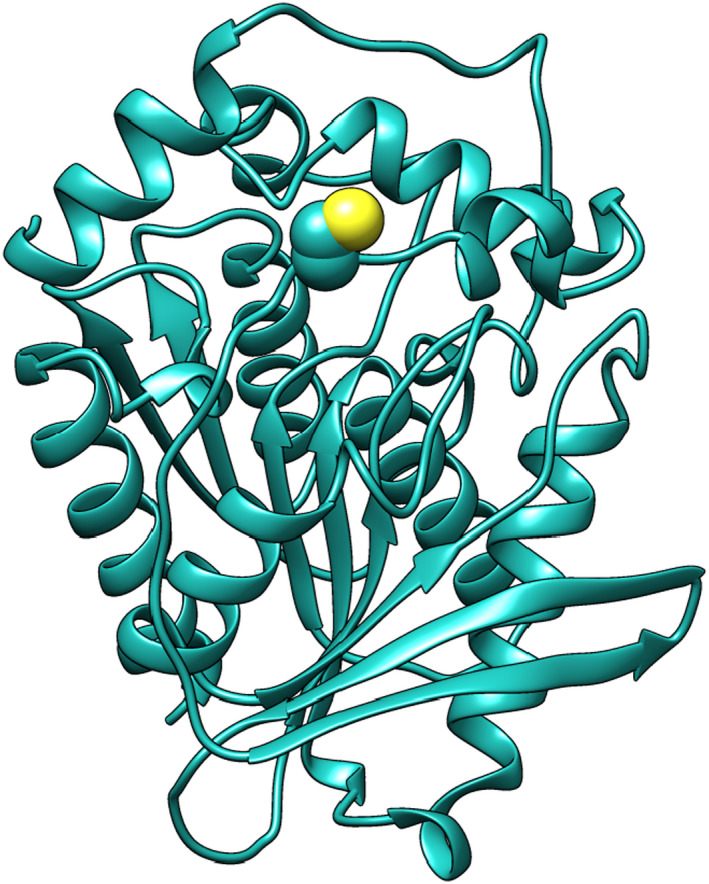
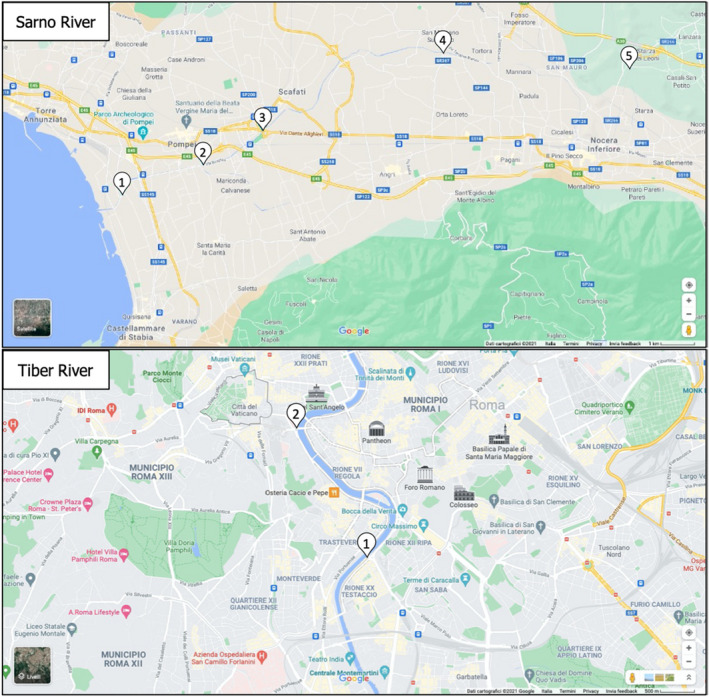
The identification of pollutants is crucial to protect water resources and ensure food safety. The available analytical methodologies allow reliable detection of organic pollutants such as pesticides; however, there is the need for faster, direct and continuous methodologies for real-time monitoring of pesticides. Fluorescent-based biosensors have been recently proposed as a valid alternative due to their advantage of being easy, cheap and specific. In this context, the aim of the present EU-FORA fellowship programme was to develop and apply a fluorescence-based biosensing device for the detection of organophosphate (OP) pesticides in water samples and drinkable food. The study was addressed using a mutant of the thermostable esterase-2 from (EST2-S35C) as a bioreceptor for OP pesticides. The use of EST2 involves some significant advantages including specificity and affinity towards OPs, and high stability over time in a different range of temperatures and pH. The protein was labelled to the fluorescent probe IAEDANS and fluorescence measurements of quenching in solution and in immobilised form were performed. The results showed good stability and sensitivity, reaching low limits of detection and quantification and a constant signal intensity over time. The addition of paraoxon quenched the fluorescence of the complex, reaching a plateau at 100 pmol paraoxon. The decrease of enzymatic activity of EST2-S35C-IAEDANS in the presence of paraoxon correlated the inhibition of the labelled enzyme with the decrease in fluorescence. The results from the application of the biosensor with real samples showed a decrease in fluorescence in surface water samples, contaminated by OPs. The use of the developed fluorescence-based biosensor demonstrated its applicability for real samples monitoring and could ensure the production of large amounts of data in a short period of time which can be used to address environmental and food safety risk assessment.
污染物的识别对于保护水资源和确保食品安全至关重要。现有的分析方法能够可靠地检测农药等有机污染物;然而,需要更快、直接且连续的方法来实时监测农药。基于荧光的生物传感器因其简便、廉价且特异的优点,最近被提议作为一种有效的替代方法。在此背景下,当前欧盟 - FORA 奖学金计划的目标是开发并应用一种基于荧光的生物传感装置,用于检测水样和可饮用食品中的有机磷(OP)农药。该研究使用来自嗜热栖热菌的热稳定酯酶 -2 的突变体(EST2 - S35C)作为 OP 农药的生物受体。EST2 的使用具有一些显著优势,包括对有机磷的特异性和亲和力,以及在不同温度和 pH 范围内随时间的高稳定性。该蛋白质用荧光探针 IAEDANS 进行标记,并对溶液中和固定化形式下的猝灭荧光进行测量。结果显示出良好的稳定性和灵敏度,达到了低检测限和定量限,且信号强度随时间保持恒定。加入对氧磷会猝灭复合物的荧光,在 100 pmol 对氧磷时达到平稳状态。在对氧磷存在下 EST2 - S35C - IAEDANS 的酶活性降低,表明标记酶的抑制与荧光降低相关。生物传感器在实际样品中的应用结果表明,受有机磷污染的地表水样品中的荧光降低。所开发的基于荧光的生物传感器的使用证明了其在实际样品监测中的适用性,并能够在短时间内确保产生大量可用于环境和食品安全风险评估的数据。