Renal Research Laboratory, Kolling Institute of Medical Research, University of Sydney, Sydney, Australia.
Department of Cardiology, Children's Hospital of Soochow University, Suzhou, Jiangsu, China.
Diabetes Obes Metab. 2022 Oct;24(10):1939-1949. doi: 10.1111/dom.14778. Epub 2022 Jun 29.
To determine, using a mouse model of obesity, whether low-dose hydralazine prevents obesity-related chronic kidney disease (CKD).
From 8 weeks of age, male C57BL/6 mice received a high-fat diet (HFD) or chow, with or without low-dose hydralazine (25 mg/L) in drinking water, for 24 weeks. Biometric and metabolic variables, renal function and structural changes, renal global DNA methylation, DNA methylation profile and markers of renal fibrosis, injury, inflammation and oxidative stress were assessed.
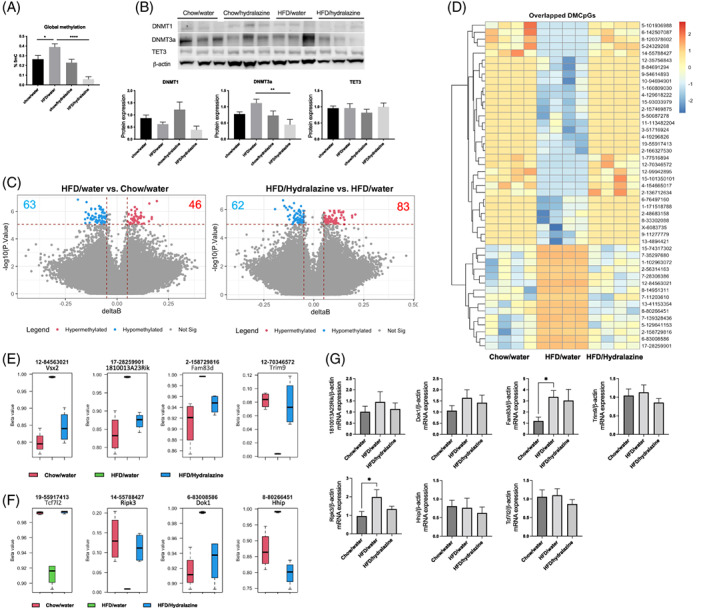
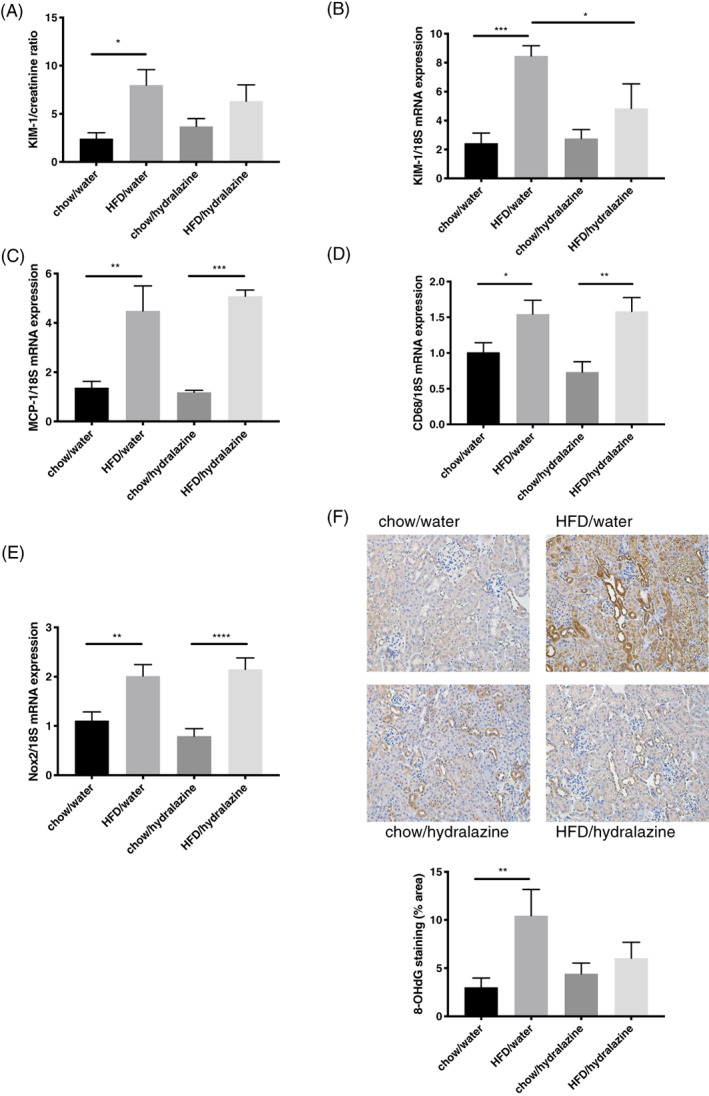
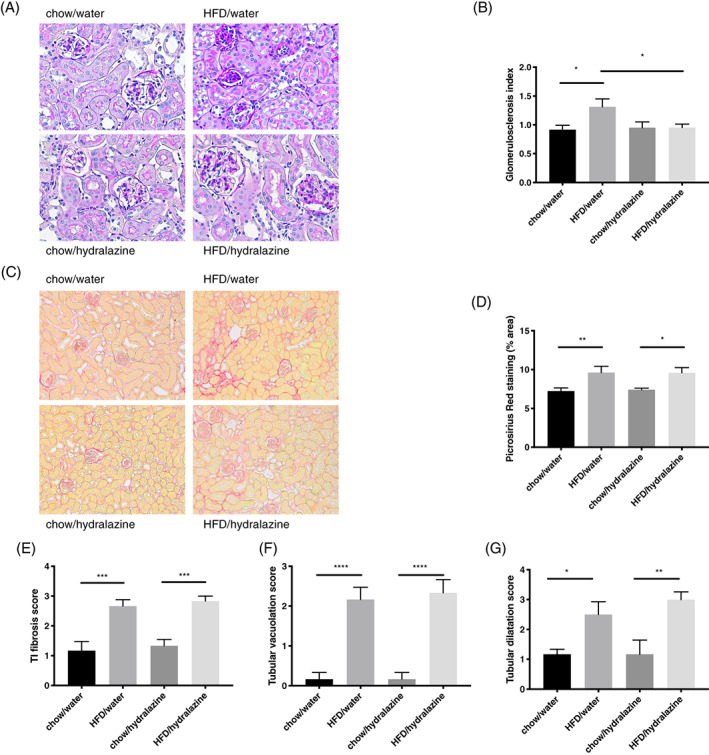
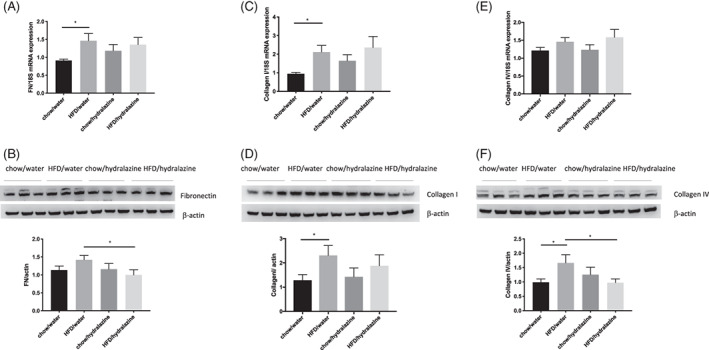
The HFD-fed mice developed obesity, with glucose intolerance, hyperinsulinaemia and dyslipidaemia. Obesity increased albuminuria and glomerulosclerosis, which were significantly ameliorated by low-dose hydralazine in the absence of a blood pressure-lowering effect. Obesity increased renal global DNA methylation and this was attenuated by low-dose hydralazine. HFD-induced changes in methylation of individual loci were also significantly reversed by low-dose hydralazine. Obese mice demonstrated increased markers of kidney fibrosis, inflammation and oxidative stress, but these markers were not significantly improved by hydralazine.
Low-dose hydralazine ameliorated HFD-induced albuminuria and glomerulosclerosis, independent of alterations in biometric and metabolic variables or blood pressure regulation. Although the precise mechanism of renoprotection in obesity is unclear, an epigenetic basis may be implicated. These data support repurposing hydralazine as a novel therapy to prevent CKD progression in obese patients.
通过肥胖症小鼠模型,确定小剂量肼屈嗪是否可预防肥胖相关的慢性肾脏病(CKD)。
雄性 C57BL/6 小鼠从 8 周龄起接受高脂肪饮食(HFD)或标准饮食,同时给予或不给予低剂量肼屈嗪(25mg/L)饮用水,共 24 周。评估体重、代谢变量、肾功能和结构变化、肾总 DNA 甲基化、DNA 甲基化谱和肾纤维化、损伤、炎症和氧化应激标志物。
HFD 喂养的小鼠出现肥胖症,表现为葡萄糖耐量降低、高胰岛素血症和血脂异常。肥胖症增加了白蛋白尿和肾小球硬化,而低剂量肼屈嗪在没有降压作用的情况下可显著改善这些病变。低剂量肼屈嗪还可减弱肥胖引起的肾总 DNA 甲基化。HFD 诱导的个别基因座甲基化变化也可被低剂量肼屈嗪显著逆转。肥胖小鼠的肾脏纤维化、炎症和氧化应激标志物增加,但肼屈嗪并不能显著改善这些标志物。
低剂量肼屈嗪可改善 HFD 诱导的白蛋白尿和肾小球硬化,与体重、代谢和血压调节的变化无关。尽管肥胖症中肾保护的确切机制尚不清楚,但可能涉及表观遗传学基础。这些数据支持将肼屈嗪重新用于预防肥胖患者 CKD 进展的新型治疗方法。