McArdle Laboratory for Cancer Research, Department of Oncology, University of Wisconsin School of Medicine and Public Health, Madison, WI, 53705, USA.
Tumour Virus Res. 2022 Dec;14:200239. doi: 10.1016/j.tvr.2022.200239. Epub 2022 May 27.
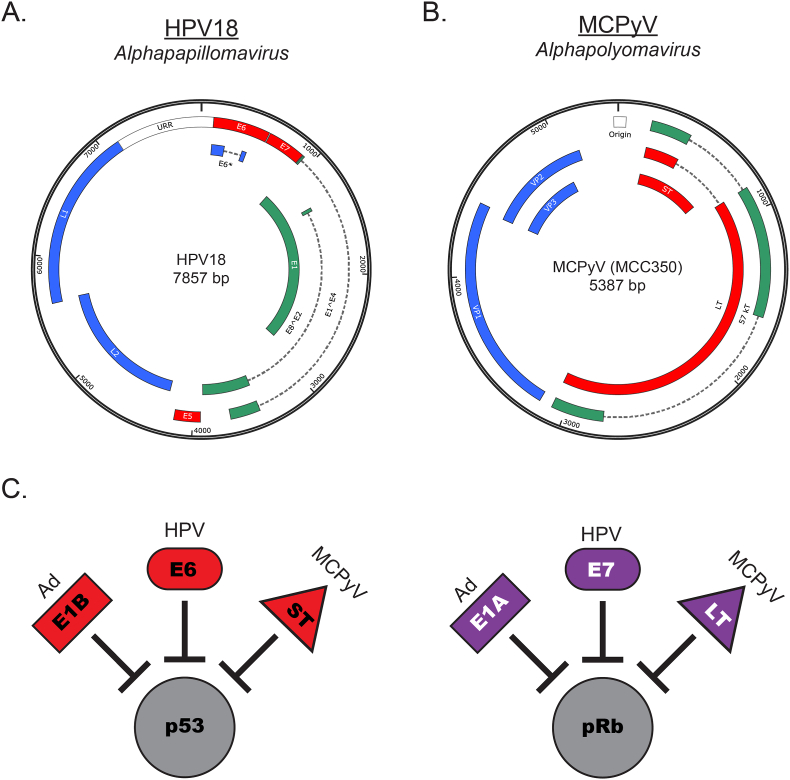
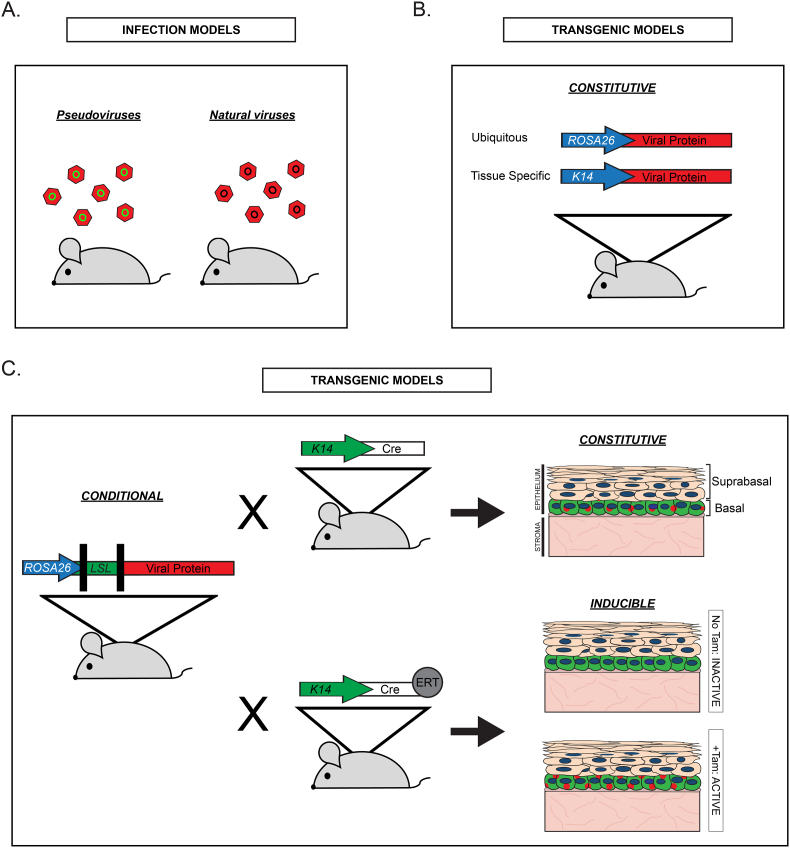
Human tumor viruses cause various human cancers that account for at least 15% of the global cancer burden. Among the currently identified human tumor viruses, two are small DNA tumor viruses: human papillomaviruses (HPVs) and Merkel cell polyomavirus (MCPyV). The study of small DNA tumor viruses (adenoviruses, polyomaviruses, and papillomaviruses) has facilitated several significant biological discoveries and established some of the first animal models of virus-associated cancers. The development and use of preclinical in vivo models to study HPVs and MCPyV and their role in human cancer is the focus of this review. Important considerations in the design of animal models of small DNA tumor virus infection and disease, including host range, cell tropism, choice of virus isolates, and the ability to recapitulate human disease, are presented. The types of infection-based and transgenic model strategies that are used to study HPVs and MCPyV, including their strengths and limitations, are also discussed. An overview of the current models that exist to study HPV and MCPyV infection and neoplastic disease are highlighted. These comparative models provide valuable platforms to study various aspects of virus-associated human disease and will continue to expand knowledge of human tumor viruses and their relationship with their hosts.
人类肿瘤病毒可导致多种人类癌症,至少占全球癌症负担的 15%。在目前已鉴定出的人类肿瘤病毒中,有两种是小型 DNA 肿瘤病毒:人乳头瘤病毒(HPV)和 Merkel 细胞多瘤病毒(MCPyV)。小型 DNA 肿瘤病毒(腺病毒、多瘤病毒和乳头瘤病毒)的研究促进了一些重要的生物学发现,并建立了一些首个与病毒相关癌症的动物模型。本综述的重点是开发和使用临床前体内模型来研究 HPV 和 MCPyV 及其在人类癌症中的作用。介绍了设计小型 DNA 肿瘤病毒感染和疾病动物模型时的重要考虑因素,包括宿主范围、细胞嗜性、病毒分离株的选择以及再现人类疾病的能力。还讨论了用于研究 HPV 和 MCPyV 的基于感染和转基因模型策略的类型,包括它们的优缺点。强调了目前用于研究 HPV 和 MCPyV 感染和肿瘤性疾病的现有模型。这些比较模型为研究与病毒相关的人类疾病的各个方面提供了有价值的平台,并将继续扩展对人类肿瘤病毒及其与宿主关系的认识。