Washington University School of Medicine, Program in Physical Therapy, St. Louis, MO, United States of America; Washington University School of Medicine, Department of Medicine, St. Louis, MO, United States of America.
Washington University School of Medicine, Program in Physical Therapy, St. Louis, MO, United States of America; Washington University School of Medicine, Department of Obstetrics and Gynecology, St. Louis, MO, United States of America.
Exp Gerontol. 2022 Aug;165:111840. doi: 10.1016/j.exger.2022.111840. Epub 2022 May 25.
The aim was to determine the nutritional adequacy of calorie restricted (CR) diets during CR interventions up to 12 months.
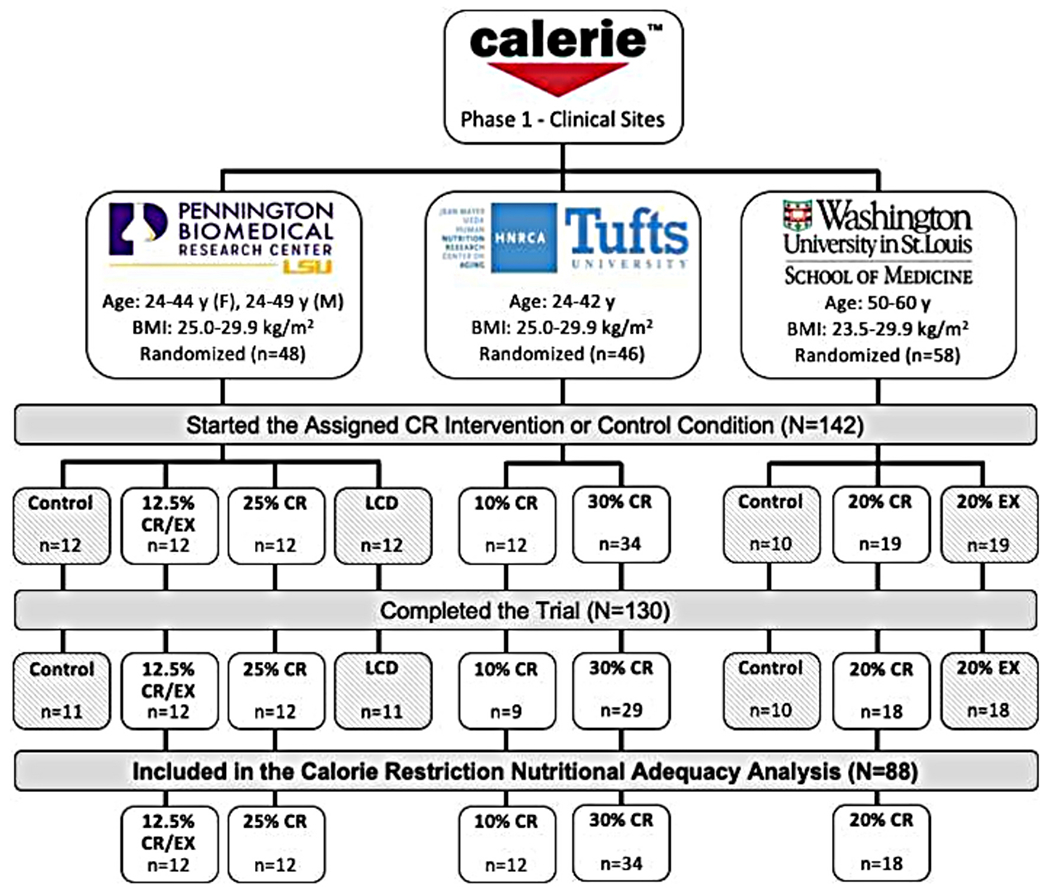
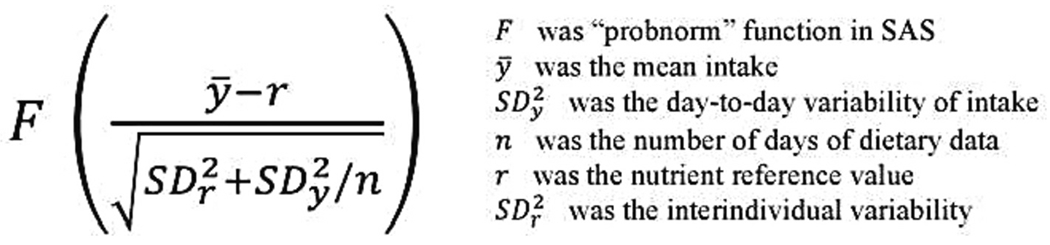
The Comprehensive Assessment of Long-Term Effects of Reducing Intake of Energy (CALERIE™) phase 1 trial consisted of 3 single-site studies to test the feasibility and effectiveness of CR in adults without obesity. After baseline assessments, participants who were randomized to a CR intervention received education and training from registered dietitians on how to follow a healthful CR diet. Food diaries were completed at baseline and during the CR interventions (~6, 9, and 12 months) when participants were self-selecting CR diets. Diaries were analyzed for energy, macronutrients, fiber, 11 vitamins, and 9 minerals. Nutritional adequacy was defined by sex- and age-specific Estimated Average Requirement (EAR) or Adequate Intake (AI) criteria for each nutrient. Diet quality was evaluated using the PANDiet diet quality index.
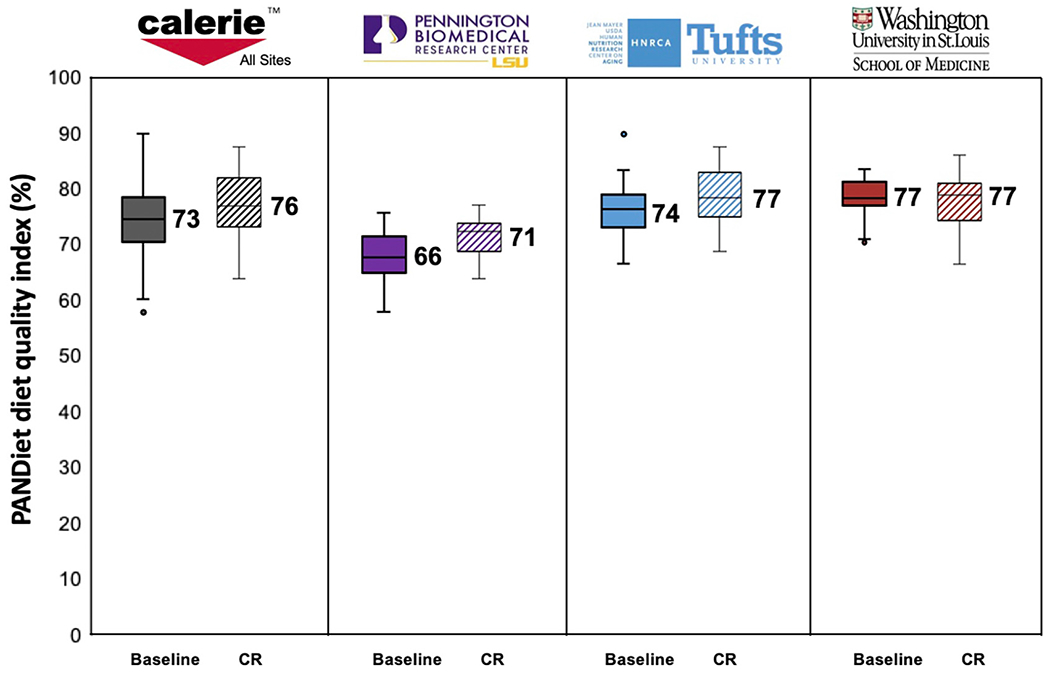
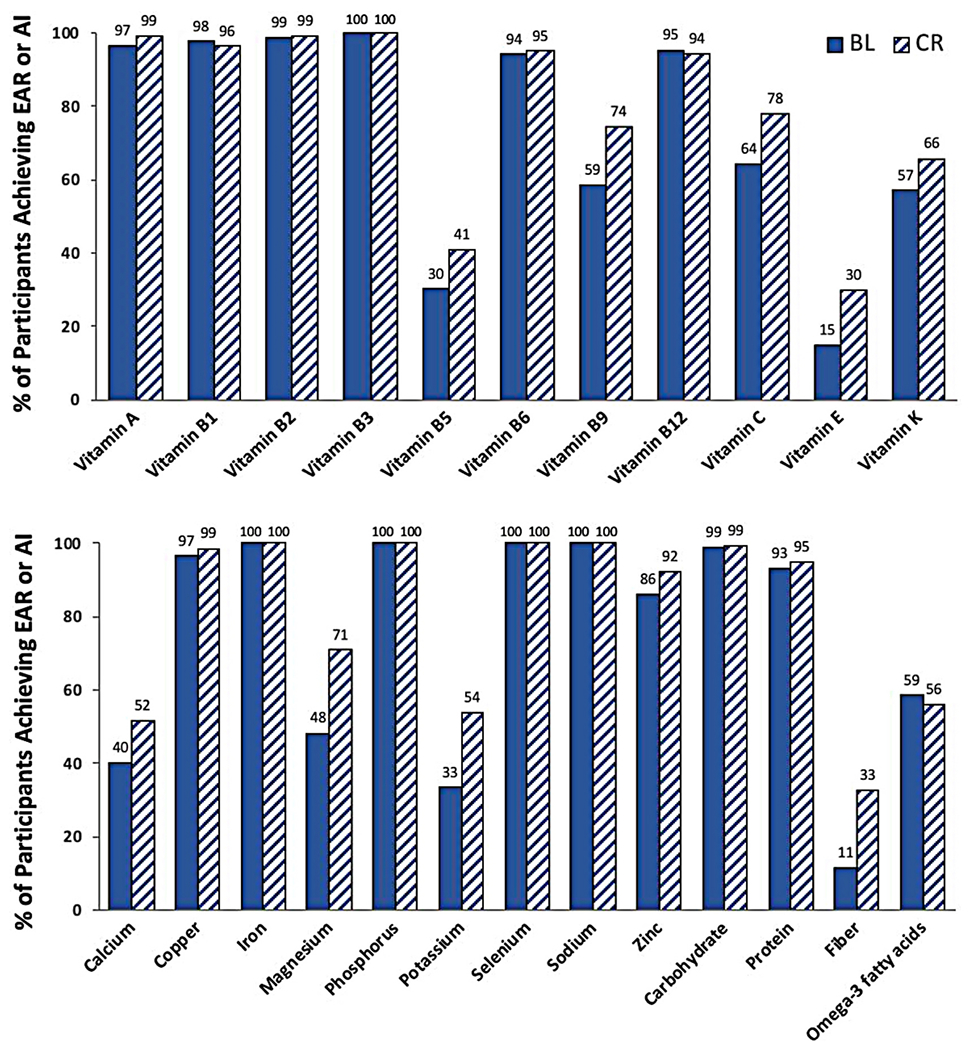
Eighty-eight CR participants (67% women, age 40 ± 9 y, BMI 27.7 ± 1.5 kg/m) were included in the analysis. Dietary intake of fiber and most vitamins and minerals increased during CR. More than 90% of participants achieved 100% of EAR or AI during CR for 2 of 4 macronutrients (carbohydrate and protein), 6 of 11 vitamins (A, B1, B2, B3, B6, B12), and 6 of 9 minerals assessed (copper, iron, phosphorus, selenium, sodium, zinc). Nutrients for which <90% of participants achieved adequacy included fiber, omega-3 fatty acids, vitamins B5, B9, C, E, and K, and the minerals calcium, magnesium, and potassium. The PANDiet diet quality index improved from 72.9 ± 6.0% at baseline to 75.7 ± 5.2% during CR (p < 0.0001).
Long-term, calorie-restricted diets were nutritionally equal or superior to baseline ad libitum diets among adults without obesity. Our results support modest calorie restriction as a safe strategy to promote healthy aging without compromising nutritional adequacy or diet quality.
旨在确定在长达 12 个月的热量限制(CR)干预期间,CR 饮食的营养充足性。
全面评估减少能量摄入的长期效果(CALERIE™)第 1 阶段试验由 3 项单站点研究组成,旨在测试肥胖成年人中 CR 的可行性和有效性。在基线评估后,随机分配到 CR 干预组的参与者接受了注册营养师关于如何遵循健康 CR 饮食的教育和培训。在基线和 CR 干预期间(约 6、9 和 12 个月)完成饮食日记,此时参与者自行选择 CR 饮食。饮食日记分析了能量、宏量营养素、纤维、11 种维生素和 9 种矿物质。营养充足性由每个营养素的性别和年龄特定的估计平均需求量(EAR)或充足摄入量(AI)标准定义。饮食质量使用 PANDiet 饮食质量指数进行评估。
共有 88 名 CR 参与者(67%为女性,年龄 40±9 岁,BMI 27.7±1.5kg/m)纳入分析。在 CR 期间,纤维和大多数维生素和矿物质的饮食摄入量增加。在 CR 期间,超过 90%的参与者在 4 种宏量营养素中的 2 种(碳水化合物和蛋白质)、11 种维生素中的 6 种(A、B1、B2、B3、B6、B12)和 9 种矿物质中的 6 种(铜、铁、磷、硒、钠、锌)达到了 100%的 EAR 或 AI。营养充足性<90%的参与者包括纤维、ω-3 脂肪酸、维生素 B5、B9、C、E 和 K 以及矿物质钙、镁和钾。PANDiet 饮食质量指数从基线时的 72.9±6.0%提高到 CR 期间的 75.7±5.2%(p<0.0001)。
在肥胖成年人中,长期的热量限制饮食在营养上与基线自由饮食相等或优于基线自由饮食。我们的结果支持适度的热量限制作为促进健康衰老的安全策略,而不会影响营养充足性或饮食质量。